In short
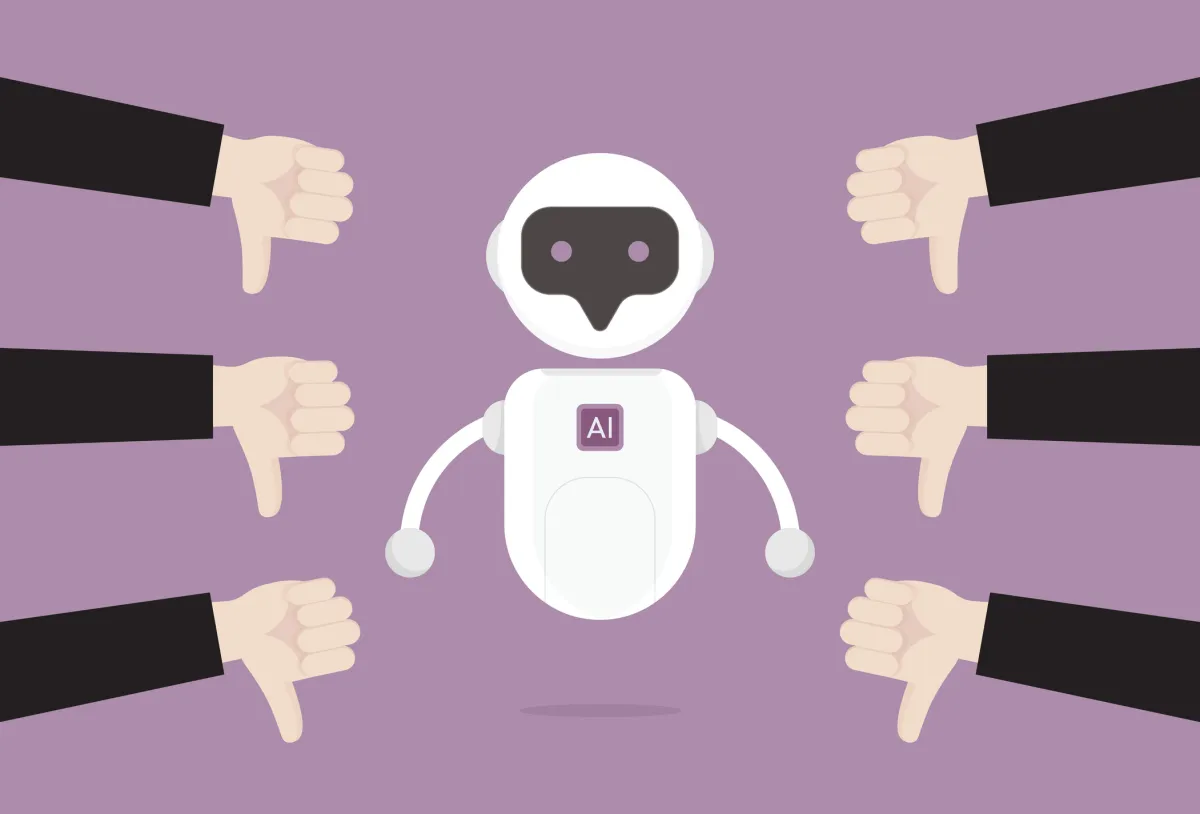
The AI sector is producing a growing graveyard of shutdowns, reversals and abandoned projects as startups and major tech firms struggle with competition, cost and trust. The latest example is Relay, which shut down after larger platforms absorbed similar automation features.
- Relay shut down after bigger platforms added similar AI automation features.
- OpenAI, Apple and Microsoft have all faced product reversals, delays or backlash.
- Hardware bets like Humane AI Pin struggled to justify themselves against smartphones.
- User retention, cost and privacy remain major threats to AI products.
- Industry data suggests a large share of AI initiatives are eventually abandoned.
The AI boom is producing a growing list of shutdowns, reversals and costly retreats, with startups and even giant tech firms now abandoning products that once looked essential. From Relay’s collapse to OpenAI’s feature rollbacks and Apple and Microsoft’s delayed rollouts, the trend shows how hard it is to turn generative AI into durable businesses.
What is becoming clear in 2026 is that the most visible AI winners are not automatically the ones that survive. Many products are being squeezed by platform giants, haunted by privacy concerns, or undone by the simple fact that users do not keep coming back once the novelty wears off.
Why the AI graveyard is growing
The phrase “AI graveyard” now describes a widening collection of discontinued products, abandoned experiments and startups that never found a stable market. Some of these failures are dramatic startup shutdowns. Others are quieter retreats inside major companies, where an AI feature is removed, merged into another product or delayed long enough that its initial promise fades.
The scale of the problem is not just anecdotal. S&P Global Market Intelligence has estimated that roughly 42% of AI initiatives are eventually abandoned by the companies that backed them. That figure helps explain why the industry’s rapid pace of launches is starting to produce an equally visible pace of exits.
There is no single reason for the culling. The common causes include funding gaps, hard engineering problems, poor product-market fit, difficulty scaling systems to real-world use, and simple competition from larger platforms that can copy useful features faster than startups can defend them.
What makes AI products so easy to replace?
AI products are especially vulnerable because many of them are feature-shaped, not company-shaped. When a bigger platform can add the same function into an app already used by hundreds of millions of people, the standalone product often loses its edge almost overnight.
That dynamic is central to the current wave of shutdowns. It helps explain why some promising tools are being absorbed by larger ecosystems instead of continuing as separate businesses.
How Relay became a cautionary tale
Relay, an AI workflow automation startup that aimed to rival Zapier, shut down completely on Monday after five years in business. The company had offered users a way to automate emails and task flows using AI agents, but the market shifted under it as OpenAI, Google and other major companies built similar automation into their own products.
Relay’s story is becoming familiar across the AI sector. A startup identifies a useful task, wraps it in an AI interface, and attracts early attention. Then a larger company integrates the same function into a broader platform with deeper distribution, more data and more user trust. At that point, the startup has to justify why it should continue existing at all.
Relay is a reminder that even a technically competent product can lose its place if the feature becomes native elsewhere. In AI, speed is important, but so is defensibility — and that is often where startups struggle most.
What OpenAI’s stumbles say about the market
OpenAI has become one of the dominant forces in AI, but even it has been forced to reverse course on several fronts. Its recent history shows that scale alone does not guarantee smooth product design or lasting adoption.
Why did the ChatGPT “super app” redesign fail?
The answer is that users rejected it quickly. On July 9, OpenAI introduced a redesigned ChatGPT app that tried to combine several separate experiences into one place, including Chat, Codex and Work modes. The company also renamed the original familiar interface “ChatGPT Classic.”
The change was intended to push ChatGPT toward a broader all-in-one role, but the reaction was immediate and negative. Users found the new layout confusing and cluttered, and OpenAI soon backed away from the redesign and restored the more familiar experience.
The episode illustrates a recurring risk for AI platforms: ambitious product consolidation can look strategic from the inside while feeling cumbersome to users. In a space where clarity is still part of the value proposition, complexity can be fatal.
What happened to OpenAI’s other side projects?
Several of OpenAI’s adjacent products have also been folded back into ChatGPT or retired. The company discontinued ChatGPT Atlas, a standalone AI web browser, after less than a year and absorbed its best features into ChatGPT. It followed a similar pattern with Operator, an AI agent designed to browse the web and carry out tasks on behalf of users.
OpenAI has also moved image generation more directly into ChatGPT, reducing the importance of DALL-E as a separate destination. In each case, the company appears to have concluded that the main app is the best home for features that once looked worthy of their own products.
That approach may be efficient, but it also adds to the graveyard by shrinking the number of independent AI applications that can survive outside the core platform.
How did Sora lose momentum?
Sora, OpenAI’s video-sharing platform, struggled with operating costs and retention problems and shut down in March 2026. The shutdown is notable because video products are expensive to run and often difficult to differentiate unless they achieve major scale very quickly.
The core lesson is familiar: even when a company is at the center of the AI conversation, not every product can support itself. Attention does not always translate into long-term usage, and usage does not always translate into a business that can absorb the cost of serving it.
Apple, Microsoft and the challenge of shipping AI safely
The AI graveyard is not limited to startups and flashy consumer apps. Apple and Microsoft have each encountered the more difficult side of deploying AI inside mainstream platforms, where expectations are high and mistakes are instantly public.
How Apple’s Siri AI rollout went off schedule
Apple Intelligence was unveiled in 2024 with Siri as one of its headline upgrades. Apple promised a smarter assistant that could understand context across apps and complete tasks more effectively than the older version.
But the rollout kept slipping. Apple repeatedly postponed the release, citing engineering issues and bugs, and the delays eventually fed into a $250 million settlement tied to claims over how the company marketed AI capabilities for the iPhone 16.
The improved Siri finally appeared in the iOS 27 beta in July and began rolling out to English-language users this month, with additional language support expected later. Even so, the long delay has made the Siri project a case study in the gap between AI marketing and AI delivery.
Why Microsoft Recall triggered immediate backlash
Microsoft’s Recall feature, introduced at the 2024 Build conference, was pitched as a photographic memory for Windows PCs. It would periodically capture screenshots of a user’s activity so they could search back through their digital past.
Privacy experts immediately sounded alarms. The obvious concern was that the feature could store highly sensitive material — including messages, passwords, banking information and other personal data — in a searchable archive. Microsoft delayed the launch for nearly a year while attempting to redesign its security and privacy safeguards.
That has not eliminated concern. A recent cybersecurity demonstration showed that data captured by Recall could still be extracted and viewed, renewing doubts about whether the underlying risk has truly been solved.
Critics of the feature have argued that a tool designed to remember everything can easily become a tool that remembers too much, especially when it captures material users never intended to archive.
In Microsoft’s case, the issue is not simply whether the feature works technically. It is whether mainstream users will trust it enough to let it stay on in the first place.
The hardware hype cycle: when AI devices fail to stick
AI hardware has been one of the most overpromised corners of the market. Several devices launched with huge expectations only to find that consumers were not interested in a new gadget unless it clearly beat the smartphone, which already does most things well.
Humane AI Pin: from hype to shutdown
The Humane AI Pin was one of the most visible AI hardware failures. Humane raised $230 million from investors and gained significant media attention for its wearable device, which aimed to deliver AI functionality without relying on a traditional phone screen.
Performance problems quickly undercut the pitch. The situation worsened when Humane warned users to stop using the charging case because of a possible battery fire risk. The company shut down its AI Pin business in February 2025, and most of its assets were later acquired by HP for $116 million.
The AI Pin’s collapse demonstrated a core truth of hardware: if the experience is not obviously better than existing devices, hype will not save it.
Rabbit R1: still alive, but under pressure
Rabbit’s R1 was another heavily promoted AI gadget. It debuted at CES in January 2024 as a compact AI companion that could perform tasks on behalf of the owner. Rabbit said it sold 100,000 units shortly after launch, which suggested strong demand on paper.
But reviews were quickly critical. Early buyers encountered an unfinished product with unreliable performance and only a limited set of useful integrations. The hardware generated excitement, but the software lagged behind the promise.
Rabbit has not shut down. Instead, it has tried to reposition the R1 as a computer controller for agentic tasks and recently announced a new portable device called Project Cyberdeck, aimed at vibe-coding workflows. The company’s survival shows that a noisy launch is not always fatal, but it also shows how difficult it is to convert hype into an enduring category.
AI apps built on novelty often struggle to survive
A number of AI products have found early attention through novelty or experimentation, only to fade when either competitors caught up or users stopped returning.
Why did Notion Mail shut down so soon?
Notion Mail launched in April 2025 as an AI-first email product meant to help people organize and automate their inboxes. The company later concluded that users were leaning on separate AI agents for email management instead.
Because of that shift in behavior, Notion Mail is scheduled to shut down on September 22. The decision suggests that even when a feature matches a real user need, it may still fail if the broader workflow migrates elsewhere.
What happened to Huxe?
Huxe was an AI audio app from former developers of Google’s NotebookLM that converted text into conversational, podcast-like audio. The idea fit a popular use case for generative AI: turning long-form reading into something easier to consume on the go.
But Huxe shut down in May 2026 as larger platforms began offering similar features to far bigger audiences. Spotify’s own expansion into AI audio tools is one example of how a specialized app can be overtaken once a major platform decides the category matters.
Why Yupp could not find product-market fit
Yupp built a free comparison playground that let users view responses from hundreds of AI models side by side, vote on the answers and even earn cryptocurrency through the platform. At its peak, it offered access to more than 800 models from companies including OpenAI, Google and Anthropic.
Despite the scale of that offering, the founders said the product never achieved strong enough product-market fit to last. Yupp shut down in March 2026.
Its demise is telling because even an unusually open and well-positioned experiment can fail if the audience views it as interesting rather than indispensable.
What made Figgs AI different?
Figgs AI, which operated from 2023 to 2024, focused on customizable characters for roleplay and storytelling. It reportedly attracted more than 1 million users, which would be a major success for many apps.
Yet the company said the economics did not work. Keeping the service free became too expensive, and it shut the platform down. In other words, user interest was not the same as sustainable revenue.
Comparison of major AI shutdowns and setbacks
The following table shows how different AI products have ended up for different reasons, even when they started with substantial attention.
| Product | Type | Outcome | Main issue | Timing |
|---|---|---|---|---|
| Relay | Workflow automation startup | Shut down | Platform competition from larger AI tools | September 2026 |
| ChatGPT redesign | OpenAI app update | Rolled back | User confusion and cluttered interface | July 2026 |
| ChatGPT Atlas | AI browser | Discontinued | Features absorbed into ChatGPT | August 2026 |
| Sora | Video-sharing platform | Shut down | High operating cost and retention problems | March 2026 |
| Siri AI | Assistant upgrade | Delayed, then launched | Engineering issues and bugs | 2024-2026 |
| Recall | Windows feature | Delayed and controversial | Privacy and security concerns | 2024-2026 |
| Humane AI Pin | Wearable hardware | Business shut down | Poor performance and battery concerns | February 2025 |
| Rabbit R1 | AI device | Still active | Unfinished software and weak integrations | 2024-2026 |
| Yupp | Model comparison platform | Shut down | Weak product-market fit | March 2026 |
What these failures reveal about the AI market
The growing graveyard of AI projects reveals that the industry is moving from novelty to accountability. Early-stage demos and viral launches can still draw users, investors and press attention, but they do not automatically produce durable products.
Three pressures keep showing up across categories:
- Platform absorption: larger companies build the same feature into existing products.
- Trust and safety: privacy, security and reliability issues can kill momentum quickly.
- Economics: many AI services are expensive to run, especially when usage is heavy or hardware is involved.
That combination is forcing a reckoning. The winners will not necessarily be the most talked-about launches. They will be the products that solve a real problem, stay simple enough to use, and survive long enough to prove they can earn their place.
Why the next phase of AI may look less glamorous
The current cleanup may not be a sign that AI is weakening. It may instead be a sign that the market is maturing. In mature markets, bad ideas disappear faster, and good ideas get copied more quickly.
For users, that could mean fewer standalone AI apps and more AI features embedded inside existing software. For startups, it means a sharper need to define why a product should exist as a company rather than merely as a feature. And for the biggest platforms, it means the temptation to consolidate everything into a single interface will continue — even when history suggests that users do not always want everything in one place.
Relay’s shutdown is only the latest entry in the list, but the broader pattern is now impossible to ignore: the AI industry is not just inventing products. It is also sorting out which of those products deserve to remain alive.
| Pattern | What it means | Who is affected most |
|---|---|---|
| Feature bundling | Core AI tools absorb standalone functions | Startups and niche app makers |
| Trust issues | Security and privacy concerns slow adoption | Consumers and enterprise buyers |
| Cost pressure | Running AI services or hardware remains expensive | Companies with weak margins |
| Retention problems | Users try products once but do not stay | Consumer-facing AI apps |
As the market enters a more selective phase, the AI graveyard is likely to keep expanding. That may sound bleak, but it is also how emerging industries mature: by separating lasting products from clever experiments that arrived too early, too expensively or without a clear enough reason to endure.
Frequently asked questions
Why are so many AI products shutting down?
So many AI products are shutting down because they often lack defensible advantages, face high operating costs and can be copied by larger platforms quickly. Many also struggle with user retention, privacy concerns or the difficulty of turning early attention into a sustainable business.
What happened to Relay?
Relay shut down completely after five years because it was outpaced by larger companies such as OpenAI and Google, which began building similar workflow automation features into their own products. That made it harder for Relay to justify itself as a standalone app.
Did OpenAI actually roll back ChatGPT changes?
Yes. OpenAI rolled back its July redesign after users complained that the new ChatGPT interface was confusing and cluttered. The company had tried to merge several experiences into one app and rename the original version ChatGPT Classic, but the change drew strong criticism.
What is Microsoft Recall and why is it controversial?
Microsoft Recall is an AI feature for Windows PCs that records screenshots so users can search their past activity like a photographic memory. It is controversial because privacy experts worry it could store sensitive material such as passwords, messages and financial data in a searchable archive.
Is AI hardware still a viable market?
AI hardware is still possible, but it is proving much harder than many investors expected. Humane AI Pin shut down after performance and safety problems, while Rabbit R1 remains alive but has had to keep evolving after a weak initial reception.