In short
SimpliSafe has launched a new wired video doorbell that works with its Active Guard live monitoring service. The system combines AI detection with human intervention to deter intruders and package thieves at the front door.
- The SimpliSafe Video Doorbell Series 2 costs $199.99 and launches with Active Guard support.
- Active Guard combines on-device AI, cloud computer vision, facial recognition, and live monitoring agents.
- The monitoring feature is opt in and requires a Pro or Plus plan starting at $49.99 per month.
- SimpliSafe says video is encrypted in transit and at rest, and shared with law enforcement only when required by law.
- Ring offers a competing Virtual Guard feature, but at a higher monthly price of $99.
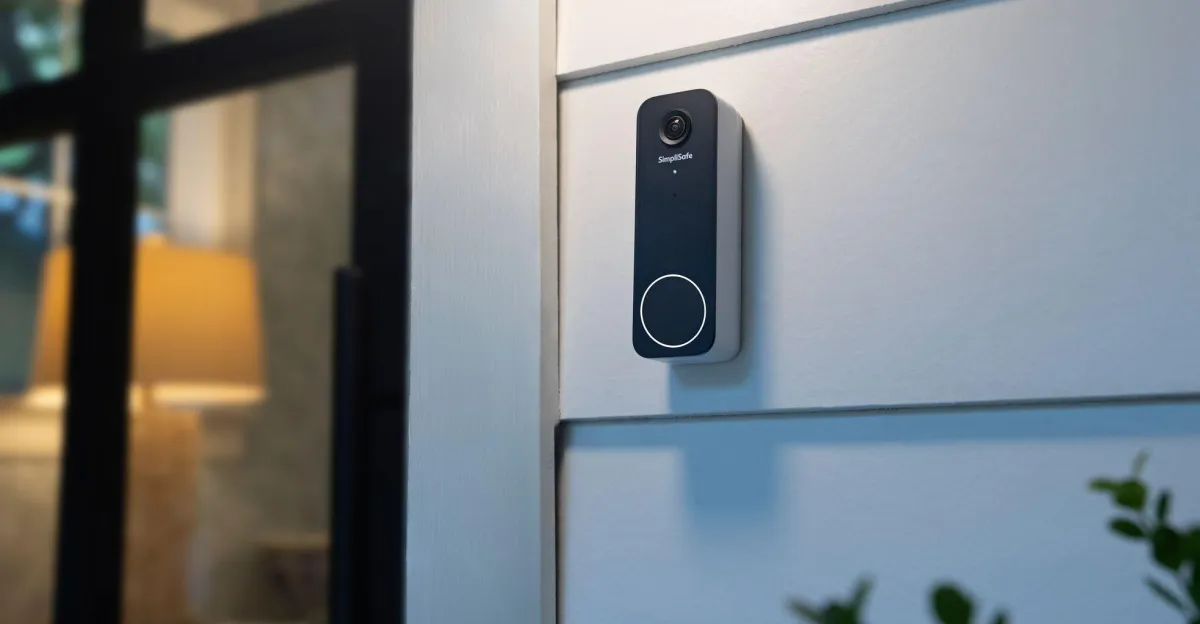
SimpliSafe has launched a new wired video doorbell that pairs AI detection with live human monitoring, giving homeowners a way to have a security agent watch and respond when suspicious activity is detected. The SimpliSafe Video Doorbell Series 2 costs $199.99 and works with the company’s Active Guard Outdoor Protection service, which starts at $49.99 per month.
The new doorbell is designed to identify possible threats using a mix of on-device AI, cloud computer vision, and facial recognition, then alert a SimpliSafe monitoring agent who can observe the scene in real time and try to deter intruders or package thieves through the camera’s speaker. For homeowners who want more than a passive alert system, the product pushes SimpliSafe further into a category that blends automation with live intervention.
What SimpliSafe launched and why it matters
The company’s latest home-security hardware is not just another smart doorbell. It is the first doorbell in SimpliSafe’s lineup to support Active Guard, the company’s proactive monitoring system that combines machine analysis with live human oversight.
That matters because most video doorbells are built around recording, alerts, and later review. SimpliSafe is positioning this one as a more active front-line deterrent, capable of moving from detection to intervention in a matter of seconds. In practice, that could mean a monitoring agent warning someone away from a porch, checking whether a delivery is legitimate, or helping confirm whether a late-night alert is actually a threat.
It also signals where the smart-home security market is heading. Hardware is increasingly only half the product; the subscription layer is where companies are trying to differentiate themselves, with AI and human response becoming a premium feature rather than an add-on.
How Active Guard works on the new doorbell
Active Guard is SimpliSafe’s name for its live-response service, and on the new doorbell it activates only when the system is armed and a trigger is detected. The feature is opt in, which means users have to choose to enable it rather than having monitoring staff automatically watch every moment of camera footage.
When activity appears suspicious, the system uses multiple layers of analysis before a human steps in:
- on-device AI that can process events locally
- cloud-based computer vision to assess what the camera sees
- facial recognition to help identify familiar people
If those systems determine something needs attention, a SimpliSafe monitoring agent can drop into the live stream, speak through the camera, and attempt to scare off a would-be intruder. The company says the same workflow can also be used to challenge porch pirates and other unwanted visitors.
Why the human element is the selling point
The direct involvement of a trained agent is what separates Active Guard from standard motion alerts. In theory, a camera can tell you that movement occurred, but a live operator can distinguish between a delivery driver, a neighbor, a pet, or a genuine threat.
That distinction matters most in situations where fast action can prevent escalation. It can also be useful in communities where repeated false alarms lead to penalties or where a homeowner wants a more credible response before calling police or emergency services.
What the SimpliSafe Video Doorbell Series 2 includes
The new doorbell is a wired model with a feature set aimed at premium home-security buyers. SimpliSafe says it offers 2K resolution, a 10x zoom, and a 150-degree head-to-toe field of view, giving users a wider look at anyone approaching the front door and more detail when zooming in.
It also includes two-way audio, a built-in siren, smart alerts for people and packages, up to five seconds of pre-roll video, and support for dual-band Wi-Fi. Like the rest of the system, it requires a SimpliSafe base station and keypad to operate.
The doorbell works with any monitored SimpliSafe plan, and it can also be used on a self-monitored plan with video recording. However, the new Active Guard functionality is reserved for higher-tier monitoring customers.
| Feature | SimpliSafe Video Doorbell Series 2 | Why it matters |
|---|---|---|
| Price | $199.99 | Positions it in the premium wired doorbell segment |
| Resolution | 2K | Sharper footage for identification and review |
| Field of view | 150-degree head-to-toe | Covers more of the porch and doorway area |
| Zoom | 10x | Helps inspect people or packages more closely |
| Monitoring requirement | Pro or Plus plan | Needed for Active Guard live response |
| Monthly price for Active Guard | Starts at $49.99 | Places human-backed monitoring in subscription territory |
How much does it cost, and who is it for?
The doorbell itself is priced at $199.99, which is in line with higher-end video doorbells from major smart-home brands. The bigger cost is the ongoing monitoring fee. Active Guard Outdoor Protection starts at $49.99 a month and requires a Pro or Plus SimpliSafe plan.
That price point makes the product most attractive to homeowners who already pay for professional security monitoring, or to those who value immediate response and visible deterrence over a simple camera notification. It is less likely to appeal to casual buyers looking for a basic doorbell cam to check deliveries.
SimpliSafe is also making a clear bet that there is a subset of consumers willing to pay for a service that moves from passive surveillance to active intervention. The appeal is strongest where theft, trespassing, or false alarms are a real concern.
Why the subscription matters more than the hardware
The hardware is the gateway; the recurring service is the real business model. SimpliSafe is following a broader pattern in consumer security and AI products, where the monthly plan determines whether the device is simply recording or actually participating in a live security workflow.
For SimpliSafe, Active Guard also helps justify the premium by tying AI to a human-in-the-loop response. That combination is harder for many competitors to copy at scale because it requires software, monitoring staff, and a service structure that can operate around the clock.
When did Active Guard expand to the doorbell?
Active Guard first appeared on SimpliSafe’s indoor camera in 2023, expanded to outdoor cameras in 2024, and is now available on the company’s newest doorbell. The rollout shows a gradual widening of a feature that started as an experimental premium service and is becoming a central part of the company’s security pitch.
That timeline suggests SimpliSafe has been testing how much value customers place on active deterrence before extending the feature to more parts of the home. The front door is a logical next step because it is one of the highest-traffic and highest-risk entry points in residential security.
| Year | Active Guard milestone | Product area |
|---|---|---|
| 2023 | Launched | Indoor camera |
| 2024 | Expanded | Outdoor cameras |
| 2026 | Arrived on Series 2 doorbell | Front-door monitoring |
How does SimpliSafe handle privacy and video access?
SimpliSafe says the system is designed to limit when and how agents can see live footage, and the company has published a privacy page to explain those controls. The monitoring agent can only view live video when the system is armed and triggered, which is intended to reduce unnecessary access.
The company also says footage is encrypted both in storage and while being transmitted, though not end-to-end encrypted. Another important safeguard is that SimpliSafe says it will not share camera footage with law enforcement unless it is legally required to do so.
Those details are central to whether consumers will trust a live-monitoring product. The idea of a human agent accessing your camera feed raises obvious privacy questions, and SimpliSafe is trying to address them by narrowing when access is permitted and by documenting the data flow.
SimpliSafe says the system is meant to help agents verify what is happening in real time, provide a more accurate picture during emergencies, and potentially reduce confusion when authorities need to be contacted.
What the lights on the doorbell tell you
The doorbell includes color-coded LED indicators to show when communication is happening through the camera. Amber indicates that a monitoring agent is speaking, while blue shows the homeowner is talking.
That visual cue is a small but important piece of the user experience. It helps residents know whether they, a live agent, or both are actively controlling the interaction, and it may also make it easier for visitors to understand that the property is being monitored in real time.
How does it compare with Ring’s Virtual Guard?
Ring already offers a similar premium feature called Virtual Guard, which works with Ring Alarm and costs $99 a month. Like Active Guard, it relies on human oversight to supplement automated detection and can be used to help deter suspicious behavior before it becomes a crime.
Compared with Ring’s option, SimpliSafe’s pricing appears lower on the monitoring side, though the exact value depends on the broader ecosystem, equipment requirements, and whether a household already uses either brand’s security platform. The important point is that both companies are converging on the same idea: AI can flag an event, but a human can verify it and respond more intelligently.
For some households, that extra layer may be worth the recurring fee. For others, it will feel excessive for a doorbell camera. The answer depends on how much risk a homeowner believes they face and how much they are willing to pay to reduce it.
Why human-backed AI is becoming a home-security trend
Home security is one of the clearest examples of a consumer market where AI is moving from novelty to utility. Detection algorithms are getting better at spotting people, packages, vehicles, and unusual motion, but the most valuable step is often what happens after the alert.
That is where human-in-the-loop services come in. By combining automated recognition with a live operator, companies can cut down on false positives, improve reaction speed, and make security systems feel more proactive. The front door is particularly suited to this model because it is a narrow, highly visible space with frequent but predictable activity.
At the same time, this model raises a few practical questions:
- How often will agents intervene correctly?
- Will customers accept a recurring fee that approaches traditional alarm pricing?
- How much do households value deterrence compared with simple notification?
Those questions will determine whether the category stays niche or becomes a mainstream expectation in smart-home security.
Who is likely to buy it?
The most likely buyers are existing SimpliSafe customers who already subscribe to monitored plans and want front-door coverage that matches the rest of their system. The product also fits homeowners in areas where package theft is common, where false alarms are costly, or where visible deterrence is considered especially valuable.
Households with frequent deliveries may also appreciate the ability to distinguish between a legitimate drop-off and a suspicious approach to the porch. Families who prefer a hands-off system that can escalate on its own, rather than just sending notifications, are another likely audience.
By contrast, buyers who want a low-cost camera, local-only recording, or full end-to-end privacy may look elsewhere. The service is built around monitoring, and the subscription economics reflect that.
What the launch tells us about SimpliSafe’s strategy
SimpliSafe is making a clear statement about where it wants to compete: not just on devices, but on responses. The company is using AI to identify problems and humans to react to them, which turns a security camera into a service endpoint instead of a standalone gadget.
That strategy is increasingly common across the smart-home industry, but SimpliSafe is leaning into it more directly than many brands that still emphasize recording quality or app features. With Active Guard on the new doorbell, the company is essentially saying that the next step in home security is not merely seeing an event, but having someone act on it while it is happening.
The bet is that consumers will pay for peace of mind if the system can genuinely deter intruders, reduce uncertainty, and provide better information in an emergency. Whether that makes the feature feel essential or excessive will depend on how people use it once the doorbell reaches homes.
Bottom line
SimpliSafe’s Video Doorbell Series 2 is more than an upgraded camera. It is the newest part of the company’s attempt to turn AI-driven detection into a live security service, with a human agent able to intervene when the system sees something suspicious.
At $199.99 for the hardware and at least $49.99 a month for Active Guard, the offering is aimed at customers who want front-door monitoring that is proactive rather than reactive. In a market crowded with cameras that notify after the fact, SimpliSafe is betting that live human response will be the feature that makes its doorbell stand out.
Frequently asked questions
What is SimpliSafe’s new video doorbell?
SimpliSafe’s new video doorbell is a wired 2K doorbell camera called the Video Doorbell Series 2. It costs $199.99 and is designed to work with the company’s Active Guard service, which lets live monitoring agents intervene when suspicious activity is detected.
How does Active Guard work on the doorbell?
Active Guard works by combining on-device AI, cloud computer vision, and facial recognition to flag suspicious activity. When the system is armed and triggered, a SimpliSafe monitoring agent can join the live feed, speak through the camera, and try to deter an intruder or porch thief.
How much does SimpliSafe’s live monitoring cost?
SimpliSafe says Active Guard Outdoor Protection starts at $49.99 per month. To use it, customers need a Pro or Plus monitoring plan, and the feature is optional rather than automatic. The doorbell itself is sold separately for $199.99.
Is the SimpliSafe doorbell available without a monitoring plan?
Yes. The doorbell can still be used with a self-monitored plan that supports video recording. However, the live human-backed Active Guard feature is reserved for monitored customers on eligible Pro or Plus plans.
How does SimpliSafe compare with Ring’s Virtual Guard?
SimpliSafe’s Active Guard is similar to Ring’s Virtual Guard because both use live agents to back up automated detection. The main difference is pricing: Ring’s feature is listed at $99 per month, while SimpliSafe’s Active Guard starts at $49.99 per month.