Updated September 9, 2026 7:54 pm
In short
Meta has launched Muse, a consumer AI agent that can take actions across users’ apps and services, with free use at entry level and paid plans for heavier usage.
- Meta introduced Muse, its first major consumer AI agent for everyday tasks.
- The agent can handle emails, travel, shopping, forms and other workflows across connected apps.
- Meta says Muse runs in a secured environment and will not feed data into its ad systems.
- The product launches with free and paid plans, including $20 and $100 monthly tiers.
- Meta’s long privacy history may shape whether consumers are willing to adopt it.
Update — September 9, 2026 7:54 pm
Meta says Muse will launch with two paid subscriptions at the start: Power for $20 a month and Maximum for $100 a month. Both are aimed at heavier users, while most people are expected to remain on the free tier.
The company is also requiring a payment card up front so it can switch users into paid access once they near their free limit. Meta says the app will show a usage meter and issue warnings before free use runs out.
Meta added that Muse will become more proactive over time, using conversations to learn what matters to each user and surface suggestions without being asked.
Update — September 8, 2026 11:23 pm
Meta is now saying Muse will launch with two paid plans: Power at $20 a month and Maximum at $100 a month. Both tiers offer higher usage limits, while the company says most people should be able to stay on the free plan.
The service also now requires a payment card to get started, because Meta plans to prompt users to subscribe once they approach their free allotment. The app will include a usage meter and alerts before free access runs out.
Meta also says Muse will get more personal over time by learning from conversations and offering suggestions without being asked.
Meta has launched Muse, a new personal AI agent that can connect to a user’s apps and carry out everyday tasks, marking one of the company’s most ambitious attempts yet to turn artificial intelligence into a consumer product people rely on daily. The rollout comes just days after Meta agreed to an $18 billion multistate settlement tied to consumer-harm claims, making trust the central question around the company’s latest bet.
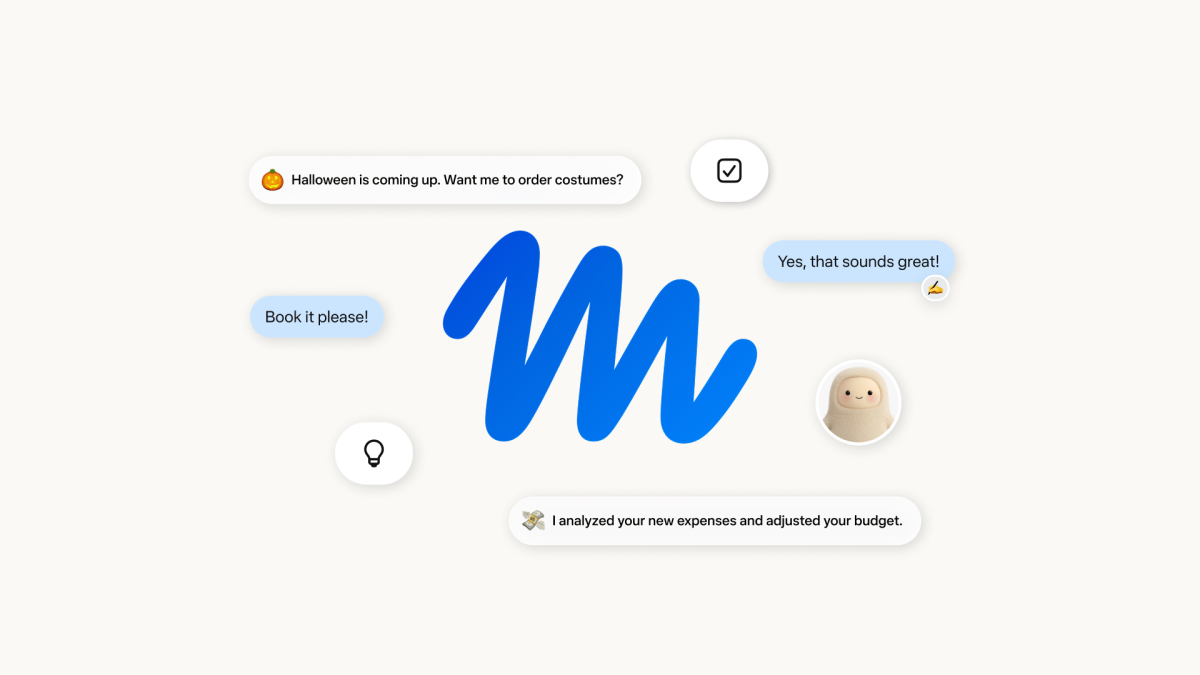
Unlike chatbots that mainly answer questions or generate text, Muse is designed to act on a user’s behalf. It can send emails, book travel, lower bills, complete forms, build plans, turn recipe videos into grocery lists, invite guests to events, and even make purchases through integrated checkout tools. Meta is positioning the service as a step beyond the ChatGPT era, where the value shifts from conversation to execution.
The company says the agent will be available first in the United States through the web, iOS and Android apps, and WhatsApp chats, with support for its AI glasses planned later. It will be free at the entry level, but Meta is introducing paid tiers for heavier use, signaling that the company expects Muse to become a meaningful subscription business as well as a strategic platform.
What is Meta’s Muse AI agent?
Muse is Meta’s new consumer-facing AI agent built to complete tasks rather than simply respond to prompts. The company describes it as a personal assistant that can work across the services people use every day, including email, calendars, shopping, payments, smart-home controls, fitness apps, music, dining reservations, and event planning tools.
The launch reflects a broader shift in the AI market. Early consumer excitement centered on assistants that could draft messages, summarize documents, or brainstorm ideas. Now, the industry is moving toward “agentic” systems that can take action, often across multiple apps and websites, with fewer prompts from the user.
That evolution gives Meta an opening to compete not only with standalone AI startups but also with larger platform companies embedding AI into operating systems, browsers, and messaging products. For Meta, the prize is obvious: if Muse becomes useful enough, it could turn the company’s apps and devices into the front door for daily digital errands.
How does Muse actually work?
Muse works by linking to services a user chooses one at a time, allowing the person to decide which accounts and workflows the agent can access. Meta says that opt-in design is intended to make the product’s permissions more transparent and give users a clearer sense of what they are connecting.
Under the hood, Muse is powered by Meta’s model called Muse Spark. The product ships with connectors for a range of services and is expected to add more over time. When an app offers a public API, Muse can establish a connection using user-provided credentials. If no API exists, the agent can interact with the service through the browser instead.
Meta says Muse can continue working after the user leaves the app, which is a key feature of the new AI agent category. Instead of waiting for every step, the system can keep progressing through a task in the background, potentially returning only when it needs more input or has finished the job.
What kinds of tasks can Muse do?
Meta says Muse is built for practical, repetitive tasks that people regularly handle across several apps. Examples include travel booking, invoice and bill management, form completion, gift planning, shopping, and event coordination.
- Send and manage email
- Book flights, hotels, or other travel
- Help reduce household bills
- Fill out applications and forms
- Turn social content into shopping lists
- Draft party invitations and plans
- Complete purchases through linked checkout systems
For shopping and checkout, Meta says Muse uses Link by Stripe, which adds purchase protections. The company also said Shopify’s Shop Pay and 1Password integrations are planned soon, suggesting a broader ecosystem strategy around commerce and identity management.
Why trust is the real product challenge
Trust may matter more for Muse than for nearly any product Meta has launched in years. To function well, the agent needs access to the services, personal preferences, and workflows that make a person’s digital life run. That can include sensitive data, financial details, and communications patterns that many users are reluctant to hand over.
Meta is trying to answer those concerns by emphasizing user control. People can connect apps individually, review what they share, and see how much usage they have left under the free plan. The company also says it will warn users before their usage exceeds the free tier and starts requiring payment.
Still, consumer hesitation is likely to be high, particularly because the agent category depends on deep access to personal systems. The more useful the product becomes, the more information it may need — and that trade-off is already drawing scrutiny across the AI industry.
Meta argues that users decide what to connect, and that the company has built Muse to make those choices visible and incremental rather than all-or-nothing.
How Meta says Muse protects data
Meta says Muse runs inside a dedicated secure environment called Muse Secure VM, which the company describes as a protected computer with its own browser. The purpose of that setup is to isolate the agent from broader system access while offering privacy, security, and safety controls.
The company also says a separate Sentinel agent operates on the same virtual machine but remains separated from Muse at the system level. According to Meta, that structure prevents the assistant from seeing passwords or payment methods and keeps the agent away from the company’s advertising systems.
Those claims matter because they address the two biggest concerns around consumer AI agents: unauthorized access and data reuse. Meta says conversations and personal data from Muse will not be shared with its ad business, a point it is likely to repeat often as the product scales.
Meta released a technical explanation alongside the launch, but the company’s architecture and privacy claims will likely draw intense review from independent security researchers. For a product that may act on behalf of users across financial and personal services, technical assurance will matter as much as marketing.
| Feature | Meta’s Muse | Why it matters |
|---|---|---|
| Primary function | Completes tasks across apps and websites | Moves AI beyond chat into action |
| Access model | Opt-in, app-by-app connections | Gives users more control over permissions |
| Security setup | Muse Secure VM and Sentinel separation | Intended to reduce data exposure |
| Monetization | Free tier plus paid plans | Signals heavy-use revenue potential |
| Launch surfaces | Web, iOS, Android, WhatsApp | Targets broad consumer reach |
What will Muse cost?
Muse will launch with a free tier, but Meta is also introducing two subscription plans for users who want more capacity. The company says the plans are designed for heavier everyday task handling, not necessarily for the average person who will likely remain on the free option.
The paid tiers are called Power and Maximum. Power will cost $20 per month, while Maximum will cost $100 per month. Meta says the app will include a usage meter so users can track how much of their allowance remains and understand when they are approaching the point where payment is required.
The pricing strategy suggests Meta is testing two markets at once. One is the mass consumer market, where it hopes to make Muse a habitual assistant. The other is the power user market, where consumers may pay to offload time-consuming digital chores more aggressively.
- Free tier: Basic use for most consumers
- Power: $20 per month
- Maximum: $100 per month
How does Meta’s history affect Muse?
Meta’s past is likely to shape the reception of Muse as much as the product itself. The company has spent years under pressure from regulators, lawmakers, and users over privacy, transparency, and consumer-harm concerns, and those issues are still fresh in public memory.
The company previously reached a 2011 settlement with the Federal Trade Commission over claims that it misled users about the visibility of their private information. In 2019, it agreed to a then-record $5 billion FTC settlement tied to multiple privacy violations. In 2023, the FTC accused Meta of violating an earlier privacy order.
Technical failures have also fed skepticism. In 2019, Meta discovered that some users’ passwords had been stored in readable form, exposing them to risk. The Cambridge Analytica scandal remains one of the most damaging examples of how Facebook data was reportedly collected and used without the consent of millions of users.
Those episodes matter because Muse asks for a level of trust beyond what users granted to a social feed. If people hesitated to trust Meta with personal content they posted publicly or semi-publicly, they may be even more cautious about giving the company permission to access payment tools, calendars, shopping habits, and private communications.
Could regulation slow adoption?
Regulatory pressure could absolutely shape Muse’s rollout, even if it does not stop it outright. The launch lands in a climate where lawmakers, regulators, and advocacy groups are watching AI products more closely, especially those that can act autonomously or touch sensitive data.
Meta has already spent years defending its handling of children’s safety and platform harms in court and before Congress. Those concerns now overlap with AI, since a consumer agent that operates across apps may create new risks around privacy, manipulation, or mistaken actions.
For Meta, that means the success of Muse will depend not just on product quality, but on whether the company can convince users and watchdogs that this time is different.
How is Muse different from other AI agents?
Muse is part of a wider industry race to define what the next generation of consumer AI should look like. The early phase of the AI boom was dominated by chat-based tools. The next phase is increasingly about agents that can initiate actions, handle multi-step tasks, and move across software environments with less supervision.
Some companies are pursuing AI web browsers or browser-like assistants that can manage tasks directly online. Others are folding AI into communication tools that people already use regularly, including messaging apps and device ecosystems. That makes Meta’s decision to launch Muse across the web, mobile apps, WhatsApp, and eventually its glasses especially strategic.
The company is trying to place the agent where people already spend time, rather than asking them to adopt yet another standalone product. If that works, Muse could become less of a novelty and more of an infrastructure layer for everyday life.
Where could this go next?
The next step for Muse is likely to be broader integration and more third-party support. Meta has already indicated that more connectors are on the way, which would expand the number of services the agent can manage.
Over time, the product could also become more personalized. Meta says the agent will learn from conversations to understand what matters to the user and offer suggestions proactively. That could make Muse more useful, but it would also intensify questions about behavioral profiling and consent.
As with most AI agents, the real test is not whether Muse can do a handful of impressive things in a demo. The test is whether it can reliably handle routine tasks in the messy reality of everyday life — and do so without making users nervous.
Key milestones in Meta’s trust-and-privacy saga
Meta’s latest AI rollout arrives against a long backdrop of legal and public-relations problems involving user data. The following timeline shows why the launch is drawing so much attention.
| Year | Event | Why it matters now |
|---|---|---|
| 2011 | FTC settlement over misleading privacy practices | Established an early pattern of regulatory scrutiny |
| 2019 | Record $5 billion FTC settlement | Deepened concerns about data handling |
| 2019 | Readable password exposure discovered | Raised technical trust concerns |
| 2023 | FTC alleges violation of privacy order | Kept compliance questions alive |
| 2026 | Meta settles major multistate consumer-harm lawsuit | Creates the backdrop for Muse’s debut |
| 2026 | Launch of Muse AI agent | Meta’s biggest consumer AI trust test yet |
Why Meta is betting on personalization
Beyond security architecture and pricing, Meta is trying to make Muse feel less like a corporate tool and more like a personal companion. Users can assign a name, pick an avatar, and customize the appearance and communication style of the agent.
That may sound cosmetic, but it reflects a deeper product philosophy. Meta appears to believe that consumers are more likely to trust software that feels familiar and human, especially when it is performing tasks that usually require discretion or judgment.
Personalization can make an AI assistant feel easier to use, but it can also blur the line between convenience and emotional attachment. In a category where trust is already fragile, that balance could prove crucial.
Meta is betting that practical utility, plus a more personal-feeling interface, will be enough to overcome the company’s trust deficit.
What happens now?
For now, Muse is a launch and a test. Meta is asking consumers to believe that it has built a secure enough environment to handle highly sensitive tasks, and that the usefulness of the agent will outweigh concerns about privacy and data access.
If users embrace the product, Meta could help define the consumer AI agent category at scale. If they hesitate, the launch may be remembered as another example of a powerful company trying to rebrand trust rather than earn it.
Either way, the debut makes one thing clear: the AI race is no longer just about who can generate the smartest answer. It is increasingly about who can be trusted to act for you.
At a glance
- Muse is Meta’s new consumer AI agent for everyday tasks.
- The product connects to apps such as email, calendars, shopping, and payments.
- Meta says it uses a secure virtual machine and does not route Muse data into ads systems.
- Two paid plans launch alongside a free tier: Power at $20 and Maximum at $100.
- The launch arrives amid renewed scrutiny of Meta’s privacy record.
Frequently asked questions
What is Meta’s Muse AI agent?
Meta’s Muse AI agent is a consumer assistant built to complete tasks across apps and websites rather than just answer questions. It can send emails, book travel, fill out forms, shop, and manage other everyday workflows, according to Meta.
How much does Muse cost?
Muse starts with a free tier, but Meta also offers two paid plans. The Power plan costs $20 per month and the Maximum plan costs $100 per month for users who need more task-handling capacity.
Is Muse safe to use with personal data?
Meta says Muse uses a dedicated secure virtual machine and that the agent cannot see passwords or payment details. The company also says Muse data is not shared with its advertising systems, though outside security review will be important.
Why is trust such a big issue for Meta’s AI agent?
Trust is a major issue because Muse needs access to sensitive personal services like email, calendars and payments. Meta also has a long history of privacy scandals and regulatory penalties, which could make users cautious about granting deeper access.
Where can users access Muse?
Users in the United States can access Muse through the web at muse.ai, via iOS and Android apps, and in WhatsApp chats. Meta says support for its AI glasses is coming later.