In short
Microduck preorders passed 20,000 after Jensen Huang demoed the open-source robots at Nvidia’s GTC Berlin keynote, according to TechCrunch. The early surge has turned a viral robotics moment into a holiday sales test.
- Microduck preorders passed 20,000 by the next day after Jensen Huang’s GTC Berlin demo, TechCrunch reported.
- The robots are expected to ship in time for Christmas, making this a holiday-season retail test.
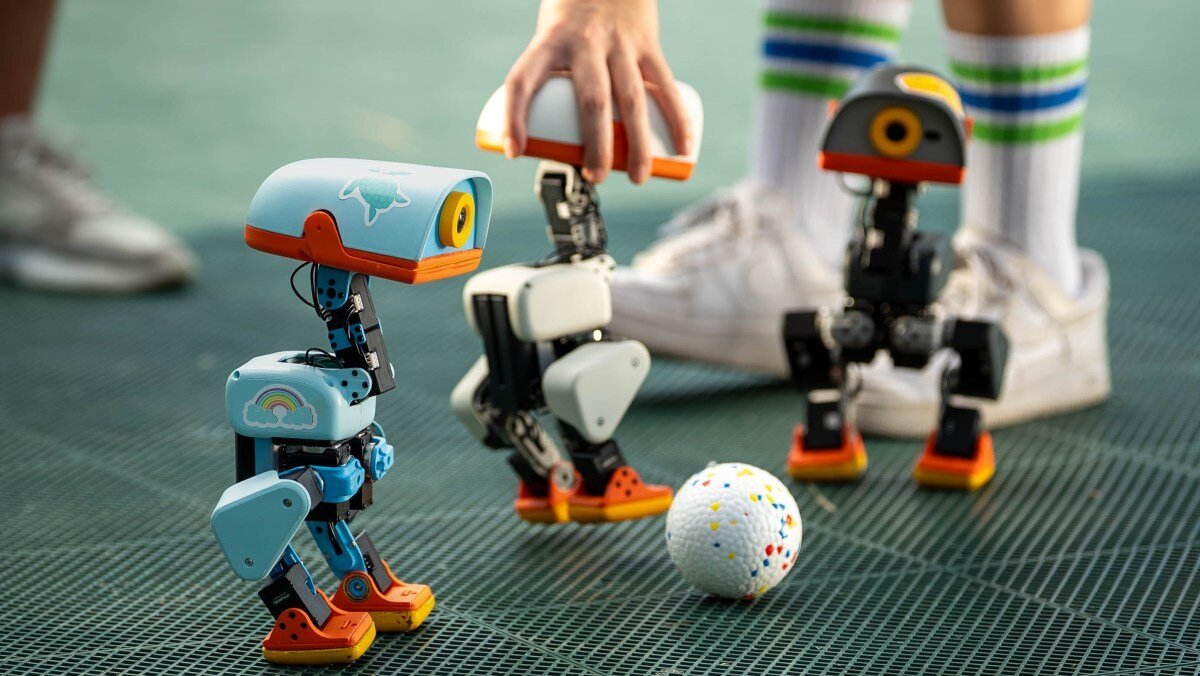
- Microduck is an open-source robot made by Pollen Robotics and is Hugging Face’s second robot product after Reachy Mini.
- TechCrunch says the robots were trained with Nvidia’s stack in simulation before release.
Microduck preorders climbed past 20,000 after Jensen Huang showed the toy-like robots onstage at Nvidia’s GTC Berlin keynote, according to TechCrunch on Oct. 23, 2026. The spike matters because it suggests a viral demo can still move consumer robotics from niche fascination toward holiday shopping momentum.
What happened at GTC Berlin?
TechCrunch reported that Huang’s appearance at GTC Berlin quickly became the centerpiece of the Microduck launch. The demo showed waddling robots onstage, with Huang playing with them in a segment that spread widely online and helped drive interest almost immediately.
By the next day, Hugging Face chief executive Clem Delangue said preorder demand had crossed 20,000. TechCrunch reported that the robots are expected to ship in time for Christmas, placing the product squarely inside the busiest retail window of the year.
Why the demo resonated
The appeal was not just that the robots were small and cute. Promos for Microduck show adults using them, which broadens the product beyond a children’s toy and points to a wider consumer audience for playful home robots.
That matters in robotics, where many products attract attention during live demonstrations but struggle to convert attention into orders. Microduck appears to have done both in quick succession, at least in preorder terms.
Why it matters
The Microduck surge is a test case for whether consumer robotics can break through with the same kind of emotional, social-media-driven momentum that has helped other gadget launches succeed. Holiday timing makes the stakes higher: if orders hold and shipments arrive on schedule, Microduck could become one of the rare robots to reach mainstream gift status.
It also highlights the commercial pull of Nvidia’s robotics stack and the way simulation-based training is now being presented to consumers, not just developers. TechCrunch said the Microducks were trained with Nvidia’s stack in simulation before release, a detail that links the product’s charm to a broader AI and robotics strategy.
For the wider market, the story is a reminder that robotics hardware can still be influenced by spectacle. A live keynote, a viral clip and a recognizable executive onstage can do what many ad campaigns cannot: make a robot feel familiar enough for ordinary buyers to order it sight unseen.
How did Microduck become an instant preorder hit?
TechCrunch’s account points to a simple chain of events: the GTC Berlin demo went viral, the clip was amplified online, and preorder demand surged almost immediately afterward. Hugging Face’s Delangue said the count topped 20,000 by the next day.
That rapid response suggests the audience did not wait for a review cycle or a hands-on product verdict. Instead, the launch leaned on the strength of the demonstration itself, plus the novelty of a robot that can walk, sit, stand, nap and even somersault on voice command.
What the robots can do
The demoed behaviors are a key part of the product story because they make the machines feel expressive rather than purely mechanical. According to TechCrunch, the Microducks can:
- walk
- sit
- stand
- nap
- somersault on voice command
That range is deliberately playful. A robot that can perform tricks on command is built for audience reaction as much as practical utility, and the social-media-friendly nature of the demo likely helped convert attention into preorder intent.
What is Microduck, and who makes it?
Microduck is an open-source robot from Pollen Robotics, a company Hugging Face acquired in 2025, according to TechCrunch. The product is described as Hugging Face’s second robot release, following Reachy Mini.
Open-source robotics gives users the ability to inspect, modify and share hardware and software designs. That matters because it changes the relationship between buyer and maker: owners are not just purchasing a finished device, but joining a community that can extend and adapt it.
TechCrunch also reported that owners can teach Microduck new tricks and share them with the community. In effect, the robot is being positioned less as a sealed consumer appliance and more as a shared platform with a social layer built around it.
How open-source changes the product pitch
Open-source branding can appeal to hobbyists, developers and parents alike, but it also carries expectations. Buyers may want documentation, customization and a path to updates that goes beyond a simple retail package.
That is especially relevant here because the robot is being marketed through the lens of delight. If the audience expects a playful but extensible machine, the open-source model can strengthen the value proposition. If they want a polished household gadget with no setup pain, the promise becomes harder to deliver.
By the numbers
The preorder story is still early, but the key figures already show how quickly the launch moved from demo to demand.
| Metric | Figure | What it means |
|---|---|---|
| Preorders | 20,000+ | Count reportedly reached by the next day after the demo |
| Acquisition year | 2025 | The year Pollen Robotics was acquired by Hugging Face |
| Corporate tie-in | September | Month TechCrunch says Nvidia bought Hugging Face |
| Key clip date | Oct. 21, 2026 | Date of the NVIDIA RTX Spark post showing the demo video |
| Delivery window | By Christmas | Expected shipping target for preorder buyers |
How Nvidia fits into the story
TechCrunch reported that the Microducks were trained with Nvidia’s stack in simulation before release, underscoring how central Nvidia’s software ecosystem has become to robotics development. That detail is important because it places the product within Nvidia’s broader pitch: train in simulation, then move toward the real world with more confidence.
The company’s RTX Spark account on X also amplified the moment, posting a clip on Oct. 21, 2026. The account later posted:
When @jensenhuang asks for a somersault, you deliver.
That social post helped turn the demo into a shareable event. In consumer hardware, especially robotics, the path from engineering milestone to purchase often runs through viral distribution.
What TechCrunch says about the corporate links
TechCrunch reported that Hugging Face is now a Nvidia company after Nvidia bought it in September. That claim, if accurate, would make the Microduck launch part of a much larger corporate integration story rather than a simple product announcement.
The fact sheet flags that point as unresolved outside TechCrunch’s reporting, so the safest conclusion is narrow: the outlet places Microduck inside an increasingly intertwined Nvidia-Hugging Face ecosystem. The product itself is still the clearest evidence of that relationship, regardless of the corporate structure behind it.
Background: how we got here
Consumer robotics launches often start with a spectacle. Companies bring a robot onstage, show it moving, give it a memorable personality and hope the audience imagines it in their home. Microduck follows that familiar playbook, but with two features that sharpen the effect: open-source positioning and a holiday shipping window.
The product is Hugging Face’s second robot after Reachy Mini, showing that the company is not treating robotics as a one-off experiment. Pollen Robotics’ 2025 acquisition gave Hugging Face a hardware foothold, while the reported Nvidia training stack gave the launch a technical narrative that fits the current AI moment.
In the wider market, this is part of a broader push to make robotics feel less industrial and more approachable. A robot that waddles, naps and somersaults does not look like a factory machine. It looks like a toy with technical depth, which may be exactly why the preorder response was so strong.
Why it matters for readers, shoppers and the market
For readers, the immediate implication is simple: a robot that looked like a novelty onstage may now be a real consumer product with a sizable waiting list. That makes Microduck a useful measure of how much demand exists for affordable, personality-driven robotics heading into the holidays.
For shoppers, the question is whether the excitement survives the period between preorder and delivery. A product can trend for a day; it is harder to sustain enthusiasm through production, shipping and the reality of use at home.
For the robotics market, this launch is a stress test. If Microduck sells well, it strengthens the case that consumer robots can be driven by community, open-source software and polished demos rather than only by utilitarian features. If it stalls, the episode will still matter as evidence that hype alone is not enough to create a durable category.
- It may help define whether holiday robotics can become a mainstream gift category.
- It shows how open-source branding can be used in consumer hardware, not just developer tools.
- It gives Nvidia another visible example of its robotics stack in action.
- It tests whether viral robot demos can convert into fulfilled orders, not just online attention.
What happens next?
The next milestone is shipping. TechCrunch says the robots are expected to arrive in time for Christmas, which makes the production and delivery schedule the most important question now. If the company can meet that timeline, the preorder momentum could translate into a real holiday sales story.
Several open questions remain:
- Will preorder demand hold after the initial viral surge?
- Can production keep pace with more than 20,000 early orders?
- Will Microduck actually reach mass-market holiday sales?
- How many units can be produced and delivered by Christmas?
- Will buyers view it as a toy, a learning platform or a serious home robot?
Delangue floated the possibility that Microducks could become the year’s top-selling robot, and he described it as a
best-selling robot of the year
. That is a bold claim for a product still at the preorder stage, but the early response suggests the idea is no longer far-fetched enough to ignore.
For now, Microduck has already achieved the hardest first step for a consumer robot: getting people to care enough to click order. The more difficult test begins once the novelty fades and the boxes start arriving.
Timeline of the launch
Here is the sequence of events as reported by TechCrunch:
| Date | Event |
|---|---|
| Earlier this week | Jensen Huang demoed Microducks at GTC Berlin and the video went viral |
| Oct. 21, 2026 | NVIDIA RTX Spark posted the clip of the demo video |
| Next day | Microduck preorders surpassed 20,000 |
| By Christmas | Preorder buyers are expected to receive shipments |
Bottom line
Microduck’s preorder surge is more than a cute robotics anecdote. It is a live test of whether a viral demo, open-source appeal and holiday timing can push consumer robots into the mainstream, with Nvidia’s AI stack and Hugging Face’s hardware push sitting behind the scenes.
Frequently asked questions
What is Microduck?
Microduck is an open-source robot made by Pollen Robotics and positioned as a consumer-friendly product from Hugging Face. TechCrunch says it is Hugging Face’s second robot product after Reachy Mini, and that owners can teach it new tricks and share them with the community.
Why did Microduck preorders surge?
Microduck preorders surged after Jensen Huang demonstrated the robots at Nvidia’s GTC Berlin keynote, where the video went viral. TechCrunch reported that preorder demand passed 20,000 by the next day, suggesting the live demo quickly converted attention into buying interest.
When will Microduck ship?
TechCrunch says Microduck is expected to ship in time for Christmas. That makes the launch especially sensitive to production and delivery timelines, because the preorder wave arrived just as holiday shopping season was approaching.
What can the Microduck robot do?
According to TechCrunch, the demo showed Microduck walking, sitting, standing, napping and somersaulting on voice command. Those tricks make the robot feel more playful and shareable, which likely helped fuel the viral response.