In short
Roland has launched Melody Flip, an AI music plug-in for DAWs that generates melodies, chords, basslines and drums as creative starting points. The tool is positioned as an idea generator rather than a full-song creator, setting it apart from services like Suno and Udio.
- Roland’s Melody Flip is its first clear move into generative AI music.
- The plugin creates loops and MIDI ideas, not finished songs with vocals.
- Users get limited controls such as genre, BPM, key and note density.
- The launch reflects Roland’s effort to modernize without abandoning DAW-based creators.
- Some musicians may welcome the tool, but AI skepticism in music remains strong.
Roland has moved into generative AI music with Melody Flip, a new plug-in designed to produce riffs, chords, basslines and drum patterns inside a digital audio workstation. The tool matters because it signals how a major music hardware brand wants to use AI: as a starting point for creativity, not a one-click replacement for songwriters.
Rather than generating complete tracks with vocals and glossy arrangements, Melody Flip is built to hand musicians short loops and MIDI ideas they can edit, reshape and layer into their own work. That puts Roland on a different path from AI music services such as Suno and Udio, and into a crowded debate about what “AI music” should actually do for artists.
What Roland has launched
Melody Flip is Roland’s first obvious push into generative AI music, and it arrives as a plug-in rather than a standalone app. That choice is important: the company is aiming at working musicians and producers already inside DAWs, not casual users hoping for instant songs.
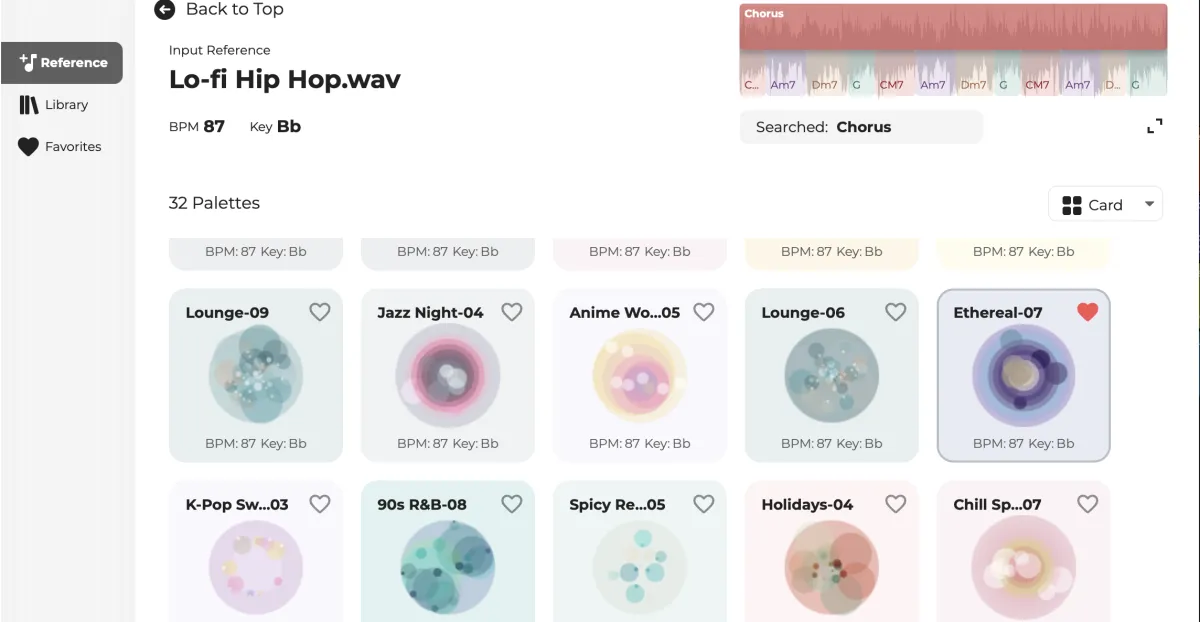
The plug-in offers about 250 themed “Palettes,” which function as genre-based idea banks. Users can start from a blank slate and ask the system to generate one or more musical elements, including melody, chord progression, bassline or drums. They can also provide a reference track and let Melody Flip derive melodic ideas from that input.
But the output is intentionally limited. Roland is not positioning Melody Flip as a prompt-to-hit-machine. Instead, the company appears to be treating AI as an assistive tool that helps artists break creative blocks or sketch a new direction quickly.
How Melody Flip differs from Suno and Udio
Melody Flip is designed to generate building blocks, not completed productions. That is the biggest distinction between Roland’s approach and the more headline-grabbing AI music platforms that can create full songs with vocals, lyrics and polished arrangements.
Services such as Suno and Udio have become known for producing tracks that can sound finished enough to share immediately. Roland, by contrast, is asking producers to do the finishing work themselves. Its tool is less like an automated composer and more like a sketchpad.
Roland’s concept for Melody Flip is closer to a creative prompt than a final product: the plug-in is meant to spark ideas that musicians can shape inside their own DAW.
Why Roland is focusing on loops instead of finished songs
Roland is focusing on loops and MIDI data because that is where its audience already works. Producers often want a quick melodic starting point, a chord movement to refine, or a rhythm pattern to test against an arrangement. Those needs fit neatly into a DAW workflow.
By keeping the system relatively narrow, Roland also avoids some of the controversy surrounding AI-generated songs that mimic the sound of real artists. Melody Flip does not appear to be built for text-to-song imitation, and its controls are much more constrained than the open-ended prompt boxes used by consumer-facing AI music apps.
The result is a product that feels closer to an assisted composition tool than a generative entertainment platform. That framing may help Roland appeal to creators who are curious about AI but wary of fully automated music generation.
What users can control
Control over Melody Flip’s output appears limited to a handful of musical settings. Users can choose a genre, note density, tempo and key, then generate material from there.
The genre list is broad enough to suggest Roland is trying to cover both mainstream and niche tastes. It includes familiar categories such as 80s disco and 90s R&B, alongside more specialized options like Kawaii Future Bass and Anime World.
What users cannot do, at least based on Roland’s current positioning, is type in highly detailed text instructions and expect a bespoke song in a chosen style. That may frustrate users seeking more control, but it also keeps the product aligned with the idea of helping musicians experiment rather than replacing them.
How the system sounds and why that matters
The sound choices included in Melody Flip are another clue that Roland expects users to do the real production work elsewhere. The presets are described as fairly basic general MIDI-style tones, the kind many musicians would treat as placeholders rather than final sounds.
That makes sense in the context of a plugin built for MIDI export. If the goal is to generate melodies, chord progressions or drum ideas, the immediate value may lie in the data, not the sound palette. In practical terms, producers can pull the generated MIDI into a DAW and replace the default sounds with their own synths, samplers and instruments.
This workflow is familiar to anyone who has used sketch tools in music production. A rough idea is only the first step; the final record still depends on arrangement, sound design, mixing and performance choices made by the artist.
| Feature | Melody Flip | Typical full-song AI music tools |
|---|---|---|
| Format | DAW plug-in | Standalone web or app experience |
| Output | Loops, MIDI ideas, short musical parts | Finished songs with vocals and arrangement |
| User control | Genre, note density, BPM, key | Often text prompts plus style controls |
| Intended use | Creative starting point | Instant song generation |
| Sound palette | Basic placeholder-style presets | More polished production-ready audio |
Who is Melody Flip for?
Melody Flip appears to be aimed at producers, composers and hobbyists who already understand basic music production. The product makes the most sense for people who can take MIDI ideas and turn them into a real arrangement.
It is less obviously suited to beginners who want to type in a request and receive a finished track. That narrower use case may limit mainstream appeal, but it also gives Roland a clearer identity: this is a tool for creators, not a gimmick for casual listeners.
How it fits into a DAW workflow
In practical terms, a producer can open Melody Flip as a plug-in, generate a musical phrase, export the MIDI data and then move that material into a session. From there, the idea can be edited, transposed, reharmonized or layered with drums, synths and vocals.
That workflow matters because it preserves authorship. The user still decides what the track becomes, while the AI provides a usable fragment rather than a finished creative claim.
Why this launch matters for Roland
Roland’s move into AI comes after a stretch in which the company struggled with customer goodwill. Its subscription-heavy Roland Cloud strategy frustrated many users, and the brand spent years trying to convince musicians that it still understood what they wanted from its instruments and software.
More recently, however, Roland has been winning back attention by shipping products that better align with its heritage and audience. The P-6 Creative Sampler, the SH-4d and the Gaia 2 all helped repair its image by addressing longstanding complaints about the company’s hardware direction. The TR-1000, meanwhile, paid direct homage to Roland’s analog legacy and was widely read as a sign that the company was listening again.
That history makes Melody Flip more complicated. On one hand, it shows Roland is trying to stay relevant in a fast-changing music tech market. On the other, it puts the company into a space many musicians view with suspicion, especially when AI is associated with mass-produced, derivative or rights-sensitive content.
Roland has recently regained some credibility with musicians through products that felt responsive to customer feedback, but Melody Flip may test whether that goodwill extends to generative AI.
How musicians may react
Reaction is likely to split along familiar lines. Some producers will welcome anything that helps them get past writer’s block or discover new chord and melody combinations. Others will see the launch as an unnecessary concession to an AI trend they would rather keep out of the studio.
The strongest criticism may not be about functionality, but about intent. Many musicians are comfortable with algorithms that assist composition, sequence notes or suggest harmonies. They are less comfortable with systems that appear to generate music in ways that could devalue human labor or blur authorship.
Melody Flip sits somewhere in between those positions. It is not a “push button, get song” service, but it is still part of the same broader movement that is changing expectations around how music can be made.
Potential advantages
- Fast idea generation for melody and harmony sketches
- Useful MIDI export for DAW-based production
- Workflow designed around human editing and arrangement
- Genre options that can inspire experimentation
Potential drawbacks
- Limited control compared with prompt-driven AI music tools
- Placeholder-like sounds may feel too rough for some users
- Could face skepticism from musicians wary of AI in creative work
- May appeal more to existing producers than to beginners
What makes Roland’s approach different?
Roland’s approach is different because it is framed around augmentation rather than substitution. The company is not promising a fully finished track and not encouraging users to pretend the machine has done the creative work alone.
That distinction may prove important as music tools become more automated. In an industry increasingly divided between generative spectacle and practical utility, Roland is betting that musicians still want a tool that behaves like an instrument or sketchpad rather than a synthetic songwriter.
There is also a brand logic here. Roland built its reputation on instruments that became central to modern music production, from drum machines to synths and samplers. A lightweight AI idea generator fits that heritage better than a generic song factory might.
What is the broader AI music context?
The AI music market is evolving quickly, with several companies racing to define the category. Some focus on consumer-friendly song generation, while others are trying to build tools that integrate into professional workflows. Roland’s entry suggests there is still room for software that serves established musicians rather than only casual users.
That broader market context also raises questions about how AI tools should be judged. Should success be measured by how realistic the output sounds, or by how useful the tool is inside a real creative process? Roland seems to be betting on the second answer.
If that strategy works, Melody Flip could become a model for how legacy music companies adopt AI without abandoning their core audience. If it fails, it may be remembered as an awkward first step into a category that musicians were never eager to embrace.
Key details at a glance
| Item | Details |
|---|---|
| Product | Melody Flip |
| Company | Roland |
| Format | Plug-in for digital audio workstations |
| Main function | Generates melodies, chords, basslines and drums |
| Controls | Genre, note density, BPM, key |
| Output type | Loops and MIDI ideas, not full songs |
| Approximate palette count | 250 themed palettes |
| Audience | Producers, composers and DAW users |
Timeline: Roland’s recent path to Melody Flip
| Period | Development | Why it matters |
|---|---|---|
| Recent years | Roland faced criticism over its cloud subscription model | Damaged trust with parts of its customer base |
| Following that | The P-6 Creative Sampler, SH-4d and Gaia 2 improved its product reputation | Helped restore confidence in Roland’s hardware strategy |
| Last year | The TR-1000 paid tribute to Roland’s analog history | Reinforced the company’s legacy brand identity |
| Now | Melody Flip introduces generative AI music features | Marks Roland’s first major step into AI-assisted composition |
What happens next?
The key question is whether musicians view Melody Flip as a useful sketch tool or as another AI product trying to solve a problem they do not have. Much will depend on the quality of its generated ideas, how easily they fit into existing workflows and whether Roland can convince users that the tool respects the creative process.
For now, Melody Flip is best understood as a cautious entry into generative AI music. It does not try to compete directly with the most aggressive song-generation platforms. Instead, it offers a narrower promise: help musicians get unstuck, then let them do the rest.
That may be a smarter route for Roland than chasing novelty alone. But in a field where musicians are increasingly skeptical of automation, even a modest AI tool will need to prove that it adds value without getting in the way of the art.
FAQ
What is Roland Melody Flip?
Roland Melody Flip is a generative AI music plug-in for digital audio workstations. It creates short musical ideas such as melodies, chord progressions, basslines and drum patterns, giving producers a starting point they can edit rather than a finished song.
How is Melody Flip different from Suno or Udio?
Melody Flip is different because it does not aim to produce polished, ready-to-release songs. Instead, it generates loops and MIDI ideas inside a DAW, making it more of a composition aid than a full AI songwriting platform.
Can you type detailed prompts into Melody Flip?
No, not in the same way you would with some other AI music tools. Roland’s system appears to rely on broader controls such as genre, note density, tempo and key rather than detailed text prompts describing an exact song style.
Who is Melody Flip intended for?
Melody Flip is intended for musicians, producers and composers who already work in DAWs. Its MIDI output and basic sound presets suggest Roland expects users to build on the ideas themselves rather than rely on the plug-in as a final production tool.
Why might musicians be cautious about it?
Musicians may be cautious because generative AI music remains controversial, especially when it appears to automate creative work. Some users may welcome it as a sketch tool, while others may worry about its effect on originality and the role of human authorship.
Frequently asked questions
What is Roland Melody Flip?
Roland Melody Flip is a generative AI music plug-in for digital audio workstations. It produces short musical building blocks such as melodies, chord changes, basslines and drum patterns, giving musicians material they can edit into a larger track.
How is Melody Flip different from AI song generators?
Melody Flip is different because it does not try to output finished songs. Instead, it focuses on loops and MIDI ideas inside a DAW, making it closer to a composition aid than a fully automated songwriting service.
Can Melody Flip create lyrics or vocals?
No, Melody Flip is not designed to generate fully polished songs with lyrics or vocals. Roland’s approach centers on musical sketches and instrumental ideas that users can then shape with their own production tools.
Who is Melody Flip meant for?
Melody Flip is meant for producers, composers and other DAW users who want a quick spark for new ideas. Its MIDI export and simple controls suggest Roland expects users to build on the results rather than rely on them as final audio.
Why is Roland’s AI music launch significant?
Roland’s AI music launch is significant because it shows a major legacy music brand entering generative AI with a more conservative, creator-focused approach. That could help the company appeal to working musicians while avoiding some of the backlash surrounding full-song AI generators.