In short
Kalshi permanently banned George Santos and fined him over an alleged self-serving bet, while a Google engineer’s Polymarket case is sharpening the legal fight over whether prediction markets are gambling or trading.
- Kalshi imposed a lifetime ban and $71,000 fine on George Santos over an alleged market tied to his State of the Union attendance.
- The Polymarket case involving a Google engineer raises a bigger question: are prediction markets wagers or financial trades under U.S. law?
- These disputes show that prediction markets are entering a stricter enforcement era, with platforms and regulators drawing firmer lines.
Prediction markets are moving from a fringe curiosity to a heavily scrutinized corner of finance, and this week brought two high-profile examples of what can happen when the rules get tested. Kalshi handed former Rep. George Santos a lifetime ban and a $71,000 fine after alleging he tried to profit from a market tied to his attendance at the State of the Union, while a Google engineer facing federal allegations over Polymarket trades is arguing that he was simply gambling, not committing insider trading.
The disputes matter because they expose how unsettled the legal and regulatory boundaries still are around platforms that look like betting sites to users but can be treated like financial products by regulators. As these markets expand, the consequences are becoming more serious: not just account suspensions, but investigations, arrests and a growing battle over whether wagers on real-world events should be policed like trades.
Prediction markets were supposed to offer a cleaner way to measure public expectations. Instead, they are becoming a test case for how far people can push platforms that sit uneasily between gambling, investing and information markets. The latest controversies show that both users and operators are being forced to confront a basic question: when does betting become market abuse?
Why prediction markets are suddenly under pressure
Prediction markets are under pressure because they are no longer just abstract tools for forecasting elections or economic events; they are being used in ways that raise immediate questions about manipulation, self-dealing and surveillance. The more money that flows through these platforms, the more likely it is that conduct once shrugged off as a loophole will trigger real penalties.
Kalshi and Polymarket have helped popularize the idea that users can trade on the outcome of future events, but the regulatory framework around those activities remains uneven. In the United States, some authorities view these products through a commodities lens, while users often treat them like ordinary gambling. That mismatch is exactly where the current wave of enforcement is coming from.
What makes these platforms different from normal betting apps?
These platforms are different because they can be regulated as financial venues rather than simple entertainment products. That distinction gives operators stronger compliance obligations and gives regulators more tools to punish misconduct. It also means users cannot assume that the rules work the same way they would on a sports-betting app or casino platform.
That confusion is part of why the Santos case landed so hard. Many people saw a headline about a ban and assumed it sounded like a routine sportsbook penalty. In reality, Kalshi says it was exercising the authority it has as a federally regulated financial platform, not just acting like a private gaming company.
What happened in the George Santos case?
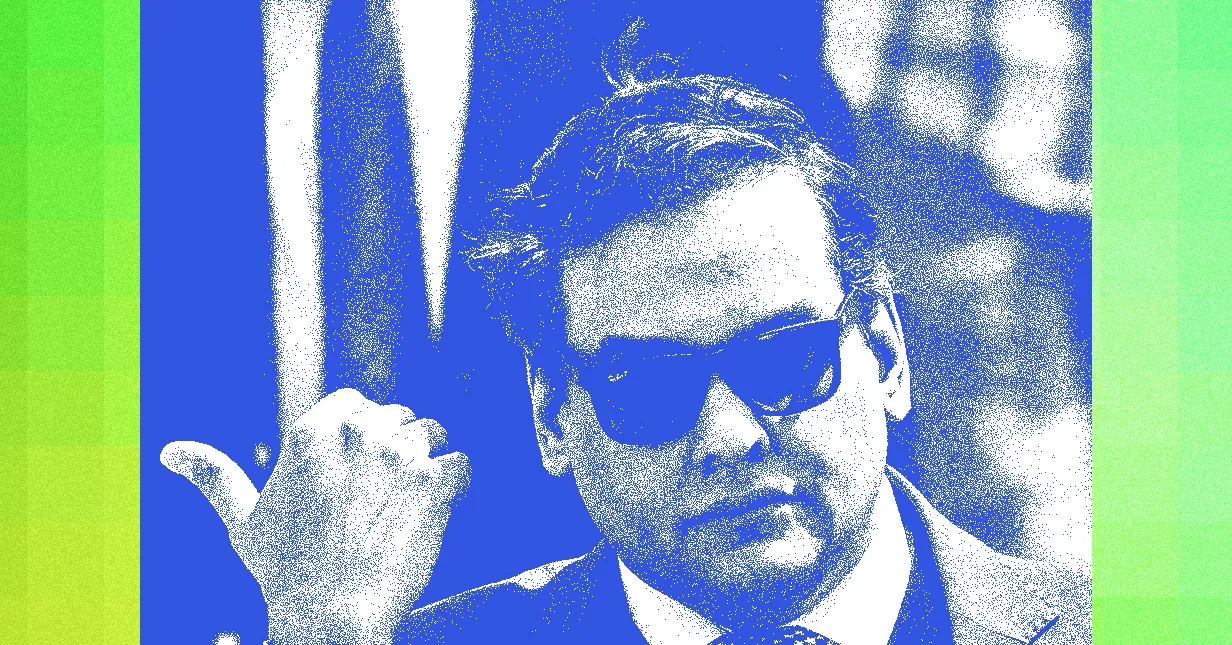
George Santos was banned for life from Kalshi after the company concluded that he had violated its rules by profiting from a market connected to his own conduct. Kalshi also imposed a $71,000 penalty tied to the incident, which centered on a market about whether he would attend the State of the Union address.
The episode began when Santos publicly said he would go to the address, only to later post that he was stuck at the airport and would not be there. That change of plan coincided with a market on Kalshi tied to his attendance, and Kalshi determined that the account that profited from the wager belonged to Santos himself.
According to reporting discussed on Uncanny Valley, the platform said it was able to verify the user’s identity because it already uses know-your-customer checks. In other words, the company did not need a mystery-solver to work out who made the trade; it already had the records needed to connect the activity to Santos.
Kalshi’s position, as described in the reporting, is that users cannot wager on events in which they are personally involved, because that crosses into manipulation and self-dealing.
The resulting punishment was notable not just because Santos was sanctioned, but because Kalshi chose to escalate the consequence to a lifetime ban. That move suggests the company wanted to make a point about boundaries, especially in a market sector still trying to establish credibility with regulators and the public.
How much did Santos allegedly make?
He reportedly made roughly $17,000 on the market, though the exact figure was not central to the platform’s decision to punish him. What stood out more was the behavior itself: publicly commenting on the event, appearing to place himself inside the market narrative, and then seeming unbothered by the controversy afterward.
The amount matters less than the principle. In a young market ecosystem, even a relatively small profit can become a precedent-setting case if the underlying behavior tests the platform’s rules and the regulator’s authority.
Why did Kalshi go beyond a fine?
Kalshi went beyond a fine because the company appeared to conclude that Santos was not cooperating in good faith. In the reporting discussed on the podcast, the platform had already reached a monetary settlement-like response, but later escalated the punishment after Santos reportedly remained combative.
That detail is important. The lifetime ban was not simply about the trade itself; it was also about the platform’s judgment that Santos had become a bad-faith actor in a system that depends on user compliance. In a market built on trust in the integrity of event outcomes, that is a serious concern.
Santos also did not sound apologetic. After the sanction became public, he took to social media to make dismissive comments about Kalshi, which only reinforced the impression that the dispute was becoming as much about posture as about compliance.
Kalshi reportedly told Santos that if he refused to pay the fine, it would pursue legal action.
That threat turns what might have seemed like a public-relations mess into a real enforcement matter. If Kalshi follows through, the case could offer one of the clearest public examples yet of a prediction-market platform using its own compliance machinery to discipline a user.
How is the Polymarket case similar, and how is it different?
The Polymarket case is similar because it also involves allegations that a user used nonpublic information to place a market bet. It is different because the sums involved were much larger, the legal stakes are higher and the person facing charges is trying to argue that the activity should not be treated as insider trading at all.
In the Polymarket matter, prosecutors say a Google engineer in Europe traded on information he gained through his job. According to the discussion in the episode, he allegedly knew enough about search trends to profit substantially from a market outcome. The reported gain was more than $1 million, far beyond the Santos case.
Unlike Santos, the Google engineer was arrested. He has pleaded not guilty and is arguing that the government is misclassifying betting as trading. That legal theory is significant because it attacks the very framework prosecutors are trying to use.
| Case | Platform | Alleged conduct | Outcome so far | Why it matters |
|---|---|---|---|---|
| George Santos | Kalshi | Allegedly profited from a market about his own State of the Union attendance | $71,000 fine and lifetime ban | Shows a platform using internal compliance rules to punish self-dealing |
| Google engineer | Polymarket | Accused of trading on workplace information | Arrested, pleaded not guilty | Could shape whether prediction-market activity is treated as gambling or commodities trading |
The engineer’s defense is especially important because it does not just deny the allegations; it challenges the category. His argument, as described in the podcast conversation, is that if the activity is just betting, then laws aimed at commodities violations should not apply in the way prosecutors say they do.
Why does the legal classification matter so much?
The legal classification matters because it determines who regulates the platform, what counts as misconduct and what penalties are available. If prediction markets are treated like financial instruments, insider-trading rules and commodities enforcement can apply. If they are treated like gambling, the legal architecture changes dramatically.
That tension is not theoretical. It is already shaping how people defend themselves. The Polymarket defendant’s case, as described in the source discussion, relies on the idea that these were simply wagers, not trades. That argument is being echoed by others facing similar scrutiny.
For regulators, the issue is not just whether someone placed a winning bet. It is whether they exploited privileged information in a system that markets itself as a serious pricing tool for future events. The answer could determine how prediction markets evolve in the next few years.
What are the broader regulatory stakes?
The broader regulatory stakes are enormous because prediction markets sit at the intersection of federal oversight, state gambling law and fast-moving fintech innovation. That means every high-profile abuse case can become a test case for the whole industry.
As more platforms normalize betting on elections, public appearances and corporate events, the chance of self-dealing or coordinated manipulation rises. Regulators are likely to keep pressing until they have a clearer framework or until courts force one on them.
What does this reveal about prediction-market culture?
It reveals that prediction-market culture is still developing its own norms, and those norms are being written in public. Many users appear to see the platforms as clever, lightly governed spaces where they can test the edge of the rules. Operators, meanwhile, are trying to prove they are not lawless casinos in disguise.
The Santos case is revealing because it shows a platform drawing a line where users may have assumed there was still room for interpretation. The Polymarket case is revealing for a different reason: it suggests that some participants are ready to turn the “it’s just betting” argument into a formal legal defense.
There is also a cultural dimension. The discussion around Santos was laced with the sense that his behavior was both outrageous and unsurprising. That combination makes for a memorable headline, but it also highlights how easily prediction markets can attract people who enjoy gaming ambiguity as much as they enjoy the financial upside.
How are platforms trying to protect themselves?
Platforms are trying to protect themselves by tightening identity checks, setting clearer rules against trading on personal involvement and signaling that they will punish abuse more aggressively. Kalshi’s response to Santos is a clear example of that strategy.
There is also a reputational element. Prediction markets want to present themselves as credible forecasting tools, not as places where public figures and insiders can casually monetize their own behavior. If they fail to police abuse, they risk regulatory retaliation and public distrust.
That is why even a single well-publicized case can have outsized importance. It creates a warning for other users and a paper trail for regulators.
- Platforms identify self-dealing through customer verification systems.
- They can impose fines, suspensions or bans when users violate event-based trading rules.
- Regulators can then use those incidents to argue for stricter oversight.
What does this mean for future cases?
It means future cases are likely to become more adversarial, more public and more legally consequential. The Santos matter shows that even a relatively small event-based trade can trigger a lifetime ban if the facts are embarrassing enough. The Polymarket case shows that defendants may increasingly argue the law itself is being stretched beyond its intended scope.
That combination suggests a period of uncertainty ahead. Platforms want predictability, traders want loopholes, and regulators want enforcement tools that match the real-world influence these markets now have.
In practice, that could mean more bans, more subpoenas and more courtroom fights over whether prediction markets are finance, gambling or something entirely new. For now, the answer appears to be: all three, depending on who is asking.
Related concerns: surveillance, AI tools and online confusion
The same episode of Uncanny Valley also touched on other tech controversies that point to a broader pattern: powerful systems are spreading faster than the norms around them. That included discussion of Flock’s AI-powered search tool for police, which WIRED reporters recreated from code and found could be used to search for people by broad physical descriptors rather than only license plates.
That story matters because it shows how AI-enabled tools can blur the line between targeted investigation and open-ended surveillance. The public debate over Flock, like the debate over prediction markets, is really about limits: who gets to use these tools, for what purpose, and with what oversight.
The hosts also discussed a backlash online over how to describe “rogue” AI agents that can coordinate attacks on other systems. That conversation echoes the same underlying concern seen in the market stories: new technologies often reach wide deployment before society settles on the language, rules and safeguards needed to govern them.
Timeline of the week’s prediction-market controversy
The immediate sequence of events shows how quickly these issues can escalate from a user post to a formal sanction or criminal case.
| Date | Event | Why it matters |
|---|---|---|
| Spring 2026 | A separate prediction-market insider-trading case involving a Google engineer becomes public | Highlights the scale and legal seriousness of the issue |
| Recent weeks | Kalshi and Polymarket disputes draw growing attention | Shows rising scrutiny of prediction markets generally |
| Monday | Kalshi announces a lifetime ban and fine for George Santos | Marks one of the clearest enforcement actions by a prediction-market platform |
| This week | Discussion intensifies around the Google engineer’s Polymarket defense | Could influence whether these cases are treated as betting or trading under U.S. law |
The bigger picture
Prediction markets are entering a period where novelty is no longer protection. The same features that make them attractive to traders and media observers — speed, public visibility and access to real-world outcomes — also make them vulnerable to manipulation and legal challenge.
Kalshi’s ban on George Santos is a warning that platforms will increasingly police user conduct to protect their legitimacy. The Polymarket case is a warning that regulators may not accept the industry’s preferred framing of these products as simple betting.
For everyone involved, the central issue is no longer whether prediction markets are interesting. It is whether they can survive the scrutiny that comes with being treated seriously.
In the view expressed on the podcast, these incidents are exposing the gray areas that have allowed participants to “tap dance” around the rules until now.
Those gray areas may be narrowing quickly. If that happens, the prediction-market boom will not disappear — but it may become a much less playful business.
Frequently asked questions
Why was George Santos banned from Kalshi?
George Santos was banned because Kalshi said he violated its rules by profiting from a market tied to his own appearance at the State of the Union. The company also fined him $71,000 and, according to reporting, escalated the punishment after he was uncooperative.
How is the Polymarket case different from the Santos case?
The Polymarket case is different because it involves a much larger alleged profit, a criminal arrest and a defendant who is challenging the legal classification of prediction-market activity. Instead of just disputing the facts, he is arguing the conduct should be treated as betting, not insider trading.
Are prediction markets regulated like gambling or like financial products?
Prediction markets can be treated more like financial products than ordinary gambling apps, depending on the platform and jurisdiction. That is why regulators can use commodities-style enforcement tools, while users often still think of the activity as betting.
Can prediction-market platforms fine users?
Yes. Kalshi’s response to Santos shows that federally regulated prediction-market platforms can impose fines and other sanctions when users break platform rules. That authority is part of what makes these services different from standard sportsbook apps.