In short
OpenAI’s former head of data centers, Chris Malone, has left the company, adding to a year of more than a dozen senior departures. The exit raises fresh questions about infrastructure leadership, internal reorganization and the company’s path toward a future IPO.
- Chris Malone, OpenAI’s former head of data centers, has exited after joining in March 2025.
- The company says its infrastructure team was reorganized and remains strong despite the change.
- Business Insider has counted 13 OpenAI executive departures in 2026 so far.
- The turnover spans revenue, operations, product, ethics, marketing and infrastructure.
- The churn is sharpening scrutiny around OpenAI’s valuation, profitability and IPO timeline.
OpenAI has lost another senior executive, with former head of data centers Chris Malone departing last week as the company continues to reshape the leadership team behind its massive infrastructure buildout. The exit matters because Malone oversaw a critical part of OpenAI’s effort to secure the computing capacity needed to train and run its AI systems, at a time when data centers have become central to the company’s growth plans.
Malone’s departure adds to a year of unusually heavy turnover at the artificial intelligence company, which has seen more than a dozen senior leaders leave in 2026. The churn comes as OpenAI is working through major infrastructure expansion, internal reorganization and growing scrutiny over its finances, valuation and long-term path toward a public offering.
What happened to OpenAI’s data center leadership?
OpenAI’s former head of data centers, Chris Malone, left the company last week, according to reporting from the Wall Street Journal. His exit is notable not only because he held a strategically important role, but also because he joined OpenAI relatively recently, in March 2025, after long stints at Google and Meta.
Malone had spent more than a decade at Google before moving to Meta, where he worked for nearly five years. That background made him one of the company’s more experienced infrastructure hires, particularly at a moment when AI labs are racing to lock down power, land, networking and hardware for ever-larger model workloads.
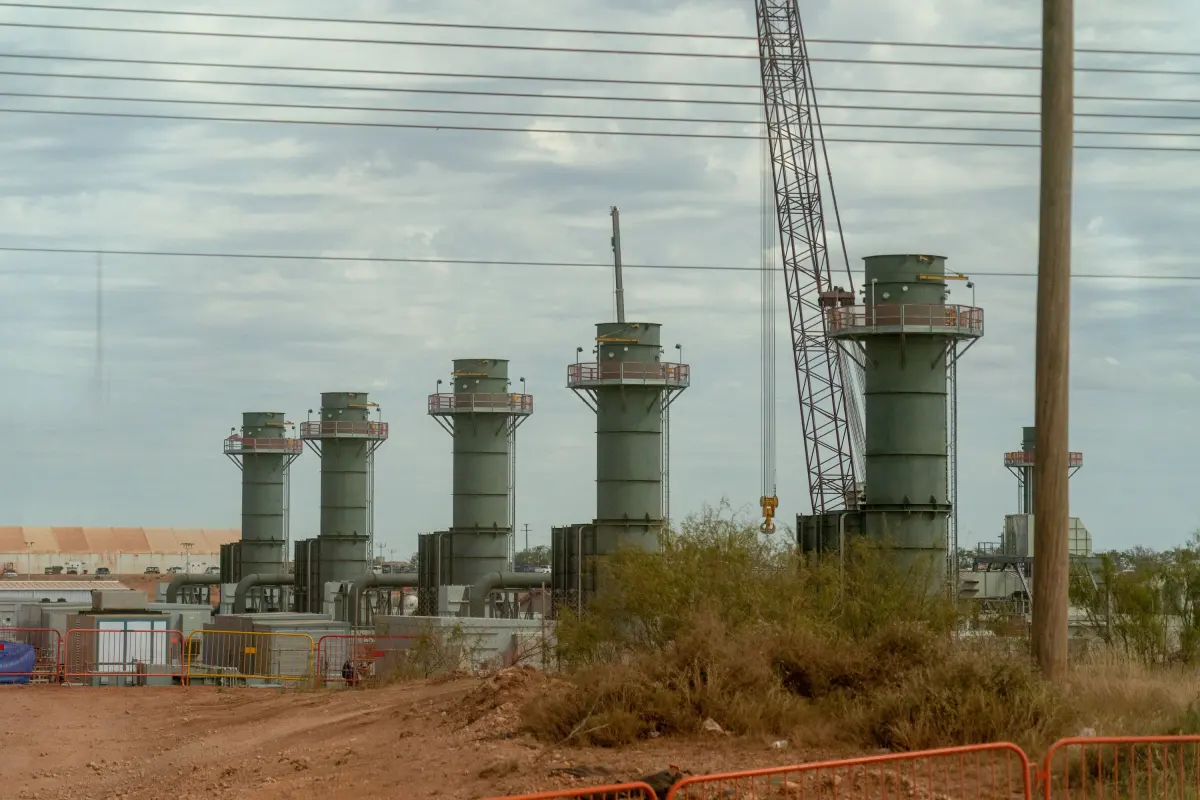
The departure also lands against the backdrop of OpenAI’s Stargate Project, the high-profile data center initiative backed by major industry partners including Oracle, Nvidia, SoftBank and Microsoft. The project, associated with a proposed $500 million investment and supported by the Trump administration, is intended to accelerate U.S. data center development and strengthen the infrastructure base for advanced AI systems.
Why Malone’s role mattered
Malone was not simply another manager on the org chart. He was responsible for executing OpenAI’s data center strategy, one of the most closely watched assignments inside any major AI company because compute access can determine whether product launches, model training schedules and enterprise expansion stay on track.
In practical terms, this kind of leadership role touches everything from site selection and engineering design to delivery timelines, vendor coordination and capacity planning. Any disruption in that seat can ripple through a company’s broader technical roadmap.
| Key detail | Information |
|---|---|
| Executive | Chris Malone |
| Former role | Head of data centers, OpenAI |
| Reported departure | Last week |
| OpenAI start date | March 2025 |
| Previous employers | Meta, Google |
| Strategic context | OpenAI’s expanding data center and compute strategy |
How OpenAI says the infrastructure team has changed
OpenAI says Malone’s departure comes after a broader internal reorganization meant to align the infrastructure group with the scale and pace of the company’s work. In a statement to TechCrunch, the company said it had recently adjusted the structure of the organization and still had a strong team in place to carry out its data center plans.
OpenAI said it had “recently reorganized” its infrastructure organization to support the scale and pace of its work and added that it has a “strong, deeply experienced data center team” with the leadership and technical expertise needed to execute its plans.
According to the Wall Street Journal, the reorganization also changed reporting lines. Malone reportedly stopped reporting directly to OpenAI President Greg Brockman and began reporting instead to Vice President Sachin Katti, who now leads the group.
OpenAI has not publicly explained whether Malone’s departure was planned, prompted by the internal restructuring or driven by another factor. The company has framed the move as part of an organizational shift rather than a crisis response.
Who is still running OpenAI’s data center effort?
OpenAI says several senior leaders remain involved in the company’s infrastructure strategy. Those reportedly include Uday Ruddarraju, who leads the data center team; Brent Mayo, who heads the build-and-delivery program; and Spas Lazarov, a veteran of the data center and energy sectors, who oversees all data center engineering.
That multi-leader structure suggests OpenAI is attempting to spread responsibility across several experienced managers, which may help it absorb personnel changes. It also reflects the complexity of the work: building data centers for frontier AI requires not just technical expertise, but coordination across hardware, energy, construction, permitting and operations.
Why is executive turnover at OpenAI drawing so much attention?
Executive turnover is drawing attention because OpenAI is not dealing with ordinary churn at the edge of the business. The departures are concentrated in senior roles across revenue, operations, product, safety and marketing, making the pattern look more like a structural reshuffle than a routine set of exits.
Business Insider recently counted 13 executive departures in 2026 alone, with several leaving within a single month. In a company as closely watched as OpenAI, even normal leadership changes can become a major story; multiple exits at once inevitably invite questions about stability and direction.
The spotlight is also brighter because OpenAI is widely believed to be preparing for a future public listing. A company that may someday go public must satisfy investors, regulators and the market that it has stable management, coherent strategy and a durable business model.
Recent high-profile departures
Malone’s exit follows several other prominent departures that have marked OpenAI’s year.
- Denise Dresser, the chief revenue officer, was replaced after about eight months in the role.
- Brad Lightcap, one of the company’s longest-serving executives and its former chief operating officer, said he was moving on to “start something new.”
- Fidji Simo stepped down from her role as product and business chief, citing recovery from a chronic illness, though she remains as an adviser.
- Chloé Bakalar, OpenAI’s head of ethics, left in July.
- Kate Rouch, the chief marketing officer, also departed earlier in the year for health-related reasons.
- Bill Peebles, who led the now-discontinued Sora image and video project, left after that product was shut down.
The pattern spans both commercial and safety-related functions, which is part of what makes the departures stand out. These are not isolated exits from one branch of the business; they cut across the organization.
What do the departures say about OpenAI’s broader strategy?
They suggest a company under intense pressure to scale quickly while still maintaining control over multiple competing priorities. OpenAI is trying to expand infrastructure, commercialize products, develop frontier models, manage safety concerns and prepare for the demands of a potential IPO-like future.
That combination can be destabilizing. Fast-growing companies often revise reporting lines and replace executives as they mature, but at OpenAI the pace of change appears unusually high. Because the company sits at the center of the AI industry, each leadership move is magnified by outside observers, rivals and investors.
At least part of the leadership churn may reflect the difficulty of operating in a market where compute constraints, capital intensity and organizational complexity are all rising at once. The most valuable leaders are often those who can bridge technical execution and operational discipline, and those people are in short supply across the entire sector.
How the infrastructure race is changing AI companies
OpenAI’s situation is part of a larger industry trend. Across the AI sector, data centers have become strategic assets, not just back-office infrastructure. Companies are racing to secure advanced chips, electricity, land and construction expertise because those inputs now shape the speed and scale at which they can ship products.
This has shifted influence inside AI labs. Infrastructure leaders are no longer hidden operators; they are now among the most consequential executives in the business. A change in that seat can affect how aggressively a company can train new models, launch consumer tools or serve enterprise customers.
For OpenAI, whose products depend heavily on access to large-scale compute, data center leadership is tightly linked to competitive advantage. The role Malone held sits at the intersection of engineering, operations and capital deployment, making his exit especially important.
How does the IPO question fit into the story?
The IPO question matters because leadership stability becomes more important as a company moves toward public markets. OpenAI’s public listing was previously expected sooner, but reports now suggest it may not happen until 2027.
That delay gives the company more time to build out its business, but it also means more time for investors and critics to examine whether the organization can justify its valuation and enormous spending commitments. The company is pouring vast sums into infrastructure, talent and model development while still facing questions about profitability.
Those concerns are not new. OpenAI has become one of the most heavily funded and most closely watched private companies in the world, and with that status comes pressure to prove that its financial model can sustain its ambitions.
In that context, the loss of another senior executive does more than create an HR headline. It feeds a broader narrative about whether OpenAI can keep its leadership bench intact while it scales into one of the most capital-intensive businesses in technology.
Timeline of recent OpenAI leadership changes
The following timeline shows how quickly senior departures have accumulated this year.
| Approximate date | Departure or change | Area affected |
|---|---|---|
| March 2025 | Chris Malone joins OpenAI | Data centers |
| April 2026 | Kate Rouch exits | Marketing |
| July 2026 | Chloé Bakalar leaves | Ethics |
| Last month | Fidji Simo steps down from day-to-day leadership | Product and business |
| Two weeks ago | Denise Dresser is replaced | Revenue |
| Two days earlier | Brad Lightcap departs | Operations |
| Last week | Chris Malone leaves | Data centers |
Why the data center seat is one of the most important in AI
The data center seat is important because it determines whether an AI company can actually deliver on its product promises. Model quality matters, but so does the ability to power, host and scale those models at a reasonable cost.
For frontier AI firms, the question is no longer only how smart a model is. It is also how much infrastructure it takes to train it, how quickly it can be deployed, and whether the company can afford the expanding footprint behind it. That means the executive running infrastructure often has influence far beyond traditional IT leadership.
In OpenAI’s case, the infrastructure team must support a growing consumer base, enterprise demand and model-development ambitions while also staying aligned with partners involved in major buildouts like Stargate. That is a demanding balancing act even with a stable leadership team.
What to watch next
Three issues will be worth watching in the weeks ahead. First, whether OpenAI names a more permanent data center structure or keeps responsibilities distributed across multiple leaders. Second, whether additional senior departures follow. Third, whether the company provides more clarity about how its infrastructure reorganization will support future growth.
Investors, rivals and customers will also be watching for signs that the company can continue expanding without sacrificing execution. In a sector where compute is power, leadership continuity in infrastructure may matter as much as model announcements.
For now, Malone’s exit is the latest reminder that OpenAI’s internal changes are moving almost as quickly as its technical ambitions. The company remains one of the defining names in artificial intelligence, but the steady drumbeat of executive departures has become part of the story it must now manage alongside product launches and expansion plans.
Bottom line: OpenAI’s loss of its former head of data centers deepens a year of intense leadership churn at the company, raising fresh questions about how it is organizing the infrastructure needed to fuel its next stage of growth.
Frequently asked questions
Why did OpenAI’s head of data centers leave?
OpenAI has not given a detailed reason for Chris Malone’s departure. The company says the exit came during a recent infrastructure reorganization, but it has not said whether the move was planned, performance-related or driven by another factor.
Who is running OpenAI’s data center strategy now?
OpenAI says the work is being handled by several senior leaders. Reported names include Sachin Katti, Uday Ruddarraju, Brent Mayo and Spas Lazarov, who each oversee different parts of the infrastructure and engineering effort.
How many OpenAI executives have left in 2026?
At least 13 executives have left OpenAI in 2026, according to a tally cited by Business Insider. The departures include leaders in revenue, operations, product, ethics, marketing and data center strategy.
Why does this departure matter for OpenAI?
It matters because data center strategy is central to OpenAI’s ability to train and run its AI models. Losing the executive overseeing that effort during a major infrastructure expansion adds uncertainty to an already closely watched organization.
Is OpenAI still planning an IPO?
Yes, OpenAI is still widely viewed as a company preparing for a future public listing, but reports suggest the timeline may now be pushed to 2027. That delay gives the company more time, but it also increases scrutiny of its financial and operational stability.