Updated August 20, 2026 8:54 pm
In short
Public skepticism toward AI is deepening, and even industry leaders are now conceding that trust is weak and the technology still has not delivered enough visible everyday value.
- Americans are growing more concerned than excited about AI, according to recent polling.
- Backlash is spilling into politics, local data center fights, and community negotiations.
- Consumers say AI often feels intrusive, low-value, or tied to job loss and copyright concerns.
- AI leaders are starting to admit the problem is less about messaging and more about trust.
- The industry now faces a challenge of proving real-world benefits to ordinary users.
Update — August 20, 2026 8:54 pm
Two prominent AI leaders are now openly acknowledging the backlash. Airbnb CEO Brian Chesky said the problem is not just messaging, but that the industry still isn’t shipping products that feel useful to “regular people.”
Anthropic CEO Dario Amodei also called the public mood a “crisis of trust,” saying people suspect AI companies, governments and the broader tech industry are looking for new ways to take advantage of them.
Amodei said the answer is to deliver on the sector’s biggest promises, arguing that AI firms have not yet shown enough real-world benefit to justify the concerns.
AI’s commercial momentum remains enormous, but public opinion is turning more skeptical at the same time as the industry expands its reach. New polling, election season backlash, and growing resistance to AI data centers suggest that the technology’s credibility problem is becoming a real business risk for the companies building it.
That shift matters because AI firms have spent hundreds of billions of dollars promoting the technology as inevitable, useful, and transformative. Instead, many consumers now associate AI with job anxiety, intrusive product changes, copyright fights, and features they did not ask for.
Why AI’s reputation is worsening now
AI is becoming more visible in daily life, but visibility is not the same thing as approval. As chatbots, AI search tools, automated writing features, and generative media products spread through mainstream software, public unease is rising rather than fading.
Multiple recent surveys point in the same direction. Pew Research found that 52% of Americans now say they are more concerned than excited about AI’s growing role in everyday life, a sharp increase from 37% in 2021. A CNBC poll of younger adults found that many respondents did not trust leading AI executives to act responsibly. And a May Economist/YouGov survey found that more than 70% of Americans believe AI is advancing too quickly.
The message from those numbers is simple: consumers are not rejecting AI because they are unaware of it. They are rejecting the way it is being introduced, explained, and monetized.
How AI went from promise to public problem
The industry originally sold AI as a productivity revolution. Companies and investors argued that smarter systems would reduce tedious work, improve services, and create an entirely new layer of digital capability across the economy.
In practice, many people experience AI as a set of uncomfortable trade-offs. They see tools that summarize web pages, rewrite emails, generate images, and alter search results. They encounter AI features inserted into devices and apps whether they wanted them or not. They also hear constant warnings about white-collar automation, creative work being scraped without permission, and schools struggling to manage AI-assisted cheating.
That mix of promise and disruption has made AI feel different from earlier technology waves. The iPhone, the PC, and even the early internet were widely understood as useful consumer innovations. AI, by contrast, is often framed by the public as a system that could help companies cut labor costs while delivering only modest benefits to ordinary users.
What the backlash looks like in daily life
One visible response has been an apparent cultural turn toward lower-tech habits. Younger people are showing renewed interest in retro devices and analog hobbies, from basic phones and compact cameras to cassette players, CD decks, quilting, puzzles, and in-person group activities.
That does not mean consumers are abandoning modern tech. But it does suggest a growing desire for tools and experiences that feel simpler, more intentional, and less algorithm-driven. In that context, AI can look less like progress and more like another layer of digital noise.
There is also a strong emotional component. Consumers may not object to AI in the abstract, but they often object to being told that the technology is a net benefit when the obvious gains are unclear. If the sell is “better work, better health care, better education,” many people are still waiting to see it.
| Signal | What it shows | Why it matters |
|---|---|---|
| Pew Research poll | 52% of Americans are more concerned than excited about AI | Public unease has overtaken enthusiasm |
| CNBC youth poll | Many 18- to 34-year-olds do not trust AI leaders to act responsibly | The industry’s younger audience is not automatically persuaded |
| Economist/YouGov survey | More than 70% of Americans think AI is moving too fast | Speed itself is now part of the backlash |
| State-level and local pushback | Communities are demanding concessions for data center development | AI expansion is running into real-world political and economic resistance |
Who is pushing back, and why now?
The answer is a broad coalition of consumers, workers, local officials, and even political operatives who see the costs of AI as more tangible than its benefits. The pushback is no longer limited to technologists or policy advocates. It is showing up in polling, in campaign politics, and in negotiations over where data centers are built.
Axios recently reported that the National Republican Senatorial Committee warned several major AI companies that data center projects in the U.S. could hurt Republicans’ prospects in a key Ohio race. That is a striking sign that AI infrastructure is becoming politically contentious, not just economically important.
Meanwhile, The Wall Street Journal reported that companies are being forced to offer sweeter terms to communities that host AI data centers. Those concessions can include job guarantees, investments in clean water systems, and other local benefits intended to soften resistance. In at least one case, the package reportedly included $50,000 bonuses for teachers in a Louisiana parish.
What used to be a race to build faster and bigger infrastructure is now also a race to persuade the public that the buildout is worth the disruption.
Why data centers have become a flashpoint
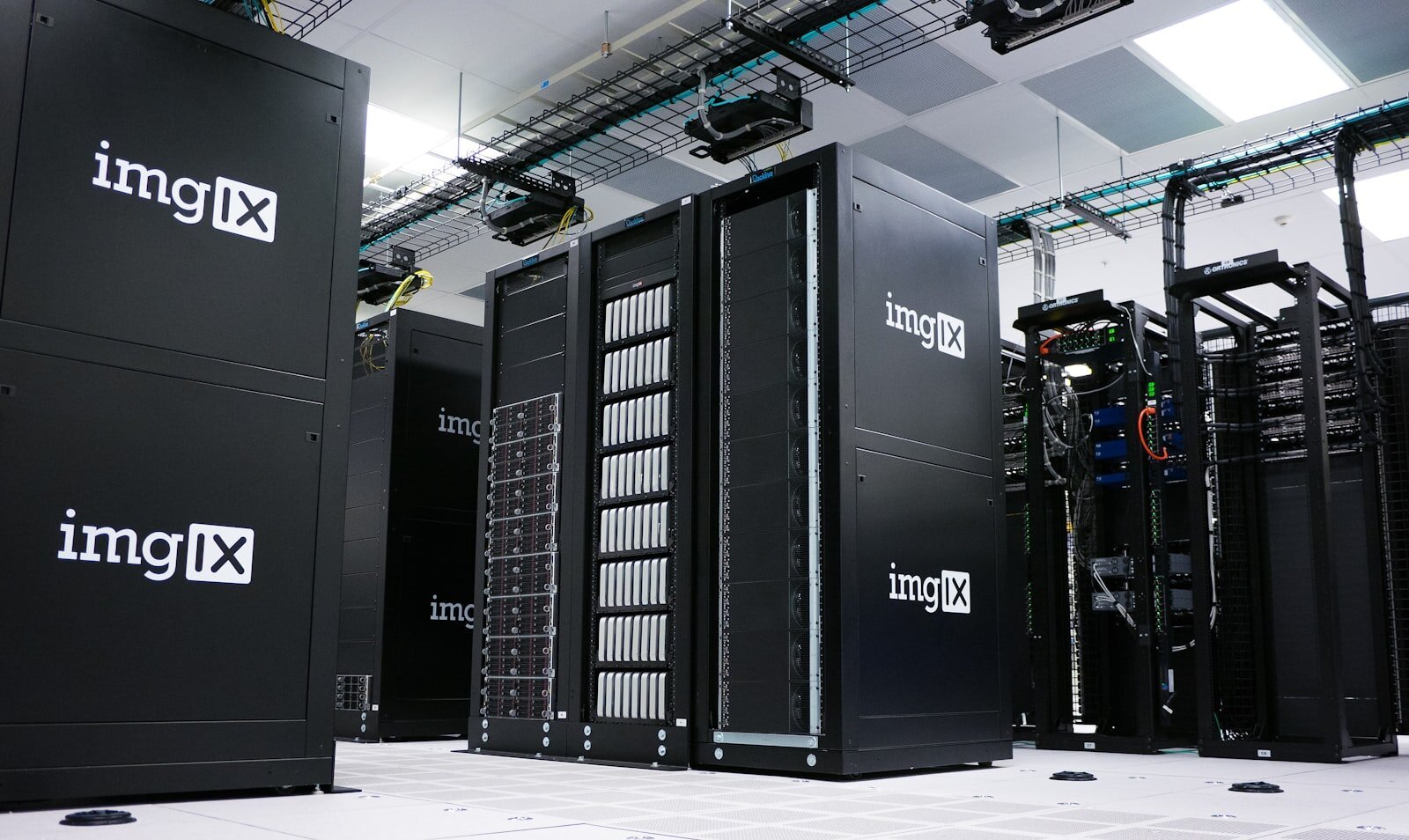
Data centers are the physical backbone of the AI boom, but they also come with visible local costs. They require land, energy, water, and transmission capacity, and communities often worry about whether promised jobs will materialize at scale.
For companies, that creates a difficult tension. The same infrastructure that powers AI services can generate opposition from the neighborhoods and local governments expected to host it. That opposition can slow projects, raise costs, and complicate expansion plans.
It also adds another layer to the public narrative. AI is no longer only a software story. It is a land-use story, an energy story, and a local politics story too.
What are consumers actually reacting to?
Consumers are reacting to a cluster of concerns rather than one single fear. The most common objections fall into a few clear categories:
- Job loss: many people worry AI will replace workers before it improves living standards.
- Low-value features: some AI tools feel gimmicky, such as chatty appliances or generic content summaries.
- Copyright and labor concerns: creators are alarmed that their work may be used to train systems without permission or compensation.
- Education disruption: schools and universities are struggling to handle AI-assisted cheating and academic integrity issues.
- Trust in institutions: many users do not trust tech companies, regulators, or executives to manage the technology responsibly.
These concerns reinforce each other. A person who believes AI will take jobs is more likely to view new AI features as threats rather than conveniences. Someone who already dislikes platform algorithms will not be eager to welcome a more powerful one into their inbox, browser, or television.
Anthropic chief executive Dario Amodei called the negative public mood a serious trust crisis, arguing that people increasingly assume AI companies, governments, and the wider tech industry are looking for new ways to take advantage of them.
Amodei also said the strongest criticism of AI companies is that they have not yet fulfilled their grand promises to make life better for the public. In his view, that shortfall is the industry’s responsibility, not the public’s misunderstanding.
How are AI leaders responding?
The most notable response has been a shift in messaging. Some executives are no longer pretending that public skepticism is imaginary. Instead, they are acknowledging that the industry has a trust problem and trying to frame the next phase of AI around specific benefits that ordinary people can see.
Airbnb CEO Brian Chesky, speaking on a recent podcast, said the backlash is real and partly tied to the fact that the industry has not delivered products that regular people genuinely love. His argument was not that communication does not matter, but that communication alone is not enough.
That distinction is important. If consumers feel they are being sold an abstract future while dealing with immediate downsides, better marketing will not solve the problem. Companies may need to prove usefulness in everyday life before they can win back trust.
Can better products change public opinion?
Yes, but only if the products create obvious value for a broad audience. Industry leaders increasingly say AI needs to do more than produce summaries, automate routine tasks, or power novelty features. It has to solve real problems that people recognize in their own lives.
That could mean better health access, more personalized tutoring, improved accessibility tools, or lower-cost services that clearly save time and money. Without that kind of tangible benefit, AI risks remaining a technology people feel is being done to them rather than for them.
For now, the gap between promise and proof remains wide.
Why this backlash is different from earlier tech cycles
The public has been skeptical of technology before. Social media faced serious criticism over privacy, addiction, and misinformation. Smartphones drew worries about screen time and attention spans. But AI’s challenge is broader because its potential impact spans work, education, creative industries, search, and even politics at the same time.
It also arrives in an era of lower institutional trust. Many Americans already doubt major corporations, news outlets, universities, and government agencies. That makes it easier for suspicion to attach itself to a new technology that is being rolled out by powerful firms with huge financial incentives.
Another difference is how fast AI is being embedded into existing products. Consumers are not only evaluating standalone tools like chatbots. They are also encountering AI inside email, search, operating systems, televisions, and productivity software. Even users with little interest in AI are increasingly unable to avoid it.
That forced exposure can backfire. If the first impression is an unhelpful feature, a clumsy interface, or a perceived threat to one’s work, the emotional response can harden quickly.
How the backlash could affect the AI business model
Public skepticism does not stop AI investment by itself, but it can raise the cost of doing business. Companies may face more expensive community agreements, slower permitting, stronger political opposition, tighter regulation, and more pressure from customers to justify every new AI feature.
There is also a branding risk. If consumers begin to associate AI with intrusion and extraction rather than convenience and value, even technically strong products may struggle to become mainstream favorites. That is especially true in categories where trust is central, such as health care, education, finance, and enterprise software.
The bigger concern for investors is that adoption does not automatically translate into enthusiasm. A product can be widely deployed and still unpopular. If that happens, the technology may remain profitable for some companies while becoming politically and socially contentious for society at large.
What comes next for AI firms?
The next stage of the AI race may be less about raw capability and more about legitimacy. Firms will need to show not just that models can do impressive things, but that the systems they build improve daily life in visible, equitable, and trustworthy ways.
That likely means three things:
- Developing products that solve concrete problems for non-technical users.
- Reducing the sense that AI is being imposed on people without consent.
- Addressing workforce, copyright, and infrastructure concerns with more than slogans.
None of those steps will be easy, especially while companies are still racing to outspend and outbuild one another. But without them, the industry risks discovering that scale alone is not enough to win public approval.
The bigger lesson for Silicon Valley
The clearest lesson from this moment is that technical progress does not guarantee social acceptance. AI can improve quickly and still fail politically if people do not see themselves in the upside.
That is the challenge now facing the most powerful firms in the sector. They have built a technology ecosystem that is expanding across consumer products, workplaces, schools, and infrastructure. But the more AI becomes unavoidable, the more it must answer a basic question: who is this for?
For the moment, too many consumers are answering that question by concluding the gains are unclear, the risks are immediate, and the promises remain mostly theoretical.
That is why the AI backlash matters. It is not just a perception problem. It is becoming a practical obstacle to growth, deployment, and trust.
Frequently asked questions
Why is the AI backlash growing now?
The AI backlash is growing now because many consumers see more risk than reward. Polls show rising concern about job loss, intrusive features, copyright disputes, and the rapid spread of AI into products and infrastructure without clear everyday benefits.
Are people still using AI even if they dislike it?
Yes, people are still using AI even if they dislike parts of it. Many users rely on AI search, chatbots, and productivity tools, but that does not mean they trust the industry or feel positively about how the technology is being deployed.
How are AI data centers becoming a political issue?
AI data centers are becoming a political issue because they affect land use, electricity, water, and local budgets. Communities and politicians are now pushing companies for concessions such as job guarantees, infrastructure investments, and other local benefits before approving projects.
What do AI company leaders think is causing the backlash?
AI company leaders say the backlash is partly a messaging problem, but several also acknowledge it is fundamentally a trust problem. They argue the industry must deliver real benefits, not just talk about future potential, if it wants public support.
Could better AI products reduce public skepticism?
Yes, better AI products could reduce skepticism if they solve obvious problems for ordinary people. Health access, tutoring, accessibility, and time-saving tools are more likely to win approval than gimmicky features that feel imposed or serve mostly corporate interests.