Updated July 24, 2026 7:54 pm
In short
Anthropic is expanding Claude voice mode to Opus and Sonnet, adding app integrations, broader language support, and new action-taking abilities such as drafting pitches and rearranging calendar events.
- Claude voice mode now supports Opus and Sonnet, not just Haiku.
- Anthropic is extending voice mode into Gmail, Slack and Canva.
- Users can switch between models and text/voice mid-conversation.
- Voice mode now supports nine additional languages beyond English.
Update — July 24, 2026 7:54 pm
Anthropic’s voice mode update also adds a broader language rollout. Non-English support is moving out of beta and now includes French, German, Spanish, Hindi, Indonesian, Italian, Japanese, Korean and Portuguese.
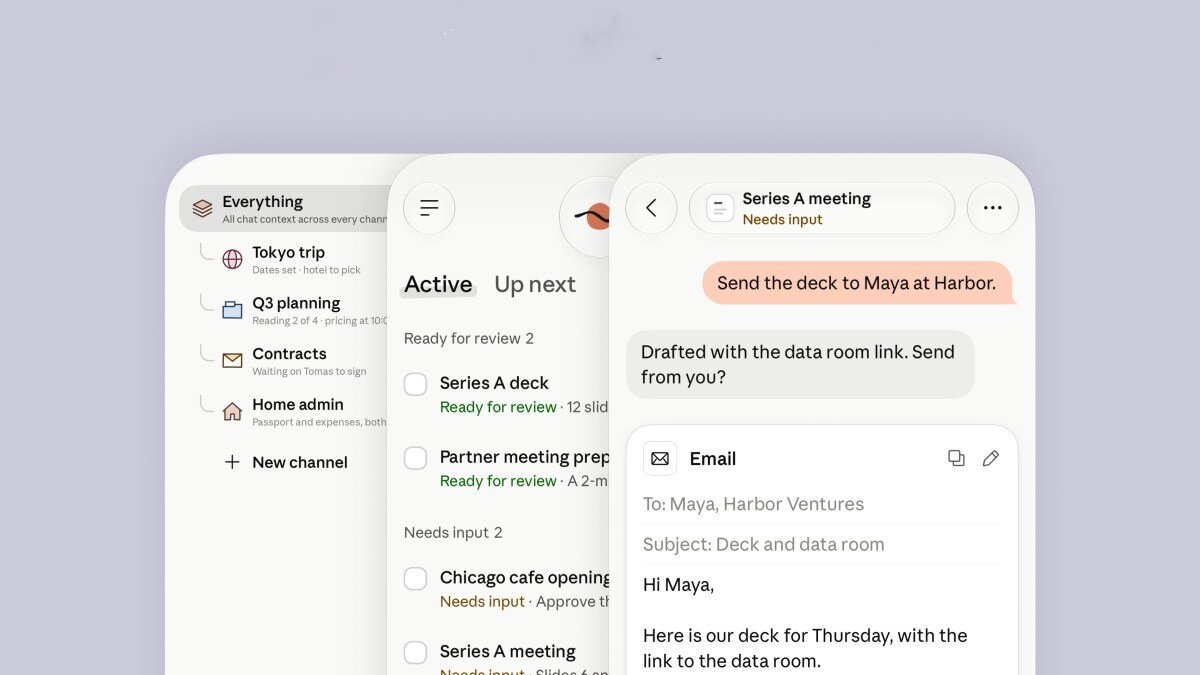
The company is also letting people use voice mode to carry out actions on their behalf, including turning a conversation into a one-page pitch and adjusting calendar appointments when schedules change.
Anthropic says users can switch not only between text and speech mid-conversation, but also between models, making it easier to start with a quick exchange and then move into a deeper discussion without losing context.
Update — July 23, 2026 10:54 pm
Anthropic has also expanded Claude voice mode to a wider set of languages. The feature is now available in French, German, Spanish, Hindi, Indonesian, Italian, Japanese, Korean and Portuguese, whereas non-English support had previously been limited to beta.
The company also says users can now use voice mode to take actions such as turning a discussion into a one-page pitch or rearranging calendar appointments when plans change.
Anthropic is broadening Claude’s voice mode beyond its fastest model, giving users access to Opus and Sonnet while also tying the feature more deeply into workplace apps such as Gmail, Slack and Canva. The update matters because it moves Claude voice from a quick-answer tool into a more capable assistant for longer, more complex work.
The company said the change reflects how people were already using voice mode: not just for brief questions, but to work through business tasks that need deeper reasoning, planning and follow-up actions. Alongside the model expansion, Anthropic is also rolling voice mode out to more languages and letting users switch between text and speech without losing the thread of a conversation.
What changed in Claude voice mode?
Claude voice mode is now available on Anthropic’s Opus and Sonnet models, not just Haiku. That is the key product change, and it gives users a way to choose a more capable model when a conversation requires stronger reasoning, more context, or a more polished output.
Previously, voice mode was centered on Haiku, Anthropic’s lighter and faster model. That setup was useful for speed, but it was limited when users wanted Claude to help with more involved work. The new rollout expands voice mode into the parts of Claude designed for harder tasks.
Why this matters for users
The practical effect is that a spoken exchange can now start as a quick question and evolve into a more serious work session. Users can move from a fast model to a deeper one when the conversation turns from simple information retrieval to drafting, summarizing, planning or decision support.
Anthropic says that is closer to how people actually use the product. What began as a feature for short, low-friction interactions has become a way to tackle real work problems that need more than a short response.
Anthropic says voice mode quickly proved useful for more than casual queries, with people using it to work through business problems that required deeper responses than Haiku was built to handle.
How do Opus and Sonnet change the experience?
Opus and Sonnet make voice mode better suited for multi-step reasoning and action-oriented tasks. Anthropic describes those models as being designed for difficult problem-solving, which means they can provide richer analysis and generate more developed output than the lighter Haiku model.
In practice, that could mean using Claude to refine a pitch deck outline, rework a meeting schedule, summarize a long thread, or turn an initial idea into a more structured plan. Anthropic also says the assistant can take actions on a user’s behalf, including helping reorganize calendar appointments when plans change.
From quick replies to work assistance
The shift is important because voice assistants have often been best at short commands and basic questions. Anthropic is now positioning Claude voice as a more flexible interface for knowledge work, where users may want to brainstorm aloud, then switch to text for precision, then return to speech for convenience.
That hybrid workflow is likely to appeal to people who treat AI less like a novelty chatbot and more like an active assistant embedded in daily work.
| Claude voice mode option | Primary use | Notable strength | Current status in voice mode |
|---|---|---|---|
| Haiku | Fast, lightweight interactions | Low-latency responses | Previously the only voice-mode model |
| Sonnet | Deeper reasoning and task work | Stronger analysis | Now available in voice mode |
| Opus | Harder problem-solving | Most advanced responses | Now available in voice mode |
Why did Anthropic expand voice mode now?
Anthropic’s own usage observations appear to be driving the rollout. The company said users did not limit voice mode to fast questions; they pushed it into more complex work scenarios, where a quicker model could feel too shallow.
That feedback loop is common in consumer AI. Companies launch with a narrow use case, then discover that users stretch the product into workflows the original design did not fully anticipate. Here, the result is a broader voice offering that better matches real-world behavior.
There is also a competitive backdrop. AI companies are racing to make assistants feel more natural, more useful and more embedded in everyday tools. Voice is a major part of that effort because speaking can be faster than typing, and because it makes AI feel more immediate and conversational.
How the update fits Anthropic’s product strategy
Anthropic has often emphasized Claude as a practical assistant for work rather than a purely entertainment-focused chatbot. Expanding voice mode into Opus and Sonnet reinforces that identity by making the feature more useful for higher-value tasks.
It also helps Anthropic turn Claude into a more complete interface. Instead of treating voice as a separate mode for light interaction, the company is making it part of the broader Claude workflow, where users can move across models and modalities as needed.
What apps can Claude now reach?
Claude voice mode is being extended into connected apps, including Gmail, Slack and Canva. That means users can do more than converse with the assistant; they can bring it into the software where much of their work already happens.
The practical implication is that voice mode becomes a bridge between discussion and execution. A user might talk through a problem in Claude, then have the assistant help summarize messages, draft a response, or work with a design-oriented tool such as Canva.
Why app access matters
Integrations are where AI assistants become genuinely useful for day-to-day work. Without them, users still have to copy, paste, switch tabs and translate their conversation into action elsewhere. By connecting Claude voice to apps people already rely on, Anthropic is trying to reduce that friction.
That could make Claude more appealing to teams that use Slack for coordination, Gmail for communication and Canva for visual content. It also suggests Anthropic sees voice as an entry point into a larger productivity workflow, not just a feature for chatting.
- Gmail: useful for drafting or summarizing email-related tasks.
- Slack: helpful for team communication and work coordination.
- Canva: relevant for creative or presentation-related workflows.
How does model switching work in Claude voice mode?
Users can now move between text and voice mid-conversation, and they can also switch models without starting over. That flexibility is one of the most important parts of the update because it removes a common frustration in AI tools: having to restart when the task gets more complicated.
Anthropic’s example is straightforward. A user might begin with Haiku for a quick exchange, then realize the idea is worth exploring in more detail. Instead of abandoning the conversation, they can jump to Opus and continue from the same context.
This kind of continuity matters because it keeps the assistant aligned with the user’s train of thought. In a work setting, preserving context can be more valuable than raw speed.
What this means in practice
The update creates a layered workflow:
- Ask a quick question in voice mode.
- Move to a deeper model if the issue needs more analysis.
- Switch back to text for edits, precision or review.
- Use connected apps to turn the result into action.
That sequence is designed to make Claude feel less like a single-purpose chatbot and more like a flexible work companion.
What languages are now supported?
Claude voice mode is expanding from a largely English-centered experience to broader language support. Anthropic says the feature is now available in French, German, Spanish, Hindi, Indonesian, Italian, Japanese, Korean and Portuguese.
Before this update, non-English access existed only in beta. Making these languages broadly available is a meaningful step because it signals Anthropic’s intent to make Claude voice usable for a global audience, not just English speakers.
| Voice mode language rollout | Earlier status | Current status |
|---|---|---|
| English | Available | Available |
| French, German, Spanish, Hindi, Indonesian, Italian, Japanese, Korean, Portuguese | Beta only | Now available in voice mode |
Why language support is strategically important
Language expansion is more than a feature checklist item. It affects adoption, accessibility and regional relevance. A voice assistant becomes much more valuable when users can speak naturally in their preferred language rather than adapting to English-first interactions.
For Anthropic, the broader rollout may help Claude compete in international markets where local-language support can shape whether a product feels polished enough for daily use. It also gives the company a stronger path into workplaces with multilingual teams.
How does this compare with the original voice mode?
The original version of Claude voice mode was built around speed. It was meant to deliver quick answers with minimal delay, making the experience feel responsive and lightweight. That was appropriate for simple conversation, but it was less suited to analysis-heavy tasks.
The new version keeps the convenience of voice while adding more capable models and more practical integrations. In effect, Anthropic is trying to preserve the conversational feel of voice while upgrading the assistant’s usefulness for real work.
Anthropic’s message is that voice mode should not only be fast; it should also be capable enough to help users solve difficult problems and complete tasks inside the apps they already use.
What does this tell us about AI assistants in 2026?
It shows that the market is moving beyond novelty toward utility. Early voice features often impressed users with speed or personality, but the real test is whether they can support sustained work across apps, languages and model tiers.
Anthropic’s update suggests the next phase of AI assistants will be defined by three things: deeper reasoning, seamless mode switching and tighter integration with the software people already rely on every day.
That combination could make assistants more useful in offices, creative teams and multilingual settings. It also raises the bar for competitors, who will need to match not only model quality but also the workflow experience around it.
Key takeaways
- Anthropic is adding voice mode support for Claude Opus and Sonnet, not just Haiku.
- The company is connecting voice mode to apps including Gmail, Slack and Canva.
- Users can switch between text and voice, and move between models mid-conversation.
- Voice mode now supports additional languages beyond English, including French, German and Japanese.
- The update is aimed at turning Claude voice into a more capable productivity tool.
What happens next?
Anthropic has not framed this update as the final version of Claude voice mode, and the broader direction is easy to see. If users continue moving from casual questions to business workflows, the company will likely keep extending the feature’s reach into more models, more languages and more connected applications.
For now, the main story is that voice mode has grown up. It is no longer just a quick-access front end for Haiku. It is becoming a broader interface for Claude’s more powerful reasoning systems, with the potential to fit more naturally into everyday work.
Frequently asked questions
What is new in Claude voice mode?
Claude voice mode now supports Anthropic’s Opus and Sonnet models, which are built for deeper reasoning than Haiku. The feature is also expanding into apps like Gmail, Slack and Canva, and it now supports more languages.
Why did Anthropic expand Claude voice mode to Opus and Sonnet?
Anthropic expanded Claude voice mode because users were using it for more than quick questions. The company said people wanted help with real business problems, and the more advanced models are better suited to analysis, planning and task execution.
Can Claude voice mode switch between text and speech?
Yes. Users can move between text and voice in the middle of a conversation, and they can also switch models without starting over. That makes it easier to begin with a fast answer and then continue with deeper analysis if needed.
Which languages does Claude voice mode support now?
Claude voice mode now supports French, German, Spanish, Hindi, Indonesian, Italian, Japanese, Korean and Portuguese, in addition to English. Before this update, non-English support was only available in beta.
What apps can Claude voice mode connect to?
Claude voice mode is being extended to Gmail, Slack and Canva. Those integrations are meant to help users turn conversations into actions inside the tools they already use for communication, collaboration and creative work.