In short
Moonshot AI and Alibaba have unveiled new frontier models within days of each other, claiming performance near or at the level of leading OpenAI and Anthropic systems. The launches underscore how quickly the China AI race is tightening and how open-weight models could reshape the market.
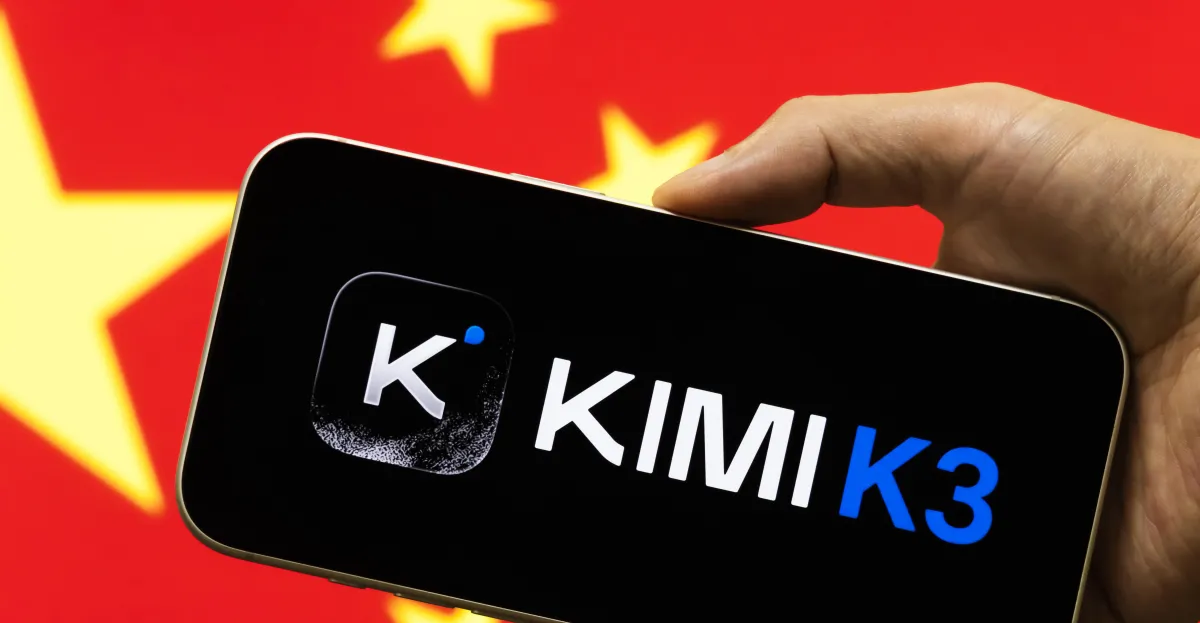
- Moonshot launched Kimi K3 and said it trails only the top OpenAI and Anthropic systems in its testing.
- Alibaba previewed Qwen3.8, describing it as one of the strongest models available and soon to be open-weight.
- Both companies are emphasizing openness, a contrast with the more closed approach of most US frontier labs.
- The releases add pressure to the US-China AI race and raise questions about whether massive US spending guarantees lasting leadership.
China’s Moonshot AI and Alibaba have unveiled new frontier models within days of each other, each claiming performance that puts them in the same league as OpenAI and Anthropic. The rapid releases matter because they suggest the gap at the top of the AI market may be narrowing just as the technology becomes a strategic priority for governments and companies worldwide.
Moonshot’s Kimi K3 and Alibaba’s Qwen3.8 are being positioned not just as powerful systems, but as signals that China’s leading AI firms are now challenging the United States on both capability and price. The companies are also leaning into a different strategy from most top US labs: openness, with plans to make at least part of their models available for developers to download, adapt, and build on.
What did Moonshot and Alibaba announce?
Moonshot AI introduced Kimi K3 on Friday, while Alibaba followed over the weekend with a preview of Qwen3.8. Both companies describe the systems as frontier-class models, meaning they are intended to compete at the very highest level of current AI performance.
The timing is notable. Rather than a single launch, the back-to-back announcements created a one-two punch that sharpened attention on China’s AI sector and its ambitions to compete with the US leaders that have dominated the industry’s public narrative.
Why are these releases drawing so much attention?
They are drawing attention because both companies say their models are competitive with, or in some cases close to, the best systems from OpenAI and Anthropic. In a market where companies often keep benchmark results, training data, and model details closely guarded, those claims are enough to reset the conversation about where AI leadership may be heading.
The bigger question is not only whether the systems are strong, but whether China can challenge US dominance without matching US spending levels. American AI firms have been pouring billions into chips, cloud infrastructure, and training runs. If Chinese companies can deliver similar capability with less capital, that could alter the economics of the entire race.
How do the new Chinese models compare with US rivals?
According to the companies’ own descriptions, Moonshot says Kimi K3 performs above nearly all US systems in its internal testing, trailing only OpenAI’s GPT-5.6 Sol and Anthropic’s Claude Fable 5, while outperforming those systems on certain benchmarks. Alibaba says Qwen3.8 is among the strongest models available and ranks it second only to Anthropic’s Fable 5.
Those statements should be read cautiously. Independent evaluation will be necessary before anyone can verify the claims, and neither OpenAI nor Anthropic publicly disclose exact parameter counts for their leading models, making direct comparisons difficult.
Moonshot has said Kimi K3 is its largest open-source model so far, and Alibaba has described Qwen3.8 as one of the most powerful systems currently available. Those are company claims, not independently confirmed rankings, but they are already reshaping market expectations.
What do the benchmark claims actually mean?
Benchmarks are standardized tests used to estimate how well a model performs at reasoning, coding, math, and other tasks. They are useful, but they do not capture every real-world use case, and companies can tune systems to perform well on tests in ways that do not always translate to everyday applications.
That is why the AI industry tends to treat launch-day claims as provisional. Final judgment usually comes only after researchers, developers, and competitors have spent time probing the models under real conditions.
| Model | Company | Claimed scale | Availability plan | Company position |
|---|---|---|---|---|
| Kimi K3 | Moonshot AI | 2.8 trillion parameters | Full weights due July 27 | Claims it trails only GPT-5.6 Sol and Claude Fable 5 |
| Qwen3.8 | Alibaba | 2.4 trillion parameters | Open-weight release coming soon | Described as among the most powerful models available, second only to Fable 5 |
| GPT-5.6 Sol | OpenAI | Not disclosed | Proprietary | Benchmark reference point |
| Claude Fable 5 | Anthropic | Not disclosed | Proprietary, with market restrictions | Benchmark reference point |
Why does open-source matter in this race?
Open-source matters because it changes who can build on the technology, who can inspect it, and how quickly it can spread. Instead of keeping their strongest systems locked behind paid interfaces or enterprise deals, Chinese AI firms are increasingly making weights or related model assets available to the public.
That approach has two effects. First, it helps developers worldwide experiment with Chinese models more easily. Second, it creates a direct contrast with the more guarded strategy used by most US frontier labs, which generally keep their most advanced systems proprietary.
How is China’s approach different from US labs?
China’s leading AI companies are presenting openness as an advantage rather than a concession. While some US firms, especially Meta, have embraced a more open model release philosophy, the biggest American developers usually keep their newest flagship systems closed.
That difference is becoming strategically important. Open models can spread faster through the developer ecosystem, influence standards, and lower barriers for startups, researchers, and enterprises that want to customize AI for specific tasks.
What is Moonshot promising with Kimi K3?
Moonshot says Kimi K3 is the world’s largest open-source AI system, with 2.8 trillion parameters. The company plans to publish the full model weights on July 27, a step that will allow outside developers and researchers to study and adapt the system more deeply than a simple product demo would permit.
Model weights are the internal numerical values a system learns during training. They matter because they determine how the model responds to prompts, generates outputs, and generalizes across tasks. Releasing them can accelerate adoption, but it can also increase scrutiny and risk.
Why does the parameter count matter?
Parameter count is often used as a rough proxy for scale and complexity. More parameters do not automatically mean better performance, but large counts often signal the size of the training effort and the ambition of the model.
- Kimi K3: 2.8 trillion parameters
- Qwen3.8: 2.4 trillion parameters
- Neither OpenAI nor Anthropic disclose comparable figures for their top models
Because the leading US companies do not reveal those numbers, parameter counts can be as much a messaging tool as a technical one. Even so, the figures highlight how far Chinese firms have moved up the scale ladder.
What is Alibaba saying about Qwen3.8?
Alibaba says Qwen3.8 is continuously evolving and will soon become open-weight. That wording suggests the company is treating the release as part of an ongoing development cycle rather than a one-time product launch.
The Qwen series has become one of Alibaba’s most visible AI efforts, and the latest preview signals that the company wants to keep pace in the highest-performance tier while also preserving a channel for developer adoption. In practical terms, that could make Qwen more useful to businesses that want customizable models without building from scratch.
What does “open-weight” mean?
Open-weight means the model’s learned weights are made available, though usually not every piece of the training pipeline. It is not always identical to fully open source in the software sense, but it is still a major concession compared with a closed model that can only be accessed through an API.
For developers, open-weight models can be easier to fine-tune, deploy locally, and integrate into specialized products. For companies, they can also create a loyal ecosystem around a model family.
Why the US-China AI rivalry is intensifying
The rivalry is intensifying because AI is no longer just a consumer technology story. It is increasingly tied to national security, economic competitiveness, industrial productivity, and geopolitical leverage. Countries that dominate advanced AI could shape military planning, scientific research, manufacturing, and digital services for years to come.
China’s latest announcements matter because they come at a moment when many observers assumed the US had secured a widening lead. Instead, the latest releases suggest the frontier may be far tighter than previously believed.
How does DeepSeek fit into the picture?
DeepSeek is the key recent precedent. Last year, the company startled the industry with a lower-cost model that was widely seen as competitive with leading US systems. That release reset expectations about how much money is really required to reach the frontier.
Moonshot and Alibaba now appear to be extending that lesson. If they can deliver strong performance with open distribution and lower apparent cost, the argument that only massive American capex can sustain frontier AI leadership becomes less convincing.
How are US restrictions affecting this competition?
US restrictions are making the race more complicated, not necessarily one-sided. Washington has used export controls to limit China’s access to the most advanced AI chips and infrastructure, while also taking other steps aimed at slowing foreign access to frontier systems.
Anthropic has also been forced to pull its most capable system from the market over concerns that it could help rival actors catch up. That shows regulators and policymakers are not just thinking about who wins the AI race, but how to control the spread of capability once it exists.
Why do chips remain such a flashpoint?
Chips are the backbone of modern AI development. Training large models requires huge amounts of computing power, and the most advanced chips determine how fast models can be trained, iterated, and deployed. If a company cannot access those chips, it may be forced to work around the constraint with more efficient methods or less capable hardware.
That makes the Chinese model launches more striking. They suggest that, even under tightened access to critical hardware, Chinese firms are still moving toward frontier systems that can challenge US leaders.
A timeline of the latest AI escalation
The latest wave of announcements unfolded quickly, adding to the sense that the frontier is changing in real time. The sequence below shows how the story developed.
| Date | Event | Why it matters |
|---|---|---|
| Last year | DeepSeek releases a low-cost model that rivals leading US systems | Proves frontier-style performance may be achievable at lower cost |
| Friday | Moonshot unveils Kimi K3 | Signals a major Chinese open-model push against US labs |
| Over the weekend | Alibaba previews Qwen3.8 | Adds pressure with another high-end model claim |
| July 27 | Moonshot says it will release full weights for Kimi K3 | Could let independent researchers test the company’s claims |
| Soon after | Alibaba says Qwen3.8 will go open-weight | Could broaden access and accelerate adoption |
What could this mean for the global AI market?
If the claims hold up, the implications are broad. Developers may gain more powerful open alternatives. Enterprises may find they can access frontier-grade systems at lower cost. Investors may reassess how much of a durable moat exists around US companies that depend on scale, closed distribution, and expensive infrastructure.
At the same time, the releases could pressure American firms to respond more aggressively on performance, pricing, and openness. The competition is no longer simply about who announces the biggest model. It is also about who can attract the most developers, establish the strongest ecosystem, and turn technical leadership into practical market power.
What are the risks of overreading the launch hype?
The main risk is assuming company marketing equals independent validation. AI launches are often accompanied by selective benchmark reporting, carefully chosen examples, and aspirational comparisons. A system can look dominant in a slide deck and then prove less impressive when used at scale.
That is why the next week will matter. Once Moonshot releases full weights and researchers begin testing the model, the industry will learn much more about whether Kimi K3 deserves the attention it is getting. Alibaba’s Qwen3.8 preview will face the same scrutiny once it is opened up more broadly.
Why this moment matters beyond technology
The significance of these launches extends beyond product competition. AI is now part of trade policy, military planning, industrial policy, and diplomacy. That means technical milestones can quickly become political signals, and vice versa.
China’s ability to produce frontier models that are good enough to challenge US leaders changes the tone of the conversation in Washington and Silicon Valley. It suggests America’s lead is not guaranteed, and that the next phase of the AI race may be less about one side pulling away and more about a contested, fast-moving equilibrium.
For now, the most important takeaway is simple: China’s leading AI companies are no longer content to follow. They are now openly challenging the US at the top of the market, and they are doing it in a way that could spread those capabilities much more widely than most American labs are willing to do.
What comes next?
The next few weeks should provide the first serious checks on the claims. Moonshot’s planned July 27 release will invite outside inspection, while Alibaba’s open-weight timeline could broaden access to Qwen3.8 and expose it to wide developer testing.
If the models live up to even part of the companies’ promises, the global AI competition may enter a new phase. If they fall short, the announcements will still have accomplished something important: they will have forced the rest of the industry to respond to a more confident, more open, and more aggressive Chinese challenge than many expected.
Frequently asked questions
What did Moonshot AI announce?
Moonshot AI announced Kimi K3, a new frontier model it says is its largest open-source system to date. The company plans to release the full model weights on July 27, allowing outside researchers and developers to test and adapt the model more directly.
What is Alibaba’s Qwen3.8?
Alibaba’s Qwen3.8 is a new preview of a large AI model the company describes as continuously evolving and among the most powerful available. Alibaba says it will become open-weight soon, which would let developers use and adapt it more freely than a closed system.
Why are these releases important in the AI race?
These releases are important because they suggest Chinese AI companies are closing in on the performance level of top US labs while also pushing open distribution. That combination could widen adoption, weaken proprietary advantages, and intensify competition between the US and China.
How do these models compare with OpenAI and Anthropic systems?
The companies claim their models are close to or competitive with leading systems from OpenAI and Anthropic, but those claims have not yet been independently verified. Until researchers test the models at scale, benchmark comparisons should be treated as preliminary rather than definitive.
Why does open-weight matter?
Open-weight matters because it gives developers access to a model’s learned parameters, making it easier to inspect, fine-tune, and deploy. That can accelerate adoption and innovation, especially compared with proprietary models that can only be used through controlled interfaces.