In short
Former Google DeepMind researcher Andrew Dai raised $55 million for Elorian at a $300 million seed valuation before the company launched a product. The deal underscores investor appetite for frontier AI teams betting on visual AI.
- Elorian raised $55 million at a $300 million valuation before product launch.
- Founder Andrew Dai previously worked more than a decade at Google DeepMind.
- Dai says visual understanding remains one of AI’s most uneven frontiers.
- He prioritized strategic investors such as Nvidia and Menlo Ventures over the highest valuation.
- The round highlights continued investor hunger for elite frontier AI talent.
Andrew Dai has raised $55 million for Elorian at a $300 million seed valuation only months after leaving Google DeepMind, turning a pre-product idea about visual AI into one of the most aggressively priced early-stage fundraises in the current market. The deal matters because it shows just how much investor demand remains for frontier AI founders with elite research pedigrees, even before a company has launched its first product.
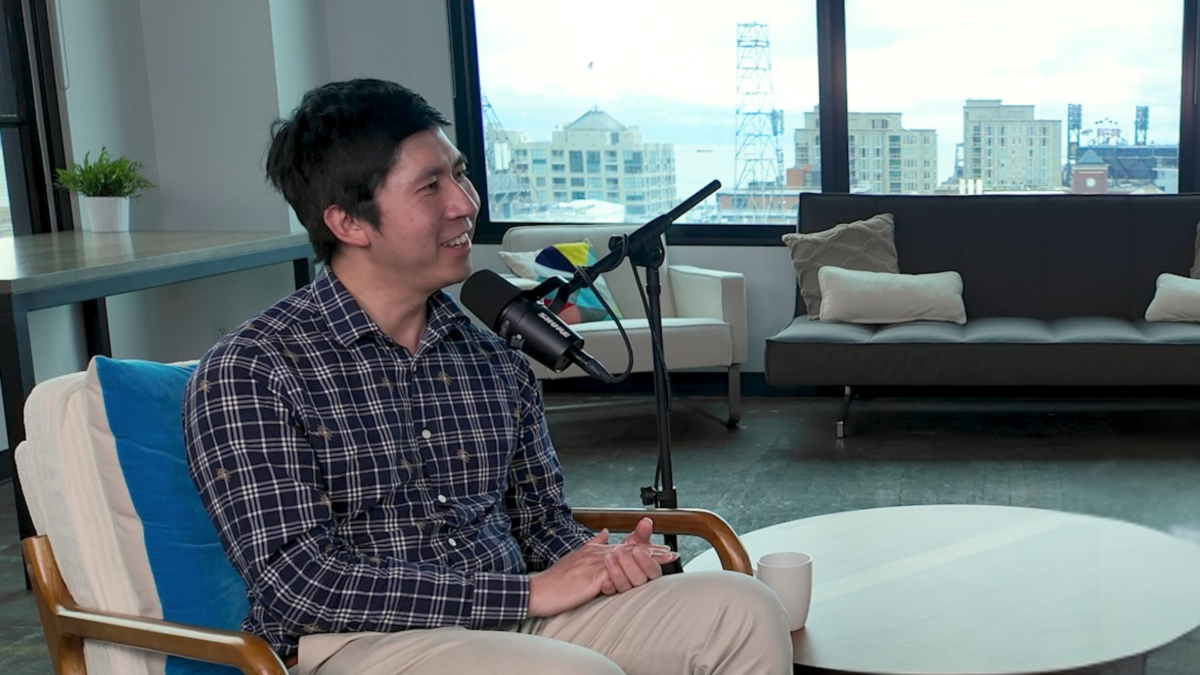
In a recent conversation on TechCrunch’s Build Mode podcast, Dai explained why he believes visual understanding is one of the next major battlegrounds in artificial intelligence, how he persuaded investors to back a highly technical thesis, and why he favored strategic partners over the highest possible price.
Dai’s path is notable not just for the size of the round, but for its timing. He left one of the world’s most influential AI labs, moved quickly to define a new company, and then raised capital in a matter of months. For founders watching the market, Elorian’s fundraise is a case study in how research credibility, narrative discipline and investor selection can matter as much as valuation itself.
Who is Andrew Dai, and why are investors paying attention?
Andrew Dai is a former Google DeepMind researcher who spent more than a decade helping build advanced AI systems before founding Elorian. His background gave him a level of technical credibility that is increasingly prized in frontier AI investing, especially in areas where product categories are still forming and benchmarks are still evolving.
According to Dai, the research he contributed to was part of the broader wave of work that later influenced systems such as ChatGPT. That pedigree helped him step into the startup world with a reputation that instantly signaled two things to investors: he understood the technical frontier, and he knew how cutting-edge model development actually happens inside a leading lab.
That reputation appears to have been especially useful in a market where investors are hunting for teams that can do more than assemble existing tools. In frontier AI, the best backers are often betting on researchers who can identify an unsolved problem early, then move quickly enough to define the category before larger competitors catch up.
What did Elorian raise, and how unusual is the deal?
Elorian raised a $55 million seed round at a $300 million valuation, a size and pricing combination that would have been unusual even in the frothy parts of the startup cycle. The company has not yet launched a product, making the raise an especially strong signal that some investors are willing to pay a premium for access to a founder with a rare technical profile and a large-scale ambition.
The economics of the deal are striking because the valuation-to-capital ratio is aggressive even by recent AI standards. The round positions Elorian among the most richly valued pre-launch startups in the market, and it comes at a moment when several top AI companies are commanding extraordinary checks before they have meaningful revenue.
Dai said the financing process moved quickly after he left DeepMind, reflecting both the urgency of the opportunity and the speed with which high-end AI capital is now deployed. In practice, that means startups with a compelling frontier thesis can sometimes raise more like a category-defining company than a traditional early-stage venture.
| Key detail | Elorian | Why it matters |
|---|---|---|
| Founder | Andrew Dai | Former Google DeepMind researcher with long AI lab experience |
| Stage | Seed | Raised before product launch, highlighting investor conviction |
| Capital raised | $55 million | Large seed round by any historical standard |
| Valuation | $300 million | Signals a premium for technical credibility and market potential |
| Focus | Visual AI | Targets an area Dai says remains uneven compared with text and code |
Why does Dai think visual AI is the next frontier?
Dai argues that progress in AI has been far more consistent in text-based tasks than in visual reasoning and visual understanding. In his view, models have made dramatic gains in areas such as mathematics, scientific ideation and software coding, but they still struggle in the kind of perceptual and spatial intelligence humans take for granted.
“One area where progress has been extremely uneven is visual understanding and visual reasoning,” Dai said, adding that Elorian’s long-term goal is to build systems that move toward what he described as visual AGI.
That thesis is important because visual AI is not just about image generation or basic recognition anymore. It increasingly encompasses systems that can interpret scenes, infer relationships, understand movement, reason across multiple frames, and connect visual inputs with language and action. Those capabilities could matter across robotics, industrial inspection, autonomous systems, healthcare imaging, retail, media and a range of other sectors.
For investors, visual AI also represents a differentiated opportunity. The text-model market is crowded, the coding-assistant market is already highly competitive, and many consumer chatbot features are becoming commoditized. By contrast, visual reasoning remains technically difficult, commercially broad and still relatively open as a category.
How is visual AI different from today’s mainstream AI?
Visual AI is different because it requires models to do more than read or generate text; it asks them to interpret physical reality. That means understanding objects, depth, motion, context and change over time, often in noisy real-world conditions that are far messier than benchmark datasets.
This difference matters because a model can be excellent at writing code or answering questions while still failing at tasks that require actual spatial comprehension. In other words, AI systems may appear broadly capable while remaining narrowly uneven in the way they see and reason about the world.
Why did Elorian choose strategic investors over the biggest offer?
According to Dai, the highest valuation was not automatically the best outcome. He said he deliberately prioritized backers who could help the company build, hire and navigate the frontier AI landscape, rather than choosing purely on price.
That is where investors such as Nvidia and Menlo Ventures became especially valuable, in Dai’s telling. Strategic fit, technical understanding and access to ecosystem support can be more useful than a marginally higher term sheet when the business is still at the stage of forming its research agenda, recruiting talent and deciding how to bring a complex idea to market.
The choice reflects a broader truth about elite AI startups: the first few investors often shape the company’s future far beyond the money they provide. They can influence hiring, credibility, partnerships, customer introductions and the pace at which a startup moves from research project to product company.
In the discussion, Dai emphasized that backing from investors who understand frontier AI can matter more than squeezing out an extra few points of valuation.
How do founders explain deep technical ideas to investors?
Dai’s fundraising story also illustrates the importance of translation. Frontier AI founders often begin with highly technical research insights, but investors need a story that connects those insights to a large market, a believable product path and a defendable moat.
That means founders must do more than describe model architecture or performance metrics. They need to frame the problem in business terms, explain why now is the right moment, and show why their team has a real chance to create something that large companies have not yet solved.
Dai said one of the core lessons from the fundraising process was learning how to take an intricate technical thesis and explain it in a way that nontechnical investors could understand. The best pitch, he suggested, is not the most jargon-heavy one; it is the one that makes complicated research feel inevitable, urgent and commercially meaningful.
What investors want to hear in frontier AI pitches
- Why the problem is still unsolved despite heavy investment from major labs
- What technical insight makes the startup’s approach different
- How the company will move from research to product
- Why the founders are uniquely qualified to execute
- What long-term advantage could become a durable moat
What does this say about the AI fundraising market in 2026?
Elorian’s raise suggests that the market still rewards a small class of founders with elite lab experience and a credible frontier thesis. Even as many AI startups face pressure to show product traction faster than before, top-tier investors continue to fund teams that can argue they are attacking a foundational technical gap.
At the same time, the round highlights a widening split in the startup ecosystem. There is the crowded layer of AI wrappers, workflow tools and lightweight applications built on top of existing models. Then there is the far smaller group of companies trying to build new model capabilities from scratch, where valuation can be much higher even without revenue.
That split helps explain why some pre-launch companies can still raise large seed rounds at premium prices. Investors are not just buying present-day traction; they are buying optionality on a future category that may reshape entire industries.
How does Elorian compare with other big early AI raises?
Elorian’s financing stands out because of the combination of capital raised, valuation and timing. Some AI startups have raised even larger sums, but few have done so at such an early stage and before shipping a product. That makes the deal especially aggressive on a per-dollar basis.
It also places the company in a broader cluster of frontier AI startups that are being priced like potential strategic assets rather than ordinary venture-backed businesses. The logic is simple: if a company can become foundational in a new layer of AI infrastructure or capability, early ownership becomes extraordinarily valuable.
| Company type | Typical signals investors want | Why Elorian fits the pattern |
|---|---|---|
| Frontier model startup | Rare technical talent, research depth, large ambition | Dai brings DeepMind experience and a model-level thesis |
| Seed-stage application startup | Clear product, early users, fast iteration | Elorian is earlier than that and has no product yet |
| Category-defining AI company | Potential to create a new layer of capability | Visual AI could become foundational across multiple industries |
Why speed has become a competitive weapon in AI
Dai also framed speed as one of the decisive advantages in modern AI. In a field where model capabilities and product expectations change quickly, founders can no longer rely on long development cycles or slow market education. The best teams move fast enough to stay ahead of both large incumbents and better-funded startups.
That urgency affects every part of the company-building process. Recruitment has to happen quickly, technical milestones have to be reached quickly, and product feedback loops have to be tight. In AI, a promising idea can lose its edge if a company spends too long polishing strategy instead of shipping and learning.
This is one reason elite founders with strong research backgrounds can be so attractive to investors. They often know how to make faster technical judgments, recognize dead ends sooner and compress the path from hypothesis to proof.
How do startups recruit top AI researchers away from Big Tech?
Startups recruit top researchers by offering more than compensation. They need to provide mission, autonomy, speed and the chance to shape a new product or category from the beginning. For many researchers, the opportunity to work on a problem that matters at the frontier can outweigh the stability of a large lab.
But the bar is high. Researchers who leave major companies want to know that the startup has enough capital, enough talent density and enough technical seriousness to compete. A high-profile fundraising round can help satisfy those concerns because it signals that the company has both investor confidence and runway.
Still, attraction is only the first step. Retention depends on whether the startup can turn abstract research goals into visible progress, and that usually requires a founder who can balance technical depth with operational discipline.
What visual AGI could mean for the industry
Dai’s use of the term “visual AGI” is intentionally ambitious. It points to a future in which models do not merely detect objects or annotate images, but interpret the visual world in ways that are increasingly general, adaptable and useful across tasks.
If that vision advances, the implications could be broad. Better visual reasoning could improve robotics systems that need to act in physical environments, medical systems that must interpret scans with nuance, manufacturing tools that inspect defects, and software that can understand what is happening in a video or live camera feed.
It could also alter the competitive landscape for AI more broadly. If visual capability becomes a major differentiator, companies that currently focus on text-first or chat-first systems may need to rethink their road maps. The companies that own the best visual reasoning stack could end up controlling important infrastructure for the next wave of intelligent products.
What founders can learn from Elorian’s raise
Elorian’s financing offers several lessons for founders, especially in frontier AI and other technical markets where the product is still under construction. The first is that pedigree still matters, but only when paired with a sharp thesis and a convincing explanation of why the market needs it now.
The second is that valuation is only one dimension of a fundraise. The right investor can accelerate hiring, sharpen strategy and expand the company’s access to technical and commercial resources. For a startup trying to do something hard, those benefits can outweigh a slightly richer number on paper.
The third is that narrative discipline matters. Founders must be able to convert deep technical insight into language that investors, partners and future employees can all understand without diluting the core idea.
Finally, the story underscores that AI remains one of the few sectors where pre-product startups can still raise extraordinary capital if the team, thesis and timing align. That does not mean every founder can repeat the feat, but it does show how wide the gap can be between ordinary startup fundraising and elite frontier AI dealmaking.
Timeline of Elorian’s fundraise
The following timeline outlines the key moments in Dai’s transition from DeepMind researcher to funded startup founder.
| Period | Event | Significance |
|---|---|---|
| More than a decade | Dai builds AI systems at Google DeepMind | Establishes technical reputation and research depth |
| Recent months | Dai leaves Google DeepMind | Creates the opening to launch Elorian |
| Shortly after | Elorian pitches a visual AI thesis to investors | Transforms research idea into fundraising narrative |
| Seed round | Company raises $55 million at a $300 million valuation | Signals strong investor confidence before product launch |
Bottom line
Elorian’s $55 million seed round at a $300 million valuation is a sharp reminder that the highest-tier AI market still runs on belief in people as much as product. Andrew Dai turned DeepMind experience into a fast, high-priced raise by arguing that visual AI is an unsolved frontier and by choosing backers who could help him build for the long term.
For the broader industry, the deal reinforces two realities at once: technical credibility can still unlock extraordinary capital, and the next phase of AI competition may hinge on solving problems that are still far from being mastered, especially in the visual domain.
Frequently asked questions
What did Elorian raise?
Elorian raised a $55 million seed round at a $300 million valuation. The company reached that pricing before launching a product, which makes the financing unusually aggressive for an early-stage startup.
Who is Andrew Dai?
Andrew Dai is a former Google DeepMind researcher who spent more than a decade building advanced AI systems before founding Elorian. His research background helped him attract major investor interest quickly.
What is Elorian building?
Elorian is focused on visual AI, a field Dai says remains much less advanced than text or coding systems. He wants the company to push models toward stronger visual understanding and visual reasoning.
Why did Dai choose investors like Nvidia and Menlo Ventures?
Dai said he valued strategic support, technical understanding and long-term help more than simply taking the highest valuation. He believed those investors could be more useful as Elorian builds a frontier AI company.
Why is this seed round notable?
This seed round is notable because Elorian raised a large amount of money at a high valuation before shipping a product. That combination suggests strong investor confidence in both the founder and the visual AI opportunity.