In short
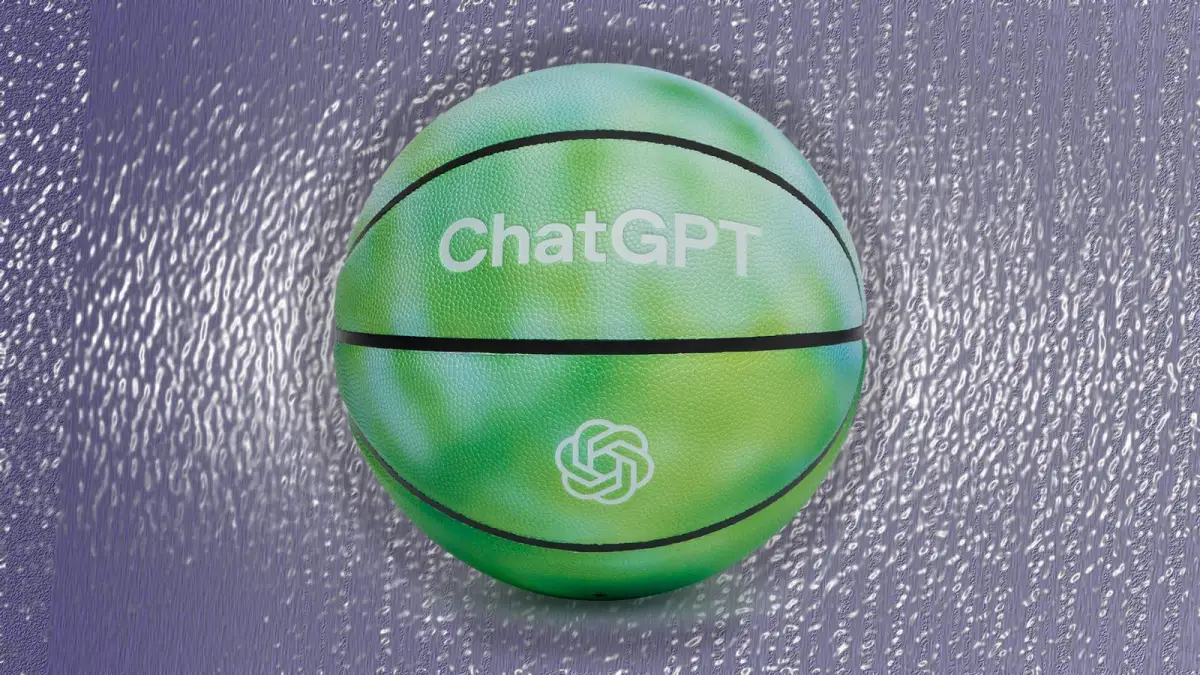
OpenAI is selling a $70 ChatGPT basketball as part of a broader merch and hardware push. The unusual product highlights how the company is turning AI branding into a lifestyle and culture play.
- OpenAI launched a $70 ChatGPT-branded basketball alongside new merch and a $230 mini keyboard.
- The company describes the ball as part of a “Pause. Play. Prompt.” campaign focused on creativity beyond screens.
- The product is made of rubber and positioned as an outdoor-friendly, premium branded item.
- The release shows OpenAI leaning more heavily into lifestyle branding and consumer identity.
- The basketball’s novelty is generating attention, which may be the point of the product drop.
OpenAI has begun selling a ChatGPT-branded basketball for $70, a surreal addition to a new merch lineup that also includes apparel and accessories tied to the company’s latest branding push. The release matters because it shows how the AI leader is trying to turn its products and identity into physical lifestyle goods, even as critics question who would actually buy them.
The basketball appeared alongside OpenAI’s first hardware product this week: a $230 mini keyboard positioned as a “command center for agentic work.” Together, the items suggest a broader attempt to translate OpenAI’s software-first brand into objects people can wear, hold, and display. But the basketball, with its unusual marketing language and premium price, is the item drawing the most attention.
OpenAI’s own product listing says the ball is part of a “Pause. Play. Prompt.” campaign, which the company describes as a reminder that creativity exists beyond screens. The company did not appear to offer much public explanation of the campaign elsewhere, leaving the basketball to stand as a strange but deliberate symbol of OpenAI’s attempt to frame AI not just as work software, but as part of a broader cultural identity.
What OpenAI is selling
OpenAI’s latest merchandise drop includes more than just novelty items. The collection blends consumer goods, branding language and company inside jokes into a retail line that looks designed for fans, founders and employees who want to signal affiliation with the company.
The most eye-catching product is the ChatGPT basketball, but the company is also offering clothing with phrases such as “Good research takes time,” along with a $175 quarter-zip sweatshirt that references academia. The result is a merch catalog that treats OpenAI less like a software company and more like a brand with a lifestyle aesthetic.
Why the basketball stands out
The basketball stands out because it is the least expected product in the lineup and because it has no obvious connection to OpenAI’s core business. A basketball is a practical sporting object, but in this case it also functions as a logo-driven status item, priced far above a basic recreational ball.
OpenAI says the ball is made entirely of rubber, which makes it more suitable for outdoor use than leather basketballs typically used in professional or indoor play. That detail gives the product a functional rationale, even if the branding remains the main story.
The company is asking $70 for the item, which places it in the realm of premium merch rather than standard sports equipment. The pricing is part of what makes the product feel more like a collectible than a court-ready ball for everyday pickup games.
How does the ChatGPT basketball fit OpenAI’s brand?
The ChatGPT basketball fits OpenAI’s brand by turning a tech identity into something tactile, playful and visibly cultural. It extends the company’s image beyond code, chatbots and enterprise tools and into a lifestyle space where branding is as important as utility.
That approach is not unusual for major tech companies, which often sell T-shirts, mugs and accessories as signals of loyalty or belonging. What is unusual here is the specificity of the object: a basketball is not a generic promo item but a highly recognizable sports product with its own social context.
OpenAI appears to be using the merchandise to do several things at once:
- reinforce brand awareness among users and enthusiasts;
- create a conversation piece that travels on social media;
- tie the company’s AI image to creativity and leisure;
- offer insiders and fans a more symbolic way to show affiliation.
That strategy has worked in the sense that the basketball is now part of the wider discussion around OpenAI’s consumer image. Whether it works commercially is a different question.
The “Pause. Play. Prompt.” message
The company says the basketball comes from a “Pause. Play. Prompt.” campaign, a phrase that reads like an attempt to connect generative AI habits with offline creativity. The wording suggests a balancing act: users can prompt models, but they should also step away, play and do something physical.
That framing is notable at a moment when AI firms are being criticized for encouraging endless screen time, nonstop productivity and constant experimentation. By attaching a sports product to a message about creativity beyond screens, OpenAI seems to be signaling that it wants its brand to feel less clinical and more human.
OpenAI’s product description frames the basketball as a physical reminder that creativity is not confined to digital devices, presenting the item as part of a broader campaign rather than a standalone joke.
Why is OpenAI selling merchandise now?
OpenAI is selling merchandise now because the company’s brand has become powerful enough to support products that are partly functional and partly symbolic. As its public profile grows, OpenAI is increasingly behaving like a consumer-facing label, not just an AI research lab or enterprise software maker.
The move also comes as AI companies are competing for cultural relevance as much as technical dominance. In that environment, merch becomes a low-risk way to deepen brand recognition, generate buzz and convert attention into revenue.
For companies in fast-moving technology markets, branded goods can serve several purposes:
- They create visible brand ambassadors among early adopters.
- They help the company appear more relatable and less abstract.
- They can make product launches feel more like events.
- They offer a small but meaningful source of direct sales.
In OpenAI’s case, the merchandise also helps the company project a distinct identity. The company has spent years becoming the face of consumer AI, and now it is using physical goods to reinforce that position.
What else is in the merch lineup?
The ChatGPT basketball is not arriving alone. OpenAI’s merchandise includes apparel and accessories that lean into self-aware startup culture, research aesthetics and references to academic life.
Among the offerings are items carrying slogans that sound like internal mantras or motivational notes for the AI era. The quarter-zip, priced at $175, is described in language that evokes campus life and research culture rather than casual streetwear.
This is where the merch line becomes more revealing. It is not trying to appeal to everyone. Instead, it seems aimed at a very specific audience: people who already understand OpenAI’s language, values and mythology.
| Item | Price | What it is | Why it matters |
|---|---|---|---|
| ChatGPT basketball | $70 | Rubber outdoor basketball branded with OpenAI’s ChatGPT identity | Turns AI branding into a lifestyle product |
| Mini keyboard | $230 | OpenAI’s first hardware product | Marks a move from software into physical devices |
| Quarter-zip | $175 | Branded apparel with academic-style language | Signals startup and research identity |
| Motivational merch | Varies | Clothing and accessories with phrases such as “Good research takes time” | Reinforces OpenAI’s internal culture outwardly |
How much is $70 for a basketball, really?
A $70 basketball is expensive for a recreational ball, but the price makes more sense when the product is understood as branded merchandise rather than sports gear. In that context, customers are paying for affiliation, not just for bounce and grip.
OpenAI’s price point also places the ball between novelty and collector territory. It is high enough to deter casual buyers, but not so high that devoted fans, employees or conference attendees might treat it as a souvenir or conversation starter.
The value proposition is therefore psychological as much as material. The buyer is not only purchasing a ball; they are buying a piece of the OpenAI identity and, perhaps, a wink at the absurdity of tech branding itself.
Why the price matters for SEO and brand perception
The price matters because it highlights a tension common in AI branding: companies want to appear accessible and playful while also signaling premium status. OpenAI’s merch manages both by combining a familiar object with an uncommon price tag.
That tension is part of the broader consumer story around AI companies. They are no longer just selling access to models; they are selling membership in a new technological culture. Merchandise like this can strengthen that feeling, even when it also invites mockery.
Who would buy a ChatGPT basketball?
The most plausible buyers are OpenAI enthusiasts, employees, conference-goers, collectors of tech memorabilia and people looking for a deliberately ironic purchase. The ball is likely to appeal less to serious basketball players than to those who appreciate tech culture as spectacle.
That market may sound narrow, but niche merchandise has become a reliable way for influential companies to generate attention. A product does not need mass appeal to be successful online; it just needs enough novelty to become a topic of conversation.
There is also a social signaling element. Carrying a ChatGPT basketball says something about the buyer’s relationship to AI: either admiration, skepticism, or a willingness to treat the company’s branding as part of one’s own identity.
What does this say about OpenAI’s strategy?
OpenAI’s merchandise line suggests that the company sees brand equity as an asset worth monetizing beyond subscriptions and enterprise contracts. The company has built enormous recognition in a relatively short time, and it now has the cultural leverage to experiment with products that function as both revenue sources and brand statements.
At the same time, the move reflects how AI firms are navigating a crowded consumer landscape. OpenAI is not just competing on model quality; it is competing on mindshare. When a company becomes a shorthand for an entire category, its logo can become as recognizable as any sports franchise or fashion label.
That is why a basketball matters. It is not because the product itself will move the business. It is because it shows that OpenAI believes its name can travel off the screen and into physical culture.
The broader trend: AI as lifestyle branding
OpenAI is not alone in trying to turn technical identity into lifestyle branding. Tech companies have long used merch to cultivate community, but the current AI wave has intensified that practice because so much of the competition is about trust, familiarity and cultural cachet.
In that sense, the basketball is part of a larger shift. AI companies are no longer speaking only to developers, researchers and enterprise buyers. They are trying to become household names, and household names often sell things that have little to do with their core software.
- Merch creates visibility outside product interfaces.
- Physical goods can humanize abstract technology brands.
- Novel items travel quickly across social platforms.
- Limited-run goods can make a company feel more exclusive.
OpenAI’s latest products lean into all four of those dynamics.
How the reaction reflects AI culture
The reaction to OpenAI’s basketball reveals a lot about how people now engage with AI companies: with curiosity, skepticism and a fair amount of irony. The product is easy to laugh at, but that laughter also keeps OpenAI at the center of the conversation.
That may be the point. Even when a merch item seems absurd, it can still perform useful public-relations work. It can generate posts, jokes and commentary while reinforcing the idea that the company knows how to keep itself in the spotlight.
There is a broader irony here too. AI companies often present themselves as builders of the future, but they also rely on old-fashioned branding tricks: logo placement, limited drops, aspirational apparel and collectible objects. The ChatGPT basketball is simply the latest version of that formula.
OpenAI’s new merch line appears designed to be both sincere and self-aware, blending product marketing with the kind of playful irony that has become common in startup culture.
Timeline: OpenAI’s physical-product push
OpenAI’s basketball is best understood as part of a small but notable shift toward hardware and merchandise. The company’s recent moves show a broadening of its physical footprint beyond software interfaces.
| Date | Development | Why it matters |
|---|---|---|
| This week | OpenAI launches a $230 mini keyboard | Signals an entry into hardware |
| Same release window | OpenAI lists a $70 ChatGPT basketball | Expands the brand into lifestyle merchandise |
| Concurrent merch drop | Clothing and accessories with research-themed slogans appear | Builds a more complete consumer identity around the company |
What comes next for OpenAI merch?
What comes next may depend on whether the company sees enough demand to expand the line or whether the basketball and related apparel remain a one-off novelty. If the response is strong, OpenAI could lean further into limited-edition physical goods that reinforce its brand.
That could mean more accessories, office items, apparel or other objects that make the company feel less like a software platform and more like a design-forward consumer brand. It could also mean more items aimed at the company’s most enthusiastic followers rather than the general public.
For now, the ChatGPT basketball does something more valuable than move units: it keeps OpenAI in the cultural conversation. In a crowded AI market, that kind of attention is often worth more than the merchandise itself.
Whether users see the ball as clever branding, a joke, or a sign of tech industry excess, it underscores the same reality: OpenAI is no longer just selling AI models. It is selling a world, and in that world, even a basketball can become a brand message.
Frequently asked questions
Why is OpenAI selling a ChatGPT basketball?
OpenAI is selling a ChatGPT basketball to extend its brand into physical merchandise and create a playful lifestyle product. The company says the ball is part of a campaign meant to remind people that creativity happens beyond screens.
How much does the ChatGPT basketball cost?
The ChatGPT basketball costs $70. That price puts it well above an ordinary recreational ball and suggests OpenAI is marketing it as branded merch or a collectible rather than standard sports equipment.
What is the ChatGPT basketball made of?
The ChatGPT basketball is made of 100% rubber, according to the product listing. OpenAI says that makes it better suited for outdoor play and more weather resistant than leather basketballs used on professional indoor courts.
What else did OpenAI release with the basketball?
OpenAI also released a $230 mini keyboard and a merch line that includes apparel with phrases such as “Good research takes time.” The collection appears designed to reinforce OpenAI’s identity as both a tech company and a cultural brand.
Who is likely to buy the ChatGPT basketball?
The most likely buyers are OpenAI fans, employees, collectors of tech memorabilia and people who enjoy ironic or novelty purchases. The product seems aimed more at brand enthusiasts than at serious basketball players.