In short
The Summer of Ludd, a New York anti-Big Tech festival, is using workshops, testimony and a puppet spokesperson to argue that modern technology has made life more isolated and extractive. Organizers say the Luddite movement is finding new traction among Gen Z and other people frustrated with social media, AI and platform power.
- Summer of Ludd is reframing “Luddite” as a serious critique of Big Tech rather than a slur.
- The movement uses no-phone events, workshops and public testimonies to push people back toward offline community.
- Organizers say social media, AI, dating apps and automation all contribute to isolation and inequality.
- The puppet spokesperson Gowanus is meant to preserve anonymity and avoid personality-driven activism.
- Gen Z and older participants alike are driving renewed interest in tech skepticism.
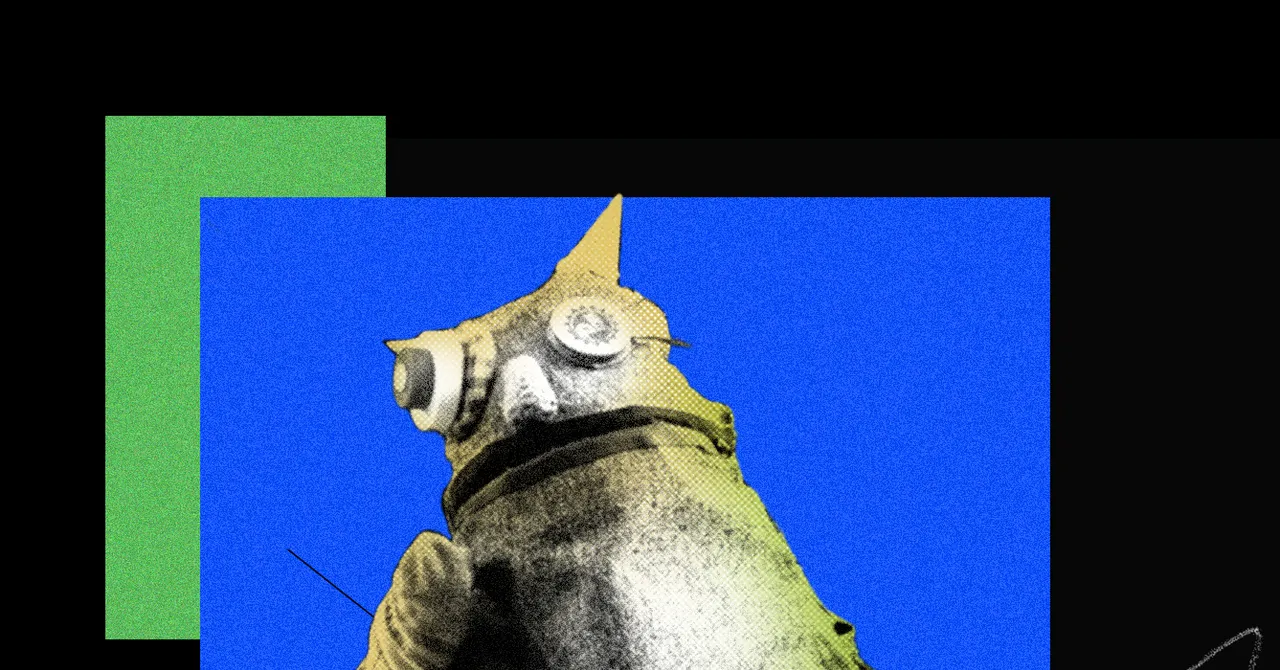
The Summer of Ludd, a New York festival built around anti-Big Tech activism, is drawing attention for turning digital fatigue into a public movement. In an interview with WIRED’s Manisha Krishnan, the festival’s puppet spokesperson, Gowanus, said the goal is to push people away from algorithmic platforms and back toward in-person community, long-form attention and tech skepticism.
The event, which took place in New York earlier this month, mixed workshops, protest performances and testimony-sharing with a simple rule: no phones, recordings or photos. Organizers say the appeal is especially strong among younger people who grew up online and are now questioning the costs of a hyperconnected life.
What is the Summer of Ludd?
The Summer of Ludd is a loosely organized anti-Big Tech festival and cultural movement that uses public gatherings to criticize the social, environmental and labor harms of modern technology.
At its New York event, attendees took part in workshops on social connection, event organizing and digital dependence, while also contributing to an “evidence” box that collected firsthand accounts of how technology has affected their lives.
The movement borrows its name and spirit from the original Luddites, the early 19th-century English textile workers who resisted machinery they believed would worsen exploitation and deepen inequality. Organizers argue that the word “Luddite” has been unfairly flattened into an insult, when in their view it should describe a serious critique of technology’s role in society.
Why is a puppet representing the movement?
The movement is fronted by a puppet because, its organizers say, anonymity is part of the message. Gowanus, the handmade media figure speaking for the festival, is meant to avoid creating a single charismatic leader while echoing the secrecy used by the historical Luddites.
The puppet’s backstory is intentionally theatrical: he is said to have been born in a Brooklyn dumpster, a nod to the neighborhood that shares his name. In practical terms, the puppet also gives the movement a recognizable public face without tying the work to one person’s identity.
Gowanus framed the choice as a way to stay true to a tradition of anonymous organizing, arguing that the original Luddites hid their identities because they were confronting powerful institutions and punitive authorities.
That unusual format may sound gimmicky, but it serves a strategic purpose. The festival’s organizers are trying to communicate through the media while resisting the logic of influencer culture, branding and personality-driven activism.
How does the movement define modern Luddism?
Modern Luddism, according to the Summer of Ludd, is not about rejecting every machine. It is about challenging technologies that intensify inequality, weaken community ties or turn people into data points for corporate extraction.
Organizers draw a distinction between tools that genuinely serve the public and platforms that shape behavior to maximize engagement, profit and surveillance. Their critique extends from social media and dating apps to automation, AI tools, data centers and consumer devices they see as part of the same system.
Rather than framing technology as neutral progress, the movement argues that every major platform has winners and losers. It asks who benefits: ordinary users, or the executives and investors behind the products?
What the organizers say is at stake
Their argument is that tech platforms have changed not just how people communicate, but how they relate to one another. In their view, endless feeds, algorithmic recommendation systems and app-based relationships encourage isolation, distraction and shallow forms of connection.
They also connect digital infrastructure to material costs. Data centers require land, electricity and water; delivery and warehouse systems can impose harsh working conditions; and software tools can be designed to replace rather than support human labor.
For the movement, this is not nostalgia. It is a claim that the modern tech economy produces social damage that can no longer be dismissed as the price of convenience.
What happened at the festival?
The New York gathering included a wide range of activities designed to turn criticism into practice. Some sessions focused on offline social skills, while others explored ways to build communications systems outside the major social platforms.
One workshop encouraged attendees to create their own events calendars and information channels, reflecting frustration that local culture has become increasingly difficult to discover through Instagram and similar services.
Another session focused on in-person flirting, but with a twist: rather than selling confidence as a product, the exercise centered on learning how to handle rejection and express interest directly without relying on app-based matching.
The event also featured a box where participants could submit testimonies about harms linked to technology. Those stories became a form of community evidence, turning personal frustration into political critique.
| Festival element | Purpose | What it says about the movement |
|---|---|---|
| Delete Day | Group app deletion and discussion | Shows that quitting platforms is hard and social support matters |
| Events calendar workshop | Teach alternatives to platform-based discovery | Promotes owned media and local community infrastructure |
| Luddite Rizz | Practice direct flirting and coping with rejection | Pushes back against transactional dating culture |
| Evidence box | Collect testimonies about tech harms | Transforms private grievances into a shared political record |
| SHITPHONE protest | Satirical demonstration with themed “trials” of technologies | Uses performance to critique neoliberal tech culture |
Why are Gen Z users embracing a Luddite label?
Gen Z is embracing the label because many young people feel they were raised inside a system that treated their attention as a commodity.
The movement’s organizers argue that today’s under-30 users did not just adopt technology; they were immersed in it at the exact age when habits, identity and social life were still being formed. That makes some of them more willing to question what the internet has done to friendships, dating, work and self-worth.
They also suggest that younger people have grown up with a clearer view of the downside: addiction-based platform design, social comparison, body-image pressure, and the feeling that real life has been displaced by scrolling.
But the appeal is not limited to one generation. The festival, according to the organizers, also brought in older attendees who described loneliness, alienation and unease with a society increasingly shaped by tech billionaires.
How do organizers connect tech criticism to daily life?
They do it by focusing on concrete problems, not abstract ideology. The movement links technology to dating, labor, family life, social discovery and mental health.
For example, organizers criticized social media for making it harder to find local events without scrolling through endless algorithmic noise. They argued that community groups, churches, unions and small cultural venues are often pushed into corporate platforms because those platforms already have the audience.
But that dependency comes at a cost. Once local groups rely on Instagram or similar services, they have to shape their messaging for the algorithm, not their communities. The result, the organizers say, is that public life becomes filtered through a system built for engagement rather than shared civic participation.
They say newsletters, RSS feeds and self-owned event tools can restore some of that lost autonomy.
Why do they care about the way people date?
They care because dating apps, in their view, train people to think about attraction as a series of fast judgments instead of a social process involving vulnerability, rejection and nuance.
That criticism was central to the “Luddite Rizz” workshop, which reframed flirting as an exercise in direct communication rather than optimized performance. The point was not to guarantee success; it was to rebuild the muscle for saying what you mean and accepting the answer.
Organizers argue that app culture can make romance feel disposable and replace emotional uncertainty with frictionless swiping. In response, they want to restore face-to-face interaction as a skill worth practicing.
What kind of evidence did people bring?
The evidence box turned out to be one of the most revealing parts of the event because it captured the breadth of people’s concerns.
One story involved a family conflict after a parent relied on ChatGPT for advice about whether a rabbit could safely eat mushrooms. According to the account shared at the festival, the chatbot gave a dangerously misleading response, and the rabbit became seriously ill after being fed the food in question.
Another testimony came from someone describing a parent working in Amazon’s warehouse system under punishing temperatures and difficult conditions, including limited access to water and bathroom breaks. The organizers used that kind of story to illustrate how the tech economy depends on hidden labor.
A separate account focused on Meta Ray-Bans, the smart glasses that can record video, which one participant described as especially troubling in public spaces because they can be used to film strangers without consent.
Festival organizers treated these stories as evidence that tech harms are not theoretical. They said the consequences show up in households, workplaces, public transit and intimate relationships.
How does the movement view AI?
The movement sees AI as part of a broader automation wave that affects both white-collar and blue-collar workers.
Organizers argue that people are being encouraged to automate themselves out of relevance, whether through tools that replace entry-level coding work or through systems that reshape creative, administrative and customer-service jobs. In their telling, AI is not just a technical breakthrough; it is another force accelerating labor displacement and social uncertainty.
They are especially critical of the way AI products can flatter users while offering unreliable information. The bunny story at the festival was meant to underline that point: a chatbot can sound confident and caring while still being wrong in ways that matter.
That combination of persuasive language and factual weakness, organizers say, is part of why people should be skeptical about treating AI as a trusted authority.
Why is the movement more than a digital detox?
It is more than a digital detox because it is trying to build an alternative social environment, not just encourage individual restraint.
Digital detox culture often focuses on private discipline: put the phone down, log off for a weekend, or cut back on screen time. The Summer of Ludd argues that this misses the structural side of the problem. If platforms dominate communication, commerce and social discovery, then one person’s detox does little to change the system.
That is why the movement emphasizes communal action. Group app deletions, public discussions and shared offline events are meant to make disengagement feel achievable rather than isolating.
The organizers’ larger thesis is that people need institutions and habits that can replace the functions now concentrated in Big Tech platforms.
What does the original Luddite history add to the debate?
It adds labor history, political memory and a reminder that technological change has always had winners and losers.
The original Luddites were not simply anti-machine. They opposed the use of machinery in ways that undermined wages, dignity and collective life. That historical distinction is central to the modern movement’s messaging.
By invoking the Luddites, the festival is trying to reclaim a label long used as a synonym for backwardness. Instead, it presents Luddism as a framework for asking whether a technology serves human needs or intensifies exploitation.
That framing gives the movement intellectual cover while also making it easier to speak about current debates over AI, surveillance, labor, creative work and environmental costs.
Timeline of the Summer of Ludd’s public message
The movement may be newly visible, but its public story has a clear sequence. The table below outlines how the message developed during the New York event and the surrounding interview.
| Stage | What happened | Why it matters |
|---|---|---|
| Historical reference | Organizers linked the movement to the original Luddites | Provides a political and labor-based framework |
| Festival event | New York gathering with no-phone rules and workshops | Turns critique into lived practice |
| Public storytelling | Attendees submitted testimonies about tech harms | Builds a shared evidence base |
| Media outreach | Gowanus appeared as a puppet spokesperson | Maintains anonymity while courting coverage |
| Broader campaign | Criticism expanded to AI, social media, labor and surveillance | Positions the movement as a systemic critique, not a nostalgia act |
Who is this movement trying to reach?
It is trying to reach people who feel stuck inside technology but do not necessarily hate it outright.
That includes young adults tired of algorithmic social life, workers worried about automation, parents concerned about their children’s online habits, and communities that have lost physical gathering spaces. It also includes people who are not ready to reject devices altogether but are open to challenging the power of the firms behind them.
The movement’s organizers are clear that they are not appealing only to ideological purists. They want broad coalitions, especially among people already experiencing the downsides of digital dependency.
That may explain why the festival blends satire, protest and practical workshops. It is trying to make the critique legible without making it feel joyless.
What the backlash says about tech culture now
The rise of Luddite aesthetics and activism points to a deeper shift in how people talk about progress.
For much of the past decade, the default assumption in tech culture was that new tools were inherently positive if they were fast, scalable and widely adopted. The Summer of Ludd rejects that premise. It asks whether a tool builds community or fragments it, whether it improves life or monetizes attention, whether it distributes value or concentrates power.
That approach resonates at a moment when many users feel oversaturated by content, overwhelmed by notifications and suspicious of the idea that every human activity should be app-mediated.
It also reflects a broader cultural impatience with the idea that if a company is innovative, it must therefore be good.
Could this become a lasting trend?
It could, because it is not only a style statement; it is a response to lived frustration.
Movements built around resistance to tech have appeared before, but the Summer of Ludd appears to be tapping into a wider mood: people want more privacy, more agency, more direct contact and more control over how their attention is used. If those concerns keep growing, anti-Big Tech activism may continue to spread beyond niche circles.
Whether the movement becomes durable will depend on whether it can turn satire and symbolism into institutions people can actually use. That means newsletters, local event networks, offline communities, labor solidarity and practical alternatives to the dominant platforms.
The organizers seem aware of that challenge. Their messaging repeatedly returns to ownership, community and shared practice rather than simple abstinence.
The bigger picture
The Summer of Ludd is not just a quirky festival with a puppet spokesman. It is part of a wider backlash against platform power, AI hype and the social costs of always-on connectivity.
By combining historical memory, performance art and practical organizing, the movement is trying to make anti-tech criticism feel immediate rather than nostalgic. Its core claim is straightforward: technology should be judged by what it does to people, not by how new or profitable it is.
That message may sound radical to Silicon Valley’s old playbook, but it is increasingly common among users who feel the promises of the internet have not been matched by its consequences. The Summer of Ludd is betting that those users are ready for something different: less scrolling, more presence and a sharper eye for who truly benefits from the machines shaping daily life.
Quick facts
- The Summer of Ludd held a no-phones festival in New York earlier this month.
- The movement uses a puppet named Gowanus as its media spokesperson.
- Its focus is on criticism of Big Tech, social media, AI, automation and platform dependence.
- Workshops included offline flirting, event-building and app deletion sessions.
- Organizers say the movement is gaining traction among Gen Z and older participants alike.
For the movement’s supporters, the question is no longer whether technology shapes society. It is whether society can still shape technology back.
Frequently asked questions
What is the Summer of Ludd?
The Summer of Ludd is a New York-based anti-Big Tech festival and organizing effort that critiques social media, AI, automation and platform culture. It combines public events, workshops and testimony-sharing to promote offline community and technology skepticism.
Why does the movement use a puppet spokesperson?
The movement uses a puppet spokesperson to preserve anonymity and avoid building a celebrity leader around the project. Organizers say that choice echoes the original Luddites, who often operated anonymously while resisting exploitative uses of technology.
Is the Luddite movement against all technology?
No, the Luddite movement is not against all technology. Its organizers say they support tools that genuinely serve people, but oppose technologies they believe intensify inequality, weaken community, extract data or encourage harmful dependence.
Why are young people attracted to Luddite ideas?
Young people are attracted to Luddite ideas because many grew up inside social media and app-based culture and now feel the effects of attention addiction, loneliness, dating fatigue and algorithmic pressure. The movement gives those frustrations a political language.