In short
A new look at ELIZA shows that the first chatbot was not just a novelty but a blueprint for the modern conversational AI interface. The story also explains why people still project understanding onto chatbots like ChatGPT.
- Recovered ELIZA code and scripts reveal the chatbot was a flexible system with multiple personas, not just one famous therapist routine.
- The ELIZA effect describes how people project intelligence and empathy onto simple responsive programs.
- Weizenbaum warned early that conversational software could mislead users and obscure the human labor behind computing.
- Modern chatbots and large language models still rely on the same powerful conversational interface ELIZA popularized.
ELIZA, the 1960s text program often credited as the first chatbot, is more than a historical curiosity: newly recovered source code and script material show how it helped shape the way people still talk to ChatGPT-style systems today, especially the habit of treating a machine like a listener. The discovery matters because it reveals that many of the assumptions behind modern AI conversation were present from the start — and so were the risks of overtrust, projection and emotional attachment.
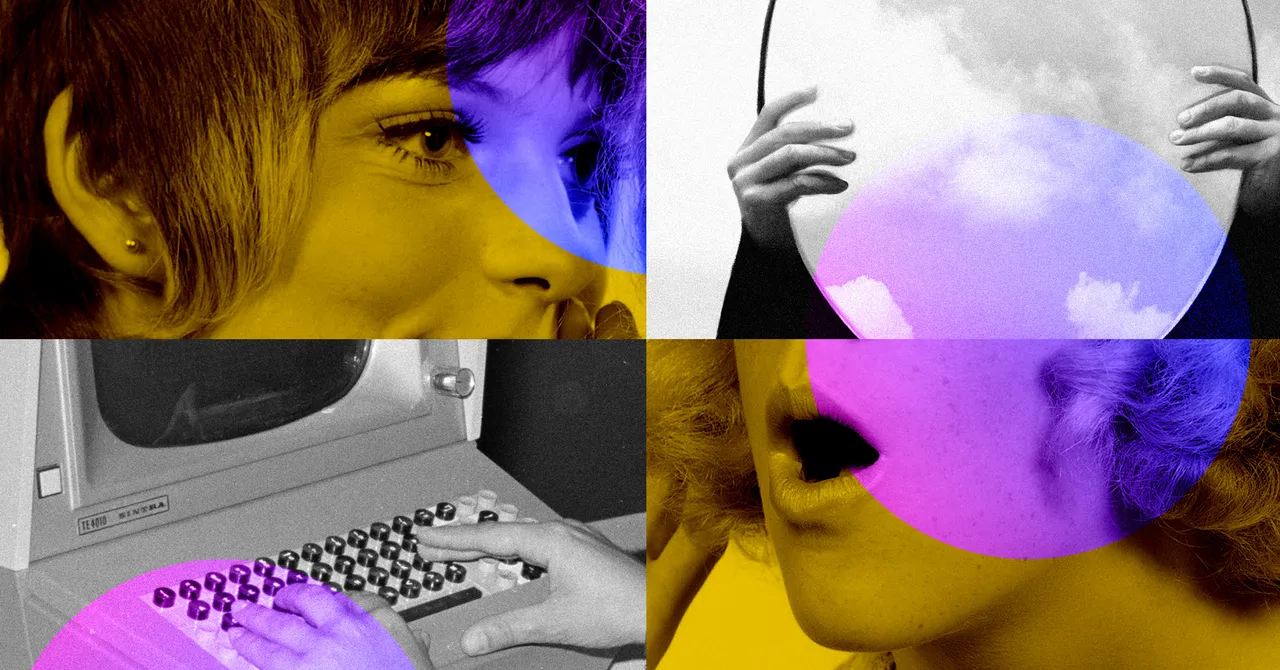
For decades, ELIZA was remembered mainly through a famous therapist-style exchange that seemed to demonstrate an automated psychologist capable of drawing out secrets. But the fuller story, now revisited in a new book, is more complicated. Researchers working from MIT Archives say they have reconstructed the original code and uncovered additional dialogs for different ELIZA scripts, showing that there was not one ELIZA but many versions built for different personas and tasks.
That deeper look turns ELIZA from a pop-culture milestone into a case study in how conversational systems are designed, how users interpret them and why artificial intelligence still inherits so much of its social meaning from a program written nearly 60 years ago.
What is ELIZA, and why does it still matter?
ELIZA is a landmark computer program from the 1960s that generated text responses through scripted pattern matching, and it still matters because it established the conversational interface that dominates AI today.
Most people know ELIZA through a short exchange that has been repeated in books, lectures and articles for years. In the standard version, a user says that her boyfriend made her seek help, and the program responds in a way that reflects the user’s own words back to her. The result feels oddly attentive, even though the system is doing no real understanding in the human sense.
That apparent empathy is precisely what made ELIZA influential. Its responses were simple, but the effect on users was powerful. People frequently supplied meaning, emotion and personality that the program itself did not possess. That gap between system behavior and human interpretation became one of the most important lessons in AI history.
According to the authors of the new book Inventing ELIZA, the recovered code and scripts show that the chatbot’s story has been simplified for years. ELIZA was not a single fixed invention but a family of programs and personas, each built to run on top of a reusable system. That matters because it changes ELIZA from a one-note novelty into an early platform for conversational automation.
Why did the recovered source code change the story?
The recovered source code changes the story because it reveals how much of ELIZA’s history has been told without direct access to the program itself.
For a long time, the public understood ELIZA through anecdotes, secondary accounts and a handful of famous excerpts. That included the notion that Joseph Weizenbaum had created a kind of fake psychotherapist that fooled people into believing it understood them. The newly surfaced code complicates that legend by showing the engineering underneath the performance.
The archival material lets researchers examine the actual logic of the system rather than relying on myth. It also surfaces previously unseen dialogs for scripts beyond the best-known “DOCTOR” persona, underscoring that ELIZA was designed as a flexible framework. In other words, the system was already experimenting with what today would be called configurable personas or promptable behaviors.
That recontextualization matters for modern AI because many current systems rely on the same user experience principle: the interface feels open-ended, while the machinery beneath it remains hidden. The more seamless the interaction, the easier it is for users to forget that they are speaking to a designed system rather than a person.
| Milestone | Approximate date | Why it matters |
|---|---|---|
| ELIZA introduced | 1966 | Showed that simple text rules could create the feeling of conversation |
| Computer Power and Human Reason | 1976 | Weizenbaum critiqued overtrust in computing and the social effects of automation |
| “ELIZA effect” enters common use | By the 1990s | Described how people project intelligence onto responsive programs |
| Modern chatbot era | 2020s | Large language models revive ELIZA-like interfaces at massive scale |
| New archival reconstruction | 2026 | Reveals code, scripts and a broader history of the original chatbot |
How did ELIZA work?
ELIZA worked by matching patterns in user input and transforming them into prewritten responses, not by understanding language the way people do.
That distinction is central to the story. Weizenbaum was explicit that the program was not meant to be intelligent in any human sense. In his own explanation of the system, he stressed that ELIZA discarded most of what it received and avoided the kind of memory or reasoning needed for genuine understanding.
Instead, the program’s strength lay in concealment. It did enough to maintain conversational flow while leaving users to fill in the rest. The illusion of comprehension came from the user’s own interpretive work, not from a machine mind.
This design helped establish a durable pattern in conversational AI: a program can be strategically limited and still feel surprisingly capable if it handles tone, turn-taking and contextual echoes well enough. That insight has echoed through decades of natural language processing, virtual assistants and large language models.
What made the DOCTOR persona so effective?
The DOCTOR persona was effective because therapy-style conversation naturally invites reflection, elaboration and projection.
A therapist-like script does not need to solve a problem to appear responsive. It only needs to ask open-ended questions, mirror phrases and sustain the user’s attention. ELIZA’s DOCTOR routine did exactly that. Its apparent curiosity encouraged people to provide more detail, which in turn gave the impression that the system was following along.
That conversational loop helped create what later came to be called the ELIZA effect: the human tendency to read depth, insight and empathy into a system that is actually operating with relatively shallow mechanics. In today’s AI landscape, the same phenomenon can make chatbots feel more knowledgeable or sentient than they are.
Joseph Weizenbaum later argued that the public reaction to ELIZA showed how quickly people could treat a computer as if it were a person capable of understanding intimate disclosures.
Who was ELIZA named after, and why does the name matter?
ELIZA was named after Eliza Doolittle, and the name matters because it links the chatbot to questions of speech, identity and social performance.
In George Bernard Shaw’s Pygmalion, Eliza Doolittle is taught to change the way she speaks so she can pass as someone from a higher social class. That story is about language as social transformation. Weizenbaum’s program draws on the same idea: by changing its style of speech, the machine appears to take on a persona.
The name therefore does more than provide a memorable label. It places the chatbot inside a larger cultural discussion about who gets to sound intelligent, who is seen as belonging and how speech can be used to perform identity. Those questions remain highly relevant in AI, where voice, tone and register often shape whether users trust a system.
How does gender shape the ELIZA story?
Gender shapes the ELIZA story because the system emerged from, and helped reinforce, assumptions about who speaks, who listens and who is imagined as a professional authority.
The famous therapist persona was called DOCTOR, a title that would have read as male-coded in the 1960s. At the same time, the typical stories surrounding the system feature unnamed women revealing private concerns to that artificial authority. That framing is not neutral; it carries social meaning about masculinity, authority and emotional labor.
The article’s authors connect this to broader ideas about performance, including Judith Butler’s theories of gender performativity. The point is not that ELIZA itself had beliefs or identity, but that its scripted interactions staged identity in ways that mirrored real social performance. The system’s seeming neutrality was always embedded in culture.
What is the ELIZA effect?
The ELIZA effect is the tendency to attribute intelligence, empathy or understanding to a computer system that is only giving the appearance of those traits.
Sherry Turkle has described the effect as a tendency to treat responsive programs as more intelligent than they truly are, while Douglas Hofstadter has defined it as the habit of reading too much understanding into symbolic strings produced by machines. Both definitions point to the same core dynamic: humans are willing to supply a great deal of meaning when a system gives just enough conversational feedback.
The effect is not limited to old software. It has become one of the defining features of the modern AI era. As chatbots become more fluent, the temptation to overinterpret them grows stronger. The system does not have to be conscious to trigger emotional attachment, social trust or mistaken confidence in its abilities.
That matters because misleading fluency can have practical consequences. Users may overshare, overrely on outputs, or assume a system has judgment, memory or moral perspective when it does not. What once looked like a quirky psychological curiosity now has consequences across education, healthcare, customer service and search.
How did ELIZA influence modern AI?
ELIZA influenced modern AI by normalizing the idea of a conversational interface and by helping define the expectations people bring to machine dialogue.
Long before large language models, researchers were already working on related areas such as machine translation, semantic networks, speech recognition, speech synthesis and text analysis. ELIZA sat near the beginning of that history, overlapping with the early development of what is now called natural language processing. It helped show that language could be treated as a computational problem with both technical and social dimensions.
Over time, those fields diverged and recombined. Different methods — syntactic, semantic, statistical and stochastic — rose and fell in popularity, yet the conversational interface remained compelling. Today’s chatbots may use vastly more data and compute than ELIZA ever could, but to the user they still often look like a text box waiting for a human-style exchange.
That continuity is one reason the comparison is so useful. ELIZA exposes a basic truth about AI products: the user interface can be far more persuasive than the underlying method. In current systems, statistical prediction, rule-based filtering and human labor may all be hidden behind a single conversational window.
Why do modern chatbots resemble ELIZA so closely?
Modern chatbots resemble ELIZA closely because the conversational window remains the most intuitive way to present machine intelligence to the public.
A chat interface is immediately legible. It suggests back-and-forth exchange, agency and availability. It also disguises complexity. A user does not see the training data, the prompt architecture, the moderation layers or the human work involved in shaping outputs. ELIZA’s greatest innovation may have been showing how powerful that concealment can be.
In that sense, the current wave of generative AI is not a break from ELIZA’s past but a continuation of it. The technical stack has changed dramatically, but the social effect is similar: people encounter a conversational surface and infer a mind.
What did Weizenbaum warn about?
Weizenbaum warned that people would use computer systems in ways that strip language of context, reduce human beings to data points and encourage harmful forms of automation.
His concerns were not limited to technical limitations. He feared a world in which computers would be treated as authorities in domains where judgment, empathy and moral responsibility matter. He argued that language cannot be fully detached from the human situations that give it meaning, and that abstracting it too aggressively into software could be dehumanizing.
That warning now sounds remarkably contemporary. Modern AI systems are embedded in hiring, education, healthcare, content moderation, search and customer support. In each of those areas, the stakes are high if a system misreads context, reproduces bias or replaces human judgment with automated guesswork.
Weizenbaum argued that people are dehumanized when they are treated as less than whole persons and processed in ways that ignore the social contexts that make language meaningful.
Why does this matter for today’s AI industry?
This matters for today’s AI industry because current products are often sold on the promise that more automation will produce more intelligence, more efficiency and fewer human constraints.
That promise is not new. Weizenbaum was already skeptical of the idea that technological acceleration automatically leads to progress. What he saw in ELIZA was a system that could seduce users into granting it more authority than it deserved. What he later saw in computing more broadly was an industry moving quickly toward scale, abstraction and social influence.
The same tensions are visible now in debates over model transparency, labor, copyright, privacy and safety. Chatbots depend on huge volumes of human-created text, yet the human labor behind them is often invisible. The result is a system that appears autonomous while remaining deeply dependent on people, institutions and infrastructure.
How does the ELIZA story connect to labor, data and scale?
The ELIZA story connects to labor, data and scale because modern chatbots are built on enormous collections of human expression that are often treated as raw material rather than creative work.
Unlike ELIZA, which relied on hand-written patterns and scripts, current large language models are trained on vast datasets and supported by complex supply chains of compute, annotation, moderation and evaluation. That structure can obscure the amount of human effort involved in making the systems function and appear helpful.
The article argues that this hidden labor is part of the contemporary AI business model. Systems can seem magical at the interface while depending on physical infrastructure, data extraction and human oversight underneath. That hidden layer is not a bug; it is part of how these products are packaged and sold.
- Training data: large corpora assembled from human writing, conversation and media.
- Human review: moderation, labeling and safety checks that shape model behavior.
- Compute infrastructure: the energy- and hardware-intensive systems that run model inference and training.
- Interface design: the conversational wrapper that makes prediction feel like dialogue.
Seen this way, ELIZA was a primitive version of a much larger pattern: the creation of a usable machine persona that hides the mechanisms beneath it.
What does ELIZA reveal about AI hype?
ELIZA reveals that AI hype often depends less on genuine machine understanding than on the public’s readiness to interpret smooth interaction as intelligence.
That lesson is especially relevant now, when large language models can produce polished prose, plausible explanations and emotionally tuned replies. The interface can persuade users that the system knows more than it does, remembers more than it can, or cares more than it ever could. ELIZA showed that this psychological effect is not a side issue; it is central to how conversational systems gain traction.
The danger is not just disappointment when the illusion breaks. The deeper risk is that institutions may start to rely on systems that perform competence without possessing it. That can lead to errors, discrimination, hidden labor exploitation, privacy problems and a general weakening of accountability.
Weizenbaum’s discomfort with ELIZA was therefore not an overreaction to a toy program. It was an early response to a pattern that has become foundational to consumer AI: the deliberate construction of interfaces that invite trust faster than understanding can arrive.
How should readers think about ELIZA now?
Readers should think about ELIZA now as both a technical artifact and a cultural warning.
As a technical artifact, ELIZA demonstrates how little machinery may be needed to create the feeling of dialogue. As a cultural warning, it shows how readily people project agency, expertise and empathy onto machines that merely reflect language back at them.
That dual lesson is especially useful in 2026, when AI systems are increasingly woven into everyday life. The question is no longer whether a chatbot can pass as human in a narrow exchange. The question is what social relationships, assumptions and incentives are being built around systems that appear conversational but remain fundamentally statistical and organizational products.
ELIZA endures because it sits at the origin point of that question. It was one of the earliest programs to reveal that conversation itself could be a powerful interface, and one of the earliest to show how easily that interface can be mistaken for intelligence.
Timeline: from ELIZA to today’s chatbots
The path from ELIZA to modern generative AI is not a straight line, but a series of overlapping technical and cultural developments.
- 1960s: ELIZA demonstrates text-based conversation through rules and pattern substitution.
- 1970s: Weizenbaum critiques the social consequences of computer authority and automation.
- 1980s-1990s: Researchers expand work in NLP, speech and knowledge representation while the term “ELIZA effect” gains traction.
- 2000s-2010s: More sophisticated conversational systems emerge, with assistants and customer-service bots becoming common.
- 2020s: Large language models popularize chat interfaces that feel far more capable but still rely on the same human tendency to project understanding.
What changed most was not the basic user experience but the scale of the machinery producing it. That is why a 1960s chatbot can still illuminate a 2020s industry.
Bottom line: why ELIZA still speaks to the AI age
ELIZA still speaks to the AI age because it exposed a durable fact about human-computer interaction: when a system sounds attentive, people are often willing to treat it as intelligent, empathetic and meaningful even when it is not.
The newly reconstructed code and expanded historical record do not just fill in a missing technical detail. They clarify how much of today’s AI conversation was already present in the earliest chatbot era — the interface, the persona, the projection, the hype and the unease. That is why ELIZA remains essential reading for anyone trying to understand why people confide in chatbots, why companies market them as companions and why the gap between appearance and understanding still matters.
Frequently asked questions
What is the ELIZA effect?
The ELIZA effect is the tendency to treat a computer program as more intelligent, empathetic or aware than it really is. It happens when users project human qualities onto a system that is only producing responsive text.
Why is ELIZA important in AI history?
ELIZA is important because it was one of the first programs to make human-computer conversation feel natural. It helped establish the chatbot interface and showed how easily people could mistake scripted responses for understanding.
How did ELIZA work without real intelligence?
ELIZA worked by matching patterns in user input and transforming them into prewritten replies. It did not reason, remember much context or understand language the way a person does, but it still created a convincing conversational experience.
What did Weizenbaum worry about?
Weizenbaum worried that people would overtrust computers, confuse fluent output with understanding and use software in ways that strip language of human context. He also warned that automation could dehumanize users and hide social harms.
Why does ELIZA still matter in the age of ChatGPT?
ELIZA still matters because modern chatbots use the same basic strategy of making interaction feel personal and intelligent. The ELIZA effect helps explain why users may trust ChatGPT-like systems more than they should.