In short
HUD withheld more than 100 records about AI-assisted policy work connected to DOGE, citing FOIA privileges and prompting concerns about transparency. Experts say the government has no AI-specific disclosure rule, leaving a growing gap around how chatbots influence policy.
- HUD used AI in work tied to policy and regulatory decisions involving DOGE personnel.
- The agency withheld more than 100 related records, citing FOIA exemptions including deliberative process privilege.
- Some file names appear to reference AI prompts and regulatory analysis, but the contents remain hidden.
- Transparency advocates say there is no federal law requiring disclosure when AI is used in policymaking.
- Experts argue the case could become an important test of how FOIA applies to chatbot-era government records.
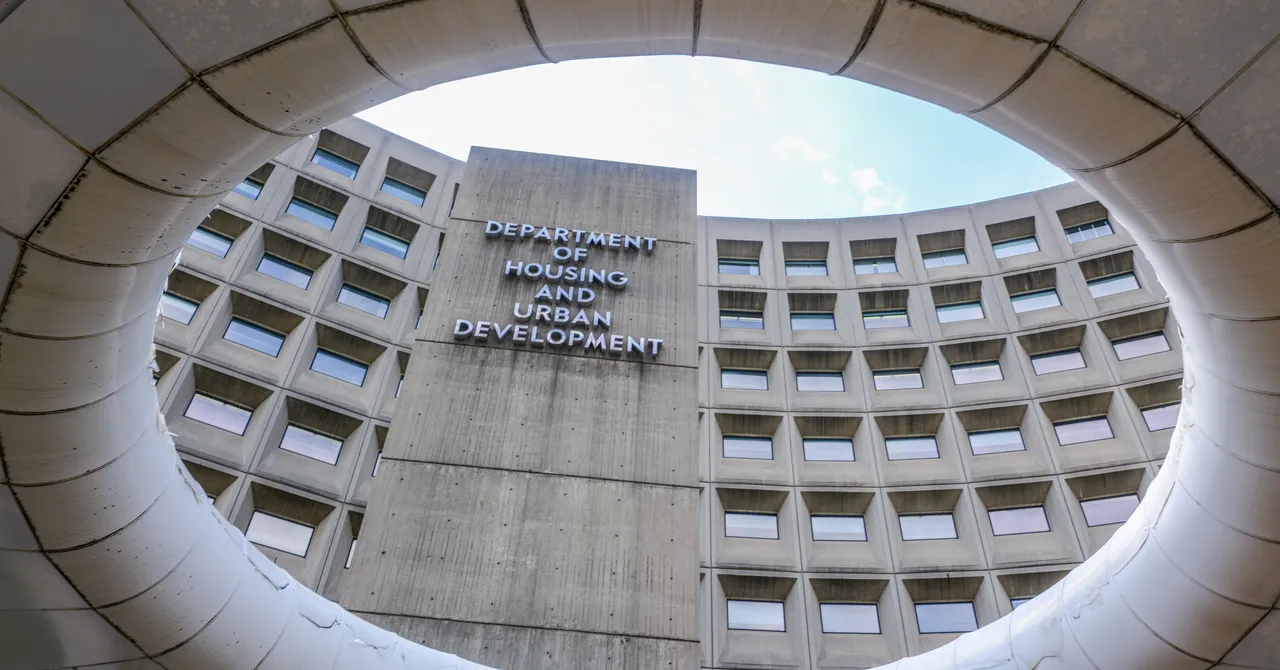
The Department of Housing and Urban Development used artificial intelligence in work tied to policy and regulatory decisions while DOGE personnel were embedded at the agency, and HUD is now withholding more than 100 related records from public release. The documents were withheld under FOIA exemptions that critics say do not clearly apply to AI, raising new questions about how the federal government is using chatbots and prompts behind closed doors.
The dispute matters because the records suggest AI may have helped shape decisions about regulations affecting housing policy, while the public still has little visibility into what those tools were asked to do, what information they produced, or how agency officials relied on them.
In the latest development, documents obtained through a Freedom of Information Act request by Democracy Forward indicate that HUD has declined to turn over a large set of files related to AI-assisted decision-making. Some file names appear to point directly to prompt creation and regulatory analysis, but the agency’s explanations remain broad and, in some cases, legally contested.
The episode offers a rare look at how an emerging federal bureaucracy of “efficiency” and deregulation has intersected with AI. It also highlights a larger policy gap: there is currently no U.S. law that specifically forces agencies to disclose whether AI was used to develop rules, regulations or policy proposals.
What happened at HUD?
HUD staff members working under the DOGE banner used artificial intelligence in efforts connected to policy decisions, according to previously reported accounts and the newly surfaced records. The documents suggest the tools were not being used simply for clerical help or note-taking, but in a process that involved identifying rules for potential rescission and drafting or testing prompts for regulatory analysis.
The records were sought by Democracy Forward, a nonprofit legal group that has pushed for transparency around federal AI use. HUD withheld more than 100 documents and relied largely on a FOIA exemption covering deliberative materials. In several instances, the agency’s descriptions suggest the withheld files may relate to AI prompts, AI-assisted analysis, or policy work that incorporated machine-generated output.
That secrecy is now the heart of the dispute. While agencies commonly protect draft material and internal debate from disclosure, legal experts say the addition of AI does not automatically create a new layer of protection. The issue is whether a prompt to a chatbot can be treated like private deliberation among government employees, or whether it should be treated as part of the public record when it helps shape official action.
Who was involved in the DOGE-HUD effort?
The effort appears to have involved at least two prominent DOGE-linked figures: Christopher Sweet and Scott Langmack. Sweet was a University of Chicago student when he joined the HUD effort last year, according to earlier reporting. Langmack, who previously worked at a property technology startup called Kukun, has since taken a role as executive director of deregulation AI at the Office of Management and Budget.
HUD employees previously told WIRED that Sweet’s main task was using AI to help identify agency rules that might be targeted for cancellation. Staff were reportedly asked to review and comment on regulations flagged by the system. Some employees said the exercise was redundant, implying that the AI layer did not add much beyond what existing staff already did.
Sweet graduated in June with an economics degree from the University of Chicago. Langmack’s current OMB position places him inside the executive branch apparatus that shapes how federal agencies interpret the administration’s deregulatory agenda. The move underscores how quickly people associated with DOGE-style government experiments have moved into formal posts.
“The public has a right to understand its impact,” Democracy Forward’s senior oversight counsel Dan McGrath said of the government’s AI use in policymaking, arguing that the existing secrecy claims appear to go beyond what traditional privileges were designed to protect.
How are the records being withheld?
HUD is leaning heavily on Exemption 5 of the Freedom of Information Act, a long-standing shield for internal deliberations. That exemption covers documents that are pre-decisional and part of the agency’s decision-making process, protecting candor among government staff as they discuss options before taking final action.
But the agency’s descriptions go further in some cases. Several withheld files are labeled in the FOIA response with phrases such as “draft of AI prompt,” “deliberative AI input,” and “deliberation of AI prompt.” Those labels are unusual enough that even advocates familiar with government secrecy say they point to a new frontier in records law.
In other instances, the files appear to be related to “regulatory analysis” for specific HUD programs. Some document names suggest the work involved developing prompts intended to generate or structure economic analysis. Others appear tied to template workflows or prompt directories, hinting at a more formalized use of generative AI in policymaking.
The government also invoked presidential communications privilege in a small number of cases. That doctrine generally protects direct advice to the president and close advisers, and legal observers say its appearance in a HUD records dispute raises fresh questions about how far up the chain some of the AI-related material may have traveled.
Why the FOIA exemptions matter
FOIA exemptions are supposed to balance transparency with the government’s need to deliberate in private. The concern here is that HUD may be stretching those rules to cover material that is not just a draft policy memo, but an interaction with a chatbot or a prompt engineered to produce policy recommendations.
That distinction matters because AI systems do not think like human officials. They generate responses based on the text they are given and the data patterns they have learned, which can make them useful but also error-prone. Unlike a person’s internal reasoning, the output of a prompt can be fast, opaque and hard to reconstruct after the fact.
Critics argue that if a prompt helped guide a decision about which rules to keep or cut, the public should at least be able to see the basic framing that produced the result. Without that, outsiders cannot easily determine whether the technology was used as a research aid, a drafting tool or an actual recommendation engine.
Why experts say the secrecy is troubling
Experts in transparency and administrative law say the HUD case raises an important principle: if AI is being used to influence policy, the government should explain that fact clearly and should not assume ordinary secrecy rules automatically apply.
Tori Noble, a staff attorney at the Electronic Frontier Foundation, has warned that AI systems can make things up, reflect bias or produce incorrect conclusions. That makes the prompt itself, not just the final product, essential for understanding how the system was used. If the prompt is hidden, the public is left guessing about the real role of the machine.
John Davisson of the Electronic Privacy Information Center says the deliberative-process privilege is meant to protect discussion between human officials who need room to debate freely before making decisions. In his view, a chatbot is not a government employee and does not deserve the same protection as human candor.
Mark Fagan, a lecturer at Harvard Kennedy School, offered a more nuanced view. He said using AI as one tool among many in a policy workflow could be considered part of an internal deliberative process. But he also argued that, at this stage in AI’s development, agencies should generally disclose when they use it to assess policy, in part to build public trust.
Fagan said AI can function as part of an internal workstream, similar to how an analyst might search the web or test ideas through several drafts, but he also stressed that agencies should be open about when the technology is used to evaluate policy choices.
What does the law say about AI in government?
There is no specific federal requirement forcing agencies to disclose when AI was used to create, edit or evaluate a rule or policy. That legal gap is one reason the HUD dispute has drawn attention. Agencies can decide how to describe the work internally, but the current FOIA framework was built long before generative AI became a policy tool.
That means a document can be withheld under an old exemption even if the technology behind it is new. In practice, that can make it difficult for journalists, researchers and watchdogs to figure out whether a regulation was shaped by a human analyst, a chatbot, or a combination of both.
For public oversight, the problem is not limited to one agency. If one department can treat AI prompts as deliberative material, others may follow. That could create a patchwork of secrecy around the use of AI across the federal government, especially in areas where agencies are under pressure to move quickly and cut staff.
Why this could become a national issue
AI-assisted policymaking is likely to spread if agencies believe it can help them sift through large numbers of regulations, find duplicative rules, or draft summaries faster than staff can on their own. The more common it becomes, the more important the disclosure rules will be.
That could affect not just housing policy, but areas such as healthcare, energy, labor and transportation. Any agency that uses a large language model to recommend cuts, rank priorities or summarize public comments could eventually face the same question HUD is now confronting: what should the public be allowed to see?
Transparency advocates say the answer should not depend on whether the work was done with a spreadsheet, a memo or a chatbot. If AI helped shape an official choice, they argue, the public deserves enough detail to understand the role it played.
How the HUD records fit into the broader DOGE story
The HUD episode is part of a wider story about the DOGE effort inside the federal government. The initiative has been associated with aggressive deregulatory ambitions and a belief that technology can speed up government reform. AI, in that context, becomes more than a productivity tool; it becomes a mechanism for deciding which rules survive.
That approach may appeal to officials who want to move quickly and reduce administrative burden. But it also raises obvious governance concerns. If a model is asked to identify rules for elimination, its assumptions, training data and prompt design can shape the result in ways that are hard to detect after the fact.
That is especially important in housing, where regulations affect renters, homeowners, landlords, developers and vulnerable communities. Even small changes can have major consequences for fair housing enforcement, financing standards, tenant protections and local program delivery.
The current FOIA dispute does not prove that AI was the sole or decisive factor in any HUD action. It does, however, show that AI appears to have been part of the process at a level the agency is not eager to explain.
Key documents and what they appear to show
While the contents of the withheld files remain hidden, the names alone offer clues about how the technology may have been used. Some appear to reference prompt design. Others appear to refer to economic analysis, regulatory workflows or program-specific policy evaluation.
| Document label or clue | What it suggests | Why it matters |
|---|---|---|
| “GPT defined Econ Analysis approach 11 10 25.docx” | AI-assisted economic analysis framework | Suggests a structured attempt to use a model for policy analysis |
| “RegulatoryAnalysisPrompt.pdf” | Prompting for regulatory review | Points to chatbot-style instructions aimed at policy work |
| “Prompt.pdf” / “PROMPT+AB2(alr)+ab.dox” | Draft or working AI prompts | Raises direct questions about machine-assisted decision support |
| “DFR Template_Workflow Prompt Directory (3).pdf” | Prompt workflow organization | Suggests a repeatable system, not a one-off experiment |
Because the files were withheld, it is not possible to know whether they reflect early brainstorming, formal analysis, or routine administrative use. Still, the naming conventions make clear that AI was not merely a background curiosity; it seems to have been part of a defined workflow.
What happens next?
The next step will likely involve continued legal pressure from Democracy Forward and scrutiny from transparency advocates who want HUD to explain exactly how AI was used. If the dispute escalates, it could become a test case for how FOIA applies to chatbot-era government records.
For now, the government appears to be holding the line. That leaves the central unanswered questions in place: what prompts were used, who wrote them, what outputs they produced, and whether any policy decisions changed as a result.
Those are not minor details. They go to the heart of how public power is exercised. If AI is becoming part of the policy process, watchdogs say, then disclosure rules must evolve fast enough to keep pace.
Until then, the HUD case stands as one of the clearest signs yet that generative AI is moving from pilot projects and office productivity into the machinery of government decision-making — and that the law has not caught up.
Timeline of the HUD AI dispute
| Date | Event | Significance |
|---|---|---|
| Last year | WIRED reported that DOGE staff were using AI at HUD to identify rules for possible rescission | First public indication that AI was part of a deregulatory effort |
| June 2026 | Christopher Sweet graduated from the University of Chicago | Marks the end of Sweet’s student status noted in earlier reporting |
| July 2026 | Documents obtained through FOIA showed HUD withholding more than 100 AI-related records | Expands the transparency fight over federal AI use |
| Now | Advocates and experts are questioning whether AI prompts can be withheld as deliberative material | Could shape future records law and government AI disclosure rules |
Why this story matters beyond HUD
The broader significance lies in the precedent. If an agency can use AI to help formulate policy and then shield the prompts behind standard secrecy claims, the public may never know how much influence the system had on outcomes that affect daily life.
That would be especially consequential in areas where federal rules shape access to housing, disability accommodations, loans, discrimination enforcement and local assistance programs. In those settings, transparency is not simply a bureaucratic preference; it is part of democratic accountability.
The HUD files suggest the government is already experimenting with AI inside policy workflows. The unanswered question is whether the public will be allowed to see enough of that experiment to judge whether it is working, where it is risky, and when it crosses the line from administrative aid to opaque policymaking.
Frequently asked questions
Did HUD use AI to help make policy decisions?
Yes. Records and earlier reporting indicate that HUD staff working with DOGE used AI in work tied to policy and regulatory decision-making, including efforts to identify rules for possible rescission and to develop prompts for regulatory analysis.
Why is HUD withholding the AI records?
HUD is withholding the records mainly under FOIA Exemption 5, which covers deliberative material, and in some cases under presidential communications privilege. Critics say those explanations may not properly fit AI prompts or chatbot-assisted work.
Is there a U.S. law requiring agencies to disclose AI use in policymaking?
No. There is currently no U.S. law that specifically requires agencies to reveal whether AI was used to create or evaluate rules, policies or regulations, which is part of why this case is drawing so much attention.
Who are Christopher Sweet and Scott Langmack?
Christopher Sweet was a University of Chicago student who worked with the DOGE effort at HUD, while Scott Langmack came from the proptech startup Kukun and now works as executive director of deregulation AI at OMB.
Why do experts say the prompts matter?
Experts say the prompts matter because they show what the government asked the AI to do, which helps reveal how the tool influenced policy. Without the prompts, it is hard to assess bias, errors or the true role of the technology.