In short
OpenAI’s Fidji Simo is stepping down from her full-time AGI leadership role and becoming a part-time advisor after a prolonged medical leave. The move comes amid a broader OpenAI leadership reorganization centered on agents and product integration.
- Fidji Simo is leaving her full-time OpenAI AGI role because of a longer-than-expected recovery from illness.
- She will remain with OpenAI as a part-time advisor.
- OpenAI has already been reorganizing leadership around Greg Brockman and a unified agent strategy.
- The move highlights both the company’s strategic shift and the strain of top-tier AI leadership.
- Simo’s departure is part of a wider pattern of executive changes at OpenAI this year.
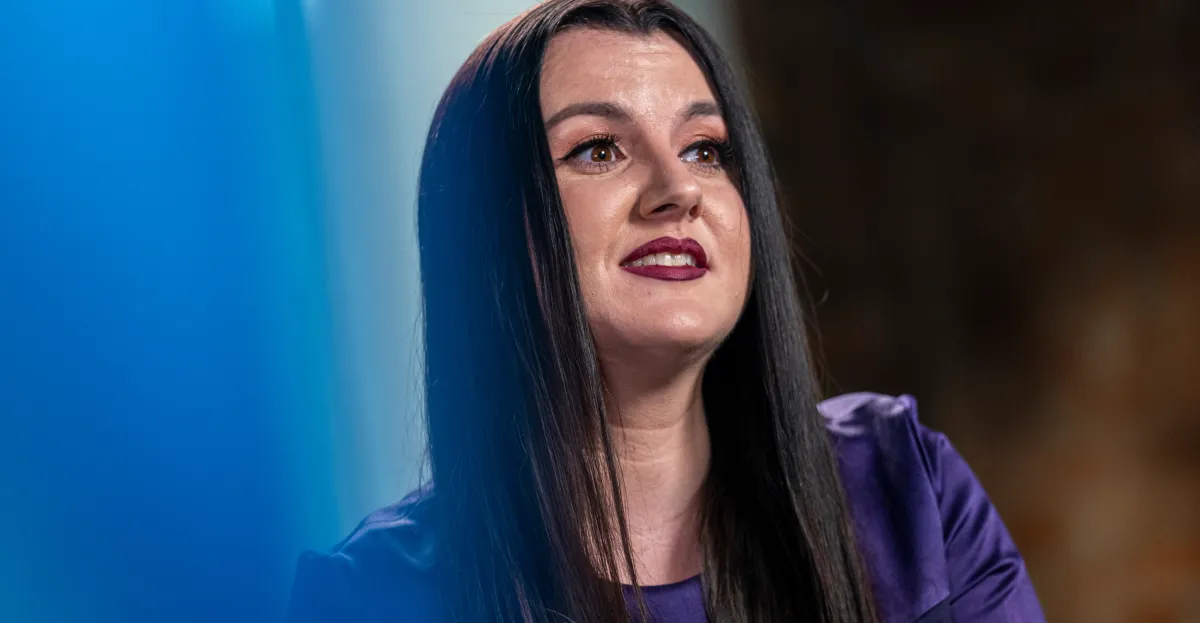
OpenAI’s Fidji Simo is stepping down from her full-time role overseeing the company’s AGI efforts and moving into a part-time advisory position after a prolonged medical leave related to a chronic neuroimmune condition. The change matters because Simo had only recently taken on one of OpenAI’s most visible leadership roles as the company reorganizes around AI agents and product integration.
Simo said the decision came after realizing her recovery would take longer than expected. The move adds another major shift to OpenAI’s leadership structure at a time when the company is trying to align its consumer products, enterprise plans, and agent strategy under a more unified operating model.
OpenAI has spent the past several months reshuffling responsibilities across its top ranks, with chief product and business leaders taking on additional duties while Simo was out. Her transition now formalizes a change that had effectively been in motion since her leave began in the spring.
What happened to Fidji Simo at OpenAI?
Simo is leaving her full-time post as OpenAI’s AGI chief and will instead advise the company on a part-time basis. She announced the change publicly on X, where she also explained that her health situation has required more time and attention than she initially expected.
The move follows a medical leave she took a few months earlier after what she described as a severe flare-up of a chronic illness she has lived with for seven years. That leave came shortly after she was given the AGI chief title, following her previous role as OpenAI’s CEO of applications.
Simo said she had to step away after a major worsening of a long-term illness, and that recovery was proving “much longer and more complex” than she first thought. She added that it was difficult to balance helping build the future of AI while managing a disabling condition that still has no cure.
OpenAI CEO Sam Altman responded by saying he was deeply sorry to see her step back and expressed gratitude for her work at the company.
Why does this leadership change matter for OpenAI?
This leadership change matters because OpenAI is in the middle of a broader restructuring aimed at tying together its products, infrastructure, and long-term AI ambitions. Simo’s role was not symbolic: she was put in charge of one of the company’s most strategically important areas at a moment when OpenAI is pushing toward agent-based software and more tightly integrated consumer and enterprise tools.
Her departure from day-to-day leadership removes one of the executives most closely associated with the company’s applications and product vision. It also underscores how much OpenAI’s leadership team has been in flux this year, with several senior figures taking on new responsibilities as the company reshapes itself around its next phase of growth.
The company’s internal changes have been especially notable because they show a shift from separate product lines toward a more unified platform approach. In that context, every executive transition affects how OpenAI prioritizes engineering, product design, business development, and commercialization.
How OpenAI’s management structure changed during Simo’s leave
OpenAI did not simply leave Simo’s responsibilities untouched while she was away. Instead, the company redistributed authority across several senior leaders, signaling that her role would not be temporarily covered in a narrow or isolated way.
During her medical leave, president Greg Brockman took charge of product, including OpenAI’s efforts to build what has been described internally as a broader “super app” strategy. Meanwhile, chief strategy officer Jason Kwon, chief financial officer Sarah Friar, and chief revenue officer Denise Dresser handled the business side.
Then, in mid-May, OpenAI made a larger reorganization official. Brockman was given control over product strategy and scaling, and his portfolio expanded across four major areas: core product and platform; key enterprise sectors; consumer applications such as health, commerce, and personal finance; and core infrastructure, ads, data science, and growth.
The restructuring was designed to support OpenAI’s push toward a single agentic platform. In practical terms, that means the company wants its products to work less like separate tools and more like parts of one connected system.
What is OpenAI trying to build with its agent strategy?
OpenAI is trying to build a more unified AI product ecosystem centered on agents, which are systems designed to take actions, complete tasks, and move beyond simple chat. That direction has become central to the company’s product messaging and internal organization.
According to a memo viewed by The Verge in May, Brockman said the reorganization would help OpenAI focus more sharply on its agent ambitions by combining products and merging ChatGPT and Codex into a single agent-style experience for users.
That kind of integration suggests OpenAI wants to reduce friction between its consumer chatbot, its coding tools, and other offerings. Rather than treating these as separate products, the company appears to be moving toward a shared interface and a shared operating layer for AI-assisted work.
The shift is important for several reasons:
- It could simplify the user experience across OpenAI products.
- It could make the company’s services more competitive against rival AI platforms.
- It could help OpenAI monetize more advanced workflows, not just chat interactions.
- It signals that agents are becoming a core strategic pillar, not an experimental side project.
How did Simo describe her decision?
Simo framed the move as a health-first decision made after months of uncertainty. She said that once she was on leave, it became obvious that her recovery would not be quick and that she needed to focus on it fully.
Her explanation also highlighted the personal strain of holding a senior job at a company shaping the future of artificial intelligence while managing a serious medical condition. That combination, she suggested, made it impossible to sustain the pace required for the role.
Simo wrote that the experience of working on the future of AI while coping with a disabling illness had been disorienting, especially because the condition remains incurable. Her remarks pointed to the reality that even top executives can face limits imposed by long-term health challenges.
By shifting to an advisory capacity, Simo remains connected to OpenAI without carrying the operational demands of a full-time executive post. The arrangement gives the company continuity while reducing the burden on her personally.
Who is Fidji Simo, and why did OpenAI hire her?
Simo is a high-profile technology executive who built a strong reputation in consumer products and digital platforms before joining OpenAI. At OpenAI, she had been seen as a bridge between the company’s technical research identity and its push toward mass-market applications.
Her earlier title, CEO of applications, reflected OpenAI’s effort to formalize product leadership as the company’s software offerings became more central to its business. When she was later given the AGI chief title, it signaled that OpenAI saw her as part of its effort to connect product development with its long-range artificial general intelligence ambitions.
That made her role especially important during a period when the company was trying to balance rapid product expansion, investor expectations, regulatory scrutiny, and a growing focus on how AI agents might reshape work.
Timeline of the leadership changes
The sequence of events at OpenAI shows how quickly the company’s leadership priorities changed over just a few months.
| Date | Event | Why it mattered |
|---|---|---|
| April | Simo announced a medical leave related to a neuroimmune condition. | OpenAI began redistributing some of her responsibilities across the leadership team. |
| April | Other executives also stepped into adjusted roles, including Brad Lightcap and Kate Rouch. | The company signaled a broader C-suite reshuffle, not just a temporary coverage plan. |
| Mid-May | OpenAI officially reorganized product leadership under Greg Brockman. | The company moved toward a unified agent strategy and a more integrated product structure. |
| July | Simo announced she would step down from the full-time role and become a part-time advisor. | Her departure locked in the leadership transition and reflected the longer-term impact of her health situation. |
What else changed inside OpenAI this year?
Simo’s transition did not happen in isolation. OpenAI has seen a series of senior-level changes across product, communications, and operations, which together point to a company trying to scale quickly without losing strategic coherence.
In the same general period, chief operating officer Brad Lightcap stepped away from his role to concentrate on special projects. Chief marketing officer Kate Rouch also stepped back to focus on her health, with plans to return later in a more limited position.
Those changes matter because they suggest OpenAI’s top team has had to adapt not only to rapid growth but also to the personal realities of the executives themselves. For a company operating at the center of the AI industry, leadership stability is a strategic issue as much as a personnel issue.
The company’s reorganization also shows that OpenAI is increasingly defining itself around execution. Rather than keeping separate tracks for consumer software, enterprise sales, infrastructure, and growth, it is moving toward a structure that puts platform integration at the center.
Why the timing is significant for the AI industry
The timing is significant because OpenAI is one of the companies most closely associated with the industry’s transition from chatbots to agents. That transition is now shaping product roadmaps across the sector, influencing how companies think about workflows, automation, and user interfaces.
Any leadership change in that context draws attention because OpenAI often serves as both a market leader and a signal to competitors. When the company reorganizes around a new product vision, the rest of the industry tends to pay close attention.
Simo’s move may not alter OpenAI’s overall direction, but it does highlight the human cost and operational complexity of sustaining that direction. High-intensity AI leadership roles require constant coordination across technical, commercial, legal, and public-facing functions. When a key executive steps away, even temporarily, the effects ripple widely.
How OpenAI’s current priorities fit together
OpenAI’s current priorities appear to be converging around a few central goals: building agents, integrating products, scaling enterprise offerings, and strengthening the infrastructure behind those services. Simo’s departure leaves that strategy intact, but it reduces the number of leaders directly associated with its product application layer.
In broad terms, OpenAI seems to be aiming for three outcomes:
- Create a more seamless experience across tools like ChatGPT and coding products.
- Expand into business and consumer categories that go beyond simple chatbot use.
- Build the technical and commercial foundation for long-term AI platform dominance.
Those goals help explain why leadership titles and reporting lines have been changing so frequently. The company is not just filling roles; it is redesigning how its executive team maps onto the next stage of AI deployment.
What happens next for Simo and OpenAI?
For Simo, the immediate priority is recovery, not another leadership transition. Her new advisory position keeps her connected to OpenAI, but it removes the expectation that she will steer the company’s AGI-related work on a daily basis.
For OpenAI, the practical challenge is maintaining momentum after yet another senior change. Brockman’s expanded authority over product and scaling gives the company a clear operational center, but the broader reorganization will still need time to settle.
The most important question going forward is whether OpenAI can keep its agent strategy coherent while its leadership team continues to evolve. The answer will affect not only product rollouts but also the company’s larger competition with other major AI players.
For now, Simo’s move underscores a more personal reality within a high-speed industry: even the people building the next generation of AI can be forced to step back when health demands it.
Key facts at a glance
| Topic | Details |
|---|---|
| Executive | Fidji Simo |
| Former role | OpenAI AGI chief and former CEO of applications |
| New role | Part-time advisor |
| Reason | Medical leave and recovery from a chronic neuroimmune condition |
| Company focus | Agentic platform strategy, product integration, and scaling |
| Key internal leader taking on more responsibility | Greg Brockman |
OpenAI has not signaled a change in strategy following Simo’s transition. But the executive reshuffling around her departure makes clear that the company’s next chapter will be shaped as much by its leadership structure as by its models and products.
As OpenAI pushes deeper into agents and unified software experiences, the company will need both technical execution and management continuity. Simo’s shift to an advisory role preserves a link to one of the firm’s important product leaders, even as the organization continues to move forward without her in the day-to-day chair.
Frequently asked questions
Why is Fidji Simo leaving her full-time OpenAI role?
Fidji Simo is stepping away from full-time leadership because her recovery from a chronic neuroimmune condition has taken longer and become more complex than she expected. She said she needs to focus on her health fully, so she is moving into a part-time advisory position at OpenAI.
What was Fidji Simo’s role at OpenAI?
Fidji Simo served as OpenAI’s AGI chief after previously leading the company’s applications business. Her role placed her near the center of OpenAI’s product strategy as the company pushed toward more integrated AI tools and agent-based experiences.
Who is leading OpenAI’s product strategy now?
Greg Brockman has taken on a larger role in OpenAI’s product strategy and scaling. During Simo’s leave, he was given oversight of product, and the company later formalized a broader reorganization that expanded his responsibilities across several major business and infrastructure areas.
Does Fidji Simo’s departure change OpenAI’s AI agent plans?
Fidji Simo’s departure does not appear to change OpenAI’s overall direction. The company is still focused on building a unified agentic platform, merging products more tightly, and pushing forward with its AI agent strategy under its restructured leadership team.
What does OpenAI mean by a unified agentic platform?
A unified agentic platform means OpenAI wants its products to function as one connected system instead of separate tools. The goal is to combine ChatGPT, Codex, and other offerings into a more seamless experience where AI agents can handle tasks across different workflows.