In short
Meta has launched Muse Image, its first image model from Superintelligence Labs, across Meta AI, Instagram and WhatsApp. The model adds features like @ mentions, direct photo edits and AI Story effects, while raising fresh questions about likeness and consent.
- Muse Image is Meta’s first image model from Superintelligence Labs.
- The model powers AI image tools in Meta AI, Instagram and WhatsApp, with Facebook and Messenger next.
- Users can @ mention Instagram accounts in prompts, letting the system draw on public photos.
- Meta is also rolling out 30 AI Story effects and teasing a future Muse Video model.
Meta is rolling out a new image-generation system across its consumer apps, and the biggest change may not be the pictures it makes but the way it understands people. The company says Muse Image, the first image model from its Superintelligence Labs division, is now behind AI photo tools in the Meta AI app, Instagram and WhatsApp, with support for Facebook and Messenger set to follow. The model also introduces a more social twist: users can include Instagram accounts in prompts with an @ mention, allowing Meta’s tools to draw on public photos associated with those accounts when generating images.
The launch marks a significant step in Meta’s broader effort to rebuild its generative AI stack around the new Muse family rather than the company’s earlier Llama lineup. It also shows how quickly AI image generation is moving from novelty to a native feature woven into the places where people already post, message and share. With tools for portrait-style remixing, room redesigns, sticker-like prompts and direct image editing, Meta is clearly aiming to make AI creation feel less like a separate app and more like a built-in layer across its social platforms.
What Meta launched
Muse Image is the company’s latest public-facing AI image model, and it arrives with a practical mission: power the image tools inside Meta’s ecosystem rather than stand alone as a consumer product. According to Meta, the model is already active in the Meta AI app, Instagram and WhatsApp, and it will soon extend to Facebook and Messenger. The company is also tying the rollout to a new wave of Instagram Story effects, with 30 AI-powered options slated to begin appearing in the United States before expanding to more markets.
The shift is notable because Meta is not simply adding a chatbot feature to a photo editor. It is embedding a model that can generate, transform and revise images across multiple surfaces where users already share content. That includes social posts, direct messages, stories and creative prompts built into the interface itself.
At the center of the launch is a broader reorganization of Meta’s AI strategy. The company says Muse Image is part of a new family of Muse models that are replacing its earlier Llama branding in this area. That suggests a more specialized product line, one that is meant to support creative generation, planning and model-to-model coordination rather than just general-purpose language tasks.
Why the Instagram integration stands out
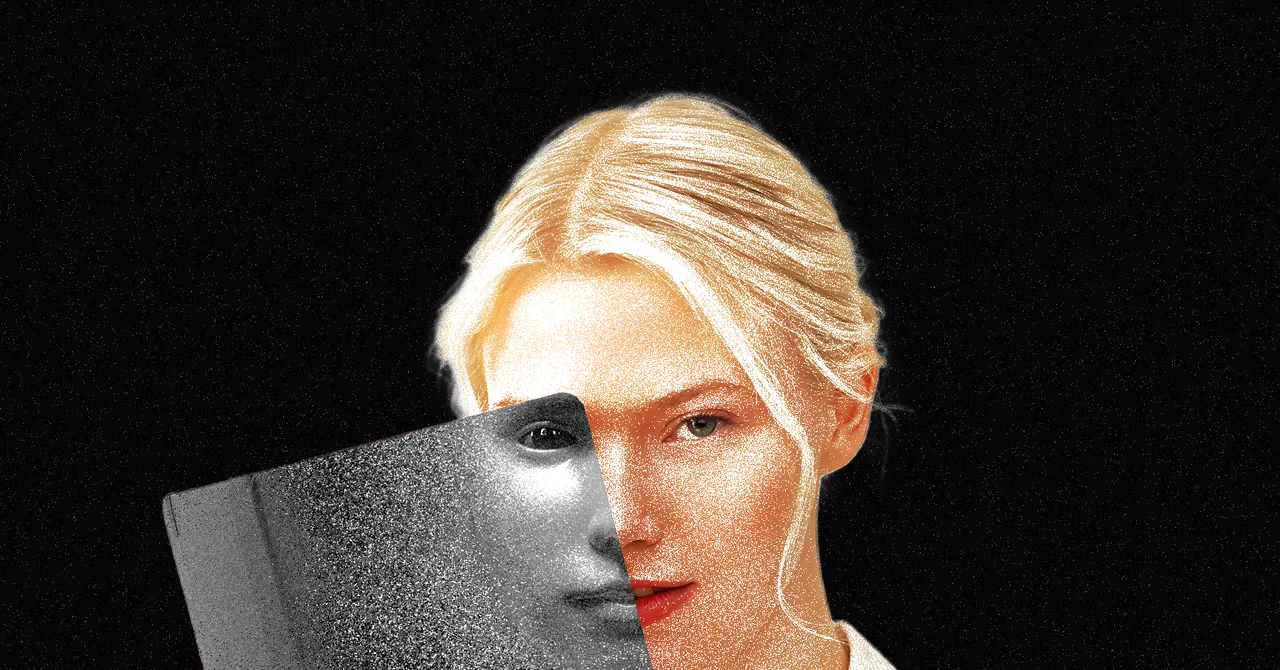
The most attention-grabbing feature is the ability to mention Instagram accounts directly in prompts. In practice, this means a user can name another public account and ask the system to incorporate that person’s likeness into an AI-generated image. Meta says the tool can use public photos to build a visual representation, while also emphasizing that users have controls over how others may reuse their content for AI purposes.
This is a major extension of AI image generation because it moves beyond generic prompts and into identity-aware creation. Instead of asking for “a person in a red jacket on a city street,” users can ask for images involving a recognizable account. That raises the creative possibilities for personalization, parody, and social sharing, but it also raises obvious questions about consent, privacy and the boundaries of using someone’s public posts as source material.
Meta says users can tag usernames so its AI can draw on public photos to create a visual, while also giving people some control over how their content may be reused.
The feature appears designed for a platform where social identity is the product. Instagram is already built around faces, aesthetics and personal branding. By connecting AI generation directly to public accounts, Meta is making the image model feel native to the app’s culture rather than bolted on from outside.
A model that tries to reason before it generates
Alexandr Wang, the executive Meta brought in to lead Superintelligence Labs, described Muse Image on Threads as “agentic,” meaning it works with Muse Spark, the company’s large language model, to interpret prompts, search the web and plan before creating the final image. In other words, Meta is positioning the system as more than a passive image renderer.
That framing matters. AI image generation has evolved quickly, but much of it still depends on a user typing a prompt and waiting for a result. Meta’s pitch suggests a more guided workflow in which one model helps reason through intent while another handles the final visual output. That approach could improve prompt following and make the resulting images feel more contextually aligned with the user’s request.
Wang has also hinted that a Muse Video model is on the way, describing it as competitive in prompt adherence, visual quality and temporal consistency. If Meta can deliver on those claims, the company would be making a play not only in images but in the next major battleground for generative media: short-form video synthesis.
What users can actually do with Muse Image
Meta’s announcement reads like a showcase of increasingly mainstream AI photo tools, but with the advantage of being integrated into social apps millions of people already use daily. The company says people can transform images using suggested prompts, create designs for invitations and postcards, and make targeted edits by drawing directly on top of a photo.
Those editing tools place Muse Image in familiar territory alongside the broader wave of AI-assisted design products. What distinguishes Meta’s version is the way it connects those functions to social sharing. A user can edit a photo and immediately post it to a feed, add it to a story or send it in chat, reducing the gap between creation and distribution.
Meta also says the model can redesign rooms using images sourced from Facebook Marketplace or elsewhere on the web. That hints at a more practical, lifestyle-oriented application of AI generation, especially for users who want quick visual concepts for home decor, layouts or redecorating ideas. It is the kind of use case that could make generative AI feel less abstract and more useful in everyday planning.
Core features Meta says are included
- @ mention prompts for public Instagram accounts
- AI-generated visuals based on public photos
- Suggested prompts for image transformation
- Invitation and postcard design creation
- Room redesigns using sourced images
- Direct photo editing by drawing on the image
- Integration with Instagram Story AI effects
- Use across Meta AI, Instagram, WhatsApp, and soon Facebook and Messenger
The table: where Muse Image is showing up
The rollout spans Meta’s main consumer surfaces, which gives the company a distribution advantage few competitors can match. Here is a quick view of the current and planned availability:
| Platform | Status | What Muse Image does there |
|---|---|---|
| Meta AI app | Live | Generates and edits images inside the standalone AI app |
| Live | Powers AI photo tools, Story effects and prompt-based editing | |
| Live | Supports AI image creation and sharing inside chats | |
| Coming soon | Will add Muse Image to Facebook’s AI features | |
| Messenger | Coming soon | Will extend image generation into messaging |
How this fits Meta’s wider AI strategy
Meta has spent the past several years trying to position itself as a major AI platform provider, not just a social media company that happens to use AI. The creation of Superintelligence Labs is the latest sign that chief executive Mark Zuckerberg wants to centralize the company’s most advanced AI work under a more ambitious umbrella.
The new Muse branding suggests a deliberate reset. Llama has become widely associated with Meta’s open model strategy and broader developer ecosystem, but Muse appears to be focused on productized, consumer-facing generation. That separation could help Meta organize its efforts around different audiences: developers on one side, end users and creators on the other.
This matters because generative AI is no longer just about model benchmarks. Big tech companies are now competing on experience, distribution and workflow. Meta has the advantage of scale: Instagram, WhatsApp, Facebook and Messenger collectively give it a massive audience that can test and normalize AI creation without leaving the company’s apps.
In that sense, Muse Image is less a standalone breakthrough than a strategic expansion. It turns AI image generation into a feature of Meta’s social graph, placing creative tools where users already have attention, identity and relationships.
Social AI and the question of likeness
The ability to invoke another user’s Instagram account in a prompt is likely to draw scrutiny well beyond the tech community. Any system that can recreate or approximate a person’s appearance using public content sits at the intersection of creativity and personal rights.
Meta says users retain controls over how their content is reused for AI. But the company will still need to explain exactly how those controls work, what types of public posts can be used, and how it handles requests involving public figures, influencers, minors and people who simply prefer not to be included in synthetic visuals.
There is also the broader issue of what happens when AI tools become deeply embedded in a platform driven by real-world identity. Instagram is not a neutral image lab; it is a place where self-presentation, social status and audience reach all carry weight. If AI can draw from that environment to construct new images, the line between inspiration, imitation and appropriation becomes harder to police.
Key concerns raised by identity-aware image generation
- Whether public photos imply permission for AI reuse
- How users can opt out or limit content use
- What safeguards exist against impersonation or harassment
- How the system handles youth safety and sensitive content
- Whether generated likenesses can be shared without clear labeling
Why the timing matters
Meta’s announcement comes at a time when the AI image market is getting crowded and increasingly practical. Consumers are no longer just impressed by surreal AI artwork; they want editing tools that save time, simplify design and make existing content easier to adapt. That is the category Meta is targeting.
It is also competing in a moment when social platforms are under pressure to prove that AI features are useful rather than gimmicky. By tying Muse Image to story effects, chatting, visual edits and room mockups, Meta is trying to show utility across everyday tasks instead of relying on one-off viral demos.
The move also reflects the pressure on social apps to keep users inside their own ecosystems. If people can create, edit and post AI visuals without leaving Instagram or WhatsApp, Meta reduces friction and increases the odds that users will stay engaged with its products longer.
How Muse Image compares with the industry direction
Across the AI industry, the most successful image tools tend to follow one of two paths: either they serve professional creative workflows or they become embedded in large consumer platforms. Meta is clearly choosing the second path.
That strategy has advantages. Consumer adoption can happen quickly when the tool is already where people communicate. And because Meta controls the distribution channel, it can introduce new capabilities in ways that feel incremental rather than disruptive.
But there are tradeoffs. A feature embedded in a social network has to work at the pace and scale of the network itself. It also has to survive public scrutiny, especially when the model touches people’s likenesses, public images and social identities. The more the system leans on real-world accounts, the more it will need clear policy boundaries and visible user controls.
For now, Muse Image gives Meta a stronger answer to one of the biggest consumer AI questions: where, exactly, should people use these tools? Meta’s answer is simple — in the apps they already open every day.
What comes next for Meta AI
The company has signaled that Muse is more than a one-off release. If the image model is the first step, a video model appears to be next, and that could be a much bigger leap. Video generation is more technically demanding than image creation because it must maintain motion, continuity and coherent storytelling across frames.
Meta’s decision to tease a Muse Video model suggests it wants to compete in a category where creator tools, social posting and synthetic media are converging. If the company can make video generation usable inside Instagram or WhatsApp, it could open a new phase in social content creation — one where AI helps generate not just edits but entire clips.
That future is still emerging, but Muse Image gives a clear preview of Meta’s direction. The company is betting that the next generation of social media will not just display photos and videos; it will help make them.
Timeline of the Muse Image rollout
Below is a simplified timeline of the launch and planned expansion based on Meta’s announcement:
| Phase | Event | Implication |
|---|---|---|
| Tuesday announcement | Meta unveils Muse Image as its first image model from Superintelligence Labs | Signals a new branding and product strategy |
| Immediate rollout | Model powers Meta AI app, Instagram and WhatsApp | Instant distribution across major consumer apps |
| Near-term expansion | Support coming to Facebook and Messenger | Broader reach across Meta’s messaging and social ecosystem |
| Upcoming feature release | 30 AI effects for Instagram Stories begin in the US | More visible consumer-facing use of the model |
| Future roadmap | Muse Video teased by Meta leadership | Potential expansion into AI-generated video |
The bottom line
Meta’s Muse Image launch is important not because it introduces image generation to social media — that part of the race is already well underway — but because it integrates AI more deeply into the mechanics of identity, sharing and creation across the company’s biggest apps. By letting users mention Instagram accounts, rewrite scenes, redesign rooms and edit directly on photos, Meta is making AI a native part of its social experience.
The feature set is ambitious, practical and likely to be popular. But it also places Meta squarely in the center of debates about consent, public likeness and how far platforms should go in turning social identity into synthetic media. The company is betting that users will welcome the convenience. Regulators, creators and users whose images appear in prompts may ask harder questions.
For now, Muse Image gives Meta a fresh AI product story and a clear reason for people to spend more time inside its apps. The next challenge is proving that the company can deliver that convenience without crossing lines that social platforms have struggled to define for years.