In short
Anthropic is expanding Claude Cowork from the desktop to mobile and browser access, removing the need to keep a laptop awake for tasks to keep running. The move reflects a broader race among AI companies to make always-on agents central to everyday work.
- Claude Cowork can now run beyond an active desktop session.
- Anthropic is targeting mobile and browser use to make agents more practical.
- The company sees strong demand in business operations and content drafting.
- OpenAI and Google are pursuing similar always-on agent strategies.
- The rollout begins with Max subscribers before reaching Pro users.
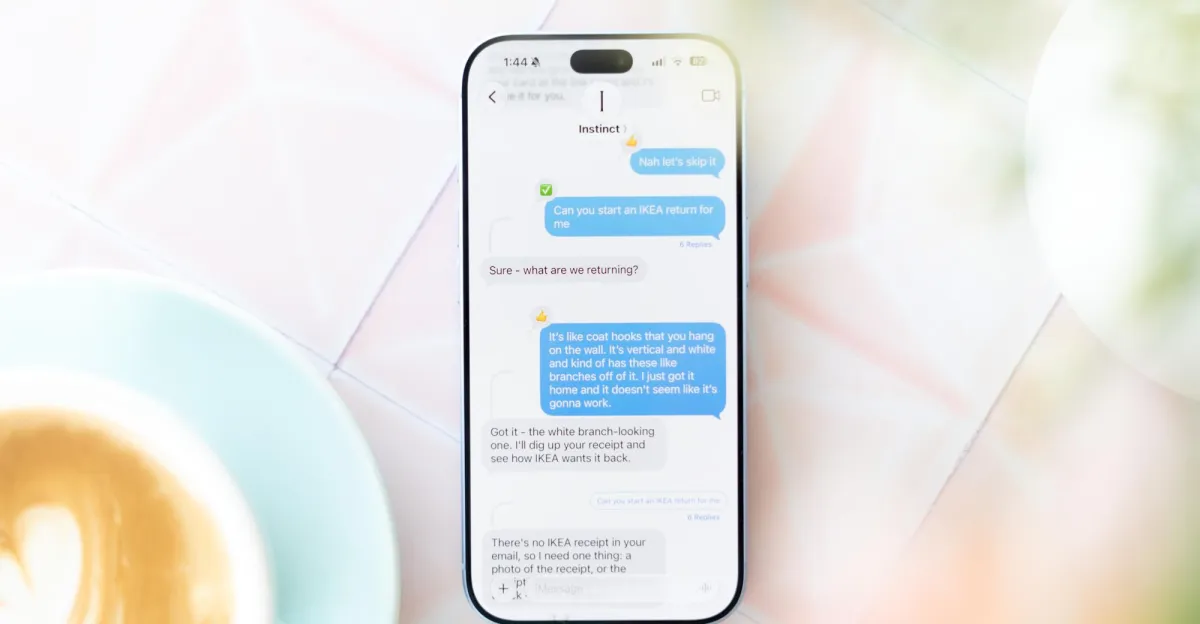
Anthropic is making a clear bet on the future of AI: the most useful agents will not live on a laptop that has to stay open all night, but inside the phone already in your pocket. On Tuesday, the company said Claude Cowork, its digital task-running agent, is moving beyond the desktop and becoming available in limited form through the Claude smartphone app and web browser. The shift removes one of the most awkward constraints of early AI agents: the need to keep a computer awake and connected for the software to keep working.
The change may sound technical, but it points to a bigger transformation underway in Silicon Valley. AI firms are racing to turn chatbots into persistent digital helpers that can handle work after hours, monitor incoming messages, and stitch together information across email, calendars, chat apps, meeting notes, and the open web. Anthropic’s move puts it in the center of that competition — and in direct conversation with OpenAI and Google, both of which are building their own always-on agent experiences.
From desktop-bound assistant to phone-friendly agent
Until now, Claude Cowork could perform multi-step tasks only while a user’s desktop session remained live. That meant anyone hoping to let the agent run overnight often had to leave a laptop open, plugged in, and connected. Anthropic is now relaxing that constraint. With the new rollout, users can interact with Cowork through the existing Claude app on mobile or through a browser, without depending on a desktop computer that stays awake in the background.
In practical terms, that makes the product feel less like a sidecar for a work machine and more like a genuine mobile assistant. A person can start a task on the go, let the agent gather information and prepare materials, and return later to review the result. For users juggling late-night emails or planning for the next morning’s meeting, the promise is obvious: the agent does not clock out when the laptop lid closes.
What Claude Cowork is designed to do
Anthropic describes Cowork as an AI agent built to handle digital work on a user’s behalf. In its launch demonstration, the company showed a scenario involving a business contract renewal. The user asked the agent to combine material from email conversations, Slack discussions, meeting transcripts, and online commentary, then turn all of that into a preparation document and a draft message for the meeting.
That example reflects the type of work Anthropic sees as especially suited to AI agents: gathering disparate information, summarizing it, producing a useful artifact, and helping a user move faster through repetitive knowledge work. The company’s framing suggests Cowork is intended not as a novelty chatbot, but as a workflow engine for tasks that normally require several tabs, multiple apps, and a fair amount of copying and pasting.
Anthropic’s new mobile approach is meant to remove the old restriction that “your computer must be awake” for the agent to keep working, allowing tasks to continue without an active desktop session.
Why this rollout matters now
Anthropic is not simply adding a convenience feature. It is responding to a broader product direction that is rapidly taking shape across the AI industry. The winning interface for agents appears to be shifting away from separate tools for technical users and toward chat-based systems that ordinary consumers already understand. That matters because the market for AI assistants is no longer limited to programmers or power users.
Instead, companies are trying to make agentic automation feel as familiar as sending a text. The goal is to embed advanced task execution into the same app where users already ask questions, summarize documents, and generate content. If the plan works, the “agent” becomes less of a product category and more of a feature layer across everyday digital life.
Anthropic’s move also reflects a deeper business reality. Agents that remain active for longer periods can become more valuable, because they can process tasks asynchronously and react to new information after a user has stepped away. In a workplace setting, that can mean overnight monitoring, follow-up drafting, and ready-made meeting prep waiting in the morning.
The broader race for always-on AI agents
Anthropic’s update lands in the middle of a fast-moving contest among major AI companies to own the next generation of agent software. The recent push toward always-running assistants was helped along by OpenClaw, a homegrown agent that became a cult favorite earlier in 2026 among early adopters who let it run continuously and delegate more of their online routines to it. The buzz around that project appears to have influenced the industry more broadly, even if the tool itself came from outside the big-platform world.
Since then, the major players have moved quickly to catch up. OpenAI brought in the creator of OpenClaw and then launched Codex, its own adaptive agent system. Google introduced Spark, its version of a persistent AI agent. Anthropic, meanwhile, has focused on making its tools easier to use and more tightly integrated into the apps people already rely on.
The result is a competitive landscape where the battleground is no longer just model quality. It is also product design, mobile access, workflow integration, and how seamlessly an assistant can move from conversation to action. Whoever makes agents feel dependable and intuitive may gain a major edge.
What Anthropic is saying about usage
Alongside the product announcement, Anthropic published a report analyzing how people are using Claude Cowork. The company says the strongest patterns are emerging in office-related work, especially in areas that overlap with routine knowledge labor.
According to Anthropic, the two largest recent usage buckets are:
- Business process and operations — including reports, checklists, and similar administrative work
- Content creation and copywriting — including slide decks and partnership proposals
Those categories matter because they illustrate where AI agents are gaining traction first. The early appeal is not just creative writing or coding, but the structured, semi-repetitive tasks that fill the workdays of managers, coordinators, marketers, and operations teams. That is where a system that can assemble information from multiple sources and produce a rough draft quickly can save real time.
Anthropic’s data also supports a larger narrative about where generative AI is heading. After a period in which many companies raced to prove that chatbots could answer questions, the newer challenge is proving that AI can complete meaningful work.
Claude on mobile: a shift from chat to control
Anthropic has already allowed mobile users to interact with Claude-connected tasks through its Dispatch feature. That earlier setup let someone start or send a task request from a smartphone, but there was a catch: the paired desktop machine still had to remain awake and running for the agent to do the work. In other words, the phone could initiate the action, but the laptop remained the engine.
With this release, Anthropic is cutting that dependency. The company is effectively making the smartphone a more complete control center for agentic work. Rather than merely issuing commands to a desktop companion, users can expect the agent to continue independently.
That evolution is important because smartphones have become the default interface for many consumer software experiences. If AI agents are going to become mainstream, they need to work in the environment where users already spend much of their time. Anthropic appears to understand that the desktop-only era of agent software may be a temporary phase.
How this differs from the older Dispatch setup
The distinction between the older phone-to-desktop handoff and the new mobile experience is subtle but significant. Dispatch let users make requests remotely; Cowork now lets the task continue without the computer being actively open. That means less friction for the user and less babysitting for the device.
For professionals who work across time zones, travel frequently, or simply do not want a laptop running unattended at home or in an office, that could make the feature substantially more appealing. It also makes agent behavior feel closer to a cloud service than a local machine utility.
The pricing strategy behind the release
Anthropic says the updated Cowork experience will begin as a beta for subscribers to its Max plan, which starts at $100 per month. After that, the company expects to make it available to users on its lower-cost Pro tier, priced at $20 per month. Anthropic has not said whether free users will eventually get access.
The pricing structure reveals a familiar strategy in AI software: debut advanced features at the top of the subscription ladder, then gradually expand availability. That approach helps Anthropic manage demand, gather feedback from heavy users, and keep its most sophisticated tools tied to paying customers.
It also highlights how AI agents are becoming a premium category. While many users first encounter chatbots through free access, the most capable work-focused capabilities are increasingly reserved for subscribers willing to pay for more power, more usage, or earlier access.
| Feature | Before the update | After the update |
|---|---|---|
| Where Cowork runs | Desktop session only | Desktop, browser, and mobile access |
| Desktop requirement | Computer had to stay awake and open | No active desktop session required for ongoing tasks |
| Mobile use | Dispatch could send requests from phone | Phone can manage tasks more independently |
| Primary availability | Claude desktop workflow | Beta for Max users first, then Pro users |
| Core use cases | Task completion on a live desktop | Asynchronous work, meeting prep, drafting, and data gathering |
Security and trust remain unresolved questions
For all the excitement around agentic AI, the category continues to raise important security concerns. When an assistant can read messages, ingest meeting notes, and act on behalf of a user, the risks are not abstract. Prompt injection, unauthorized access, data leakage, and mistaken actions all remain live issues in agent design.
The source of the feature notes that the first version of Cowork was impressive in execution but not without danger. That tension remains central to the product category. The more autonomy an AI system has, the more useful it becomes — and the more carefully it has to be bounded.
This is especially true in enterprise-adjacent use cases, where the agent may be asked to process sensitive business communication or draft materials for client-facing work. Anthropic’s challenge is to make Cowork feel capable enough to be trusted, but constrained enough to be safe.
What the launch video suggests about real-world use
The business renewal scenario featured in Anthropic’s promotional material is revealing because it mirrors a common office reality. Many professionals already spend hours collecting background information from multiple systems before a single meeting or deadline. If an agent can do the gathering and organizing while a human handles judgment and final review, the productivity payoff could be meaningful.
That kind of workflow also explains why the company is emphasizing document creation and copywriting. In many organizations, the bottleneck is not raw knowledge but the time required to turn scattered inputs into usable output. Drafting a brief, assembling talking points, or preparing an email response are all tasks where speed matters and the first pass is often enough to move work forward.
Anthropic’s challenge is that utility alone will not determine adoption. People need confidence that the agent knows when to stop, when to ask for help, and how to avoid acting on bad instructions embedded in the data it reads.
The product strategy: fold agents into the chatbot
One of the most notable aspects of Anthropic’s move is the way it blurs the boundary between chatbot and agent. Rather than asking users to adopt a new product with a new interface, the company is folding these capabilities into Claude itself. That means the agent becomes an extension of a familiar conversational environment.
This design choice matches a broader industry belief: the best way to normalize AI automation is not to make it look like enterprise software, but to make it feel like a conversation. If users can text an assistant to research a topic, prepare a document, or track a task, the learning curve drops dramatically.
It also helps explain why the market is converging around chat-first experiences. Chatbots are already the most recognized consumer-facing form of AI. By letting them initiate and manage actions, companies can turn a familiar interface into a work platform.
Why texting may become the dominant interface
Text-based interaction is not just convenient; it is broadly legible. People know how to ask for things in plain language, revise a request, and review a response. That makes it well suited to AI agents that need human oversight while handling many small steps autonomously.
Anthropic, OpenAI, and Google all appear to be converging on the same conclusion: users may not want to navigate separate agent dashboards or command-line environments. They may prefer to simply message an assistant that can then go do the work.
How Anthropic fits into the industry shift
Anthropic has already seen strong recognition for Claude Code, which became popular among developers because it could automate parts of coding workflows. Cowork is important because it translates that model for a broader audience. Instead of serving only technical users, it is aimed at knowledge workers who want help managing the flood of digital tasks that now define office life.
That repositioning matters strategically. Developer tools can create powerful reputational momentum, but consumer and professional productivity tools scale much farther if they become routine. Anthropic seems to be betting that the same core agent technology can move from code-heavy contexts into mainstream business use with the right interface design.
The company’s latest release suggests that the next frontier is not simply better answers, but better delegation. The agent that can take over a chunk of your administrative work while you are away may be more valuable than the chatbot that can explain a concept on demand.
Timeline of the agent race
The competitive picture has changed quickly over just a few months. Here is a simplified timeline of the major developments referenced in Anthropic’s latest move:
| Period | Company / Project | What happened |
|---|---|---|
| Early 2026 | OpenClaw | A homebrew always-on agent goes viral among early adopters. |
| First half of 2026 | OpenAI | Hires OpenClaw’s creator and launches Codex. |
| First half of 2026 | Introduces Spark, its own persistent agent approach. | |
| January 2026 | Anthropic | Claude Cowork debuts on the desktop. |
| June 2026 | OpenAI | Rolls out Codex Remote for smartphone control. |
| July 2026 | OpenAI | Updates its iOS app with more direct Codex management tools. |
| July 2026 | Anthropic | Expands Cowork to mobile and browser use without a live desktop session. |
What happens next
Anthropic’s announcement suggests that agent software is moving into a more mature phase. The novelty is no longer just that an AI can answer questions, but that it can continue working after the conversation ends. That change has real implications for how people schedule work, delegate tasks, and manage attention.
Still, the road ahead is likely to be uneven. Users will want a balance of autonomy, transparency, and control. They will also expect the tool to be reliable enough that it does not create more cleanup work than it saves. Those expectations may prove difficult, but they are the standard any successful agent will have to meet.
For now, Anthropic is trying to make one thing clear: the future of AI assistance is not tied to a glowing laptop screen. It is portable, persistent, and increasingly designed for the phone in your hand.
Bottom line
Claude Cowork’s move to mobile is more than a feature drop. It is a sign that the AI industry is entering a phase in which agents are expected to stay active, work across devices, and quietly manage the tedious parts of modern digital life. Anthropic is making a calculated bid to turn that idea into a mainstream product — and to make sure the next generation of AI work assistants lives inside the apps people already use every day.