In short
SoftBank CEO Masayoshi Son has questioned Elon Musk’s orbital data center idea, arguing that the AI industry needs compute capacity now, not years from now. The debate also highlights how much of the AI infrastructure race is shaped by companies talking their own book.
- Masayoshi Son says orbital data centers are too slow to solve AI’s near-term compute shortage.
- The proposal could indirectly benefit SpaceX by increasing launch demand.
- SoftBank’s skepticism is notable given its own history of aggressive tech bets.
- The debate reflects a broader race to secure compute through chips, clouds, and alternative infrastructure.
Elon Musk’s idea of building data centers in orbit has quickly become one of the AI era’s more audacious proposals — and one of the easiest to question. The latest skeptic is not a regulatory watchdog or a rival founder, but Masayoshi Son, the SoftBank chief whose own track record includes some of the technology industry’s boldest wagers. Son’s public doubts highlight a growing divide in the AI infrastructure race: the industry is desperate for more compute, but not every futuristic answer is practical, affordable, or timely.
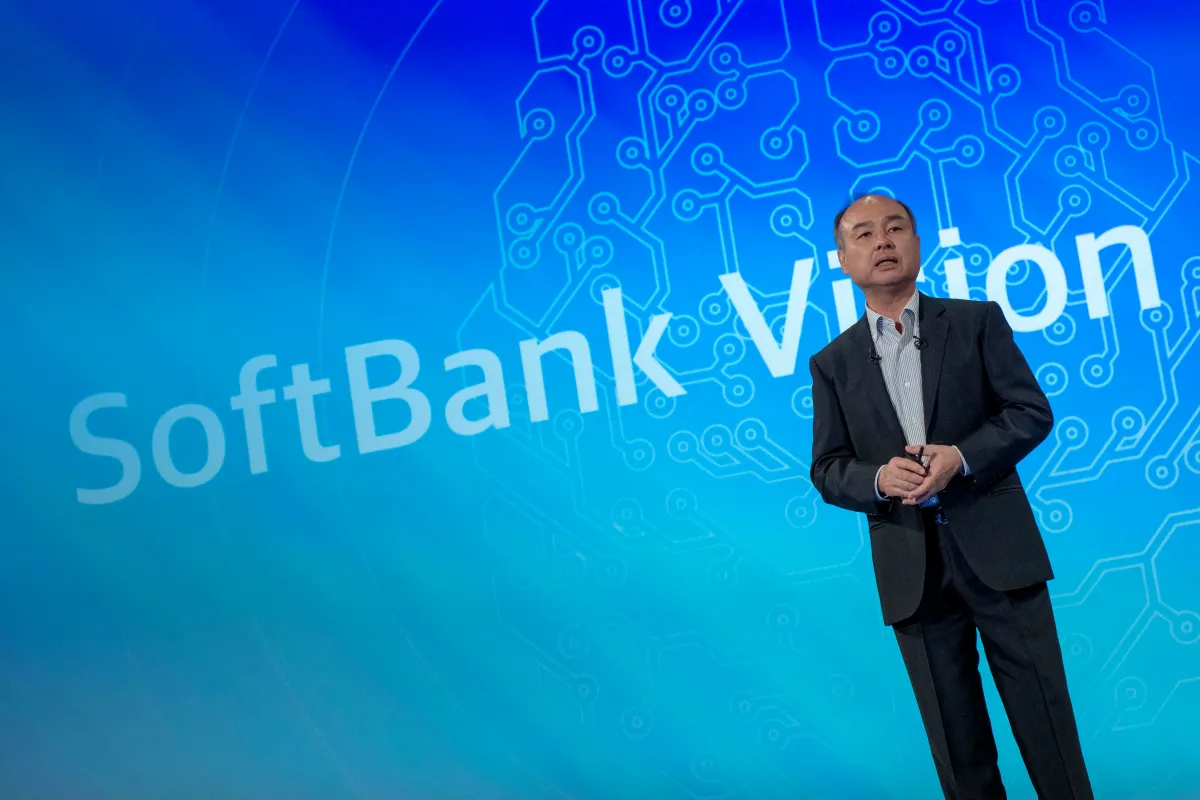
At a recent SoftBank shareholder meeting, Son argued that shifting data centers into space is unlikely to deliver meaningful cost savings and, more importantly, would arrive too late to solve the immediate pressure facing AI builders today. His point was simple: even if orbital infrastructure eventually works, the sector’s most urgent challenge is the next few years, not the next decade.
The exchange has broader implications than a debate over science fiction-style infrastructure. It reveals how much of the current AI boom is being driven by companies that stand to benefit from whichever future they describe. Musk’s space-based data center vision would likely reinforce business for SpaceX. SoftBank, meanwhile, is heavily exposed to terrestrial data center investments. And around the industry, executives are racing to secure chips, power, and compute capacity while trying to convince investors that their preferred strategy is the one most likely to win.
Why orbital data centers are suddenly part of the AI conversation
The idea of placing computing infrastructure in space sounds radical, but it is emerging at a time when AI builders are running into hard limits on Earth. Large-scale model training and inference require huge amounts of compute, and demand has outpaced available supply in many parts of the market. That shortage has helped create a new class of companies often described as “neo-clouds” — firms that are trying to monetize access to computing capacity in a market where every GPU and every data hall matters.
SpaceX’s own role in this environment is part of what makes Musk’s proposal so notable. The company is already deeply tied to the economics of satellites and launch services, and it has increasingly become a participant in AI infrastructure conversations through compute-rental arrangements and broader cloud-style ambitions. If orbital data centers required large satellite fleets that need regular replacement, that would naturally create demand for launches — and by extension, additional business for SpaceX itself.
That circularity is exactly what critics are seizing on. Musk’s pitch may be technically ambitious, but it also aligns neatly with the economic interests of his companies. In that sense, the debate is not just about whether orbital compute is feasible. It is also about whether the vision is being sold as a solution to the AI bottleneck or as a way to expand the ecosystem around it.
Son’s warning: the AI race is happening now
Son’s skepticism focused on timing. Even if space-based data centers could eventually be built, he suggested the payoff would come too late to matter for the current wave of AI competition. That argument has become increasingly important as companies pour money into chips, datacenters, and power infrastructure in an effort to keep pace with model development and deployment.
In practical terms, the AI race is not waiting for a breakthrough in orbital engineering. Enterprises want inference capacity today. Model developers need training clusters now. Investors are funding companies that can deploy hardware in the near term, not in some distant future where launch costs, satellite durability, thermal control, and maintenance are all solved at scale.
SoftBank’s chief framed the issue in that context, suggesting that the market is much more concerned with the next several years than with speculative infrastructure that might take a decade or more to mature. That skepticism resonates in a sector where many ambitious plans are judged less on how exciting they sound and more on whether they can be operational before the market shifts again.
Masayoshi Son’s central argument was that space-based data centers may be impressive in theory, but they are unlikely to help with the immediate compute shortage driving the AI boom.
A very pointed critique from someone with a history of big bets
What makes Son’s comments especially striking is the messenger. SoftBank has built its reputation on enormous, high-conviction investments — not all of them successful — in areas ranging from telecom to robotics to office space. For that reason, it has become somewhat ironic that Son is the one urging caution about Musk’s most futuristic AI infrastructure pitch.
That irony was not lost on observers. One of the most obvious takeaways from the debate is that when an executive known for aggressive bets starts questioning another executive’s moonshot, the criticism carries unusual weight. It also underscores how normalized extreme ambition has become in tech. A proposal that might have seemed absurd a few years ago can now be discussed seriously because the industry’s appetite for compute has created an opening for almost any idea that promises more capacity.
But reputation cuts both ways. Son’s criticism may be accurate, but it also comes from someone whose own company has backed plenty of bold, risky, and expensive plans. That makes the critique more interesting, not less. It is not a conservative outsider dismissing innovation. It is a veteran of the biggest swings in tech making a pragmatic argument about timing, cost, and utility.
The real business logic behind SpaceX’s orbital compute ambitions
Launch demand is part of the story
One of the strongest objections to the orbital data center concept is also one of the simplest. If a constellation of computing satellites needs to be launched, refreshed, and maintained, then the project creates a built-in need for more rockets. From SpaceX’s perspective, that is not a bug. It is a feature.
As critics point out, SpaceX already benefits enormously from satellite-related demand. Its launch business is widely dominant, in large part because Starlink has become a major internal customer. Without that satellite internet network, SpaceX’s share of the launch market would likely look much less overwhelming. The orbital data center idea could deepen that advantage by adding another reason to keep rockets flying.
That raises an obvious question: is the project being discussed because it is the best way to solve the AI compute problem, or because it reinforces the business model of a company already positioned at the center of the launch economy?
Compute rentals and the next layer of monetization
There is another layer to the logic as well. SpaceX’s interest in compute is not limited to launching things. The company has also been connected to the idea of renting out computing power, which mirrors a broader trend among hardware-heavy companies trying to become infrastructure platforms. In that respect, orbital data centers fit a wider pattern: control the physical layer, then monetize access to it.
This is where the debate over “neo-clouds” becomes relevant. Across the market, companies with access to scarce hardware are trying to reposition themselves as compute vendors. The goal is not necessarily to become a traditional cloud provider, but to serve customers who need immediate access to scarce AI infrastructure and are willing to pay for it.
In that sense, SpaceX, Groq, and other companies are participating in the same economic shift, even if their technical approaches differ. They are all trying to capitalize on the same scarcity. The question is whether those opportunities are temporary arbitrage or the foundation of durable businesses.
What the TechCrunch discussion revealed about the market
The wider conversation around Son’s comments came during a TechCrunch Equity podcast discussion that also touched on other key AI infrastructure developments, including OpenAI’s push toward custom chips and Groq’s large new funding round. Taken together, those topics point to the same underlying reality: the industry is in a race to secure more compute by any means available.
That race is producing a proliferation of strategies. Some companies are designing their own chips. Others are raising massive amounts of capital to build proprietary infrastructure. Some are trying to lease out excess capacity. And a few are pushing all the way into speculative territory, imagining data centers beyond Earth’s atmosphere.
The common thread is urgency. Demand for AI compute has made nearly every available angle feel like a business opportunity, whether it involves semiconductors, servers, launch systems, or satellites. But the fact that so many players are chasing the same bottleneck also increases the odds of overreach.
Table: key points in the orbital data center debate
| Issue | What supporters imply | What skeptics say | Business impact |
|---|---|---|---|
| Cost | Space may avoid some Earth-based constraints | Launch, maintenance, and replacement remain expensive | Could boost launch providers if satellites must be replaced often |
| Timing | Long-term infrastructure bet | Too slow to help near-term AI demand | May miss the window of immediate compute shortages |
| Technical feasibility | Engineering challenges can be solved over time | Thermal management, durability, and repairs are major hurdles | High risk of delays and cost overruns |
| Strategic value | New frontier for scalable compute | Could be more hype than practical solution | Benefits companies already positioned in satellites and launches |
How the market got here
The orbital data center debate is really the latest expression of a much older tech pattern: when a market is under strain, every constraint inspires a new layer of infrastructure. In the current AI cycle, that constraint is compute. The scarcity of chips and the strain on data center supply have created a wave of investment in everything from specialized accelerators to power generation to cloud alternatives.
This environment encourages increasingly creative thinking. A few years ago, a serious discussion of data centers in space would have felt fringe. Today, it fits a broader narrative in which conventional infrastructure seems too slow, too regulated, too power-hungry, or too geographically limited. The industry’s appetite for scale has widened the range of ideas considered plausible.
Still, plausibility is not the same as readiness. Many concepts make sense only after years of technical progress, falling costs, and supply-chain maturation. The AI business, by contrast, is moving at breakneck speed. That mismatch is what gives Son’s criticism its force.
The influence of incentives: everyone is talking their own book
A recurring theme in this debate is that no major participant is truly neutral. Musk has obvious incentives to promote a space-heavy future. SoftBank has substantial exposure to conventional data center investments. Other AI leaders, investors, and chip executives also have reasons to favor the infrastructure path that benefits their own companies.
That does not mean their arguments are invalid. But it does mean they should be read as strategic as well as analytical. In an industry where enormous sums are at stake, executives routinely frame the future in ways that align with their existing assets and future revenue streams.
For investors and policymakers, the implication is clear: treat grand predictions with caution and inspect the incentives behind them. The more ambitious the vision, the more important it is to ask who wins if that vision becomes the default answer.
As the discussion put it, the people making the biggest predictions about AI’s future often have the most to gain from the version of the future they are promoting.
Why the argument matters beyond SpaceX
Although the spotlight is on Musk, the implications reach far beyond SpaceX. The debate touches nearly every corner of the AI infrastructure ecosystem, from chip design to cloud leasing to energy and manufacturing. If orbital infrastructure ever becomes viable, it could change the economics of compute, satellite networks, and launch cadence. If it never does, the concept may still have shaped investment behavior and competitive positioning across the sector.
That makes Son’s skepticism more than a passing comment. It is a reminder that the AI race is being fought on multiple timelines at once. Some companies are building for the next quarter. Others are building for the next decade. The challenge is knowing which bets are genuinely strategic and which are simply expensive ways to capture attention.
For now, the most immediate reality remains on Earth: data centers are constrained, chips are scarce, power is limited, and demand keeps rising. Against that backdrop, a space-based solution may be inspirational. Whether it is practical is a much harder question.
What to watch next
The orbital data center idea is unlikely to disappear, especially given the companies and personalities involved. But the next phase of the debate will probably focus less on whether the concept sounds bold and more on whether it can survive contact with economics, engineering, and timelines.
- Whether SpaceX or affiliated entities provide more concrete technical details about the concept
- How investors respond to competing claims about near-term versus long-term compute capacity
- Whether more AI companies pursue custom silicon or alternative infrastructure instead
- How the launch market changes if satellite-based compute becomes a real demand driver
For now, Son’s challenge to Musk may be the most useful thing that has happened to the orbital data center idea. Skepticism forces a proposal out of the realm of vision and into the discipline of execution. And in the AI economy, that may be the only test that matters.
Bottom line
The debate over orbital data centers is not really about whether AI needs more compute. It does. The real question is which kinds of infrastructure can deliver that compute fast enough, cheaply enough, and reliably enough to matter. Son’s caution reflects a broader market truth: in an industry moving this quickly, a solution that arrives too late may be no solution at all.