In short
A satirical take on 2026 shows how politics, AI and the climate crisis are shaping a new vocabulary of insults. The trend reflects public frustration, exhaustion and a media cycle that constantly supplies fresh material.
- Politics, AI and climate anxiety are driving new forms of satire and insult
- Donald Trump remains a major shorthand in contemporary political mockery
- AI language has become everyday shorthand for something fake or robotic
- Climate crisis imagery is increasingly used to describe chaos and recklessness
- Cartoons and commentary help turn headline fatigue into shareable cultural language
When politics gets noisier, humour usually gets sharper. In a year already crowded with arguments over Donald Trump, artificial intelligence and the escalating climate crisis, cartoonists, columnists and social media users alike have found fresh ways to turn frustration into mockery. The result is a modern insult vocabulary that is less about simple name-calling and more about capturing a specific kind of public mood: exasperation, disbelief and fatigue.
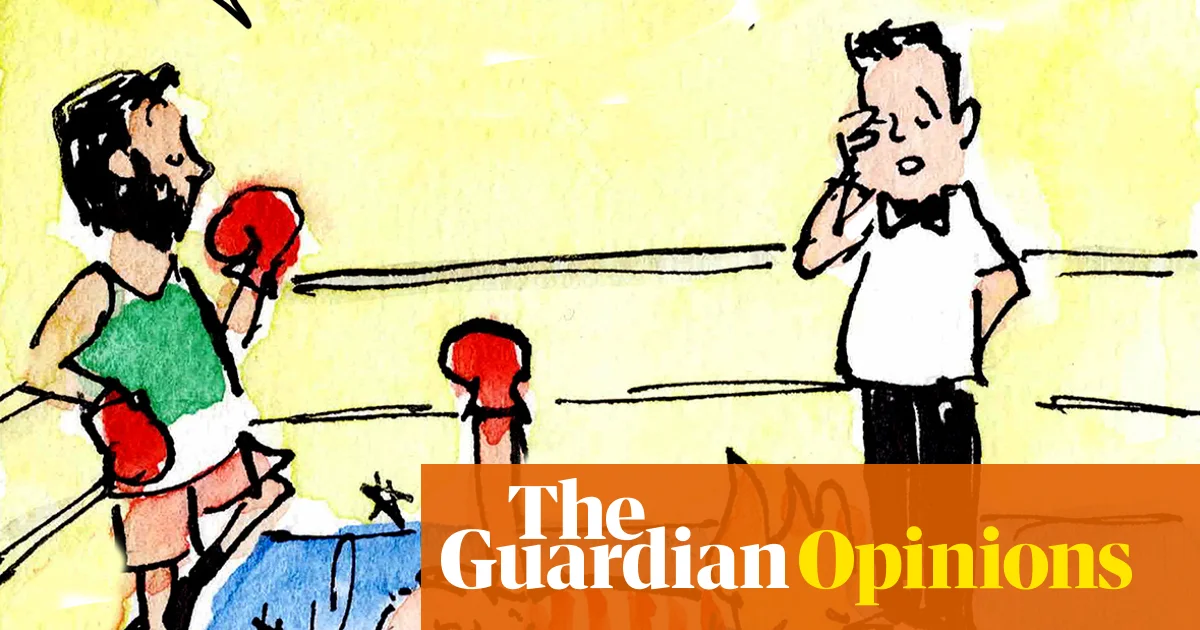
That changing language is the real story behind a cartoon that riffs on “new insults to use in 2026.” The joke lands because it reflects something larger than a punchline. In an era of relentless headlines, people increasingly borrow from politics, tech culture and environmental anxiety to build insults that feel current, precise and culturally literate. The vocabulary of contempt has become a kind of rolling commentary on the state of the world.
Rather than inventing cruelty from scratch, today’s best barbs often recycle the news cycle. They are part joke, part diagnosis. And if the material keeps coming, so too will the language people use to respond to it.
Why insult culture changes with the headlines
Insults have always evolved alongside society. They pick up speed during periods of upheaval because people reach for language that can compress complex dissatisfaction into one sharp phrase. What changes in 2026 is not the basic human impulse to mock, but the sources people draw from. Political chaos, AI anxiety and climate dread all supply vivid imagery that can be repurposed into cutting remarks.
That makes contemporary insults feel different from older forms of name-calling. They are often more descriptive, more ironic and more culturally specific. Instead of relying only on generic abuse, speakers now invoke failed products, misinformation, fake intelligence, apocalyptic weather and unstable public figures to sharpen a point.
The news cycle as a dictionary
The modern insult is frequently built from a headline. A bungled policy announcement becomes shorthand for incompetence. A botched AI rollout becomes a way of calling something synthetic and unreliable. A climate-related disaster becomes a metaphor for chaos, denial or recklessness. The joke works because the audience already understands the reference.
That shared knowledge is important. Insults are no longer only about the target; they are also a signal to everyone listening that the speaker is fluent in the cultural moment. In that sense, a clever insult is less a random jab than a compact editorial.
Donald Trump remains a central reference point
No single political figure has shaped the modern insult ecosystem more than Donald Trump. For years, he has functioned as both a subject of mockery and a source of linguistic style. His name appears in satire not simply because he is controversial, but because he embodies a broader set of traits that people want to criticise: bombast, self-regard, volatility and relentless media domination.
That is why references to Trump continue to anchor political humour. In cartoons, opinion writing and online commentary, his presence often signifies more than one man. It stands for a particular style of politics — noisy, theatrical and aggressively polarising — that many critics feel has defined the age.
Satirists rarely need to explain why Trump works as shorthand; the audience already knows he represents spectacle, grievance and disruption.
As a result, Trump-related jokes frequently carry extra weight. They are not only aimed at his personal behaviour but at the wider ecosystem that grew around him: media saturation, partisan identity and the collapse of shared norms about public discourse.
AI has become fertile ground for new contempt
Artificial intelligence has quickly moved from technical jargon to everyday reference point, and with that shift has come a wave of fresh insults. AI language now appears in jokes about people being robotic, fake, clueless or emotionally empty. The technology’s public image — powerful, fast-moving and often overhyped — lends itself neatly to satire.
One reason AI inspires mockery is that it is often presented as both miraculous and precarious. Supporters describe efficiency and transformation; critics see hallucinations, job anxiety, surveillance and cheap imitation. That tension makes it a perfect target for insult culture. Calling something “AI” in a derogatory context can imply it is synthetic, soulless or suspiciously produced.
Why AI shorthand sticks
AI insults work because they capture a shared discomfort. Many people now encounter AI through chatbots, image generators and workplace tools that promise productivity while raising questions about trust. This has created a rich vocabulary of scepticism. If a response sounds generic, cold or detached, it is easy to label it machine-like.
What began as technical terminology has thus become a social insult. “AI” increasingly implies not intelligence but deficiency: something that looks smart at a glance but lacks judgment, nuance or humanity. That shift says as much about public anxiety as it does about the technology itself.
Climate crisis language is entering everyday mockery
The climate crisis is another major source of contemporary satire. As heatwaves, fires, floods and policy failures pile up, people increasingly use environmental imagery to describe disorder in politics and public life. The climate emergency is not just a scientific concern anymore; it is also a metaphor for systemic breakdown.
In insult form, climate language often serves two purposes at once. It can accuse someone of recklessness, and it can suggest they are part of a broader pattern of denial or delay. The target is not merely wrong, but dangerously out of step with reality.
That makes climate-inspired mockery unusually potent. It connects personal behaviour to planetary consequences, which gives the insult moral force. It is one thing to say a person is annoying; it is another to imply that they are contributing to a disaster while pretending not to notice it.
The anatomy of a modern insult
New insults are often more effective when they are specific. A good contemporary barb usually contains at least one of the following ingredients:
- a political or cultural reference the audience immediately recognises
- a word associated with technology, bureaucracy or media spin
- a sense of irony rather than direct abuse
- an image of dysfunction, fakery or collapse
That combination makes the insult feel fresh without becoming obscure. It also helps explain why humour can travel so quickly across platforms. The same phrase that works in a political cartoon can be clipped, memed and reused online in a matter of hours.
From name-calling to diagnosis
Traditional insults usually aimed for blunt emotional impact. Modern versions often do something more analytical. They identify a perceived flaw and package it in a way that sounds half comic, half clinical. That is why many of today’s best insults read less like shouting and more like a summary judgment.
This evolution mirrors broader changes in public discourse. People are increasingly conditioned to interpret events through commentary, analysis and irony. As a result, an insult that sounds too simple can feel dated. The winning line is often the one that sounds as if it has been social media-tested, news-literate and culturally debased all at once.
What satire reveals about public frustration
Cartoons and satirical headlines rarely emerge in a vacuum. They reflect what audiences already sense but may struggle to articulate directly. In 2026, that sentiment is often a mixture of anger and exhaustion. People are not only annoyed by political figures or technological hype; they are worn down by the sheer volume of events competing for attention.
Satire gives that fatigue a shape. It takes the all-purpose feeling of “this is too much” and translates it into something visual, verbal and shareable. That is why political cartoons remain so powerful even in a fragmented media environment. They can condense a full news cycle into one image or line.
Good satire does not merely insult a person or institution; it captures a public mood that many readers already feel but have not yet named.
In this context, new insults are not trivial. They are cultural evidence. They show which events have lodged themselves in the public imagination and how those events are being repackaged into everyday language.
A brief timeline of how the joke becomes a phrase
To understand how a modern insult takes hold, it helps to follow the path from news event to repeated phrase. The process is often faster than people realise.
| Stage | What happens | Why it matters |
|---|---|---|
| 1. News event | A political, technological or climate story dominates the headlines. | Provides the raw material for mockery. |
| 2. Satirical framing | Cartoonists and commentators turn the event into a joke or visual shorthand. | Transforms complexity into a memorable image or phrase. |
| 3. Audience uptake | Readers repeat the joke in conversation or online. | Tests whether the reference feels widely recognisable. |
| 4. Linguistic drift | The phrase gets reused in new contexts. | Turns a one-off line into a broader insult template. |
| 5. Cultural shorthand | The insult becomes part of the shared vocabulary of criticism. | Signals how the public is interpreting the moment. |
This cycle explains why the news can feel like a perpetual insult factory. Each headline does not just report events; it also seeds the language people use to judge them.
Why cartoonists matter in the age of endless commentary
In a media landscape saturated with takes, cartoons still matter because they offer compression. A single image can do the work of a long essay. It can point to hypocrisy, absurdity or danger with an efficiency that prose sometimes struggles to match.
Cartoonists also operate in a space where exaggeration is the point. Their work is not meant to be neutral. It is meant to distil, amplify and provoke. That makes cartoon satire especially well suited to the current moment, where so much public debate already feels exaggerated by design.
Fiona Katauskas, whose work inspired the satire framing behind this story, belongs to a tradition of artists who translate the day’s anxieties into sharp visual commentary. The joke may be lightweight on the surface, but it sits on top of a serious observation: the news has become so absurd that it seems to generate its own insult vocabulary.
The social function of being funny and mean
Insults are not only about hostility. They also serve a social function. They create in-groups, mark boundaries and allow people to bond over shared disbelief. A sharp joke about a politician, a tech company or a climate denialist can communicate solidarity as much as contempt.
That is one reason satirical insults circulate so widely. They help people express frustration without writing an op-ed. They can also relieve pressure. In times of public stress, laughter can be a coping mechanism, and sarcasm a substitute for a longer argument.
When the joke becomes a worldview
There is a downside to this, of course. A culture that communicates mainly through mockery can become trapped in cynicism. If every event is reduced to a punchline, it becomes harder to imagine solutions. The insult may be funny, but it can also flatten serious debate.
Still, the persistence of satirical language suggests that people feel a need to respond to the world in compressed, emotionally charged forms. Whether that helps or harms public conversation depends on how it is used. At its best, the joke exposes truth. At its worst, it becomes a substitute for thought.
What the rise of new insults says about 2026
The current wave of topical insults is telling us at least three things about the moment. First, politics remains deeply personalised, with Trump continuing to dominate the symbolic landscape. Second, AI has become part of everyday life quickly enough to develop its own pejorative shorthand. Third, the climate crisis is no longer a distant policy issue but a lived source of anxiety that shapes how people talk about collapse, incompetence and denial.
Put together, those themes suggest a public language under pressure. People are using humour to process systems that feel unstable and leaders who seem unable or unwilling to respond adequately. The insults are not random. They are a map of frustration.
That is why a cartoon about “new insults to use in 2026” feels more revealing than frivolous. It is a reminder that the cultural mood has become so intense that even mockery must keep updating itself.
Examples of how the new vocabulary works
The exact wording of fresh insults will vary, but the logic behind them is increasingly consistent. They often follow patterns like these:
- Tech-laced insult: suggesting a person is automated, algorithmic or generated without judgment.
- Political insult: invoking a polarising figure such as Trump to imply chaos, vanity or corruption.
- Climate insult: framing the target as reckless, overheated, deluded or catastrophically out of touch.
- Media insult: accusing someone of spin, noise or performing for attention rather than substance.
These categories overlap because the news itself overlaps. Politics is mediated by tech, tech is shaped by regulation and the climate crisis is filtered through government failure. The insult vocabulary follows those intersections.
Why audiences keep rewarding sharp language
Part of the reason these lines persist is simple audience demand. Readers and viewers are drawn to language that cuts through clutter. In a world where official statements are often cautious and corporate messaging is heavily managed, a blunt joke can feel refreshing.
That does not mean people want only mockery. It means they value clarity, especially when institutions appear evasive. A sharp insult can function as a public service by naming what polished language avoids. If a term makes people laugh because it feels true, it can spread quickly.
And because the media cycle is relentless, there is always room for another phrase. New scandals, new failures and new anxieties constantly refresh the supply.
The bottom line
The appeal of “new insults” is not really about cruelty. It is about recognition. In a year dominated by political turbulence, AI hype and climate alarm, satire offers a way to say, in one compact burst, that the world feels absurd, exhausting and a little beyond belief.
That is why the joke works. It is not just funny because it is mean. It is funny because it is current.
And as long as the news keeps delivering fresh material, the language of mockery will keep adapting with it.
| Theme | Common insult traits | Why it resonates |
|---|---|---|
| Politics | Bombastic, chaotic, performative | Captures distrust in public leadership |
| AI | Artificial, robotic, hollow | Reflects fear of soulless automation |
| Climate | Reckless, denial-driven, overheated | Expresses urgency and moral anger |
| Media culture | Noisy, spin-heavy, self-promotional | Mocks attention-seeking discourse |
In other words, the modern insult is less a throwaway line than a live record of public stress. The headlines may change, but the need to laugh at them — and at the people making them worse — is unlikely to disappear anytime soon.