In short
Otter.ai has raised $320 million from General Catalyst’s Customer Value Fund to accelerate enterprise growth, product innovation and international expansion. The company says usage and revenue continue to climb as competition intensifies in the AI meeting-notetaking market.
- Otter.ai raised $320 million through General Catalyst’s Customer Value Fund, a non-dilutive financing structure.
- The company says it has reached 40 million users and passed $100 million in ARR.
- Otter is expanding beyond transcription into pre-briefs, live assistance and workflow automation.
- The meeting-notetaking market is crowded, with rivals including Fireflies.ai, Granola, Read AI and Superhuman’s Fathom.
- Retention and enterprise stickiness remain key unanswered questions for the company.
Otter.ai has raised $320 million from General Catalyst’s Customer Value Fund, a financing structure that lets startups take on capital without giving up equity. The deal gives the nearly decade-old meeting assistant fresh firepower for enterprise expansion, international growth, and new product development as the market for AI note-takers becomes more crowded and more demanding.
The funding announcement lands at a pivotal moment for Otter. The company says it has now been used by 40 million people, up from 25 million a year ago, and that it crossed $100 million in annual recurring revenue last year. While Otter did not disclose updated revenue figures or usage quality metrics such as retention or monthly active users, the new financing suggests it is betting that scale, enterprise adoption, and deeper workflow automation can help it stand out in a fast-moving category.
Otter is not operating in a vacuum. It is now competing against a wide group of well-funded meeting intelligence products, including Fireflies.ai, Granola, Read AI, Circleback, Talat and Quill, as well as newer challengers such as Calendly and Wispr. Superhuman also entered the space after acquiring Fathom, adding another serious contender to a market that has quickly moved beyond simple transcription.
Why the new funding matters
The $320 million investment is important because it gives Otter a large non-dilutive capital base at a time when many AI products are fighting for distribution, enterprise contracts, and user loyalty. In practical terms, the company can use the money to accelerate sales, improve the product, and expand internationally without immediately issuing new shares.
General Catalyst’s Customer Value Fund is designed differently from a traditional venture round. Rather than buying equity in the company, the fund provides capital that is repaid through the outcomes of marketing and customer acquisition spend. That model can be attractive for companies with proven demand, particularly if they can turn spending into durable customer growth.
General Catalyst partner Pranav Singhvi said the firm sees voice as one of the biggest untapped opportunities in enterprise AI and views Otter as a company that is already translating conversations into operational value. He added that when teams can capture voice data and turn it into insights, they can move faster and make sharper decisions.
That framing reflects a broader shift in the AI market. The initial appeal of meeting tools was convenience: automatic transcripts, summaries, and searchable notes. But investors and customers are increasingly asking for something more ambitious. They want software that can connect meeting data to the systems that actually run the business, then use that data to trigger actions, surface priorities, and reduce time spent on repetitive coordination.
How Otter is trying to stand out in a crowded market
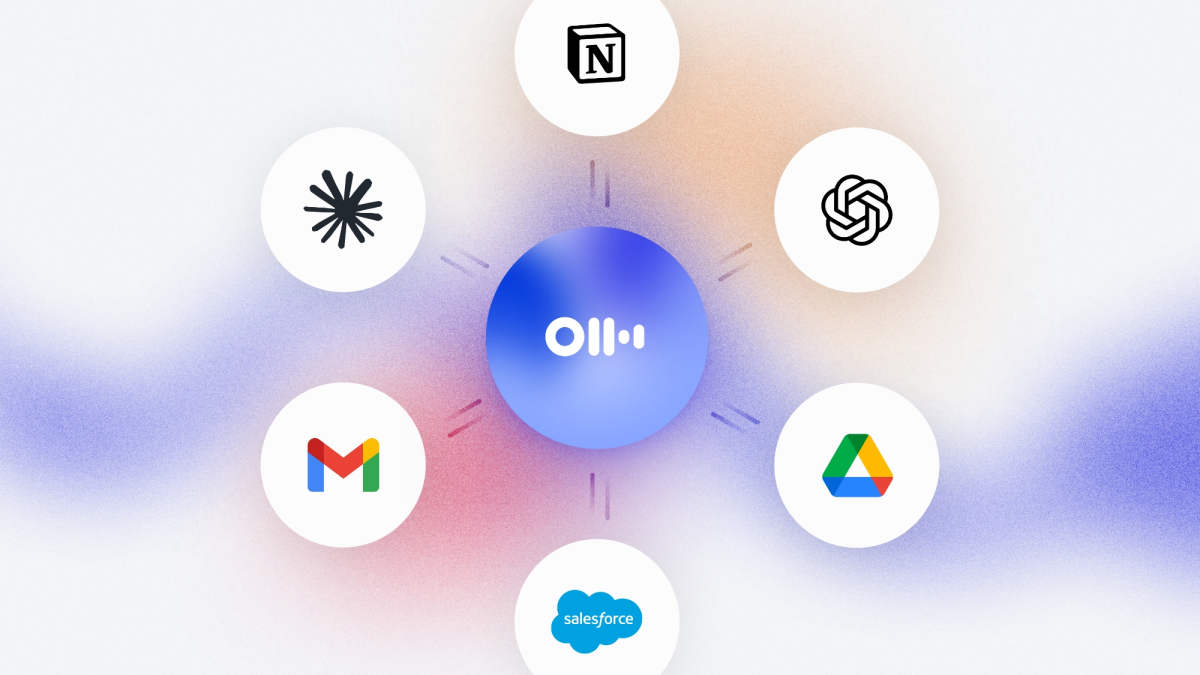
Otter’s answer to the competition is to become more than a recorder. Over the last few years, the company has added a meeting assistant, a cross-app search function, and integrations with other AI tools. The broader strategy is to help users work across a full conversation lifecycle, not just collect a transcript after the call ends.
That approach matters because the meeting-notetaking market is no longer defined by who can summarize a call best. Competitors now emphasize workflow automation, enterprise integrations, and context across multiple applications. In other words, the core product has shifted from “capture what happened” to “help people decide what happens next.”
Otter’s new chief marketing officer, Alex Gay, who previously worked at Superhuman, described the company’s focus as serving people in meeting-heavy roles where conversations themselves are the work. At a recent sit-down at the HumanX conference, he said the pain point is especially clear for teams that move from meeting to meeting all day and lose valuable time simply reconstructing context.
Gay said many workers begin meetings by spending the first part of the conversation recapping what was said before, which slows decisions and reduces productivity. He argued that the real opportunity is to turn those conversations into an actionable roadmap before, during, and after the meeting.
What Otter is testing now
Otter is experimenting with features that bring intelligence into the meeting flow rather than treating it as a post-meeting task. One test involves sending users a pre-brief with background information and context drawn from earlier conversations across different surfaces. Another is Live Assist, which would let people ask the AI assistant questions while the meeting is still happening.
If those tools work well, they could make Otter more useful to sales teams, customer-success teams, executives, and other knowledge workers who depend on context and speed. They could also help the company justify itself as a deeper enterprise platform instead of a point solution for transcription.
What is General Catalyst’s Customer Value Fund?
The Customer Value Fund is a financing product that lets startups raise money without giving away ownership. Instead of equity, General Catalyst expects returns tied to the efficiency and results of customer acquisition and marketing investment. For companies that can reliably convert spending into recurring revenue, the structure can create a large growth cushion without the dilution that comes with a standard venture round.
That makes the model especially relevant for a company like Otter, which has already shown meaningful traction and now needs to defend its position in a highly competitive software niche. The new funding likely gives Otter room to spend more aggressively on customer acquisition while also investing in product innovation and market expansion.
| Otter.ai milestone | What was disclosed | Why it matters |
|---|---|---|
| Total funding raised in this deal | $320 million | Provides major growth capital without an equity round |
| Reported annual recurring revenue milestone | More than $100 million ARR | Signals strong commercial traction |
| Users to date | 40 million | Shows broad market reach |
| Last previously reported fundraise | 2021 | Highlights the long gap before this growth financing |
Why meeting tools are becoming enterprise infrastructure
The modern meeting assistant market has evolved quickly because businesses are now using AI to reduce the overhead of knowledge work. In many organizations, meetings are no longer just calendar events; they are the place where strategy is discussed, customer details are captured, sales plans are refined, and cross-functional decisions are made.
That gives meeting tools a unique role. They sit at the intersection of communication, documentation, and operations. If a product can reliably extract useful information from conversations and push that information into business workflows, it becomes far more valuable than a simple recording app.
That is also why enterprise buyers are paying close attention to integration depth. The winners in this category may not be the companies with the flashiest summaries, but the ones that can connect to CRMs, task managers, internal search tools, and collaboration platforms in ways that save time every day.
How the market has changed
The earliest meeting note tools were often treated as productivity accessories. Today, they are increasingly pitched as intelligence layers for the workplace. That change has pushed vendors to promise more automation, more context, and more direct business impact.
- They now compete on workflow automation, not just transcription quality.
- They are expected to integrate with enterprise software systems.
- They must prove retention in a crowded field where switching costs can be low.
- They are being judged on whether they help teams make decisions, not only document them.
What Otter still has to prove
Despite the latest financing and growth claims, Otter faces the same challenge confronting many software startups in the AI boom: user attention can be easy to win and hard to keep. The company disclosed that 40 million people have used its product, but it did not share data on how often those users return, how many are paying customers, or how much churn it sees.
That omission matters because the market is crowded with alternatives, and many of them offer similar core features. In a world where transcription and summaries are increasingly commoditized, product stickiness becomes the critical metric. The challenge is not only convincing new users to try Otter, but ensuring it becomes embedded in their routines and their companies’ internal systems.
Another open question is how well Otter can move from being a helpful meeting utility to a system of record for conversation-driven work. If it can successfully capture context before meetings, support people in real time, and generate actionable follow-up afterward, it may be able to deepen engagement and justify enterprise spend. If not, it risks being one more useful but replaceable app in a competitive field.
Where the company goes from here
The new funding suggests Otter sees its future in enterprise growth and product expansion rather than consumer-only usage. International expansion is also on the agenda, which could open new markets but will also require local sales, compliance considerations, and product adaptation for different work cultures and languages.
Product innovation will likely be the other major focus. The company’s tests around pre-briefing and live in-meeting assistance indicate that it wants to move toward proactive AI rather than reactive note-taking. That direction aligns with the broader industry shift toward AI agents and assistants that do more than summarize information after the fact.
For now, the key strategic question is whether Otter can convert visibility into durable enterprise adoption. The company already has scale, brand recognition, and a large base of users. The new capital gives it the chance to turn that reach into a more defensible business model.
Timeline of Otter.ai’s recent progress
| Year | Milestone | Significance |
|---|---|---|
| 2021 | Last previously reported funding round | Marked the company’s prior major capital raise |
| Last year | Crossed $100 million in ARR | Showed strong revenue momentum |
| Last year | Reported 25 million users | Established a large installed base |
| This year | Reached 40 million users and announced $320 million in CVF financing | Expanded scale and secured major growth capital |
Why investors are still betting on voice
Voice data remains one of the most underused forms of enterprise information because it is rich in context but historically difficult to organize. Meetings, calls, and other spoken interactions contain decisions, objections, commitments, and cues that often never make it into formal systems. AI is making it easier to unlock that information at scale.
That is the logic behind the continuing investor interest in the category. If AI can reliably turn conversations into searchable, structured, and actionable data, it can improve sales efficiency, customer support, internal alignment, and management decision-making. In that sense, Otter’s latest round is not just about one product; it is also a bet on the future of voice as a business asset.
For Otter, the opportunity is clear, but so is the pressure. The company must prove that it can stay ahead of competitors, deliver measurable enterprise value, and build products that are useful before, during, and after the meeting. The fresh capital gives it the means to try.
Frequently asked questions
How much funding did Otter.ai raise?
Otter.ai raised $320 million through General Catalyst’s Customer Value Fund. The financing is designed to support customer growth without diluting equity, with returns tied to marketing and acquisition performance rather than an ownership stake.
What will Otter.ai use the money for?
Otter.ai says it will use the capital for enterprise growth, go-to-market efforts, international expansion and product innovation. The company is also testing new AI features that provide context before meetings and support users during meetings.
How big is Otter.ai’s user base?
Otter.ai says its product has been used by 40 million people to date, up from 25 million last year. The company did not disclose how many of those users are active monthly or paying customers.
Who are Otter.ai’s biggest competitors?
Otter.ai faces competition from Fireflies.ai, Granola, Read AI, Circleback, Talat and Quill, as well as newer entrants such as Calendly and Wispr. Superhuman also joined the category after acquiring Fathom.
Why is the meeting-notetaking market so competitive?
The meeting-notetaking market is competitive because many tools now offer similar transcription and summarization features. Companies are increasingly competing on enterprise integrations, workflow automation and retention rather than basic note-taking alone.