Updated August 1, 2026 3:25 pm
In short
SpaceX says it will keep xAI’s unpermitted Memphis-area turbines in service until July 2027, while a new filing reveals a $2.8 billion turbine spending plan and hints at additional, separate power projects.
- SpaceX says the current turbines will stay in place until July 2027.
- The company claims 69 turbines are powering xAI’s Colossus data centers.
- The NAACP and the Southern Environmental Law Center have sued over unpermitted operations.
- The Justice Department has backed SpaceX, citing security concerns.
- A separate 1.2 GW plant with 41 turbines is being built in Mississippi.
Update — August 1, 2026 3:25 pm
SpaceX’s latest filing also says xAI plans to spend about $2.8 billion on gas turbines for its data centers over the next three years, suggesting the company’s power buildout is much larger than the Memphis project alone.
The filing further points to a possible mismatch between the equipment already running near Memphis and the turbines listed for the permanent Mississippi plant. TechCrunch reports that the units tied to that new facility appear to differ from APR Energy’s fleet, implying those turbines may be intended for another project.
Update — July 31, 2026 6:54 pm
SpaceX’s latest filing adds that Elon Musk’s company plans to buy $2.8 billion in gas turbines for its data centers over the next three years, pointing to a much larger buildout than the Memphis project alone.
The new detail also suggests the turbine fleet tied to the permanent Mississippi plant may not be the same equipment that is now powering Colossus. TechCrunch said the turbines APR Energy had in its fleet appear different from those listed in the Mississippi permits, raising the possibility that those units are earmarked for another project.
SpaceX says it will not finish removing the unpermitted gas turbines powering xAI’s Memphis-area data centers until July 2027, extending a controversial arrangement that has already drawn lawsuits and federal scrutiny. The delay matters because the turbines sit at the center of a broader fight over air pollution, permitting rules and the energy demands of artificial intelligence infrastructure.
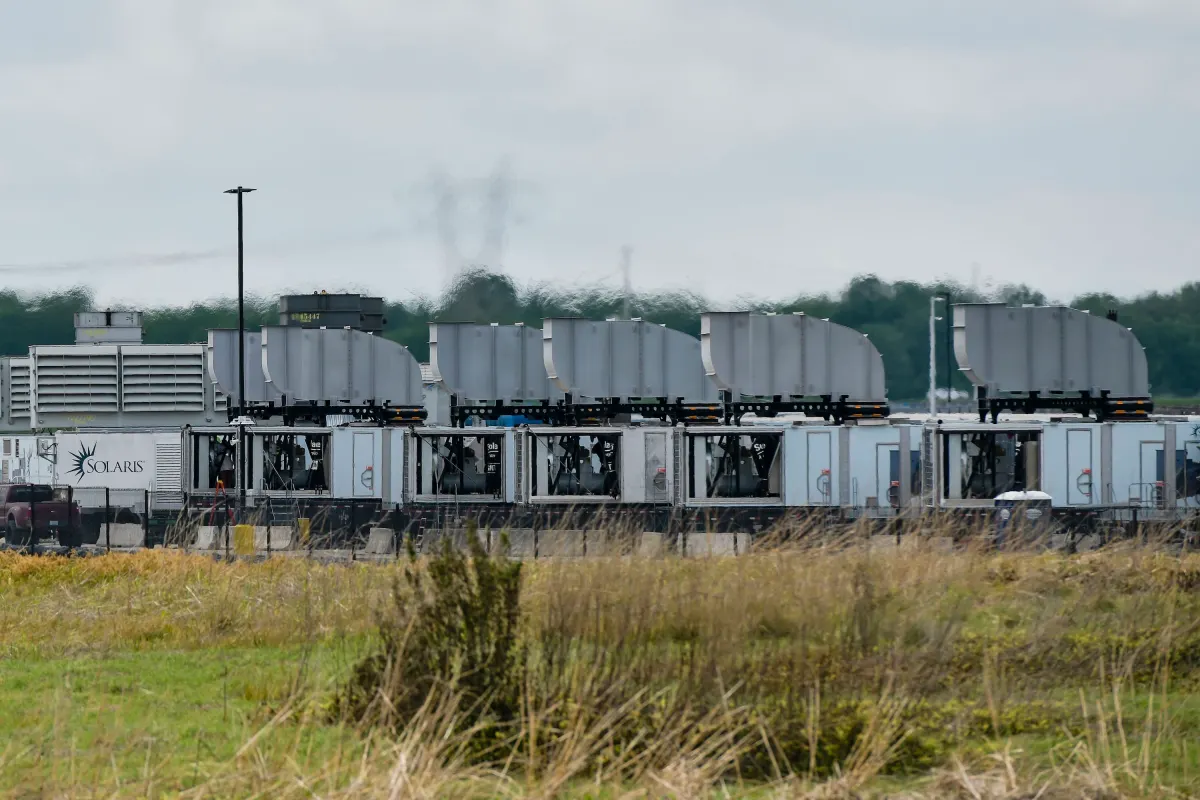
The company says it is shifting to a permanent natural gas power plant, but the transition will take time. In the meantime, dozens of turbines are still running south of Memphis, in Mississippi, while environmental groups argue the system has operated for months without the permits required under federal rules.
What SpaceX says is happening now
SpaceX told regulators and observers that it is replacing temporary power equipment used for xAI’s Colossus data centers with a permanent natural gas facility. But the timeline shows that the changeover is far from immediate: the company expects the existing turbines to remain in service until July 2027 before they are fully removed.
According to SpaceX, 69 gas turbines are currently operating to support the data center complex. The company says many of those units have been in use for months already, powering a project that has become one of the most closely watched examples of the growing energy footprint of AI.
The turbine issue has become especially contentious because the facilities are not located in Memphis proper but just over the state line in Mississippi, where local air quality concerns have intensified. Environmental advocates say the turbines can emit more than 2,000 tons of smog-forming nitrogen oxides, or NOx, each year.
Why are the turbines controversial?
The turbines are controversial because critics say they should have required permits from the start, while SpaceX maintains they can operate without them. The disagreement hinges on whether the units should be treated as temporary equipment sitting on trailers or as industrial-scale emissions sources subject to federal regulation.
SpaceX argues that the turbines are exempt because they remain mounted on the trailers they were shipped on. Environmental and legal opponents say that claim does not override the rules governing how large combustion turbines are used in practice. Federal regulations, they say, require permits based on the size and function of the equipment, not simply on what it is sitting on.
That legal fight has already produced a high-stakes collision between the company’s energy strategy and public health concerns in a region that is already burdened by heavy industrial pollution.
Who is suing xAI over the turbines?
The NAACP and the Southern Environmental Law Center have sued xAI over the unpermitted turbines. Their lawsuit centers on the claim that the company is operating major pollution sources without the approvals needed under environmental law.
In that case, the Justice Department recently sided with SpaceX, calling the turbine dispute a matter of national, economic and energy security. That intervention gave the company a significant legal boost, even as the underlying environmental debate continues.
The Justice Department said the turbine issue involves “national, economic, and energy security,” aligning itself with SpaceX in the NAACP lawsuit.
How many turbines are involved?
SpaceX says 69 gas turbines are currently being used to power the Colossus data centers. The company has also obtained permit documents for a new, permanent facility in Mississippi that would use 41 turbines of a different size range.
The new plant is described in state permit filings as a 1.2 gigawatt natural gas power project. Those documents list turbines ranging from 16.48 megawatts to 50 megawatts each, suggesting a substantial dedicated energy system intended to support large-scale computing operations.
TechCrunch reported that it could not verify the exact models of the 69 existing turbines. However, the equipment listed in the new permit documents appears to differ from the turbines now on site, raising questions about how the transition will unfold and what happens to the current fleet once the permanent plant is online.
What is the timeline for the Memphis-area power buildout?
The timeline shows a phased strategy rather than an immediate shutdown of the temporary setup. The existing turbines stay in place through July 2027, while SpaceX builds a separate permanent gas plant and, according to filings, begins planning future power expansion beyond the Memphis project.
The company’s approach highlights a recurring pattern in the AI infrastructure race: capacity comes first, and long-term energy planning often follows. For operators under pressure to scale rapidly, temporary power sources can bridge the gap between data center growth and utility infrastructure upgrades.
Here is a simplified overview of the key developments.
| Item | Details | Why it matters |
|---|---|---|
| Current turbines | 69 gas turbines are powering xAI’s Colossus data centers | They are at the center of the permitting dispute |
| Removal deadline | SpaceX says full removal will happen by July 2027 | The temporary setup will last much longer than critics expected |
| New power plant | 41 turbines in a permanent 1.2 GW natural gas facility | Signals a move toward dedicated long-term energy infrastructure |
| Legal challenge | NAACP and Southern Environmental Law Center sued xAI | The dispute is now both legal and political |
| Federal position | DOJ backed SpaceX, citing security concerns | Strengthens the company’s position in the lawsuit |
What makes this different from a routine permitting dispute?
This is not just a local zoning fight or a narrow paperwork argument. The dispute sits at the intersection of AI expansion, power generation and environmental justice, with a major technology company building out compute capacity in a region already grappling with pollution.
Memphis has become a symbolic site in the debate over how artificial intelligence will be powered. The industry’s appetite for electricity is forcing companies to secure enormous amounts of generation capacity, often through arrangements that are faster and less transparent than conventional utility expansion.
In this case, the dispute is amplified by the scale of the operation and by Elon Musk’s control over multiple linked companies. SpaceX acquired xAI in February, tightening the connection between Musk’s rocket company and his AI ambitions. That acquisition has drawn additional attention to how resources, infrastructure and capital are being moved across his corporate empire.
Why the Mississippi location matters
The fact that the turbines are located just south of Memphis in Mississippi is important because it places the equipment near a metropolitan area with existing air-quality pressures while also subjecting it to a separate state permitting structure. That geography has become part of the legal and political contest.
Environmental groups argue that the site’s regional pollution burden should make regulators especially cautious. Company supporters counter that large projects need flexible energy solutions if they are to meet the demands of modern AI compute.
How does the new plant fit into Musk’s broader energy strategy?
The new plant appears to be part of a much larger effort to lock in power for AI operations. SpaceX said in its IPO filing that it plans to buy $2.8 billion worth of gas turbines for its data centers over the next three years, suggesting that the Memphis project may be only one piece of a bigger buildout.
That filing is notable because it shows the company is not treating gas generation as a temporary stopgap alone. Instead, it suggests a sustained investment in turbine-based electricity to support compute-heavy operations.
Earlier this year, Elon Musk also bought APR Energy, a company known for temporary natural gas power systems. The purchase pointed to a strategic interest in fast-deployable generation assets that can be used to support data centers and other infrastructure needs without waiting for grid-scale expansion.
Based on archived material from APR Energy’s website before it was taken down, the company’s fleet appears different from the turbines cited in the permit documents for the new plant. That suggests the newly disclosed turbine fleet may be intended for a different project rather than the permanent Colossus facility.
Could there be another project coming?
Yes. The evidence points to the possibility that the turbine purchases are meant for an as-yet-unannounced development outside the current Colossus buildout.
If APR Energy’s equipment is not destined for the Memphis plant, then Musk’s recent acquisition may be part of a parallel power strategy designed to support other data center or industrial projects. For now, SpaceX has not publicly explained the likely destination of that separate fleet.
Why are data centers turning to gas power?
Data centers are turning to gas power because AI systems require huge and reliable amounts of electricity, often on timelines that outpace utility upgrades. Natural gas turbines can be deployed relatively quickly and can supply large volumes of power when grid access is limited or delayed.
That speed has made gas an appealing bridge fuel for many operators, but it also brings environmental costs. Combustion turbines emit pollutants that can worsen local air quality, which is why siting and permitting have become such flashpoints when data centers rely on them heavily.
The tension between speed and stewardship is likely to define the next phase of AI infrastructure development. Companies want fast, resilient power. Communities want clean air, clear rules and advance notice.
What comes next in the xAI Memphis case?
The immediate next step is the long transition toward the new plant, but the legal and regulatory disputes are unlikely to disappear. The NAACP and the Southern Environmental Law Center have shown they are willing to press the case, while federal officials have already signaled sympathy for the company’s security argument.
Even if the permanent facility is completed on schedule, questions will remain about the legality of the current setup, the environmental impact of months of operation and whether the new turbine fleet is truly tied to Colossus or to another project entirely.
For now, the most important fact is simple: the turbines powering xAI’s Memphis-area data centers are not going away soon. SpaceX’s plan gives the company nearly another year before complete removal, prolonging a fight that could influence how future AI facilities are powered across the country.
Key points at a glance
- SpaceX says the unpermitted turbines powering xAI’s data centers will not be fully removed until July 2027.
- The company says 69 gas turbines are currently operating near Memphis, across the border in Mississippi.
- The NAACP and the Southern Environmental Law Center are suing over the turbines’ lack of permits.
- The Justice Department recently backed SpaceX, framing the issue as one of security and economic importance.
- SpaceX is building a separate permanent 1.2 gigawatt natural gas plant with 41 turbines.
- Elon Musk’s purchase of APR Energy suggests a broader strategy around temporary gas power for data centers.
Background: Why the case matters beyond Memphis
This dispute is about more than one company’s choice of generators. It captures a larger shift in the AI economy, where the race to build ever-larger data centers is colliding with the realities of power supply, environmental regulation and public accountability.
As AI companies chase scale, they are increasingly becoming power companies in all but name. The xAI case offers a clear example of how that transformation can create friction: legal challenges, public health concerns, and pressure on regulators to decide whether temporary solutions should be allowed to operate as long-term infrastructure.
For policymakers, the Memphis area may become a test case. For the AI industry, it is a warning that energy strategy can no longer be treated as an afterthought. And for nearby communities, it is a reminder that the cost of digital expansion is often paid in physical places, by people living near the smokestacks and turbines that keep the cloud running.
Frequently asked questions
When will SpaceX remove the turbines powering xAI’s data centers?
SpaceX says the turbines will not be fully removed until July 2027. The company says it is transitioning to a permanent power plant, but the temporary gas units are expected to keep running during the buildout.
Why are xAI’s turbines under legal challenge?
They are under legal challenge because opponents say the turbines have been operated without the permits required under federal rules. The NAACP and the Southern Environmental Law Center argue that the equipment’s size and use make it subject to permitting requirements.
How many turbines are currently operating for xAI near Memphis?
SpaceX says 69 gas turbines are currently operating to power the Colossus data centers. Many of those units have reportedly been running for months as the company works toward a permanent power solution.
What is SpaceX building in Mississippi?
SpaceX is building a permanent natural gas power plant in Mississippi that permit documents say will include 41 turbines and provide about 1.2 gigawatts of power. The project appears separate from the current temporary turbine setup.
Why does this story matter for the AI industry?
It shows how quickly AI companies are becoming major energy users and how that growth can trigger pollution, permitting and public-health disputes. The case may influence how future data centers secure power and how regulators respond to similar projects.