In short
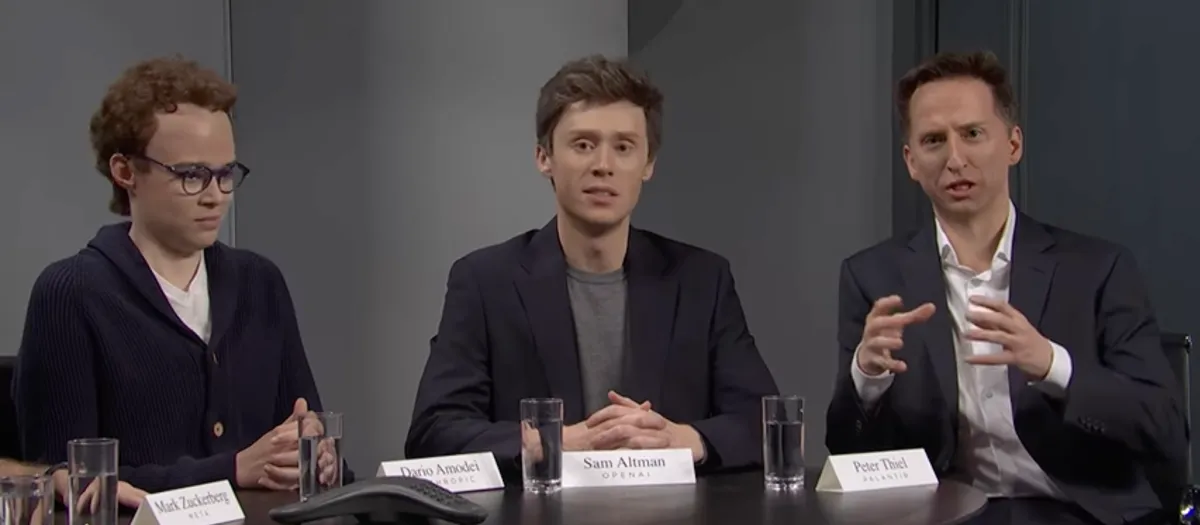
Saturday Night Live mocked a group of top tech executives in a CIA-themed sketch aired Nov. 15, 2026, with John Mulaney warning them about romantic spies. TechCrunch said the bit leaned on recent outage jokes and a broader satire of Silicon Valley’s power and awkward public image.
- SNL aired a tech-focused sketch on Nov. 15, 2026, that spoofed several high-profile Silicon Valley leaders.
- John Mulaney played a CIA agent warning tech bosses about romantic spycraft.
- The sketch referenced a Friday night U.S. flight disruption and a Thursday Microsoft Outlook outage.
- TechCrunch said the bit fit SNL’s recurring portrayal of awkward or creepy tech executives.
Saturday Night Live skewered Silicon Valley power on Nov. 15, 2026, with a sketch that cast some of the world’s best-known tech leaders as easy targets for foreign intelligence and romantic manipulation. The bit, reported by TechCrunch, packed in impressions of Peter Thiel, Sam Altman, Dario Amodei, Elon Musk, Mark Zuckerberg and Jensen Huang, using spycraft jokes to lampoon the public image of the industry’s biggest names.
John Mulaney played a CIA agent who warned the group to distrust sudden romantic interest, turning the premise into a broad joke about wealthy tech executives being vulnerable to “honey trap” style schemes. The sketch also folded in recent real-world disruption, using U.S. flight chaos on Friday night and a Microsoft Outlook outage on Thursday as punchlines about technology’s failure modes.
What SNL did with Silicon Valley
The sketch leaned into a familiar SNL pattern: take a cluster of public figures, exaggerate their defining traits, and then push those traits into a more absurd version of reality. In this case, the show treated the tech elite less like untouchable power brokers and more like awkward marks who might be outmatched by a flattering stranger with a hidden agenda.
TechCrunch said the segment centered on the idea that wealthy tech executives can be targets for foreign intelligence operations. That framing gave the writers a way to link celebrity, wealth and geopolitics into one comic premise, with Mulaney’s CIA character serving as the straight man inside the chaos.
How the sketch framed the CEOs
The impressions were not subtle. Instead of attempting nuanced character studies, the sketch used each executive as shorthand for a different Silicon Valley stereotype: arrogance, oddness, self-importance or overconfidence. That made the joke structure easy to read, and it also helped the bit move quickly through a long list of targets without losing its central premise.
Bowen Yang returned to play Jensen Huang, after previously departing the show, according to TechCrunch. The recap said Huang’s portrayal was tied to a recent Nvidia departure allegedly linked to an affair with a suspected Chinese spy, a reference the sketch used to sharpen the joke around espionage and elite vulnerability.
Who got mocked, and why it landed
The people singled out in the sketch were not random picks. Peter Thiel, Sam Altman, Dario Amodei, Elon Musk, Mark Zuckerberg and Jensen Huang all sit near the center of the public conversation around AI, social platforms, chips and venture capital. That makes them ideal targets for a show that thrives on recognizable names and instant audience recognition.
Thiel’s character pushed back against the premise that tech executives deserve less respect, a line that pointed to one of the sketch’s underlying ideas: Silicon Valley leaders often project immense influence, but they are also easy material for satire because of how outsized their self-image can appear to the broader public.
“Name one time technology has let us down”
The line, delivered by Peter Thiel’s character and quoted by TechCrunch, captured the joke’s tone well. The humor came from the gulf between the character’s confidence and the audience’s awareness of how often technology actually does fail, stall, break or embarrass the people behind it.
Why it matters
This sketch matters because it shows how Silicon Valley’s influence has moved from industry coverage into mainstream comedy as a ready-made symbol of power, fragility and weirdness. When SNL uses a cluster of tech executives as a satire target, it signals that these figures are now part of the broader cultural vocabulary, not just the business pages.
It also reflects a changing public mood around the tech sector. The joke worked because it tied together three ideas audiences already recognize: these executives are rich, they shape major platforms and products, and they are regularly associated with scandal, surveillance, platform outages or geopolitical anxiety. The sketch turned those associations into a single comic thesis: the people building the future may still be surprisingly easy to fool.
For the market and the sector, this kind of satire can be more than a throwaway pop-culture moment. It reinforces the notion that technology leaders are now public characters with reputations to manage, not just CEOs at the top of public companies. When a show like SNL places them in a spy story, it helps cement a public image that can be harder to escape than any earnings call or keynote speech.
Background: how SNL keeps finding tech for comedy
Saturday Night Live has long used celebrity impressions and topical sketches to chase the week’s biggest conversations, and tech leaders have become increasingly fertile material. As the industry has grown more central to everyday life, the gap between its grand claims and its recurring failures has widened enough to give comedy writers plenty of material.
In this sketch, the show stitched together two different sides of the tech narrative. On one side were the men who dominate AI, platforms and semiconductors. On the other were the mundane but disruptive failures that make digital systems feel fragile: a Microsoft Outlook outage on Thursday and U.S. flights halted nationwide on Friday night, both referenced in the bit as examples of technology letting people down.
That combination mattered. It let the sketch mock not only the executives themselves, but also the broader assumption that the sector is synonymous with competence. The humor depended on a simple contrast: the people who sell advanced systems are also the people most associated with everyday breakdowns.
Why the spy theme fits the moment
The spycraft angle gave the sketch a sharper edge than a generic billionaire parody would have. In the modern tech industry, questions about foreign influence, surveillance and insider risk are never far from the surface. By putting those ideas into the mouth of a CIA agent, SNL could joke about paranoia while still sounding close enough to plausible reality to make the material sting.
TechCrunch said the sketch joked about tech leaders being easy marks for attractive people. That is a classic comedy setup because it collapses status and insecurity at the same time: these are world-famous men with enormous resources, yet the joke says a flattering glance might still be enough to outmaneuver them.
By the numbers
The sketch was a compact example of how quickly topical comedy can absorb current events, real or implied. The timeline below lays out the reported anchors from TechCrunch.
| Date or reference | What the sketch used it for | Why it mattered in the bit |
|---|---|---|
| Nov. 15, 2026 | TechCrunch published its recap of the SNL sketch | Established the reporting date for the episode |
| Friday night | U.S. flights halted nationwide | Served as a joke about technology failure |
| Thursday | Microsoft Outlook outage | Another example of tech disruption folded into the punchlines |
| Six executives | Thiel, Altman, Amodei, Musk, Zuckerberg and Huang | Showed how broad the parody sweep was |
What the joke says about tech power
At its core, the sketch is less about any one executive than about what happens when wealth and status become recurring punchlines. Tech leaders spend enormous energy presenting themselves as builders, visionaries or world-shapers. SNL’s version of that story strips away the polish and recasts them as socially awkward figures whose judgment may be just as compromised as anyone else’s.
That is part of why the bit works beyond a single night of television. Silicon Valley is no longer just a business sector; it is a public identity with recognizable archetypes. The genius founder, the eccentric billionaire, the chip king, the AI visionary and the platform mogul are all now familiar enough that an audience can recognize them instantly, even when the joke is harsh.
The sketch also hints at a broader tension in how the public sees these companies. Their products are powerful, their leaders are famous and their influence is enormous — but the same ecosystem is also associated with outages, social friction, political anxiety and allegations of poor judgment. Comedy thrives in that contradiction.
Key lines and recurring themes
Two of the clearest signals in the sketch were its direct jab at technological reliability and its mockery of executive self-regard. TechCrunch reported that Mulaney’s CIA agent told the group: “I hope this is obvious: Even though you’re gay, you can still be tricked by a spy.” The line, as quoted, pushed the bit into the realm of blunt, purposely awkward comedy.
Another standout line came when Mulaney’s character cut the conversation short with: “I’m done naming times.” That worked as a release valve after the sketch had already stacked up examples of tech failure and public embarrassment, turning the premise into a running gag about the sheer volume of material available to mock.
One of the recurring themes, according to TechCrunch, was SNL’s habit of portraying tech executives as creepy or awkward rather than simply rich. That framing has become common in satire because it lets the show highlight how the public often sees the industry: not as heroic, but as strange, self-serious and occasionally threatening.
What happens next
The immediate next question is whether any of the executives or companies referenced in the sketch respond publicly. The fact sheet does not indicate any reactions, and that silence itself can be part of the cycle: most of these sketches live their loudest life online before quickly moving on to the next cultural target.
Another open question is what specific real-world incident the Jensen Huang reference alluded to. TechCrunch said the sketch tied the portrayal to a recent Nvidia departure allegedly linked to an affair with a suspected Chinese spy, but the fact sheet does not identify the incident in detail. If that reference draws more attention, it could prompt further reporting or commentary around the line between comedy and real-world scandal.
A third question is how much of the bit’s news references were shaped by events directly tied to the show’s production date. The sketch used a Thursday Microsoft outage and Friday night flight disruptions as shorthand for tech unreliability, but the extent to which those were topical anchors or simply convenient examples is not spelled out in the source material.
What to watch
- Any reaction from the named executives, companies or their representatives.
- Whether the Jensen Huang reference sparks renewed attention to the alleged incident behind it.
- Whether SNL continues using AI and tech leaders as recurring satire subjects.
- How audiences and commentators interpret the sketch’s mix of scandal, outage jokes and espionage tropes.
Context: why these names, and why now
The names in the sketch map neatly onto today’s tech power structure. Peter Thiel represents a long-running figure in venture capital and political influence. Sam Altman and Dario Amodei sit at the center of the AI race. Elon Musk and Mark Zuckerberg are among the most recognizable tech personalities in the world. Jensen Huang stands for the hardware backbone that has made AI infrastructure a defining business story.
That lineup gave the sketch a broad reach across the industry’s most visible categories. It was not just a joke about one company or one product line. It was a sweep across the people who symbolize the sector’s ambitions, its wealth and its public controversies.
TechCrunch framed the bit as part of SNL’s recurring theme of awkward or creepy tech executives, and that description fits the moment. The industry’s leaders have become so prominent that their caricatures almost write themselves. Whether the subject is AI, social networks, chips or platform outages, the comedy often comes from the same place: the disconnect between immense influence and obvious human frailty.
That is why this sketch resonates beyond one episode. It suggests that Silicon Valley is now fully embedded in the culture’s sense of who deserves parody. The executives may build tools that shape modern life, but on late-night television they are still fair game — vulnerable not just to criticism, but to the kind of joke that can reduce a billionaire’s mystique in a single line.
Source and reporting note
This article is based on TechCrunch’s recap of the Nov. 15, 2026 SNL sketch and the details included in that report. All references to the sketch, its impersonations, its quoted lines and its topical examples are drawn from that fact sheet.
Frequently asked questions
What was the SNL sketch about tech executives?
The sketch was a CIA-style parody built around the idea that wealthy tech executives can be vulnerable to foreign intelligence operations and romantic manipulation. John Mulaney played the agent warning the group, while the show mocked Silicon Valley figures through impressions and outage jokes.
Which tech leaders were impersonated on SNL?
TechCrunch said the sketch included impressions of Peter Thiel, Sam Altman, Dario Amodei, Elon Musk, Mark Zuckerberg and Jensen Huang. The lineup pulled from some of the most prominent names in AI, chips, platforms and venture capital.
Why did SNL reference tech outages in the sketch?
The sketch used a Thursday Microsoft Outlook outage and Friday night U.S. flight disruptions as punchlines about technology failing in public. Those references helped connect the satire of tech leaders to the more familiar experience of digital systems breaking down.
Did Bowen Yang play Jensen Huang again?
Yes. TechCrunch reported that Bowen Yang returned in the sketch to play Jensen Huang after previously departing the show. The detail added another layer to the parody, especially given the bit’s espionage and scandal framing.