In short
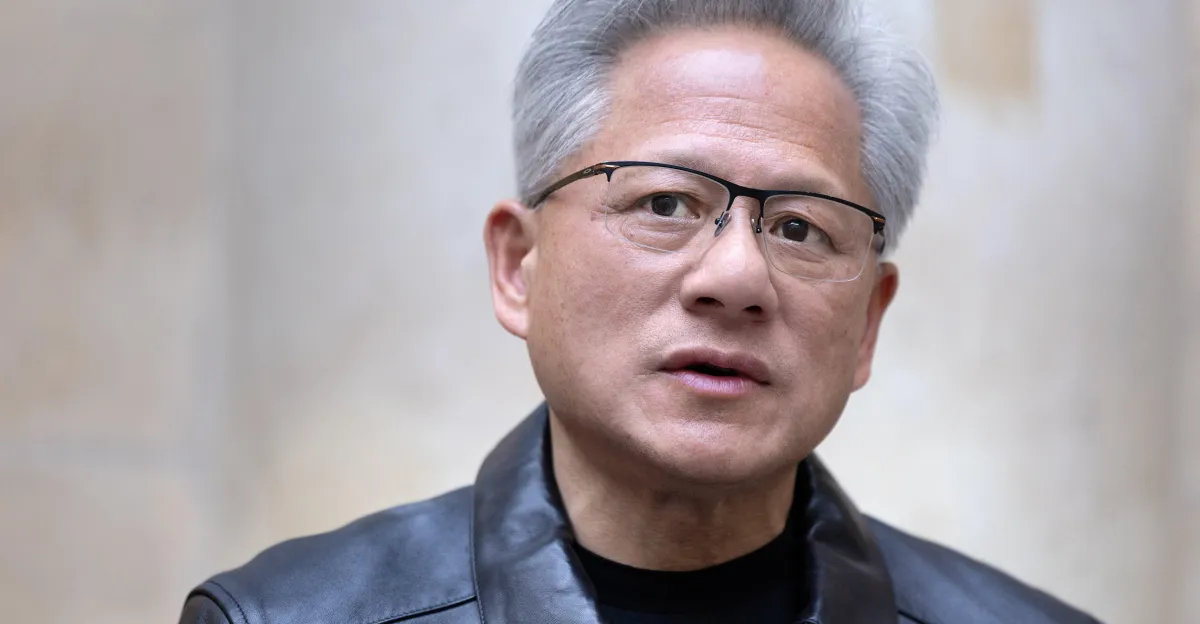
Nvidia will report Q3 results Tuesday with Colette Kress leading the call, the first earnings update without Jensen Huang at the helm. The call comes as the company faces leadership turmoil, China-chip scrutiny and questions about governance.
- Colette Kress will run Nvidia’s Tuesday Q3 earnings call after Jensen Huang’s resignation.
- Nvidia faces scrutiny over alleged chip diversion into China and has promised an internal investigation.
- Congressional pressure is rising, with Huang ordered to answer in a closed-door session.
- A petition for Huang’s reinstatement has reached 180,000 signatures, but CNBC reported Nvidia is not discussing a return.
Nvidia will report third-quarter results on Tuesday with interim CEO Colette Kress running the earnings call, marking the company’s first update without founder Jensen Huang at the helm. The moment matters because it lands as Nvidia faces an internal shake-up, congressional scrutiny and fresh questions about its China exposure and board governance.
What is happening on Tuesday?
TechCrunch reports that Kress, Nvidia’s long-time chief financial officer and now interim CEO, will lead the company’s Q3 earnings call. That makes the briefing more than a routine financial update. It is the first time investors will hear from Nvidia’s leadership without Huang steering the conversation.
The earnings call is expected to cover the usual fundamentals — revenue, guidance and commentary on demand — but the backdrop is unusually tense. Huang was forced to resign last week after admitting an affair with a customer executive, and he was also accused of two additional affairs with Nvidia employees, according to the fact sheet cited by TechCrunch.
At the same time, Nvidia is contending with allegations that restricted chips may have been smuggled into China, a subject that has already triggered promises of an internal investigation and drawn political attention in Washington.
Why it matters
Nvidia is not just another semiconductor company reporting quarterly numbers. It is the dominant AI chipmaker, a bellwether for the artificial intelligence market and a company whose growth has been tightly bound to Huang’s public-facing leadership style and dealmaking instincts.
That is why the absence of Huang on the call is so significant. Investors are not only looking for fresh financial guidance; they are trying to understand whether the company’s growth story can survive a leadership shock, whether its governance structure is more fragile than it appeared, and whether regulatory pressure could hit sales into China-linked channels.
The questions extend beyond one earnings report. If Nvidia becomes more conservative on AI dealmaking under Kress, that could reshape how aggressively it pursues new customers and markets. If the company tightens its China posture, the impact could ripple through its revenue mix and future growth expectations. And if board governance becomes the dominant issue, the market may begin to revalue Nvidia less as a founder-driven expansion machine and more as a company forced into a more cautious phase.
How did Nvidia get here?
The sequence began before the earnings call. Last week, Huang resigned after admitting an affair with a customer executive, a development that TechCrunch says also came with accusations of two additional affairs with Nvidia employees. His departure removed the public face of one of the most influential companies in AI just as the company was entering a period of heightened scrutiny.
Then came the China-chip controversy. Nvidia is facing questions over alleged smuggling of restricted chips into China, and the company has promised an internal investigation into the diversion claims. The issue is especially sensitive because Nvidia operates under a broader U.S.-China export-control environment that has already made its supply chain and sales channels a geopolitical flashpoint.
Complicating matters further, Huang has been ordered to answer Congress in a closed-door session with three Republican-led committees, and top Democrats have also vowed to investigate Nvidia. That means the company is now dealing with both internal instability and external oversight at the same time.
From founder-led dominance to interim management
Kress is stepping into a role that normally would be shaped by Huang’s aggressive style and high-profile presence. The fact sheet says she is expected to be more conservative on AI dealmaking than Huang, which could influence how the market interprets any guidance she offers on Tuesday.
Her background as long-time CFO also matters. She is likely to bring a stricter financial lens to the job, especially as investors scrutinize what the leadership change means for capital allocation, customer concentration and revenue visibility. But the transition is also a test of whether Nvidia’s operational machinery can function without its founder-frontman.
What exactly is driving the China scrutiny?
The central concern is whether Nvidia chips were diverted into China through channels that were supposed to remain restricted. According to the fact sheet, the company is facing questions over alleged smuggling of restricted chips into China, and it has already promised an internal probe. That puts the company in a position where it must reassure regulators, investors and customers simultaneously.
One specific thread in the reporting involves Megaspeed. TechCrunch says the organization was linked to a U.S. diversion probe in October 2025, after earlier reporting by The New York Times. Nvidia told CNBC that Megaspeed was legally using chips for cloud operations, while The Wall Street Journal reported that Nvidia voluntarily blocked Megaspeed from getting more chips in June 2025.
The paper trail matters because it shows how quickly an alleged customer relationship can turn into a broader governance and compliance issue. For a chipmaker with major exposure to export controls, even a narrow allegation can become a proxy for the company’s broader controls over where its products end up.
| Timeline | Event | Why it matters |
|---|---|---|
| June 2025 | Nvidia reportedly blocked Megaspeed from receiving more chips | Shows the company was already reacting to concerns about the customer relationship |
| Summer 2025 | Huang argued on the Dwarkesh Podcast for selling less powerful chips to China | Highlights how Nvidia has tried to navigate export constraints |
| October 2025 | The New York Times reported a U.S. investigation into Megaspeed | Raised the stakes on possible chip diversion |
| Last week | Huang resigned after admitting an affair with a customer executive | Triggered the leadership crisis now facing the company |
| Tuesday | Nvidia will report third-quarter results with Kress leading the call | First earnings update without Huang at the center |
How much of Nvidia’s growth story is tied to Singapore?
A lot more than many investors may have appreciated. TechCrunch reports that Nvidia said Singapore accounted for 22% of total revenue in Q2 of last year, after the company described the city-state as one of its fastest-growing regions. That detail now sits at the center of a broader question: how much revenue exposure remains in Singapore or China-related channels under Nvidia’s newer reporting method?
The company later changed its revenue reporting to customer headquarters rather than shipping address, a move that, according to the fact sheet, hid sales to Singapore and Megaspeed’s effect. That change complicates the task of tracking regional demand and may make it harder for outsiders to see where sales are actually landing.
For investors, reporting methodology is not a technical footnote. It shapes how the market interprets growth, regional exposure and possible regulatory risk. If the revised reporting obscures significant business tied to jurisdictions under scrutiny, the questions around transparency will only intensify.
Background and context
Nvidia has spent years becoming the defining supplier of chips for the AI boom. Its business is closely watched because the company’s GPUs sit at the heart of training and running large AI systems, and because its customer roster can reveal where demand in the sector is moving next.
That also makes Nvidia unusually sensitive to U.S.-China export controls. The fact sheet notes that the company is a leading AI-chip maker with major exposure to those controls, which is why allegations of restricted-chip diversion carry outsized consequences. Even without a formal enforcement outcome, the scrutiny itself can affect customer behavior, investment assumptions and boardroom decision-making.
There is also a governance story here. The fact sheet says board governance and concentration of power are expected to be a major issue after Huang’s ouster. That is a significant shift for a company long associated with a founder-centric model in which strategic direction, public messaging and dealmaking were strongly identified with a single person.
What the market is likely watching
- Guidance: whether Kress offers a conservative or cautious outlook on AI dealmaking.
- China posture: whether Nvidia changes how it talks about restricted chips, customers or regional sales.
- Megaspeed explanation: how much detail the company gives on the alleged diversion concerns.
- Leadership transition: whether Kress addresses Huang’s future role or a possible reinstatement.
- Governance: whether investors get any sign that the board is changing how power is distributed.
What happens next?
The immediate milestone is Tuesday’s earnings call, which will be the first chance for investors to hear how Nvidia is framing this upheaval. Kress is expected to be the lead voice, and her comments could set the tone for how the company handles the next few weeks of scrutiny.
Beyond the earnings report, several open questions remain. Will Kress address Huang’s future role or possible reinstatement? The fact sheet says a petition calling for his return has 180,000 signatures and is growing, while CNBC, citing unnamed sources, reported that Nvidia is not in talks to reinstate him. Financial Times separately reported that Huang may have been trying to return.
There is also the congressional track. Huang has been ordered to answer Congress in a closed-door session with three Republican-led committees, while Democrats have vowed their own investigation. That means the company’s problems are not confined to the investor call; they are now part of a broader political and regulatory process.
Finally, the company must clarify what it believes happened with Megaspeed and whether any further controls are being imposed on chip sales or customer access. If Nvidia opts for a more restrictive stance, the market may read that as prudent risk management. If it resists changes, it may face tougher questions about whether the internal controls are enough.
What to watch on the earnings call
- Whether Kress discusses the leadership transition directly or avoids the subject.
- How much detail Nvidia provides on the internal investigation into chip diversion.
- Any change in language around China, Singapore or other regional exposure.
- Whether the company signals a more cautious posture on AI customer deals.
- Any hints that the board is reassessing governance after Huang’s exit.
The bigger question for Nvidia
This is no longer just a question of one quarter’s numbers. Nvidia’s Q3 update will offer a first look at how much of the company’s growth story depends on Huang’s presence, how durable its governance structure is under pressure, and how exposed it remains to political scrutiny around China and export controls.
If the company can steady itself quickly, Tuesday may become a brief but painful interruption. If not, the absence of its founder on the call could mark the start of a deeper reset in how Nvidia presents itself to Wall Street, Washington and the AI market.
“the company is not in talks to reinstate Huang”
Frequently asked questions
Why is Nvidia’s Q3 earnings call important?
Nvidia’s Q3 earnings call is important because it is the company’s first update without Jensen Huang leading the discussion, and it comes amid leadership turmoil, China-chip scrutiny and new questions about board governance.
Who is leading Nvidia’s earnings call?
Colette Kress is leading Nvidia’s Tuesday Q3 earnings call. The fact sheet describes her as the interim CEO and long-time chief financial officer.
What is Nvidia facing in China?
Nvidia is facing questions over alleged smuggling of restricted chips into China. The company has promised an internal investigation, and reporting cited in the fact sheet links Megaspeed to a U.S. diversion probe.
Will Jensen Huang return to Nvidia?
It is unclear, but CNBC reported, citing unnamed sources, that Nvidia is not in talks to reinstate Huang. A petition calling for his return has 180,000 signatures and is still growing.
How exposed is Nvidia to Singapore sales?
According to the fact sheet, Nvidia said Singapore accounted for 22% of total revenue in Q2 of last year. The company later changed its reporting method to customer headquarters rather than shipping address, which affected how those sales appeared.