In short
Constellation Energy says election-driven market worries will not derail its data center business. CEO Joe Dominguez argues Democrats are unlikely to halt a buildout that supports jobs, growth and major power deals.
- Constellation says Democratic election gains will not stop data center development.
- The company recently signed major power deals with Amazon, Google and Microsoft.
- Federal support for nuclear upgrades remains central to Constellation’s strategy.
- Lawmakers are weighing faster permitting even as some Democrats raise objections.
Constellation Energy says the latest election-driven selloff will not derail its data center business, even as investors worry that Democratic gains could slow the buildout of power-hungry AI infrastructure. Chief executive Joe Dominguez used the company’s third-quarter earnings call last week to argue that the policy risks are being overstated.
The message matters because Constellation’s growth story is increasingly tied to the electricity demands of major data center customers, including Amazon, Google and Microsoft. If those projects keep moving, the company’s nuclear fleet and power deals could remain central to the AI expansion even as lawmakers debate how fast the industry should grow and what guardrails should apply.
What Constellation is telling investors
Dominguez pushed back against the market reaction after Democratic midterm wins, which The Verge described as triggering a broad $2.5 trillion selloff across AI-adjacent stocks, including technology, energy, construction and materials names. His core argument was straightforward: Democratic leaders are unlikely to shut down a sector that supports jobs, investment and economic growth.
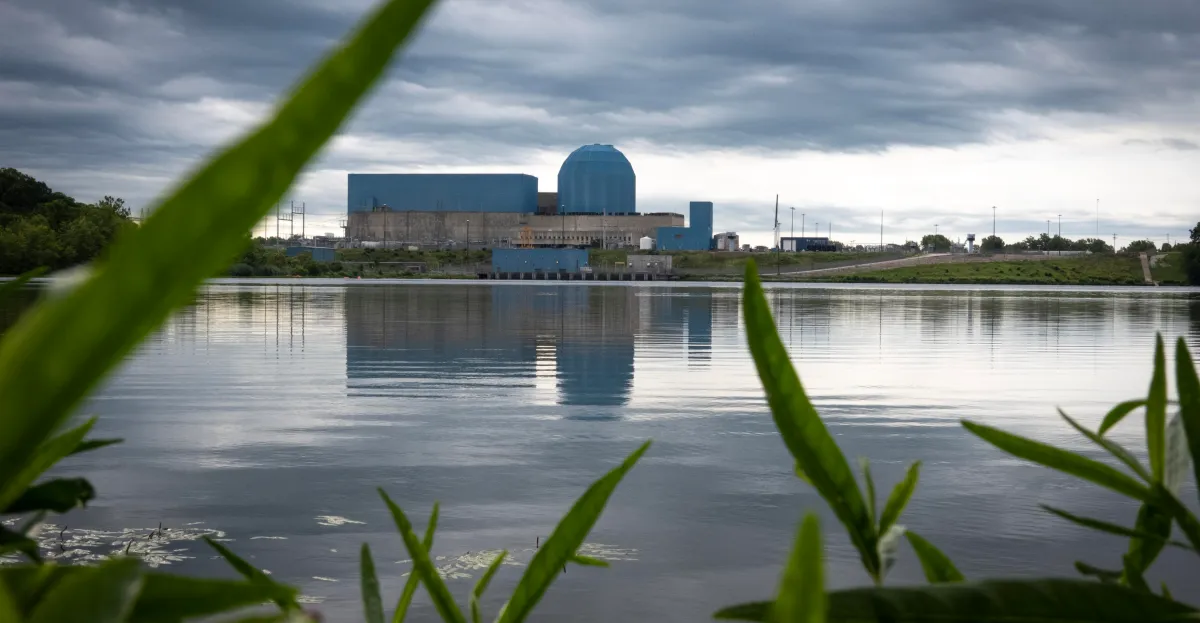
The company’s position is not just political spin. Constellation signed major third-quarter contracts to supply data centers operated by Amazon and Google, and it has a separate deal with Microsoft tied to the restart of the Three Mile Island nuclear plant. That gives the utility a direct stake in whether the current wave of data center construction continues at pace.
“I do think we’ve seen a bit of an overreaction in the market to the election results”
Dominguez framed the issue as one of practical politics rather than ideology. In his view, Democrats may criticize moratoriums or impose conditions, but they are still likely to support activity that brings construction work, labor jobs and economic spin-off to their states and districts.
Why it matters
For investors, the story is about whether the market has misread the durability of the AI infrastructure boom. For utilities, it is about how quickly new power demand can translate into contracts, financing and plant upgrades. For states and local communities, it is about the tension between welcoming a new class of large energy users and managing water, land-use and grid concerns that come with them.
Data centers are among the most power-intensive industrial customers in the country. They need large, reliable supplies of electricity to run AI and cloud computing systems, which makes nuclear power especially attractive because it produces electricity without direct carbon emissions during operation. That is one reason Constellation has emerged as a key supplier in the AI economy.
The company’s future is therefore linked less to a single election result than to whether the U.S. keeps building enough generation and transmission to support the next wave of digital demand. If that demand holds, the political noise may matter less than the physical and financial limits on getting power to where it is needed.
Why are Democrats unlikely to stop data center buildout?
The company’s answer is that the politics cut both ways. Some Democrats are skeptical of moratoriums, but they also do not want to be blamed for slowing an industry that promises jobs and local investment. Dominguez said the policy solutions are likely to be broadly similar regardless of party control.
“The policy solutions are going to be somewhat similar.”
That does not mean there will be no friction. Local resistance to data centers is still uneven, and opposition can flare over noise, land use, zoning, electricity demand or water use. But Constellation is betting that the national economic case for data center development remains stronger than the political appetite for slowing it outright.
Background: how the company got here
Constellation’s business is anchored in nuclear generation, and that makes it unusually exposed to the policy and financing choices surrounding the U.S. power sector. Nuclear operators have long depended on federal support, tax credits and loan programs because building and upgrading plants is expensive and slow. The company’s recent moves show how that dependence is now intersecting with AI demand.
The most visible symbol of that strategy is Three Mile Island, a site already loaded with political meaning because of the 1979 partial meltdown that made it one of the most recognized names in U.S. nuclear history. Constellation’s deal with Microsoft to revive the plant underscores how far the nuclear industry is willing to go to serve the electricity needs of data-heavy customers.
The Biden administration also backed the sector through the Civil Nuclear Credit Program, which was planned at $6 billion in support. More recently, the U.S. Department of Energy approved a $5 billion loan to Constellation this month for nuclear fleet upgrades, while Vistra received a separate $4.2 billion DOE loan. Those figures show that federal support remains a live part of the company’s operating environment, regardless of who controls the White House or Congress.
How much does Constellation depend on data centers?
A lot of the company’s growth story now hinges on that market. Constellation has already signed major contracts with Amazon and Google in the third quarter, and the Microsoft deal at Three Mile Island adds another layer to its AI-era strategy. The company’s expansion depends on whether those customers and others keep buying large blocks of reliable power.
That dependency is why the market’s reaction to the election mattered. Investors were not only pricing political risk; they were also reassessing whether the regulatory climate might become less favorable for rapid data center expansion. Dominguez’s message was that the underlying demand has not changed.
What the political fight is really about
The fight is not simply between pro- and anti-growth forces. It is also about who gets to shape the terms of the buildout. Some Republican state lawmakers, including Virginia Sen. Richard Stuart, have pushed for more data center regulation. Virginia Gov. Abigail Spanberger denied Stuart’s request for a special session over groundwater concerns, a reminder that resistance to data centers is not confined to one party or one level of government.
At the federal level, lawmakers are considering a bill that would speed permitting for power plants, transmission lines and data center hookups. Supporters argue that the U.S. cannot meet rising electricity demand without faster approvals. Critics, including some Senate Democrats, say the bill could weaken public input and environmental review.
That tension is central to Constellation’s outlook. Faster permits would help power companies and their customers move quicker. Stricter review could slow projects, extend timelines and increase costs. The company’s argument is that the broad policy direction will remain supportive enough, even if the details shift.
By the numbers
The figures attached to the story show how much capital, policy support and market attention are now concentrated around data center power demand.
| Figure | What it refers to | Why it matters |
|---|---|---|
| $2.5 trillion | AI-adjacent stock selloff after election results | Shows how sharply investors repriced the sector |
| Third quarter | Period when Constellation signed Amazon and Google contracts | Highlights recent commercial momentum |
| 20-year | Microsoft deal tied to Three Mile Island | Signals long-term confidence in nuclear supply |
| $5 billion | DOE loan to Constellation for fleet upgrades | Supports modernization of the nuclear fleet |
| $4.2 billion | DOE loan to Vistra | Shows broader federal backing for nuclear operators |
| $6 billion | Biden-era Civil Nuclear Credit Program support | Illustrates the scale of planned federal aid |
| 38 states | States that have welcomed data centers with tax breaks | Explains why the industry has spread so widely |
Why it matters for readers, markets and the region
For readers, this is a story about how the AI boom reaches into places most people do not see: power plants, transmission lines, and local permitting boards. The servers driving chatbots and cloud services do not run on software alone; they run on steel, concrete and huge quantities of electricity.
For markets, Constellation’s comments are a reminder that the AI trade is not limited to chipmakers and software firms. Utilities, nuclear operators and infrastructure companies are all exposed to the same demand curve. If data center buildout continues, the beneficiaries could stretch well beyond the tech sector.
For the region, especially states competing to host data centers, the stakes are even more immediate. Tax breaks have helped 38 states attract projects, but the infrastructure burden remains local. Communities that welcome facilities may still resist the water, land and power impacts once projects arrive.
What happens next
The next phase will depend on three overlapping questions: whether federal lawmakers advance the permitting bill, whether state-level opposition broadens beyond isolated fights, and whether Big Tech keeps locking in long-term power deals with utilities like Constellation.
Investors will also be watching how much of Constellation’s future growth depends on additional large contracts. The company has already signaled that its strategy is built around data center electricity demand, but that demand must keep growing to justify the scale of its nuclear investments and upgrades.
Another issue is whether regulators or lawmakers decide to add new guardrails around data center power use. If they do, the market may still continue to expand, but possibly at a slower pace and with more costs pushed onto developers and utilities.
For now, Constellation’s message is that election results have changed the political mood, not the underlying economics. The company is betting that the need for reliable electricity will keep data center projects moving, even as the debate over how to power them becomes more intense.
Timeline
- 2022: The Biden administration launched the Civil Nuclear Credit Program.
- Last month: Virginia Gov. Abigail Spanberger denied Richard Stuart’s request for a special session on groundwater concerns.
- Last week: Joe Dominguez addressed election concerns on Constellation’s third-quarter earnings call.
- This month: The Department of Energy approved a $5 billion loan to Constellation for nuclear fleet upgrades.
Constellation is not arguing that politics do not matter. It is arguing that, for now, data center demand matters more.
Frequently asked questions
Why did Constellation Energy address the election selloff?
Constellation addressed it because investors sold off AI-adjacent stocks after Democratic midterm wins and feared tighter policy could slow data center expansion. CEO Joe Dominguez said the reaction was exaggerated and argued demand for power-hungry AI infrastructure should continue.
How is Constellation tied to data centers?
Constellation is tied to data centers through major power deals with Amazon and Google and through a Microsoft agreement connected to Three Mile Island. Those contracts make the company’s growth heavily dependent on continued demand for reliable electricity.
What is the significance of Three Mile Island in this story?
Three Mile Island matters because Constellation and Microsoft have a deal to revive the nuclear plant. The site is a symbol of U.S. nuclear history and shows how utilities are repurposing existing assets to meet AI-era electricity demand.
What federal support has Constellation received?
Constellation received a $5 billion DOE loan for nuclear fleet upgrades this month, and the Biden administration previously planned $6 billion in support through the Civil Nuclear Credit Program. Those programs show how dependent nuclear developers remain on federal financing.
Will Democrats stop data center construction?
Not necessarily. Dominguez said Democrats care about economic growth and jobs tied to construction, and some oppose moratoriums. But local resistance can still slow projects, and the policy debate is likely to continue at both state and federal levels.