In short
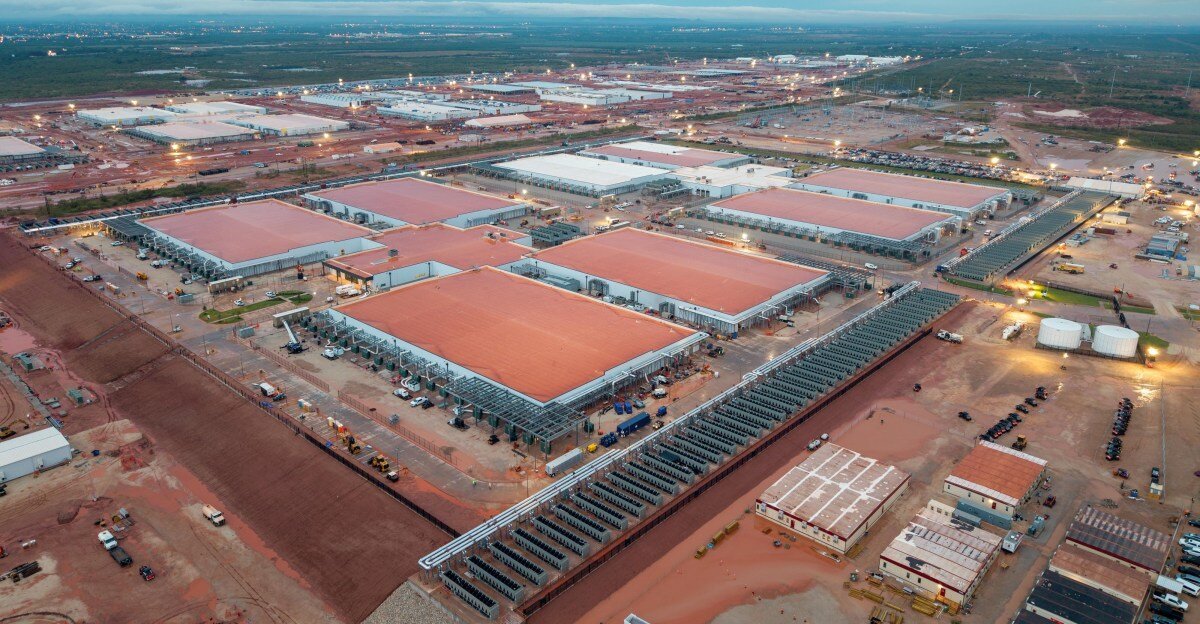
OpenAI has begun calling data centers “compute campuses” as part of a new Grid Protectors Program, starting with a planned site in Effingham County, Georgia. The move appears aimed at easing backlash over AI infrastructure, but critics say it changes the label more than the underlying burdens.
- OpenAI announced a Grid Protectors Program and introduced the phrase “compute campus” in a Monday post.
- The first planned site is in Effingham County, Georgia.
- The Verge said OpenAI used “data center” only twice in roughly 900 words.
- Critics told The Verge the rename looks like a response to unpopular data centers.
- India Today cited a Pew poll showing 54% of Americans say AI data centers harm the environment.
OpenAI has started calling data centers “compute campuses” as it launches a new Grid Protectors Program, beginning with a planned site in Effingham County, Georgia. The shift matters because it comes as the company tries to soften resistance to the power-hungry infrastructure behind AI, while local and national scrutiny of those facilities keeps rising.
What OpenAI announced
In a Monday announcement, OpenAI introduced the Grid Protectors Program and used the term “compute campus” more often than “data center,” according to The Verge. The company’s wording was not accidental in tone or structure: in roughly 900 words, “data center” appeared only twice, while the newer phrase carried most of the weight.
The first planned site in the program is in Effingham County, Georgia. OpenAI framed the effort as part of a broader response to strain on electric grids during extreme weather and emergencies, signaling that the company wants to present its infrastructure plans as part of the solution rather than the problem.
OpenAI said it will “pay the costs we create” and help communities keep the lights on. That promise is central to the company’s pitch: build large AI facilities, but also acknowledge that those facilities can impose real burdens on local power systems and public trust.
Why is OpenAI changing the name?
OpenAI has not publicly laid out a full branding memo for the switch, and The Verge said the company did not respond to a request for comment on its motivations. But the timing and the language strongly suggest a messaging shift aimed at a skeptical public.
India Today reported that an OpenAI spokesperson confirmed the rebranding plan to Business Insider, and said the company wants “AI compute campuses” to sound friendlier and more accurate than “data centres.” That framing fits the broader strategy visible in the Monday announcement: a term that sounds more engineered, more modern, and perhaps less likely to trigger environmental backlash.
TechCrunch, meanwhile, reported that Axios had already signaled a post-midterm public relations push from OpenAI that would include a data-center rebranding effort. In that coverage, Chris Lehane, OpenAI’s chief global affairs officer, linked the political moment to the 2028 presidential race and said the company wants to shape the debate over AI policy, including proposals such as AI “speed limits.”
The company’s language change does not alter the basic physical reality of what these sites are. They still house servers and networking equipment for cloud and AI workloads, and they still depend on electricity, land and, in many cases, water. But the name does matter in policy fights. Labels shape first impressions, and first impressions shape whether a project is seen as a burden, an investment or both.
How the announcement fits the politics around AI infrastructure
OpenAI’s move lands at a sensitive moment for the industry. AI facilities have become a flashpoint because they can draw heavy power loads and raise questions about local grid capacity, environmental impacts and who ultimately pays for the upgrades needed to support them.
Those concerns are not theoretical. India Today cited a Pew poll showing 54% of Americans say AI data centers are harmful to the environment. That level of skepticism helps explain why companies are adjusting not just engineering plans, but also vocabulary.
TechCrunch reported that Lehane described public scrutiny of data centers as “good and healthy,” and argued that communities should hold companies accountable for the transformative benefits promised by such projects. That comment suggests OpenAI wants to make a case that the social bargain around AI infrastructure should be explicit: communities bear some costs, but should also expect tangible upside.
Still, critics are not persuaded that new terminology equals a new approach. Holly Elmore, founder and executive director of PauseAI US, told The Verge, “OpenAI is clearly responding to the unpopularity of data centers.” Abre’ Conner, director of the NAACP Center for Environmental and Climate Justice, was even blunter, saying, “This feels like an empty solution to an existing issue.”
The clash is straightforward. OpenAI says the facilities are different from data centers built a few years ago and deserves a new name. Opponents hear a cosmetic change that leaves the same electricity demand, land use and community concerns intact.
Why it matters
This is about more than branding. If OpenAI can normalize “compute campus” in public filings, permit applications and community meetings, it could help reset the terms of the debate over AI infrastructure. That matters for residents near proposed sites, for local utilities, and for policymakers trying to balance economic development against grid stability and environmental impact.
There is also a broader industry effect. If OpenAI’s phrasing catches on, other AI and cloud companies may adopt it too, especially if they think it softens opposition without changing the underlying project. In that sense, a vocabulary shift can become a policy tool, not just a marketing move.
For communities, the stakes are practical. Large AI facilities can mean new jobs and investment, but they can also mean pressure on power systems and more complicated negotiations over land, taxes and public benefits. The name on the sign may not change those realities, but it can influence how fast a proposal moves and how much resistance it meets.
There is also a political dimension. With midterm elections in the background and the 2028 race already on the horizon in some policy circles, companies are paying closer attention to how AI infrastructure is framed in public. OpenAI appears to be trying to get ahead of that conversation rather than react to it later.
Background: how we got here
Data centers have long been a backbone of the internet, but the rise of AI has made them a much bigger public issue. Traditional cloud computing already requires significant infrastructure, yet AI training and inference have intensified interest in where facilities are built, how much energy they use and what local communities get in return.
The general public often meets these projects through a local lens: a proposed site, a utility request, a zoning hearing or a neighborhood campaign. The industry sees scale and efficiency; residents often see strain on infrastructure, uncertain benefits and limited transparency. That gap has widened as AI companies push for more compute capacity.
OpenAI’s new language reflects that tension. The company says its newer “compute facilities” are different from data centers built a few years ago. That may be true in technical terms, but the point of contention is not only engineering. It is whether the public should treat these projects as ordinary industrial development or as a new class of infrastructure with new obligations.
The Grid Protectors Program also suggests an attempt to position the company as a responsible actor during emergencies and extreme weather. By linking AI infrastructure to grid resilience, OpenAI is trying to shift the narrative from consumption to stewardship. Whether that framing is accepted will depend on local experience, not just corporate language.
By the numbers
| Metric | Figure | What it refers to |
|---|---|---|
| Announcement length | roughly 900 words | The length of OpenAI’s Monday announcement, according to The Verge |
| “Data center” mentions | just 2 | How often the older term appeared in the announcement |
| Initial site | 1 upcoming site | The planned location in Effingham County, Georgia |
| Public-opinion figure | 54% | Share of Americans in a Pew poll who said AI data centers are harmful to the environment |
| Political horizon | 2028 | The election year Lehane referenced in discussing AI’s policy future |
How the outlets differ
The core reporting is aligned across The Verge, TechCrunch and India Today, but each outlet emphasized a different slice of the story.
- The Verge focused on the company’s wording in the Monday announcement, the Grid Protectors Program and the criticism from advocacy groups.
- TechCrunch emphasized the political strategy, including Axios’s earlier report about a post-midterm PR push and Lehane’s comments on shaping the AI debate.
- India Today highlighted the rebranding as a friendlier, more accurate label and tied it to public concern over environmental damage from AI facilities.
Put together, the reports point to the same conclusion: OpenAI is not just building infrastructure. It is also trying to rename it in a way that makes the project easier to defend.
What critics say
Opponents of large AI facilities are likely to see the change as a public relations maneuver rather than a policy breakthrough. That reaction is already visible in the comments quoted by The Verge.
PauseAI US and the NAACP Center for Environmental and Climate Justice both pushed back on the company’s framing, suggesting that the rename does little to address the actual harms or burdens associated with large-scale AI infrastructure.
The criticism points to a larger question: what counts as meaningful accountability? If a company promises to share costs and support local resilience, does that amount to genuine mitigation, or is it simply the price of doing business at scale? OpenAI’s critics appear to believe the latter.
Even supporters of new infrastructure may want more than a revised label. Communities typically care about specifics: how much power the site will use, whether grid upgrades are paid for by the company, what environmental safeguards are in place and whether promised economic benefits materialize. None of those questions disappear because a project is called a campus instead of a center.
What happens next
The next major test will be whether OpenAI uses “AI compute campus” in practical settings beyond a Monday announcement. That means watching permit filings, public presentations, community negotiations and any future project documents for the new terminology.
Effingham County, Georgia, is the first concrete site named in the Grid Protectors Program, so local responses there may offer the clearest early signal. If residents and officials push back, the company may need to do more than rename its plans. If the project advances with limited friction, the wording shift could become a template for future sites.
There are also open questions about whether other AI and cloud companies adopt the same language. If they do, the industry could converge on a softer, more policy-friendly way of talking about power-intensive infrastructure.
For now, the most important thing to watch is whether OpenAI’s rebrand is matched by concrete commitments. The company has promised to help communities keep the lights on and to pay the costs it creates. The real test will be whether those claims show up in contracts, utility planning and community benefit agreements—not just in the wording of a press release.
Bottom line
OpenAI’s “compute campus” language is a sign of how quickly the AI infrastructure fight has moved from engineering to politics. The facilities are still data centers in function, but the company clearly believes the name attached to them can shape how the public, regulators and local communities respond.
Frequently asked questions
What is OpenAI’s new “compute campus” term?
OpenAI’s new “compute campus” term is its preferred label for the facilities it is planning and discussing instead of using “data center.” The company introduced the phrase in a Monday announcement tied to its Grid Protectors Program, according to The Verge.
Why is OpenAI renaming data centers?
OpenAI appears to be trying to make its infrastructure sound friendlier and more precise, while also responding to backlash over the environmental and grid impacts of AI facilities. India Today said the company wants the new label to sound more accurate than “data centres,” while critics call it cosmetic.
Where is the first planned AI compute campus?
The first planned site in OpenAI’s Grid Protectors Program is in Effingham County, Georgia. OpenAI framed the project as part of a response to grid strain during extreme weather and emergencies.
Does changing the name affect the actual impact of the facility?
No, not by itself. A new label does not change the electricity, land or water demands associated with large AI facilities, which is why critics say the rename does not solve the underlying issue.