In short
SpaceX is reportedly exploring a handset-like AI device, though Elon Musk has denied the report. The idea points to a possible new hardware push tied to xAI and Starlink, but the AI device market is already crowded with failed launches.
- SpaceX is reportedly testing a handset-like AI device prototype, but Musk has denied the report.
- The concept could tie together xAI, Starlink and SpaceX’s manufacturing strengths.
- AI device startups have struggled to prove consumer demand beyond early hype.
- A SpaceX device would likely compete indirectly with OpenAI’s own hardware ambitions.
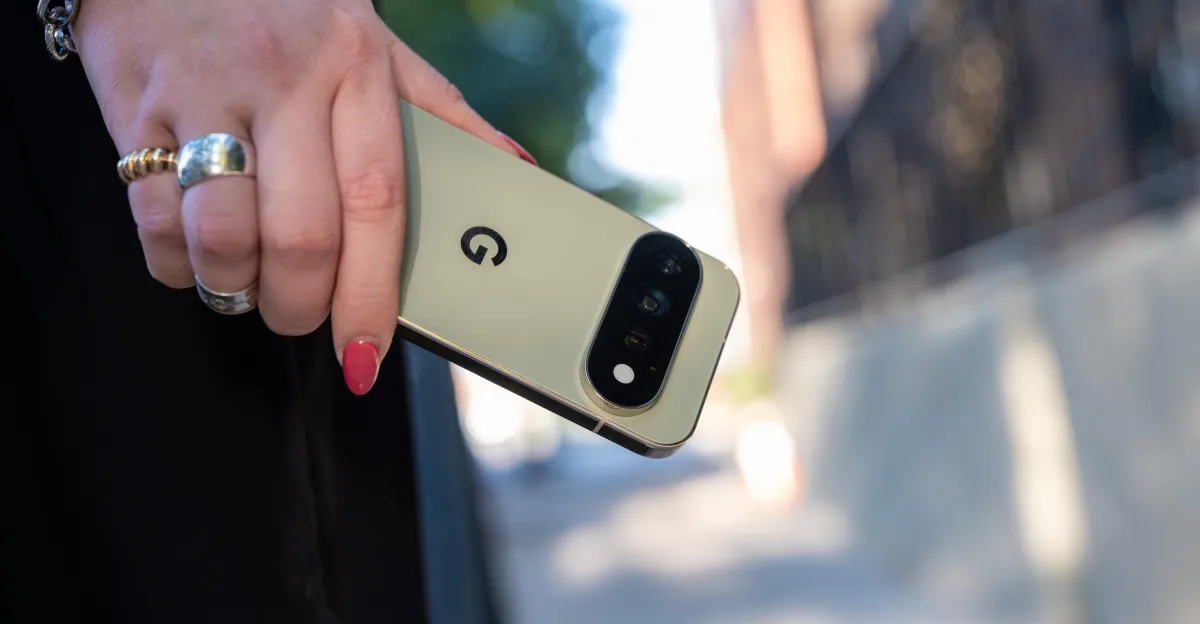
SpaceX may be preparing to test a new frontier far beyond rockets, satellites, and broadband: consumer hardware built around artificial intelligence. According to reporting from The Wall Street Journal, Elon Musk’s aerospace and connectivity company has privately shown investors a prototype of a handset-like AI device that looks slimmer and sleeker than a typical iPhone.
The device is still early in development, and the design could change before anything reaches market. But the reported prototype is already enough to raise a bigger question: is SpaceX merely exploring another idea in a crowded category, or is Musk positioning his private empire to compete in the next phase of personal computing?
Musk has publicly pushed back on the report, calling it false. Still, the claims fit a broader pattern across his companies. SpaceX has the manufacturing scale, supply-chain relationships and strategic overlap with Starlink to imagine a connected device that could sit at the intersection of AI, wireless service and satellite connectivity.
It would also arrive into a market that has already begun to punish overhype. Humane’s AI Pin stumbled. Rabbit’s R1 drew attention but struggled to convert curiosity into durable demand. That history suggests the challenge is not simply building an AI gadget. It is convincing people they need one.
What SpaceX is reportedly building
Based on the report, SpaceX has shown a prototype described as handset-like to investors and other stakeholders. The device is said to be thinner than an iPhone and may have a form factor somewhere between a compact touchscreen phone and one of the early AI-first gadgets that have tried to reimagine mobile computing.
That detail matters because the category itself remains undefined. A “handset-like” AI device could mean anything from a phone replacement to a specialized pocket assistant with a screen. The early stage of the project reportedly leaves plenty of room for changes in size, interface, software and purpose.
For now, the most significant takeaway is not the look of the prototype but the strategic direction it suggests. SpaceX appears to be considering whether AI hardware could become another vertical in a business already defined by systems integration, manufacturing discipline and deep control over infrastructure.
Why the form factor matters
AI hardware startups have often tried to break from the phone template while still borrowing some of its essential traits: portability, touch interaction and constant connectivity. That has proven difficult. If a device is too unlike a phone, consumers may not know how to use it. If it is too much like a phone, it can feel redundant.
A slim, handset-like design suggests SpaceX may be testing the middle ground. The goal could be to create a product that feels familiar enough to use immediately while still offering a different interface for AI-native tasks such as voice interaction, contextual assistance or device-level automation.
Industry watchers have noted that the real challenge for AI devices is not technical possibility but product-market fit: people must see a reason to carry a second screen, or replace the first one they already own.
Musk’s denial adds uncertainty, not closure
Despite the attention around the report, Musk moved quickly to reject it, saying the story was inaccurate. That denial leaves the public with two competing possibilities: either the prototype was mischaracterized, or SpaceX is experimenting so early that even internal descriptions are fluid and easy to dispute.
In practice, both things can be true. Large companies often test concepts behind closed doors long before they commit to commercialization. A prototype shown to investors does not guarantee a launch, and a launch plan does not guarantee a marketable product. In Musk’s case, the distance between private experimentation and public declaration can also be unusually wide.
Still, the denial does not fully remove the strategic logic behind the idea. Musk has a long history of moving across sectors where his companies can control hardware, software and distribution all at once. If SpaceX were to enter the AI-device market, it would follow a familiar playbook: integrate vertically, reduce reliance on outside platforms and build a product around a network that SpaceX already owns or can influence.
Why SpaceX would have advantages in hardware
Unlike a typical software startup trying to ship consumer electronics, SpaceX would not be starting from zero on the industrial side. The company is already a highly sophisticated manufacturer with experience in complex engineering, supply chains and production at scale. That matters when a product category requires tighter tolerances, specialized chips, and rapid iteration.
SpaceX also has a direct link to satellite connectivity through Starlink. That could make any future device more than just a standalone gadget. In theory, it could become a communications product designed to work across ordinary wireless networks and satellite coverage, extending usefulness in places where conventional mobile service is weak or unavailable.
That possibility is especially interesting because it touches one of the few genuine advantages a Musk-owned device might have over rivals: network differentiation. If the handset can connect to Starlink, it may not have to rely entirely on traditional carriers in the same way a regular phone does.
The Starlink angle
SpaceX has already shown interest in expanding beyond rural internet service into mobile connectivity. Starlink Mobile has been framed as a potential rival to large wireless carriers such as Verizon and AT&T. A consumer AI device tied to that effort could serve as both a product and a platform.
That would create a strategic loop. The device could showcase Starlink’s connectivity strengths, while the network could help sell the device by promising broader coverage or more resilient links. If successful, SpaceX would be competing not just in hardware, but in distribution and service.
Analysts have also floated the possibility that a telecom acquisition could accelerate such ambitions, though that would be enormously expensive and highly complex. Whether or not SpaceX ever explores that route, the mere suggestion shows how far the logic of a connected AI handset could extend.
The xAI connection and the push for a proprietary stack
The reported prototype is said to integrate technology from xAI, Musk’s artificial intelligence company. That detail is important because it suggests the product would not simply be a shell for third-party software. Instead, SpaceX could be trying to build a tightly controlled device stack with its own operating system and native AI capabilities.
That approach would echo a longstanding frustration in the tech world: many devices are ultimately dependent on platforms owned by other companies. A proprietary system could allow Musk’s companies to avoid being boxed in by Android or other ecosystems and instead create a more self-contained experience.
Such a move would not be unprecedented, but it is difficult. Device makers that try to build new ecosystems often discover that software, app support, developer interest and consumer habit are much harder to change than industrial design.
Why proprietary software is attractive
- It gives the company control over the user experience.
- It reduces dependence on outside platform owners.
- It can deepen integration with AI models and cloud services.
- It creates opportunities for a unique interface designed around voice and context.
At the same time, a proprietary stack carries real risk. Users may not tolerate a walled garden unless the product offers enough value to offset the inconvenience. That is where many AI gadgets have struggled: they promise a new paradigm, but deliver an interface that is less flexible than the phone already in a pocket.
A crowded graveyard of AI devices
The idea of a dedicated AI device sounds promising in theory because it speaks to a common complaint about smartphones: they are full of distractions, apps and notifications. A purpose-built AI companion could, at least in concept, make interactions simpler and more ambient.
But the market has already seen what happens when that promise outruns execution. Humane’s AI Pin, once pitched as a bold replacement for the smartphone’s attention-hungry interface, ended up becoming a cautionary tale. Rabbit’s R1 captured huge curiosity on launch, but like many novelty devices, it faced questions about practical use and long-term appeal.
Those failures matter because they show that early excitement around AI hardware does not automatically translate into consumer loyalty. Buyers may admire the ambition, but if the device cannot reliably outperform the phone they already carry, enthusiasm tends to fade quickly.
What past AI devices got wrong
- They often lacked a clear reason to exist alongside smartphones.
- Some depended too heavily on voice interaction in noisy, real-world settings.
- Battery life, speed and reliability frequently disappointed users.
- They struggled to define a stable everyday use case.
SpaceX would have to avoid those traps if it wants to turn a prototype into a product. A sleek shape is not enough. A better AI device would need durable utility, intuitive controls and a clear explanation for why it belongs in a consumer’s life.
How this fits into Musk’s broader competition with OpenAI
Any discussion of a Musk-linked AI device inevitably circles back to OpenAI. Musk co-founded the company before leaving years ago, and his rivalry with it has only intensified since. Now OpenAI is developing its own hardware effort with former Apple design chief Jony Ive, a move that has become one of the most closely watched projects in consumer AI.
According to recent reporting, OpenAI has been working through design and development challenges, and it has brought in additional Apple talent to support the hardware effort. News that Paul Meade, Apple’s vice president overseeing Vision Pro, joined OpenAI’s hardware team suggests the company is serious about building a new class of device.
If SpaceX is also testing a handset-like AI product, the competitive dynamic becomes more interesting. Musk would not just be competing in AI models or software services. He could be trying to answer OpenAI at the hardware layer as well.
One reading of the situation is that Musk may not want a rival he helped inspire to define the next consumer AI category without offering his own version of what that future should look like.
Could SpaceX actually sell a consumer device?
Even with its advantages, SpaceX would face a difficult question: is it really the right company to sell a mass-market handheld device? Rockets and satellites are not phones. The consumer electronics business demands fast refresh cycles, retail relationships, after-sales support and a relentless focus on user experience.
SpaceX does have one major asset in its favor: brand power. Musk’s companies generate attention at a level few competitors can match. That can help with launch momentum, preorders and investor interest. But attention is not the same as adoption.
There is also the issue of focus. SpaceX is still primarily a space and connectivity company. Entering the device market could distract from core missions unless the product is tightly tied to Starlink or another strategic initiative.
Three possible directions for the prototype
- Internal test bed: The device could be a research prototype that helps SpaceX explore AI interfaces without a product launch.
- Starlink accessory: It could become a companion device built around satellite and wireless connectivity.
- Full consumer handset: SpaceX may be testing whether it can enter the market as a direct hardware competitor.
At this stage, there is no public evidence that any of those paths is confirmed. But each would lead to a very different business strategy, and each would require a different level of investment, support and regulatory planning.
What the reported device could mean for the market
If SpaceX does pursue an AI handset seriously, the implications would stretch well beyond one product launch. It would signal that the next phase of AI competition may not be confined to chatbots, cloud APIs and enterprise tools. It could move into the physical objects people carry every day.
That shift would intensify pressure on every company thinking about AI hardware, from startups to giants. It would also underline the importance of distribution: which company can bundle the best model, the most useful interface and the most dependable network into a single package?
There is also a broader consumer trend at play. As AI features become more common inside standard phones, dedicated AI devices face a tougher sales pitch. Why buy a new gadget for AI if your existing phone, earbuds and watch are already getting smarter?
Why investors are paying attention
SpaceX reportedly shared the prototype with investors and stakeholders before the company went public. That detail suggests the device may have been part of a broader narrative about future growth, diversification or the long-term value of the company’s ecosystem.
For investors, the attraction is obvious. A successful device could create new revenue streams, strengthen the Starlink business and increase the strategic value of xAI integration. It would also give Musk another story about dominance in a category where hardware, software and network services reinforce one another.
But investor interest can cut both ways. Hardware businesses are capital-intensive, operationally demanding and unforgiving. A flashy concept may excite backers, but consumer disappointment can quickly damage credibility if the product never matures into something useful.
Timeline: how the story appears to be unfolding
| Period | Development | Why it matters |
|---|---|---|
| Last autumn | OpenAI’s hardware efforts reportedly hit design challenges. | Shows how hard AI device design remains, even with elite talent. |
| Earlier this year | OpenAI brought on additional Apple hardware expertise. | Signals renewed seriousness about consumer AI hardware. |
| Recently | Paul Meade, Apple’s Vision Pro leader, joined OpenAI’s hardware team. | Strengthens OpenAI’s push into physical devices. |
| Now | SpaceX reportedly has a handset-like AI prototype. | Suggests Musk may be exploring a direct response. |
| Immediately after report | Musk denied the story as false. | Leaves uncertainty around how far the project has progressed. |
The bigger question: what counts as an AI device?
The phrase “AI device” has become one of the most overused in tech, but it still lacks a settled meaning. In some cases it refers to a small assistant built around voice queries. In others, it means a gadget with dedicated AI services layered onto familiar hardware. For some companies, it is simply a phone with an AI brand label attached.
That ambiguity may be part of the reason companies like SpaceX are experimenting. The category is still being invented, which means the winners have not yet been decided. A product that combines strong connectivity, a polished interface and genuinely helpful AI behavior could still define the market before smartphones absorb all the useful features.
But the window may be narrow. As flagship phones adopt more on-device intelligence, the bar for a separate AI gadget keeps rising. Any startup — or giant — trying to justify a standalone product has to answer a difficult question: what can this do that a phone, watch or earbuds cannot?
The road ahead for SpaceX
For now, the reported prototype should be treated as an early signal rather than a confirmed launch plan. SpaceX may be exploring a new market, validating a concept for internal strategic reasons, or simply testing whether its infrastructure could support a consumer AI product in the future.
Yet even if the device never reaches stores, the report itself is revealing. It shows how far the center of gravity in tech has shifted. AI is no longer just a software layer. It is becoming a hardware prompt, a carrier strategy, a design problem and, increasingly, a battleground for platform control.
If Musk does decide to push SpaceX into the category, the company would have unusual strengths and equally unusual burdens. It could pair connectivity with AI in ways most competitors cannot. But it would still have to solve the oldest consumer-tech problem of all: making people want the thing enough to buy it, carry it and keep using it.
That remains the real test for every AI device — whether from a startup, a laboratory, or a company that already launches rockets into orbit.
Key facts at a glance
| Topic | Reported detail | Implication |
|---|---|---|
| Prototype status | Early-stage handset-like device | Design may still evolve substantially |
| Form factor | Slimmer than an iPhone, possibly phone-adjacent | Suggests a consumer-friendly, portable AI product |
| Software | Proprietary operating system, xAI integration | Points to tighter ecosystem control |
| Connectivity | Potential Starlink tie-in | Could differentiate the device from regular phones |
| Market risk | AI device category has multiple failures already | Consumer demand remains unproven |
Whether SpaceX’s reported prototype becomes a product, a platform test, or a footnote, the idea alone underscores a broader reality: the AI race is moving from screen to hand, from cloud to device, and from abstract capability to everyday hardware.