In short
Starcloud added $250 million to its Series A, lifting total funding to $420 million and valuation to $2.3 billion. The company is using the money to expand manufacturing and secure launch capacity as rocket availability tightens.
- Starcloud’s new $250 million extension brings total Series A funding to $420 million.
- The round values the orbital AI startup at $2.3 billion and includes Nvidia and Cisco.
- Launch access is becoming a major bottleneck as Falcon 9’s phaseout and Starship’s delays reshape the market.
- Starcloud plans 2027 Starcloud-2 missions and hopes to fly its larger Starcloud-3 on Starship.
- The company says it is already testing orbital inference with a Nvidia H100 GPU in space.
Starcloud has raised an additional $250 million to expand its orbital data center program, bringing the startup’s total Series A financing to $420 million and lifting its valuation to $2.3 billion. The money will help the company build a bigger manufacturing site and move closer to launching Starcloud-3, its largest spacecraft yet, even as access to rockets becomes increasingly hard to secure.
The fundraising underscores a growing reality for space-compute companies: the biggest bottleneck may not be chips or customers, but launch capacity. Starcloud says it is planning ahead for a future in which orbital AI inference depends on large, reliable rocket availability, and it is betting heavily on SpaceX’s still-developing Starship system to make that future affordable.
What Starcloud just raised and why it matters
Starcloud’s latest capital injection comes as the startup tries to turn a bold technical idea into a repeatable business. The company is developing satellites that can run AI inference in space, reducing the need to move data back and forth from Earth-based facilities for certain workloads.
The extension to Starcloud’s March Series A was led by Manhattan West Ventures and included participation from Nvidia and Cisco, along with Benchmark, EQT, Soma, NFX, 776, Cedar Capital, Goanna Capital and Standard Capital. A person familiar with the financing said Nvidia invested $25 million.
That backing is strategically important. Starcloud is positioning itself as one of the few companies trying to turn orbit into a practical layer of AI infrastructure, rather than just a place to host experimental payloads. The new money gives it more time and resources to build manufacturing capacity, develop larger spacecraft and line up future launches before the market tightens further.
Why launch access is now a strategic problem
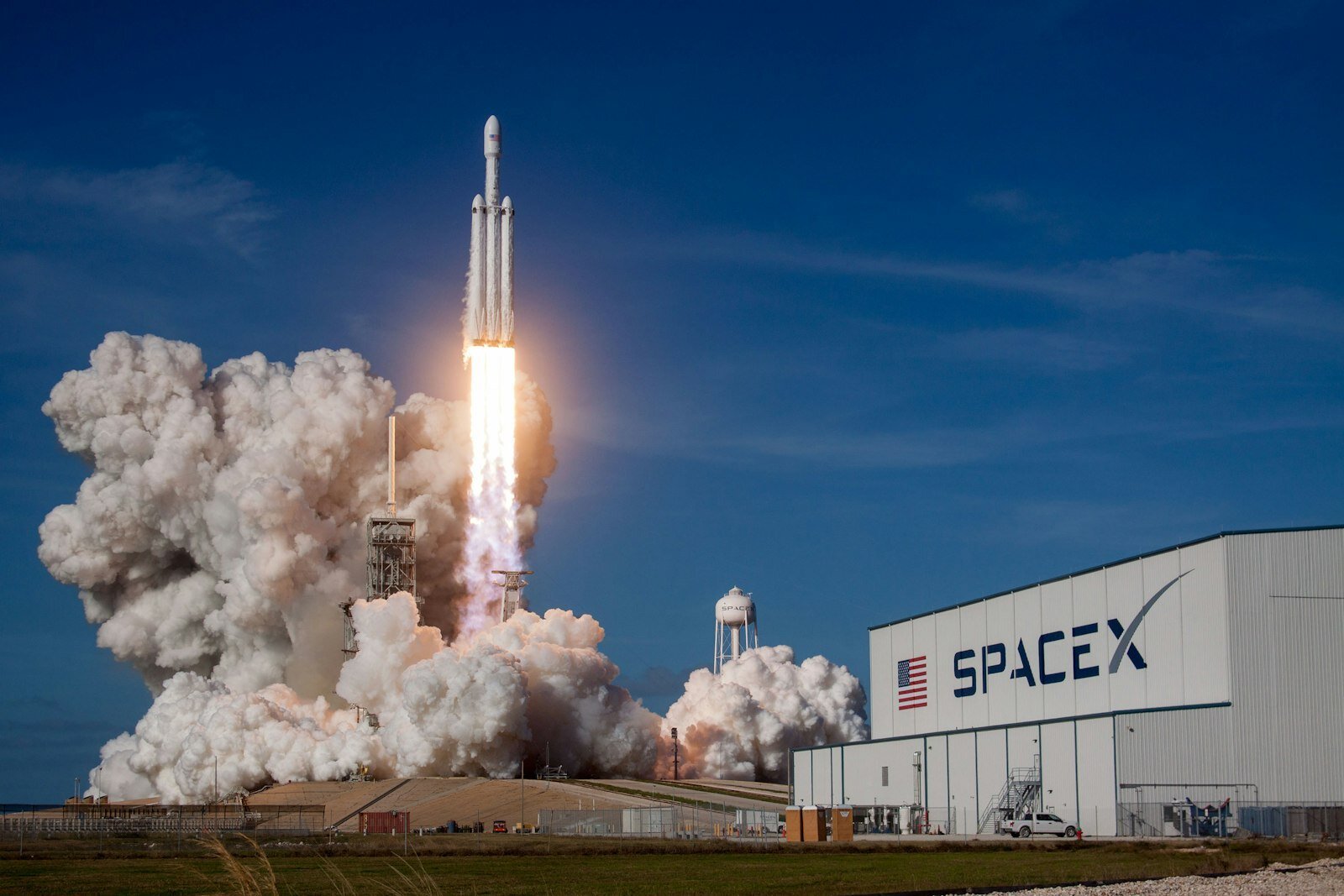
Launch availability has become a central issue for the entire orbital data center sector. SpaceX’s Falcon 9 has been the workhorse for commercial spaceflight, but the company is expected to phase it out in 2028 as it transitions to Starship. That creates uncertainty for satellite operators that need dependable ride options well in advance.
At the same time, other rocket programs are not yet able to fill the gap at scale. Blue Origin’s New Glenn and United Launch Alliance’s Vulcan have not been flying frequently enough to give operators broad scheduling confidence, and Rocket Lab’s Neutron has not yet reached the launch pad. For startups trying to build constellations, the lack of mature alternatives makes long-range planning difficult.
Starcloud chief executive Philip Johnston has been explicit that the company is raising money in part to secure launch commitments before that crunch worsens. He says the startup expects to need a very large number of flights, and he wants to lock in capacity with SpaceX and others as early as possible.
“We can see what’s coming—we’re going to need to book an enormous amount of launch,” Johnston told TechCrunch.
He also said launch costs remain one of the biggest expenses in the business, and that the company wants to get under contract with Starship as soon as it can.
How Starcloud plans to use the new funding
Starcloud says the extension will support two immediate priorities: a larger manufacturing facility and the next generation of its orbital compute hardware. The company currently employs about 25 people and is growing, with production lines being developed at a 100,000-square-foot facility in Woodinville, Washington.
The site is near other satellite builders, including SpaceX and Amazon, both of which have established a major presence in the region. For Starcloud, the choice reflects the need to assemble and test increasingly sophisticated space hardware in a location with a deep aerospace supply chain.
The startup is also preparing to launch two of its new 8-kilowatt compute satellites, called Starcloud-2, on rideshare missions in 2027. Those satellites are designed to carry out orbital inference work for customers, including U.S. government agencies.
In parallel, the company is evaluating whether to reserve a dedicated Falcon 9 launch for additional spacecraft and whether to sign contracts with more than one launch provider to spread risk. That redundancy may be important if Starship development slows or competing rockets remain inconsistent.
What is Starcloud-3?
Starcloud-3 is the company’s largest planned orbital data center spacecraft and is intended to fly on SpaceX’s Starship rocket. If Starship becomes operational at scale, Starcloud believes it could materially lower the cost of putting compute into orbit and help make space-based inference economically competitive with terrestrial data centers for specific use cases.
The company’s long-term strategy depends on that cost curve. Starcloud is not just trying to prove that orbital AI is technically possible; it is trying to show that it can become a repeatable infrastructure business with enough launch volume, enough thermal efficiency and enough chip durability to make financial sense.
Johnston said he remains confident that SpaceX can solve the reusability and turnaround challenges needed for Starship to matter commercially. But he also acknowledged that the timetable matters. If launch access remains constrained too far into the decade, the business case becomes much harder.
“Obviously if we can’t book any SpaceX launch capacity in 2029, that will be challenging for us,” Johnston said.
Why Nvidia’s investment is a signal
Nvidia’s participation is one of the most closely watched parts of the round because it signals that a major chipmaker sees value in Starcloud’s space data and engineering experience. According to Johnston, Nvidia’s interest reflects technical work the startup has already done in orbit.
Starcloud says it is currently the only known company operating a terrestrial Nvidia H100 data center GPU in orbit, and it claims to be the first to train a model with it. Most other space-focused GPUs are designed more for edge processing than for heavier inference workloads.
That distinction matters. Edge chips are useful for processing data near the source, but Starcloud wants to push space hardware closer to full-fledged compute infrastructure. That requires more demanding thermal, shielding and launch-hardening design choices.
Johnston said Nvidia’s choice to invest now was driven by the data Starcloud gathered from its orbital work, adding that the chipmaker had done more technical diligence than any other investor.
Starcloud says it is sharing those learnings with Nvidia as the company develops its own space-focused processor, the Vera Rubin Space-1 chip. The chip has not yet been built, but Starcloud hopes to launch it by late 2028.
How hard is it to build AI hardware for orbit?
It is very difficult, because a chip designed for space must survive launch shocks, radiation exposure and severe thermal management constraints. On Earth, data centers rely on stable power, sophisticated cooling systems and predictable maintenance. In orbit, every one of those assumptions breaks down.
Starcloud says its engineers are focused on several major design variables:
- how hot the chip can run before performance or reliability suffers;
- how large the radiators must be to disperse that heat in space;
- where to place radiation shielding to protect sensitive components;
- how to ruggedize the hardware so it survives rocket launch.
These constraints shape the economics of orbital AI as much as the AI models themselves. If cooling systems are too large, the spacecraft becomes heavier and more expensive to launch. If shielding is insufficient, the electronics may fail early. If the hardware is not robust enough, the mission can end before it starts.
For that reason, Starcloud’s development program is as much about spacecraft engineering as software or chips. The company is effectively trying to merge a data center, a satellite bus and an AI accelerator into one reliable product.
How does Starcloud compare with other space-compute efforts?
Starcloud is among the most advanced names in orbital AI inference, but it is not operating in a vacuum. The concept of putting compute in space has drawn interest from startups, aerospace vendors and chip companies looking for ways to serve workloads that may benefit from low-latency sensing, remote processing or novel infrastructure economics.
What sets Starcloud apart, at least for now, is its insistence on scaling toward true inference infrastructure rather than niche edge computing. Its plans for a large constellation, its work with Nvidia and its emphasis on future launch capacity suggest a company preparing for industrial-scale deployment, not just demonstration flights.
| Milestone | What happened | Why it matters |
|---|---|---|
| March 2026 | Starcloud closed a $170 million Series A | Established the company as a major player in orbital AI infrastructure |
| August 2026 | Added a $250 million extension | Raised more capital for manufacturing and launch planning |
| 2027 | Plans to launch two Starcloud-2 satellites | Will support early orbital inference missions |
| Late 2028 | Target date for space-focused Nvidia chip launch | Could deepen the hardware partnership and improve performance |
| 2028-2029 | Falcon 9 phaseout and launch-constrained period | Creates risk for satellite operators depending on available rockets |
What role does SpaceX’s Starship play in Starcloud’s plan?
Starship is central to Starcloud’s long-term economics because it could radically reduce launch costs if it becomes reusable quickly and flies frequently. That would allow the company to deploy more satellites and build out an orbital inference layer without the current penalty of extremely expensive transport.
Starcloud’s business thesis depends on the idea that launch costs are not permanently prohibitive. If Starship can bring down those costs, the company believes it can scale in a way that makes orbital processing competitive for certain customers and workloads.
But the vehicle is still in development. This week, Elon Musk said SpaceX was pushing back its effort to catch a returning Starship booster by a few months, and the first attempt to refly the vehicle is now expected at the end of 2025 or early 2027. That kind of moving schedule illustrates why satellite startups are nervous.
Even companies with strong ties to SpaceX need real alternatives while a new launch system matures. Starcloud’s strategy reflects that tension: it continues to bet on Starship while also planning for Falcon 9 and other providers where possible.
Why investors are still funding orbital data centers
Investors appear to be betting that the combination of AI demand, rocket improvements and satellite hardware miniaturization could eventually create a viable space-compute market. The logic is straightforward: if orbit can do certain tasks more efficiently than Earth-bound infrastructure, then the economics may justify the complexity.
That argument becomes more credible when the hardware gets better, the launches get cheaper and the operators secure anchor customers. Starcloud is trying to check all three boxes.
The presence of major strategic investors in the round suggests the market is not merely financing a science project. Cisco’s participation adds enterprise credibility, while Nvidia’s involvement signals potential alignment with one of the most important chip suppliers in the AI industry. Benchmark and other venture firms add further support from seasoned technology backers.
Still, the space-compute sector remains highly speculative. The technical hurdles are real, launch supply is uncertain and the path to profitability is not proven. That is why capital raises like this one matter: they buy time to test whether the idea can become infrastructure rather than a prototype.
What happens next for Starcloud?
In the near term, Starcloud will focus on manufacturing, launch bookings and the Starcloud-2 deployment plan. The company also needs to continue working with Nvidia on next-generation space hardware while preparing for the much larger Starcloud-3 spacecraft.
The next few years will likely determine whether the company can turn its technical lead into a durable commercial advantage. If it can secure enough launch access, prove out orbital inference on customer workloads and keep improving its hardware, Starcloud could become one of the defining names in space-based AI infrastructure.
If not, the launch bottleneck may slow the whole category. For now, the company is acting as though the opportunity is real and the window is opening — but only for those who can secure a place on the rocket manifest.
Key facts about Starcloud’s latest financing
- Total Series A financing: $420 million
- Extension amount: $250 million
- Valuation: $2.3 billion
- Lead investor: Manhattan West Ventures
- Notable participants: Nvidia, Cisco, Benchmark, EQT, Soma, NFX, 776, Cedar Capital, Goanna Capital, Standard Capital
- Current staff size: about 25 employees
- Manufacturing site: 100,000 square feet in Woodinville, Washington
For Starcloud, the latest round is not just a financial milestone. It is a bet that the future of AI infrastructure may extend beyond Earth — and that the companies that secure the earliest launch windows will be the ones best positioned to build it.
Frequently asked questions
What did Starcloud announce in this funding round?
Starcloud announced a $250 million Series A extension that lifts its total fundraising to $420 million and values the company at $2.3 billion. The money will support manufacturing expansion, launch planning and development of larger orbital data center spacecraft.
Why is launch capacity such a big issue for Starcloud?
Launch capacity is a major issue because Starcloud needs many missions to build an orbital compute network, but available rockets are becoming harder to book. SpaceX’s Falcon 9 is expected to phase out in 2028, while alternatives are not yet flying often enough.
What is Starcloud-3?
Starcloud-3 is the company’s largest planned spacecraft and the vehicle Starcloud wants to fly on SpaceX’s Starship. It is central to the startup’s long-term plan to scale orbital AI inference and reduce the cost of putting compute in space.
Why did Nvidia invest in Starcloud?
Nvidia invested because Starcloud has produced technical data from real orbital GPU operations, according to CEO Philip Johnston. Starcloud says it is the only known company running a Nvidia H100 data center GPU in orbit and the first to train a model with it.
When could Starcloud launch its next satellites?
Starcloud is targeting 2027 for two Starcloud-2 satellites that will perform orbital inference tasks. The company also hopes to fly a space-focused Nvidia chip around late 2028, depending on hardware development and launch availability.