Updated August 7, 2026 3:24 pm
In short
SoftBank says its $50 million Trump-library donation went to the foundation, not the dissolved Florida fund, and new reporting notes Eric Trump’s role as a trustee while scrutiny over the Ohio data center lease continues.
- SoftBank gave $50 million to a Trump library fund in January 2026.
- Months later, SoftBank announced a federal land lease for a major AI data center in Ohio.
- Democratic lawmakers say the timing raises ethics and bribery concerns.
- SoftBank says the donation was consistent with its prior library contributions.
- The planned Ohio project could require at least 9.2 gigawatts of power.
Update — August 7, 2026 3:23 pm
SoftBank’s reply to lawmakers adds a new detail about where the money went: the company says its $50 million contribution was sent to the Trump Presidential Library Foundation, not the Florida-based fund that had been cited in earlier reporting.
The Verge also reports that Eric Trump is a trustee of the nonprofit tied to the donation, a disclosure that could deepen scrutiny around the political connections behind the gift and the Ohio federal land lease.
SoftBank continues to say it treated the payment as a routine presidential-library donation and expected it to help fund the future library’s construction and operations.
Update — August 6, 2026 5:54 pm
SoftBank’s response to lawmakers adds one new wrinkle: it says the $50 million was given to the Trump Presidential Library Foundation, not the dissolved Florida fund that had previously been cited in reporting on the donation.
The Verge also reports that Eric Trump is a trustee of the nonprofit that can receive the money, a detail that could further fuel scrutiny over the political ties surrounding the contribution and the Ohio land deal.
SoftBank reiterated that it views the gift as a standard presidential-library donation and says it expects the funds to support the library’s construction and operations.
SoftBank donated $50 million to the Trump presidential library fund in January, only months before the company announced a major federal land lease in Ohio for what it says could become one of the world’s largest artificial intelligence data center projects. The timing has triggered fresh accusations of political pay-to-play and renewed scrutiny from congressional Democrats.
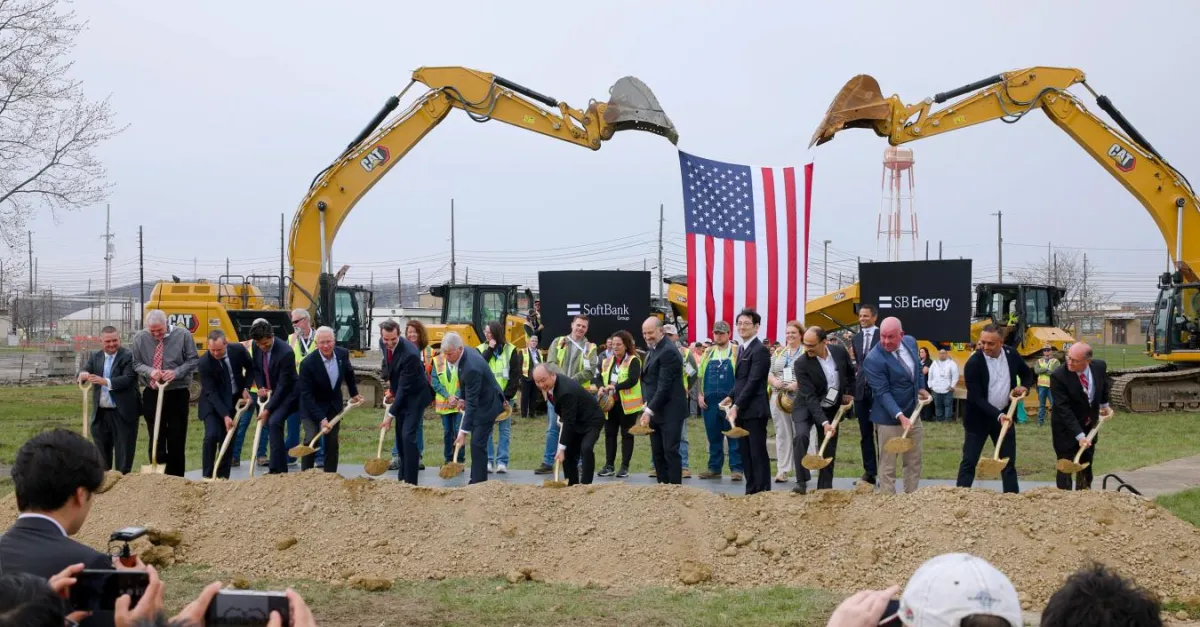
The controversy centers on SoftBank’s planned development at a Department of Energy site in Portsmouth, Ohio, where the company’s SB Energy unit says it wants to build a sprawling AI infrastructure campus paired with a natural-gas power plant capable of producing at least 9.2 gigawatts. Lawmakers argue the sequence of events raises questions about influence, ethics and whether the donation to a Trump-related nonprofit was connected to the later federal deal.
What happened, and why does it matter?
SoftBank confirmed that it made the $50 million contribution in January, after senators and a representative asked the company to explain the donation in light of the Ohio project. That answer has intensified concern because the donation came while Donald Trump was still in office, before any presidential library had been built, and before the federal lease arrangement was publicly announced.
The stakes go well beyond one donation. The Ohio project could become a flagship example of how the United States plans to power the next wave of AI growth. It also puts a global tech investor in the middle of a political debate over whether large corporate contributions can shape access to federal decisions, especially when government land, energy resources and AI infrastructure are involved.
How did the donation and data center deal line up?
SoftBank’s timeline is what has drawn the most attention. The company says it made the donation in January. By March, SoftBank said SB Energy had entered a public-private partnership to build a massive AI data center at the Portsmouth federal site. The company described the project as a potential record-setter in scale.
Then, in June, three Democratic lawmakers sent a letter pressing for answers about whether the contribution was meant to curry favor with the Trump administration. In response, SoftBank defended the donation as part of a pattern of support for presidential libraries and insisted there was no improper link to the Ohio lease.
What SoftBank says about the donation
SoftBank has said it gave the money to the Donald J. Trump Presidential Library Foundation, Inc. and understood the contribution would support the construction and operation of the library. The company framed the payment as consistent with its earlier support for presidential libraries tied to former presidents.
SoftBank’s response said the donation was made in line with its previous library contributions and that it expected the money to help fund the Trump library’s future construction and operations.
That explanation has not satisfied critics, who note that the Trump library did not yet exist and that the structure handling donations had reportedly been dissolved by Florida months earlier after failing to file a required annual report. Those details have fueled more questions about the legitimacy, timing and destination of the funds.
Why are lawmakers calling the donation suspicious?
Lawmakers say the optics look unlike prior presidential library donations made by major donors to former presidents. In their view, those earlier gifts were given after the presidents had left office and after the library foundations had been established. By contrast, SoftBank’s January contribution came while Trump was still president and before any library had been built.
Sen. Elizabeth Warren, one of the lawmakers who raised the issue, said the chronology is too convenient to ignore. She argued that it is difficult to believe the donation and the later lease announcement are unrelated, and she suggested the administration may have prioritized personal ties to chief executives over broader public interests.
Warren said the sequence of events makes it hard to dismiss the possibility that the donation and the lease were connected, and she criticized what she sees as a pattern of dealmaking that benefits powerful executives.
Along with Warren, the letter came from Sen. Richard Blumenthal of Connecticut and Rep. Melanie Stansbury of New Mexico. Their concern is not just about one company’s behavior, but about how government decisions around land and infrastructure can intersect with political relationships at the highest levels.
What is SoftBank building in Ohio?
SoftBank says it is participating in a project at the Department of Energy’s Portsmouth site that could become “the world’s largest” AI data center. The effort is being developed through SB Energy, SoftBank’s renewable-energy infrastructure subsidiary, and it appears designed to support the enormous computing needs of advanced artificial intelligence systems.
To make that possible, the project would need immense power. SoftBank has said the partnership includes plans for a nearby gas-fired plant with a minimum capacity of 9.2 gigawatts, a scale that underscores just how energy-hungry AI infrastructure has become. For comparison, that is enough electricity to place the project among the largest power-consuming industrial developments in the country.
Why this location matters
The Portsmouth site is a federal property, which means the lease arrangement depends on government approval and cooperation. That makes the project more politically sensitive than a typical private real-estate development. It also raises questions about how federal land is used to support private AI expansion.
Supporters of such projects argue that the United States needs domestic data-center and power capacity to compete in AI. Critics counter that the same urgency can be used to obscure questionable relationships, weak oversight or deals that provide advantages to politically connected firms.
How does this compare with other presidential library donations?
Democrats say SoftBank’s donation differs from the pattern seen in earlier administrations. Presidents Reagan and George W. Bush also received library contributions, but those donations came after they had left office and after the related foundations or institutions had already been established, according to the lawmakers’ letter.
That contrast matters because presidential libraries are usually treated as legacy institutions rather than active political vehicles. A donation made while a president is still in power can look less like historical patronage and more like a transaction occurring during a live governing relationship.
| Event | Date | Why it matters |
|---|---|---|
| SoftBank donation to Trump library fund | January 2026 | Raised concerns because it happened while Trump was still in office |
| SoftBank announces Ohio AI data center partnership | March 2026 | Revealed a major federal land project tied to SB Energy |
| Lawmakers send letter demanding answers | June 2026 | Questioned whether the donation and deal were linked |
| SoftBank responds to lawmakers | Following the June letter | Company says the donation was to the Trump library foundation and was consistent with prior practice |
Who is involved in the Trump library fund?
SoftBank says it contributed to the Donald J. Trump Presidential Library Foundation, Inc., rather than to a political campaign or a super PAC. Even so, ethics concerns remain because the nonprofit is associated with a sitting former president and because Donald Trump’s son, Eric Trump, has been identified by ethics advocates as a trustee of the organization.
That connection matters because even donations routed through a nonprofit can create political goodwill. When the donor is a major global company seeking a major federal project, critics say the risk of perceived influence becomes difficult to separate from the formal paperwork.
What are the broader policy questions?
This episode taps into a larger national debate about how the United States should manage the surge in AI infrastructure. Data centers require enormous amounts of land, water, electricity and regulatory coordination. As companies compete to build bigger and faster facilities, federal agencies increasingly become gatekeepers for the land and infrastructure that make those projects possible.
That makes transparency essential. If a company donating to a presidential library or related fund is also seeking a federal lease, lawmakers want clear evidence that the two matters were handled independently. Without that clarity, even lawful donations can look like influence-peddling to the public.
Why AI infrastructure is politically sensitive
AI development is now tied to massive industrial buildouts rather than just software releases. The companies behind these projects need access to power plants, transmission lines and large tracts of suitable land. That means the federal government can become an indispensable partner, especially when a project is proposed on government property.
SoftBank’s Ohio plan is therefore a case study in the collision between artificial intelligence policy and political ethics. It shows how quickly a discussion about computation and energy can become a discussion about access, favoritism and the limits of corporate influence.
What happens next?
The immediate next step is likely continued congressional pressure. Warren, Blumenthal and Stansbury have already put the company on record, and their questions suggest that SoftBank may be asked for more detail about how the donation was approved, who at the company authorized it and whether any government contacts took place around the same period.
There may also be more scrutiny of the Portsmouth project itself, especially because the scale of the power requirement and the federal land lease make it one of the most ambitious AI infrastructure proposals currently under discussion in the United States. If the project moves forward, the politics surrounding it are unlikely to disappear.
For now, the key issue is not whether SoftBank can legally donate to a presidential library fund. It is whether the donation, coming just before a federal lease for a giant AI data center, creates the appearance of a payoff in a system where billions of dollars and major public assets are at stake.
Key facts at a glance
- Donor: SoftBank
- Donation amount: $50 million
- Donation timing: January 2026
- Project location: Portsmouth, Ohio, at a U.S. Department of Energy site
- Project lead: SB Energy, SoftBank’s subsidiary
- Announced project timing: March 2026
- Power plant scale: At least 9.2 gigawatts
- Congressional critics: Sen. Elizabeth Warren, Sen. Richard Blumenthal, Rep. Melanie Stansbury
As the AI race accelerates, the fight over this Ohio site may become a test of whether the country can build the infrastructure it needs without eroding public trust in how those deals are made.
Frequently asked questions
Why is SoftBank’s donation being investigated?
SoftBank’s donation is drawing scrutiny because it came in January 2026, months before the company announced a major federal land deal for an AI data center in Ohio. Lawmakers say the close timing raises questions about possible influence or favoritism.
What is SoftBank planning to build in Ohio?
SoftBank is backing a massive AI data center project at a Department of Energy site in Portsmouth, Ohio. The company says the development could become one of the world’s largest, and it would be paired with a nearby gas-fired power plant.
How much money did SoftBank donate to Trump’s library fund?
SoftBank donated $50 million to the Donald J. Trump Presidential Library Foundation, Inc., according to its response to lawmakers. The company says it viewed the gift as a presidential-library contribution similar to its support for other former presidents’ libraries.
Who is raising concerns about the donation?
Sen. Elizabeth Warren, Sen. Richard Blumenthal and Rep. Melanie Stansbury raised concerns in a letter to SoftBank. They said the donation’s timing, combined with the later federal land deal, could suggest improper influence.
Did SoftBank deny any wrongdoing?
Yes. SoftBank denied that the donation was tied to the Ohio deal and said it was made as part of its longstanding practice of supporting presidential libraries. The company said it understood the money would help with the library’s construction and operations.