In short
Replit CEO Amjad Masad says AI agents are already changing how his company works and believes the future of work is the “self-driving company.” He argues that agents will handle more routine tasks while humans focus on judgment, planning and taste.
- Replit CEO Amjad Masad says AI agents are already reshaping internal workflows.
- He describes the next workplace model as a “self-driving company” with humans supervising agents.
- At Replit, agents now help triage support tickets and assist with fixes.
- Masad says workers will spend more time on strategy, architecture and deciding what to build.
- He argues AI could make jobs more productive and less boring, not just cheaper.
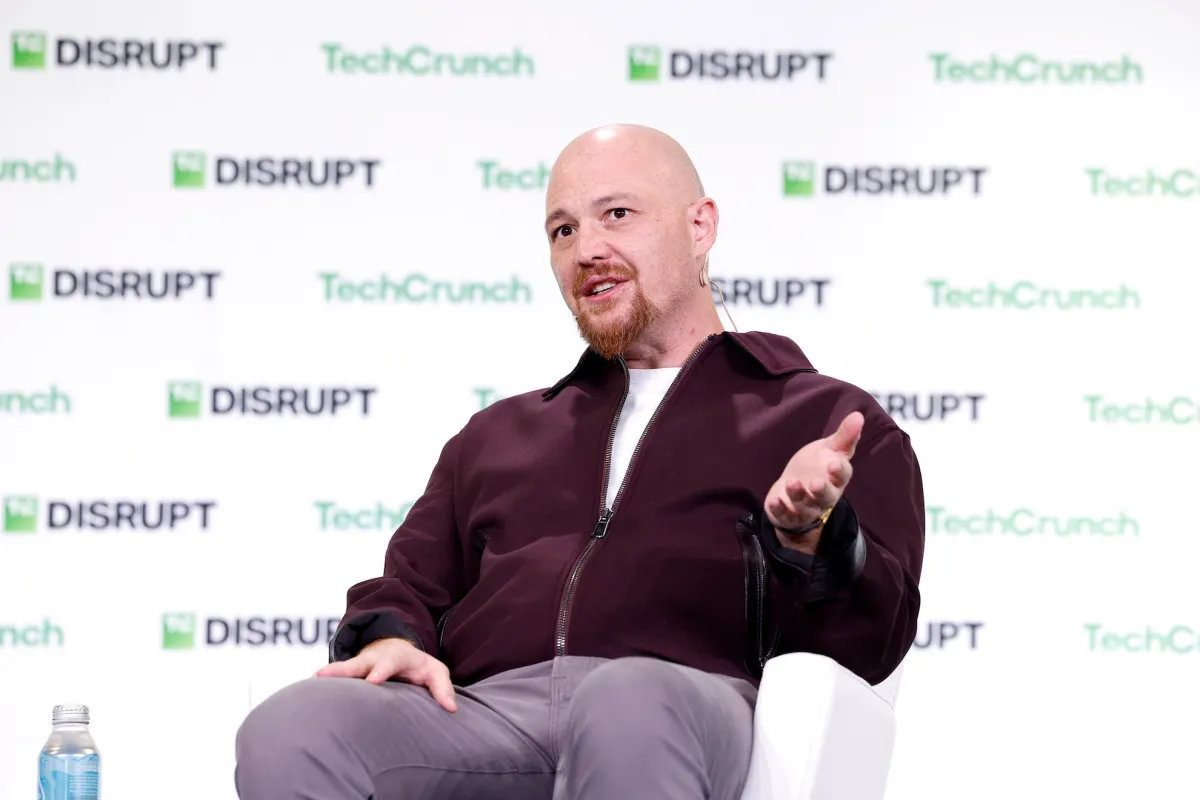
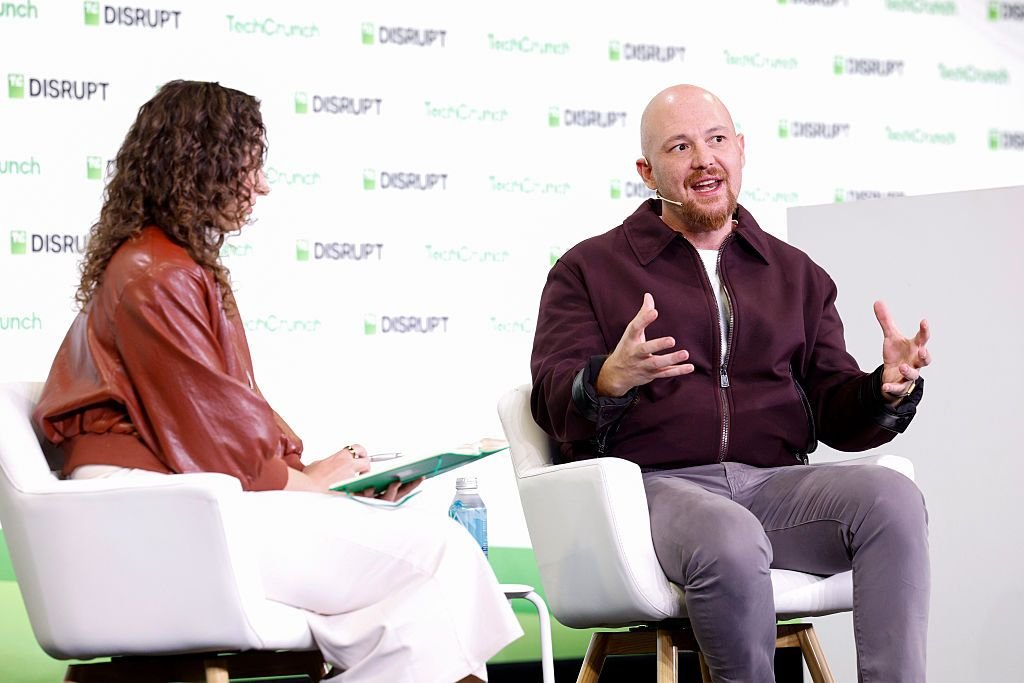
Replit CEO and co-founder Amjad Masad says the rise of AI agents is already reshaping how companies operate, and he believes the next major shift in work will be the “self-driving company.” He made the case at TechCrunch Disrupt in San Francisco on Thursday, arguing that software agents are moving from side tools to core parts of daily business operations.
Masad’s message was not that machines are replacing people outright. Instead, he argued that AI is taking over more of the repetitive, administrative and coordination-heavy work inside organizations, while humans increasingly focus on judgment, product direction, architecture and taste.
The Replit chief said his own company has been transformed over the past year as AI agents became more capable and reliable. In his view, that change is a preview of what many other companies will soon experience: fewer manual handoffs, faster decision-making and more work flowing through automated systems with humans supervising the critical parts.
What Replit means by a “self-driving company”
Replit’s version of a self-driving company is a business where agents handle much of the routine labor, while people intervene where nuance matters most. Masad used the phrase to describe a workplace in which AI systems can inspect information, route tasks, prepare fixes and even launch actions with limited human prompting.
The comparison is meant to evoke autonomy, not invisibility. Just as a self-driving car still relies on sensors, rules and human oversight, Masad’s model still depends on people making the hardest calls. The difference is that the surrounding workflow becomes far more automated than traditional office work.
Masad said the shift has already changed how Replit itself functions. According to him, the company’s operations have been reorganized around agent-driven workflows, with humans spending less time on execution and more time on deciding what should happen next.
Why this matters now
This matters now because the use of AI agents is moving beyond demos and pilot projects into real operational systems. Businesses are beginning to rely on these tools not just for brainstorming or content generation, but for tasks that affect shipping, support and engineering decisions.
That transition could change the structure of many jobs. Instead of treating AI as a tool that sits outside the workflow, companies are starting to embed it into the workflow itself. That has implications for hiring, management, product development and the pace at which teams can operate.
How AI agents are changing day-to-day work at Replit
At Replit, Masad said support requests now typically begin with an agent, not a person. The agent reviews the incoming ticket, checks relevant GitHub issues, examines the codebase and looks through Linear tasks before a human sees the case.
By the time a support employee takes over, they already have a compiled picture of what happened and what may need to be done. That means the person is not starting from zero; they are stepping into a better-informed decision point.
Masad said the process does not stop there. If the support staffer decides a fix is needed, they can trigger another agent to help prepare or apply the patch. In other words, the loop is increasingly agent-assisted from start to finish.
Masad said the company has built a workflow in which agents do most of the heavy lifting, but human judgment remains essential in the middle, especially when deciding whether a fix is actually the right fix.
He stressed that the need for “taste” and judgment is not disappearing. In his telling, those human strengths become more valuable as AI takes over more mechanical tasks.
What changes for workers when agents do the grunt work?
The biggest change, Masad said, is that teams spend less time producing output in the old sense and more time deciding what output should exist at all. That shift sounds subtle, but it can dramatically alter the nature of a job.
Instead of long stretches spent on repetitive tasks, employees may find themselves doing more whiteboarding, system design and planning. Masad said he has noticed more discussion across the company and more time devoted to architecture and strategy.
He argued that this is not a loss of meaning but a reallocation of effort. In his view, AI can make work less tedious and more creative by clearing away the tasks that often drain energy without adding much strategic value.
That idea is central to Replit’s pitch to customers as well. Masad said conversations with other companies increasingly focus on productivity and employee satisfaction, not just cost reduction. The implication is that AI adoption may be sold not only as a way to do more with less, but also as a way to make work better for the people who remain.
Why human judgment still matters
Human judgment still matters because AI systems are not yet trusted to make every decision correctly or safely. Masad’s own example suggests that the most important role for people is no longer performing each step manually, but deciding whether the AI’s proposed path is sensible.
That role includes evaluating trade-offs, recognizing edge cases and understanding the broader business context. It also includes aesthetic judgment — what Masad called “taste” — which can influence product quality, design choices and engineering priorities in ways an agent cannot fully replicate.
In practice, that means the future workplace may reward people who can supervise systems, shape priorities and identify what matters most. The technical work does not disappear, but it becomes more mediated by software agents.
How quickly is the shift happening?
The shift is happening faster than many workers may realize, according to Masad. He said a large part of the workforce has not yet fully absorbed how much the job market and office culture have already changed over the past year.
That disconnect matters because companies often adopt new tools long before workers outside the tech sector understand their implications. Masad suggested that this is especially true now, when agent-based systems are improving quickly enough to alter everyday operations in a relatively short time frame.
His warning is not just about automation. It is also about expectation management. As AI becomes more capable, employees may need to adapt their responsibilities even if their job titles do not change immediately.
| Area | Traditional workflow | Replit’s agent-assisted model |
|---|---|---|
| Support triage | Human reviews the ticket first | Agent gathers context from GitHub, code and Linear |
| Problem solving | Staff searches for background manually | Employee receives a pre-organized case file |
| Fix deployment | Engineer applies changes directly | Agent can be triggered to help with the patch and deployment |
| Employee focus | More time on repetitive execution | More time on architecture, planning and judgment |
What Replit is signaling to the rest of Silicon Valley
Masad’s comments also serve as a broader statement about where he thinks the industry is headed. Rather than emphasizing fear of job loss, he presented a more optimistic vision in which AI reduces drudgery and frees workers to do more interesting work.
He suggested that Silicon Valley often highlights the most alarming scenarios while paying less attention to a more constructive one: a workplace where people are happier because software handles the tasks nobody wants to spend all day doing.
That framing is important for a company like Replit, which builds AI-powered coding tools and has a strong interest in showing that AI can augment human work rather than simply eliminate it. If businesses accept that pitch, the market for AI agents could expand well beyond software development.
It would also help normalize a business model in which every internal process, from customer service to engineering to operations, can be partly mediated by software agents. That is the bigger idea behind the “self-driving company” phrase: not a single product feature, but an operating philosophy.
Why the company’s own experience matters
Replit’s internal example gives Masad more credibility than a purely theoretical argument would. He is not describing a future he has only imagined; he is describing workflow changes his company says it is already living through.
That does not prove every company will adopt the same model at the same speed. Different industries face different constraints, and many jobs require human interaction that cannot be outsourced to software. But Replit’s experience suggests that agent-based systems can already do more than many executives assumed a year ago.
The most significant takeaway is not that agents are replacing all employees. It is that they are changing the ratio of machine work to human work inside a company. That ratio could become a key competitive advantage if the tools keep improving.
Key points from Masad’s vision
- AI agents are taking on more routine operational work inside companies.
- Human workers remain essential for judgment, taste and strategic decisions.
- At Replit, support and engineering workflows already rely heavily on agents.
- The company sees AI as a way to make work more productive and less tedious.
- Masad believes many businesses have not yet grasped how quickly this shift is arriving.
How investors and operators should read this trend
For investors, Masad’s remarks highlight a simple but powerful proposition: the most valuable AI companies may not be the ones that merely generate content or answer questions, but the ones that can sit inside real workflows and perform useful work repeatedly.
For operators, the message is more practical. If agents can collect context, triage issues and prepare action items, then managers may need to rethink team structure, training and performance metrics. The relevant question becomes less “Can AI help?” and more “Which parts of the business should AI run first?”
There are still obvious limits. Agents can make mistakes, misread context and introduce new risks if they are trusted too broadly. That is why Masad’s emphasis on human oversight is notable: he is not pitching a future without people, but one in which people are positioned differently.
In that sense, the “self-driving company” is best understood as a hybrid model. Software carries more of the operational load; humans concentrate on the calls that require experience, ethics, design sense and accountability.
What comes next for AI at work?
What comes next is likely a broader test of whether agent-driven companies can scale beyond early adopters. Replit is one example, but the larger question is whether the same workflow changes can be replicated across industries that are less technical and more regulated.
If they can, the impact on office work could be substantial. Support teams, operations groups, engineering organizations and even some managerial layers may begin to look very different within a few years.
Masad’s comments point to a future in which AI is not just a feature of the workplace but a structural layer underneath it. That future is already starting to arrive inside some companies — and Replit wants to be among the first to define what it looks like.
For now, the company’s message is straightforward: AI agents are not merely assisting work; they are helping to reorganize it. And if Masad is right, the most important job skill in the next era may be knowing when to trust the machine — and when to step in.
Frequently asked questions
What does Replit mean by a self-driving company?
A self-driving company is a business where AI agents handle much of the routine operational work, while people focus on judgment, strategy and quality decisions. Replit CEO Amjad Masad says that model is already taking shape inside his own company as agents increasingly manage support and workflow tasks.
How are AI agents being used at Replit?
AI agents at Replit are being used to triage support tickets, gather context from GitHub issues, code and Linear tasks, and help prepare fixes. Masad says the agents do most of the preliminary work before a human steps in to make the final judgment.
Why does Masad think AI will change work?
Masad believes AI will shift workers away from repetitive execution and toward higher-value tasks like architecture, planning and product decisions. He says this change is already happening and could make jobs more creative and less boring, rather than simply eliminating them.
Will humans still matter in AI-run companies?
Yes. Masad says human judgment remains essential, especially for deciding which fixes are correct, what priorities matter and how a company should move forward. In his view, AI can do more of the grunt work, but it cannot replace taste, accountability or strategic thinking.