In short
Music gear makers are increasingly open-sourcing firmware and tools as AI-assisted vibe-coding mods spread. The trend could extend product life and deepen customization, but it also raises reliability and warranty concerns.
- Music hardware makers are opening firmware and tools to community modding.
- inMusic, Behringer, M-Vave, Erica Synths and Polyend are among the companies making moves.
- The trend is fueled by vibe-coding, which makes firmware experimentation easier.
- Manufacturers are trying to balance openness with reliability, warranty and support risks.
Music hardware makers are opening up their firmware and developer tools as AI-assisted “vibe-coding” turns once-locked instruments into customizable platforms. The shift matters because it could change how producers modify gear, how long devices stay useful, and how manufacturers balance creativity against reliability.
Open-source firmware moves from fringe to strategy
What began as hobbyist tinkering is now pushing more instrument makers to publish source code, SDKs, and other building blocks that let users alter devices in deeper ways. The clearest sign comes from The Verge’s reporting on a wave of announcements that would have been unusual in the hardware-synth market not long ago.
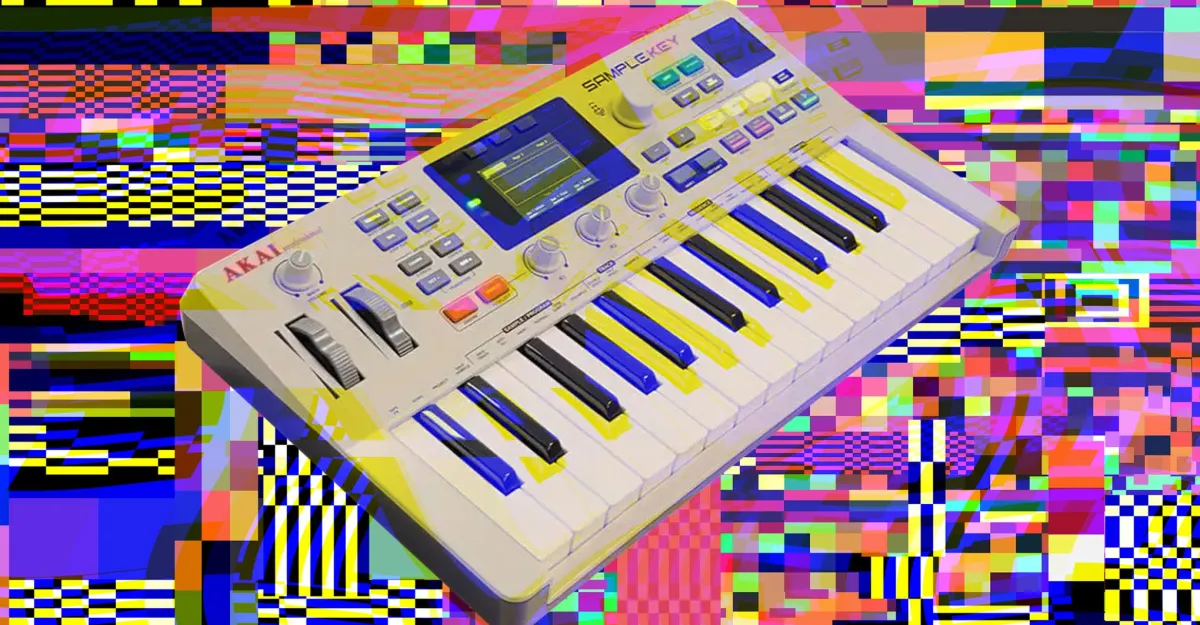
inMusic says it will give its community a toolbox and a look at the inner workings of devices such as MPC and Sample products. Akai, which sits under the inMusic umbrella, has also launched an SDK and teased an open-source device called the MPC Sample Key.
That approach is not simply about generosity. It is an attempt to let modders get inside the machine without undermining the core promise of pro audio gear: that it should boot, behave, and survive the road.
How is the industry responding?
Companies are responding in different ways, but the direction is clear: more access, more community experimentation, and more willingness to treat firmware as part of the product rather than a sealed box.
Behringer has announced multiple open-source products after the rise of vibe-coding mods, including a $150 Kick clone of the MPC One, an SP-1200 clone, the Anima DJ controller, the Ignite sequencer, and the Polykeys 61 MIDI controller. The timing for those products remains unclear, but the lineup shows how central open-source positioning has become in product planning.
Elsewhere, M-Vave has turned an inexpensive synth clone into a community project. Its $70 FM-1, built in the style of the Yamaha DX7, became a hackable favorite and helped spark the broader trend. That device now has well over a dozen custom firmware variants, and M-Vave has since released open-source firmware with extra developer-facing features. The company also says an FM-2 successor is in development and will be open source as well.
Why it matters
The move toward open firmware could reshape competition in the music gear market. For users, it may mean longer-lasting products, more features, and a chance to tailor hardware to specific workflows. For makers, it could mean stronger communities and a steadier life for older devices. For the broader market, it raises a question: is a piece of gear a finished appliance, or a platform that can keep evolving after purchase?
That question has commercial stakes. If a synth, sampler, or controller can be repurposed through community code, it may stay relevant far longer than a traditional one-and-done product cycle. That can reduce the pressure to buy replacement hardware, which is attractive to some users and potentially threatening to manufacturers that depend on refresh cycles.
There is also a practical side. Open-source firmware may help companies channel what users are already doing unofficially. Rather than chase unofficial patches after they spread on forums and social channels, brands can set rules, publish tools, and give power users a sanctioned route to build.
| Company / product | Open-source move | Notable detail |
|---|---|---|
| inMusic / Akai | SDK and community toolbox | Teased MPC Sample Key and access to internal workings |
| Behringer | Multiple open-source products announced | Includes a $150 Kick clone, SP-1200 clone, Anima, Ignite, and Polykeys 61 |
| M-Vave | Open-source firmware | FM-1 has well over a dozen custom firmware variants |
| Erica Synths | LXR-02 source code released | Founder questions whether vibe coding solves a fundamental problem |
| Polyend | Tracker groovebox line open-sourced | Part of the broader shift toward community modification |
Background: how the modding culture got here
Music hardware has long had an underground modding scene. Users have swapped firmware, changed interfaces, and repurposed machines for jobs their creators never intended. What is different now is the tooling. Vibe coding, which uses AI tools to generate or modify code with minimal manual programming, lowers the barrier for more users to experiment.
That lower barrier matters because firmware changes are no longer limited to expert coders. The community can iterate faster, test more ideas, and share variants with less friction. In effect, the hardware becomes a canvas.
Polyend’s move fits that history. The company open-sourced its Tracker groovebox line, and last year it released the Endless pedal for user-created effects. Those steps suggest the shift is not limited to one-off publicity moves; for some makers, it is becoming part of product design philosophy.
The Verge reports that the trend accelerated over the last several weeks, as more makers appeared willing to meet users halfway. That has made open firmware less of a niche stance and more of a competitive differentiator.
What the makers say
inMusic CEO Jack O’Donnell framed the company’s approach as a controlled kind of openness. As he put it, “We’re going to provide a toolbox to the community” and “try to give them a reset button.” The message is that experimentation should be possible, but recovery should be too.
That balance is the central challenge for any manufacturer that wants to support hacking without creating a support nightmare. If users can change the device, they also need a way back when a modification goes wrong.
Erica Synths founder Ģirts Ozoliņš is less convinced that the entire movement solves a deep problem. He said, “I’m still wondering what fundamental problem vibe coding solves.” Even so, he sees one possible advantage: fewer disposable boxes if a single device can be repurposed over time.
Ozoliņš also argues that the environmental benefit is not straightforward. In his view, the sustainability upside of fewer throwaway products does not outweigh the environmental impact of the data centers behind AI tools.
Elektron has taken a more guarded position. The company barred forum links to custom firmware, citing the risk of bricking devices, update problems, and warranty issues. But Christian Alsing, the company’s chief product officer, also said users have a right to modify their devices.
That tension — caution about damage, but recognition of user autonomy — sits at the heart of the current debate.
Why makers are opening up now
Open source is attractive for at least four reasons. First, it can extend a product’s life by letting users add features instead of discarding hardware. Second, it can deepen loyalty among technically minded customers. Third, it can turn an unofficial mod scene into a more orderly ecosystem. Fourth, it can make a product feel more future-proof in a market where buyers increasingly expect software updates, not just physical design.
There is also a defensive logic. If custom firmware is already spreading, a company may prefer to publish tools itself rather than let the community operate in secret. That does not eliminate the risk, but it can reduce uncertainty and make support boundaries clearer.
At the same time, openness is not cost-free. Firmware releases can create support burdens, complicate warranty claims, and make quality control harder. For hardware makers, the question is not whether users can hack the product. It is whether the company wants to shape that hacking or simply react to it later.
By the numbers
The story can be summarized with a few concrete figures that show how quickly the market is moving.
- $70 — the price of M-Vave’s FM-1, the hackable DX7-style clone that helped spark the trend.
- $150 — the price attached to Behringer’s Kick, described as an MPC One clone.
- Well over a dozen — the number of custom firmware variants available for the FM-1.
Comparison: openness versus control
What the new model offers
Open-source firmware gives users a larger role in shaping the gear they buy. They can add features, customize workflows, and in some cases build entirely different operating experiences on top of the same hardware.
What manufacturers still need to protect
Pro-audio hardware has to be dependable. Companies cannot ignore the risks of bad updates, broken machines, and support calls from users who pushed a device too far. That is why the best-case version of this trend is not unrestricted modification, but structured access with guardrails.
What users may gain
For musicians and producers, the immediate appeal is practical. One box might do more jobs. A groovebox could become a more personal instrument. A controller could stay useful longer. And a cheaper device may punch above its weight if the community builds around it.
What happens next
The next phase will be less about announcements and more about delivery. The biggest question is which of the newly announced open-source products will actually ship, and when. Behringer’s timing is still unclear, which leaves its lineup in the realm of promise rather than product.
It will also matter how far other major brands go. Roland, Korg, Arturia, and Novation had not publicly commented in The Verge’s reporting, and their responses could shape whether open firmware becomes an industry standard or remains a more selective strategy among a handful of companies.
Another open question is whether more manufacturers will publish firmware or SDKs specifically to channel community mods. If they do, the market could split between brands that embrace user tinkering and brands that continue to keep their devices tightly sealed.
The final variable is motivation. Some companies may be responding to genuine customer demand. Others may be acting defensively because the modding culture has already moved too far to stop. In either case, the result is the same: music gear is becoming more software-like, more collaborative, and more contested.
Timeline
The shift did not happen overnight. It gathered momentum across a series of recent moves that show how quickly the market has changed.
| When | What happened |
|---|---|
| Last year | Polyend released the Endless pedal for user-created effects. |
| Recently | Akai/inMusic launched an SDK and teased the MPC Sample Key. |
| Recently | Erica Synths released the LXR-02 source code. |
| Recently | M-Vave released open-source firmware for the FM-1. |
| Last several weeks | Music hardware makers increasingly opened products and tools in response to vibe-coding mods. |
| 2026-11-25 | The Verge published the report documenting the trend. |
Who stands to benefit most?
Power users are the most obvious winners. They are the ones most likely to make use of SDKs, source code, and firmware variants. But less technical buyers could benefit too, indirectly, if open ecosystems lead to better updates, more fixes, and longer product life.
The companies may benefit as well, though not always in obvious ways. A thriving mod scene can keep a product visible and relevant. It can also make a device feel more like a platform than a one-time purchase.
That said, the companies that succeed will likely be the ones that draw a line between flexibility and chaos. The market will reward openness only if it does not come at the expense of reliability.
For now, The Verge’s reporting shows a market in transition. What was once a hobbyist loophole is becoming a design choice, and the next wave of gear may be judged not just by sound or build quality, but by how much of its code the owner is allowed to touch.
Frequently asked questions
What is open-source firmware in music gear?
Open-source firmware in music gear means the code that runs a device is made available for users or developers to inspect, modify, and extend. In this story, makers are also releasing SDKs and other tools so communities can create custom features and alternate versions.
Why are music hardware companies opening up their devices now?
Music hardware companies are opening up devices because vibe-coding and community modding have made firmware modification easier and more popular. Publishing tools and source code can help brands channel that activity, extend product life, and reduce the risk of unofficial hacks spreading unchecked.
Which companies are involved in the open-source firmware trend?
The Verge reported moves from inMusic and Akai, Behringer, M-Vave, Erica Synths, Polyend and Elektron. Roland, Korg, Arturia and Novation had not publicly commented in the reporting.
What are the risks of custom firmware for music gear?
The main risks are bricking a device, creating update problems and complicating warranty support. Elektron specifically warned forum users about custom firmware risks, while still saying users have a right to modify their devices.
Will these open-source music products definitely ship?
Not all of them are guaranteed to ship on a clear schedule. The Verge said Behringer’s announced open-source product timing remains unclear, so the next thing to watch is whether the products move from announcement to release.