In short
Meta’s adults-only Muse AI product is under scrutiny because its plush mascot, Jolly, looks and behaves like a children’s character. Critics say the branding could attract kids and make adults less wary of privacy risks.
- Meta’s Muse AI agent is restricted to adults, but its mascot Jolly has a childlike, toy-inspired design.
- Youth advocates say the branding could appeal to children and normalize overly trusting behavior toward AI.
- Meta says age checks and additional safeguards are in place, and that the design is meant to be fun and personal.
- Privacy critics warn that charming interfaces can make users less aware of data collection and model training.
- Meta plans a confidential virtual machine and a Tamagotchi-style device tied to Muse later in 2026.
Meta is rolling out Muse, its AI agent product, with an adorable mascot named Jolly that looks more like a children’s character than a workplace tool. The app is restricted to users 18 and older, but the toy-like branding is drawing criticism from youth advocates who say the design could still appeal to children and make adults less cautious about privacy and manipulation.
That tension sits at the center of Meta’s latest AI push: an adults-only assistant built around a cuddly, customizable avatar, timed to a broader company effort to make its AI feel friendly, personal and fun. The design may help Muse stand out in a crowded AI market, but it also raises a familiar question for Meta: when does “delightful” branding become a way to lower users’ guard?
What is Meta’s Muse, and why is it getting attention now?
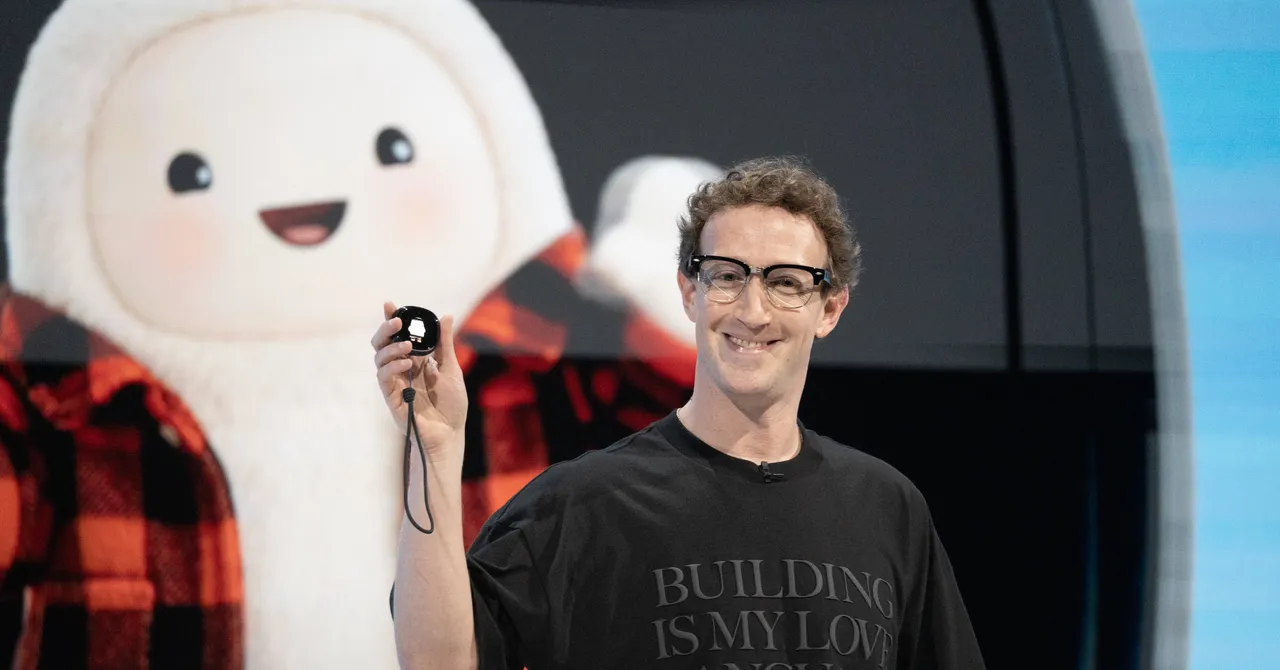
Meta’s Muse is an AI agent designed to complete digital tasks for users, and it has already climbed app rankings as interest in consumer AI assistants continues to grow. What has amplified the product’s visibility, however, is not only its functionality but its mascot, Jolly, a plush-looking character that can be dressed up in different outfits and will soon be tied to a Tamagotchi-style companion device Meta plans to release later this year.
The product’s presentation is deliberately playful. At Meta Connect, CEO Mark Zuckerberg showed off Jolly in a toga and laurel wreath, while Instagram ads portrayed the mascot in athletic gear and framed it as a fitness helper. The combination of utility, personalization and character branding has helped Muse cut through the noise of the AI market, even as it also fuels skepticism.
Meta says the product is intended for adults only and includes age checks, but critics argue the character design sends mixed signals. That concern is especially acute because the company is still working to rebuild trust after years of criticism over its platforms’ effects on children, teens and mental health.
| Key Muse facts | Details |
|---|---|
| Product | Meta’s Muse AI agent |
| Age restriction | 18+ only, according to Meta |
| Mascot | Jolly, a customizable plush-style character |
| Upcoming hardware | Tamagotchi-like Muse Charm device expected later in 2026 |
| Privacy posture | Meta says it will offer a confidential virtual machine option later in 2026 |
Why does Muse look like a kids’ character if it is for adults?
Muse appears to be designed to feel approachable, expressive and emotionally warm rather than corporate or sterile. Meta says that is intentional. The company argues that users prefer avatars with personality and style because they make the experience more enjoyable and less like interacting with a faceless brand.
That strategy is common in consumer technology, especially in products that are meant to be friendly and habitual. The difference with Muse is that the visual language is especially soft, rounded and toy-like, which makes it easy to read the mascot as child-friendly even though the app is not supposed to be used by minors.
Meta spokesperson Daniel Roberts said the company requires users to enter a birth date, blocks accounts it believes belong to under-18 users and applies additional age-checking measures. In the company’s view, the presence of a cute avatar does not mean the product is aimed at children.
Meta says Muse is not a children’s product, but a fun, personalized experience for adults, and that it uses age gates and other checks to keep minors out.
Still, public concern remains because design does not exist in a vacuum. In an online environment where brands often use mascots, filters and collectible characters to drive engagement, the line between playful and predatory can be difficult to draw.
How did the mascot become part of the story?
Jolly is not a minor side detail; it is becoming part of the product’s identity. Meta’s AI chief Alexandr Wang has been posting memes featuring the character, including some with sexualized undertones, adding to the sense that Muse is being turned into a cultural object as much as a software tool.
That meme-friendly strategy may be working on one level. Social media users recognize the mascot, the visuals are easy to share and the character gives the product a memorable face. But it also invites scrutiny because it suggests Meta is leaning into virality at the same time it is asking people to trust the company with sensitive interactions.
In practical terms, the mascot turns Muse into something closer to a persona than a product. That can improve engagement, but it can also blur the user’s awareness of the underlying system: a data-hungry AI service owned by one of the world’s most powerful advertising companies.
What makes Jolly so visually effective?
Jolly uses the visual cues of comfort: rounded contours, a soft texture, large expressive eyes and an outfit system that makes the character feel collectible. Those are familiar ingredients in children’s entertainment and Japanese character branding, but they also work on adults because they trigger nostalgia and affection.
That visual appeal is part of the point. Meta is trying to make Muse feel less like enterprise software and more like a companion. The risk, according to critics, is that the emotional softness of the design can obscure more serious questions about surveillance, data use and influence.
Why are youth advocates pushing back?
Youth safety advocates say Muse’s appearance is not just cute, but strategically disarming. They argue that a plush, toy-like mascot could attract very young children even if the product is technically locked to adults.
Josh Golin, executive director of the nonprofit Fairplay, said the character resembles a Teletubby and looks engineered to appeal to preschool-age children. His concern is not only that kids may want to use it, but that the design normalizes a style of interaction that can make AI companionship feel harmless when it may carry real risks.
Fairplay has previously campaigned against Meta’s child-targeted marketing and data practices, and it sees Muse as part of a broader pattern: Meta introducing products that appear playful while operating inside a commercial ecosystem built to maximize engagement and collect information.
Critics say the problem is not just that Muse looks cute, but that a cute interface can make it easier to overlook the power of the company behind it.
For advocates, the concern is especially urgent because children are highly susceptible to anthropomorphic characters. Developmental researchers have long noted that rounded, friendly visual designs can strongly influence younger audiences, even when the product is not marketed to them directly.
How does Meta defend the design?
Meta’s answer is that the design exists to improve the user experience, not to lure children. The company says people want customizable avatars that feel expressive and joyful, and it argues that the alternative would be a dry, corporate interface that discourages use.
Mona Sarantakos, vice president of product management at Meta Superintelligence Labs, has said in company materials that the team wanted Muse to feel “delightful” and less awkward than talking to what she described as a corporate logo or entity. That framing makes clear that Meta sees emotional design as a competitive advantage, not a gimmick.
There is also a practical business reason for friendliness. Consumer AI tools live or die on daily engagement. The more personal they feel, the more likely users are to return, trust the system and let it become part of their routine.
But that same logic is what worries critics: an interface built to charm people may also make them less likely to question how the system works, what it stores and how it may be trained.
What privacy risks come with a cute AI agent?
One of the biggest concerns is that a warm, playful interface can mask a serious data relationship. Meta says it trains its AI models using user interactions with Muse unless people opt out. That means conversations and behavior patterns may contribute to future model improvement, which is standard for many AI products but still sensitive in the hands of a platform giant.
Jathan Sadowski, an associate professor at Monash University, argues that “cute” and frictionless design can make people less vigilant. In his view, the aesthetic of a friendly companion can encourage passive trust, especially when paired with nostalgia for earlier technologies that felt simpler or less intrusive.
Sadowski says the danger is that users begin to treat the assistant like a harmless little character, rather than a gateway into a large surveillance-capable platform.
That concern is not hypothetical. The AI industry has repeatedly shown that personality-driven interfaces can encourage disclosure, routine dependence and over-trust. A user may treat an agent like a helper, even when the service is collecting signals that could be used for training, personalization or ad-related inference elsewhere in a company’s ecosystem.
What data concerns are most relevant here?
The most immediate issue is the possibility that Muse conversations can be used to refine Meta’s models. The broader issue is that any highly engaged AI system becomes a rich source of behavioral data, even if it is not directly sold to advertisers in a simple, one-to-one manner.
Because Meta’s core business is still built on attention and targeting, privacy critics say users have reason to ask how much information Muse may reveal about moods, routines, relationships and preferences. The more intimate the product feels, the more personal the data it can elicit.
Could a “confidential” version of Muse change the equation?
Meta says it plans to release a confidential version of the virtual machine that powers Muse later in 2026. The company has suggested this system could cryptographically and verifiably prevent Meta from accessing user data, which would be a meaningful privacy step if delivered as described.
That promise matters because much of the criticism around AI companions is not about the existence of data use itself, but about control. If users can be confident that their information is processed in a way even the platform cannot inspect, trust becomes easier to justify.
However, the idea of a privacy-preserving architecture does not eliminate every concern. Age-gating, behavioral design, model training policies and downstream use of data are all separate issues. A more secure machine does not automatically make a mascot less appealing to children or a product less manipulative to adults.
| Issue | Meta’s position | Critics’ concern |
|---|---|---|
| Age access | Adults only, with checks | Design still attracts children |
| Visual style | Fun and personalized | Looks engineered to lower caution |
| Data use | Used to improve the product unless opted out | Could fuel surveillance and profiling |
| Future privacy tech | Confidential virtual machine planned | Promise not yet proven in practice |
What does this say about the AI companion market?
Muse’s design choices fit a broader trend in consumer AI: companies are increasingly giving software personalities, faces and names so it feels less like a tool and more like a presence. That can make products easier to market and stickier to use.
Meta is hardly alone. Technology history is full of mascots and characters used to soften complicated products, from Microsoft’s Clippy to more recent anthropomorphic assistants and companion bots. The difference today is that the systems are much more capable, more intimate and more closely tied to data collection than the cartoon helpers of the past.
AI companions also occupy a strange middle ground. They are not exactly search engines, not exactly chatbots and not exactly toys. They can help plan workouts, answer questions, organize tasks and provide a sense of responsiveness that users may come to rely on.
That is why the design debate matters. When products gain social presence, the interface itself becomes a policy issue. A cute exterior is not merely decoration; it can shape how much people trust the system, how long they stay with it and how much they reveal to it.
How could regulators and families respond?
Regulators could look more closely at whether adult-only labels are enough when a product’s presentation clearly resembles child-friendly media. They could also examine whether a design strategy that uses toy-like appeal should trigger additional scrutiny, especially if the company has a history of child-safety controversies.
Families, meanwhile, may need to be more cautious than they would be with an ordinary app. Even if Muse is restricted to adults, children in a household can still encounter the mascot through ads, videos or shared devices, and a friendly character can make it easier to misunderstand what the product actually is.
Golin believes the issue is serious enough to warrant broader oversight. His view is that the combination of playful branding, a major platform company and an AI product built around engagement should not be left to corporate self-regulation alone.
Advocates argue that if a product feels designed to charm children, regulators should ask whether the adult-only label is enough to protect them.
The bigger picture: Meta’s trust problem is part of the story
Meta’s challenge is not just to make Muse popular; it is to convince people it can launch a new consumer AI product responsibly. That is difficult for any company, but especially difficult for one that has spent years under intense scrutiny over user addiction, teen safety and data practices.
In August, the company settled claims involving social media addiction and agreed to strengthen restrictive features for teens while paying out as much as $16.7 billion. That backdrop shapes how people interpret every new Meta product, particularly one that appears designed to be warm, addictive and emotionally sticky.
As a result, Muse is being judged on more than functionality. It is also a test of whether a company with a fraught reputation can persuade the public that its most charming products are not covert attempts to deepen dependency and harvest more data.
For now, Muse is a reminder that in the age of AI, visual design can carry as much political weight as the underlying code. A friendly face can help a product spread quickly. It can also make people ask harder questions about who benefits when the face belongs to a giant platform company.
What happens next?
The next major milestone is the arrival of Muse Charm, Meta’s Tamagotchi-like device, expected around the holiday season. That launch will likely intensify the debate because it moves Muse further from an app and closer to an object people can keep nearby and interact with repeatedly.
If Meta follows through on its privacy architecture later in 2026, the company may be able to argue that it is addressing one of the most serious concerns surrounding AI companions. But the reputational challenge will remain: a product can be technically adult-only while still feeling like it was designed with the aesthetics of a toy store.
That is why Muse has become such an unusual flashpoint. It is not just another AI tool. It is a case study in how character design, trust, surveillance and child safety now collide in the consumer AI market.
Frequently asked questions
What is Meta’s Muse?
Meta’s Muse is an AI agent product designed to help users complete digital tasks, and it is restricted to adults 18 and over. The service is wrapped in a customizable mascot called Jolly, which has become central to how the product is being marketed and discussed.
Why are people concerned about the Muse mascot?
People are concerned because Jolly looks like a toy or children’s character, even though Muse is supposed to be adults-only. Critics say that kind of design can appeal to young children, lower adults’ skepticism and distract from privacy and data-collection issues.
Does Meta say Muse is for children?
No. Meta says Muse is for adults only and that it uses birth-date checks, account screening and additional age verification measures. The company says the mascot is meant to make the experience enjoyable, personal and less awkward than interacting with a corporate interface.
What privacy concerns are tied to Muse?
The main privacy concern is that Meta may use Muse interactions to train its AI models unless users opt out. Critics also worry that a friendly, low-friction design could make people reveal more personal information than they would to a less charming product.
Will Meta change Muse’s privacy setup later?
Meta says it plans to release a confidential version of the virtual machine powering Muse later in 2026. The company says that system could cryptographically prevent Meta from accessing user data, though that promise has not yet been tested at scale.