Updated August 31, 2026 3:30 pm
In short
Caterpillar is expanding AI from mining automation into field service, manufacturing and internal software, while also leaning on operators to train systems and benefiting from a record quarter driven by data-center power demand.
- Caterpillar is expanding from mining automation into broader industrial AI applications.
- The Cat AI Assistant helps technicians and customers troubleshoot equipment using voice commands.
- The company has 1.6 million connected assets and more than 16 petabytes of structured data.
- Caterpillar plans to invest $100 million over five years in AI, autonomy and robotics training.
- AI-related data center demand is helping drive record revenue and a surge in power-generation sales.
Update — August 31, 2026 3:30 pm
Caterpillar said it also relies on experienced operators to help train its AI systems, using the know-how long-time workers have built up in the field.
As autonomy expands, some operators are expected to move away from running one machine at a time and instead supervise several machines remotely from a command center.
The company also said its second-quarter revenue hit a record $20.5 billion, lifted by strong demand for power-generation equipment tied to data centers. Sales in that division jumped 72% to $3.10 billion.
Caterpillar is using lessons from years of mining automation to roll out artificial intelligence across customer sites, factories and its own workforce, as the industrial giant tries to solve one of AI’s biggest problems: turning promising technology into day-to-day operations. The company says the same playbook it used to automate dangerous and labor-intensive mining work is now guiding its AI deployment in construction, quarries, manufacturing and internal software development.
Speaking at the Ai4 conference in Las Vegas earlier this month, Caterpillar Chief Technology Officer Jaime Mineart said the company is moving beyond autonomous hauling and drilling systems to a broader set of AI tools that help technicians, operators and employees work faster and more safely. That shift matters because Caterpillar is not just selling machines; it is trying to build the digital infrastructure around them, at a time when industrial companies are racing to find practical uses for AI.
From mining automation to AI deployment
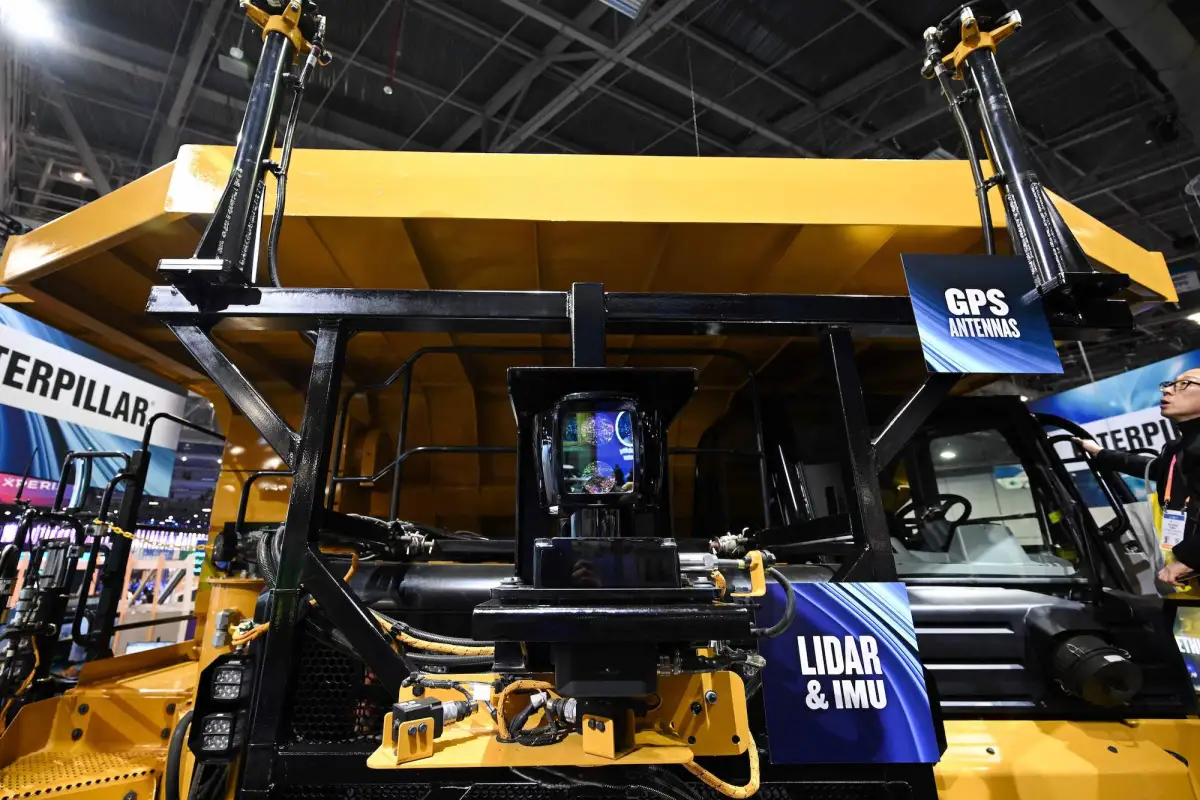
Caterpillar’s autonomy business began in mining because the environment offered a clear case for automation: harsh conditions, heavy machinery and chronic labor shortages. Over time, that effort produced a wide range of products and services, including automated haul trucks, drilling systems, underground loaders, dozers, remote-controlled equipment, fleet management software and terrain intelligence tools.
Now the company believes that know-how can be transferred into less controlled and more complex settings. Mineart described the opportunity as bringing mining lessons into more dynamic jobsites, including construction sites and quarries, where machines, people and changing terrain create a much harder deployment environment.
The company’s challenge is familiar to many firms trying to adopt AI. Building a model, a tool or a machine is only one part of the process. The harder part is making sure it fits into existing workflows, is trusted by workers and delivers value in the real world.
Why industrial AI is harder than software AI
Industrial AI has to deal with physical risk, site conditions, equipment downtime and human behavior. In Caterpillar’s case, a machine can be highly capable in a controlled environment but still fail to deliver if operators, technicians and managers do not change how they work around it.
Mineart said the company has learned that autonomy is not simply about putting a machine in the field and turning it on. It also requires redesigning how the jobsite functions and how responsibilities shift between people and machines.
Mineart said the biggest obstacle is not the technology itself, but integrating autonomy into customer workflows and jobsite processes.
That insight puts Caterpillar in the center of a larger industry debate. Many enterprises have experimented with generative AI, copilots and automation tools, yet adoption often stalls when those tools are disconnected from the systems employees already use. In heavy industry, where failures can be expensive or dangerous, that gap is even wider.
How Caterpillar is using AI today
Caterpillar is already applying AI across several parts of its business, from field service to manufacturing to internal engineering. One of the most visible products is the Cat AI Assistant, a voice-driven tool that allows technicians working beside a machine to ask for repair procedures, troubleshooting guidance and parts information before they begin a fix.
According to Mineart, the assistant is being used not only by Caterpillar staff but also by customers, operators and technicians in the field. That makes it more than a convenience feature. In practical terms, it can help reduce diagnostic delays, speed repairs and lower the chance of errors when equipment is down.
The assistant is powered by Caterpillar’s proprietary data, which is unusually deep and broad for a company of its kind. Mineart said the company has about 1.6 million connected assets worldwide and more than 16 petabytes of structured data. That data includes machine telemetry and information generated through Caterpillar’s connected ecosystem, giving the company a large base of real-world industrial information to draw from.
What is the Cat AI Assistant?
The Cat AI Assistant is a voice-enabled support tool for technicians and machine operators. It helps users retrieve repair steps, identify likely issues and figure out what parts may be required before work begins, which can shorten service times and improve maintenance accuracy.
Because it is built on Caterpillar’s own machine and service data, the assistant is designed to answer questions in the context of the company’s equipment rather than as a generic chatbot. That specificity is important in industrial settings, where small differences between machines can have major operational consequences.
AI is also reshaping Caterpillar’s factories and software
Caterpillar’s AI strategy extends well beyond field service. Mineart said the company is using AI to scan sites and create digital twins in manufacturing, enabling teams to analyze operations more effectively. Digital twins can help engineers simulate real-world conditions, spot bottlenecks and test changes before they are applied in physical plants.
The company is also adopting AI in enterprise operations and software development, including the use of AI agents to modernize older code, generate and test new software and identify defects earlier in the development process. In other words, Caterpillar is not only selling AI-enabled products to customers; it is also using AI to update the digital backbone of its own organization.
This internal use matters because industrial companies often have large stores of legacy software tied to manufacturing systems, equipment monitoring and fleet management. Updating those systems by hand can be slow and costly. AI-assisted coding may help accelerate modernization, though it still requires oversight and validation from human engineers.
Where digital twins fit in
Digital twins are virtual models of real environments, machines or operations. In Caterpillar’s manufacturing and site-scanning work, they can help the company understand how assets behave, identify inefficiencies and assess the impact of changes before implementing them in the physical world.
For an industrial business, this can be a powerful bridge between physical operations and AI analytics. It turns raw site information into a testable model, which can support better planning and decision-making.
How Caterpillar is preparing its workers for AI
The company says workforce training is becoming a major priority as more of its systems become autonomous and AI-driven. Caterpillar employs about 118,000 people, and Mineart said the company plans to spend $100 million over the next five years to train employees in AI, autonomy and robotics.
That investment reflects a basic truth of automation: the technology changes jobs, but it does not eliminate the need for people. In Caterpillar’s case, some operators may move from controlling one machine at a time to supervising multiple machines remotely from a command center.
That shift could change the skill set required on the job. Instead of focusing only on direct machine operation, workers may increasingly need to understand fleet coordination, software interfaces, remote monitoring and decision support tools. Training is therefore not just a human resources issue; it is central to the company’s operating model.
Mineart said experienced operators remain essential because their institutional knowledge helps train AI systems and shape how autonomy works in practice.
That point is especially relevant in heavy industry, where machines encounter messy real-world conditions that are difficult to model. Human expertise can help teach systems what normal looks like, what danger looks like and how to respond when conditions change.
Why the data advantage matters
Caterpillar’s large installed base gives it a significant advantage in industrial AI. The company’s 1.6 million connected assets generate a continuous stream of operational information, and its 16 petabytes of structured data provide the raw material for machine learning, diagnostics and predictive support.
This kind of data scale is difficult for competitors to replicate quickly. It gives Caterpillar an opportunity to train systems on actual machine performance, maintenance behavior and environmental conditions rather than on synthetic examples alone. In industrial AI, that can make the difference between a useful product and a generic one.
It also helps explain why the company is pushing into software and services more aggressively. The more connected its machines are, the more useful its digital tools can become. And the more those tools improve, the more value they can add to Caterpillar’s hardware business.
| Area | Caterpillar’s AI or automation use | Why it matters |
|---|---|---|
| Mining | Autonomous haul trucks, drilling systems, loaders and dozers | Proven environment for early automation |
| Field service | Cat AI Assistant for technicians | Speeds repairs and troubleshooting |
| Manufacturing | Site scanning and digital twins | Improves analysis of plant operations |
| Software engineering | AI agents for code modernization and testing | Helps update legacy systems faster |
| Workforce development | $100 million training plan over five years | Prepares employees for AI and robotics |
What does Caterpillar’s strategy say about the broader AI market?
Caterpillar’s approach shows that the next phase of AI adoption may be less about flashy demos and more about operational integration. Many companies can purchase AI tools, but fewer can embed them into complicated physical workflows where equipment, human expertise and site conditions all interact.
That is why Caterpillar’s mining experience is so relevant. The company has spent years learning how to introduce autonomy into environments where safety, uptime and worker trust all matter. Those same lessons are now being applied to AI deployments that are meant to touch more parts of the business.
The industrial logic is straightforward: if AI can help technicians diagnose problems faster, help factories see inefficiencies earlier and help software teams move faster with fewer defects, then it becomes a practical business tool rather than just a strategic experiment.
At the same time, the company’s move underscores a broader truth about enterprise AI. The real hurdle is not convincing companies that AI is powerful. It is proving that it can fit into existing systems without creating new friction, new risk or new confusion.
How the AI boom is feeding Caterpillar’s results
AI is also boosting demand for Caterpillar’s power-generation equipment, especially as data centers expand to support cloud computing and generative AI. That trend helped drive the company’s quarterly revenue to a record $20.5 billion in the second quarter.
Within that total, Caterpillar’s power-generation division posted a 72% jump in sales to $3.10 billion. CEO Joe Creed said the company is seeing no slowdown in customer appetite for infrastructure tied to cloud and generative AI workloads.
That commercial tailwind gives Caterpillar two ways to benefit from AI: first, by helping customers deploy automation and digital tools on their sites; second, by supplying the equipment that powers the data centers behind the AI economy.
What comes next for Caterpillar
The company’s next phase will likely be defined by execution. It has already shown that autonomous systems can work in mining and that AI can add value in service, software and manufacturing. The harder test is whether those capabilities can scale into more dynamic environments without disrupting operations.
Mineart’s comments suggest that Caterpillar sees itself as more than a machine manufacturer. It is becoming a systems company that blends hardware, software, remote operations and training into one package. That transition may prove critical as more industrial customers ask not only for equipment, but for tools that make equipment easier to use, manage and maintain.
For Caterpillar, the lesson from mining appears to be clear: autonomy succeeds when it is treated as an operating model, not just a technical feature. The same may now be true for AI.
- Caterpillar is extending lessons from mining automation into broader AI deployment.
- The Cat AI Assistant is now helping technicians, operators and customers in the field.
- The company has 1.6 million connected assets and more than 16 petabytes of structured data.
- Caterpillar plans to spend $100 million over five years on AI, autonomy and robotics training.
- AI demand is also boosting Caterpillar’s business through power-generation sales for data centers.
Timeline of Caterpillar’s AI and autonomy push
| Period | Milestone | Significance |
|---|---|---|
| Earlier years | Mining automation begins | Establishes Caterpillar’s autonomy foundation |
| Following years | Autonomous haul trucks, drilling and remote-controlled equipment expand | Builds a full mining automation stack |
| Recent period | Cat AI Assistant rolls out | Brings AI support to field service workflows |
| Current phase | Digital twins, AI agents and site scanning gain traction | Extends AI into manufacturing and software |
| Next five years | $100 million training investment | Prepares employees for AI-driven operations |
Bottom line
Caterpillar is trying to convert a long history of mining automation into a broader AI strategy that spans equipment, workers, factories and software. Its message is that successful AI deployment requires more than models and code; it demands changes in workflow, training and the way people and machines work together.
In a market full of AI pilots and prototypes, Caterpillar is making a more industrial argument: the future belongs to companies that can actually deploy the technology at scale.
Frequently asked questions
What is Caterpillar doing with AI?
Caterpillar is deploying AI across field service, manufacturing, software development and internal operations, building on its earlier work in mining automation. The company is using tools such as the Cat AI Assistant, digital twins and AI agents to improve maintenance, efficiency and engineering workflows.
How is Caterpillar using its mining experience in AI?
Caterpillar is applying the same deployment lessons it learned from automating mines to more complex environments like construction sites and quarries. The company says the hard part is not building the technology, but fitting it into real-world workflows and training workers to use it effectively.
What is the Cat AI Assistant?
The Cat AI Assistant is a voice-enabled tool for technicians and operators that provides repair procedures, troubleshooting steps and parts guidance. It is designed to help workers diagnose equipment faster and is already being used by customers, operators and Caterpillar technicians.
How much is Caterpillar spending on AI training?
Caterpillar plans to spend $100 million over the next five years to train its 118,000 employees in AI, autonomy and robotics. The investment is meant to help workers adapt as machines become more autonomous and remote oversight becomes more common.
Why is AI good for Caterpillar’s business results?
AI is helping Caterpillar in two ways: it is creating new operational tools for customers, and it is boosting demand for the company’s power-generation equipment used in data centers. That demand helped drive record quarterly revenue and a 72% jump in power-generation sales.