In short
Screen-free wearables are gaining momentum as consumers look for health trackers that do their job quietly, without constant notifications or screen time. AI is helping companies turn raw biometric data into useful insights, even as it raises questions about subscriptions and digital overload.
- Screen-free wearables are growing because many users want less distraction from their devices.
- AI is becoming central to how these trackers explain health data and justify premium subscriptions.
- Whoop helped pioneer the category, but Google, Garmin, Polar and Amazfit are now pushing similar products.
- The trend reflects broader fatigue with notifications, workplace digital pressure and always-on tech.
- Apple is reportedly exploring the idea, suggesting the category could move further into the mainstream.
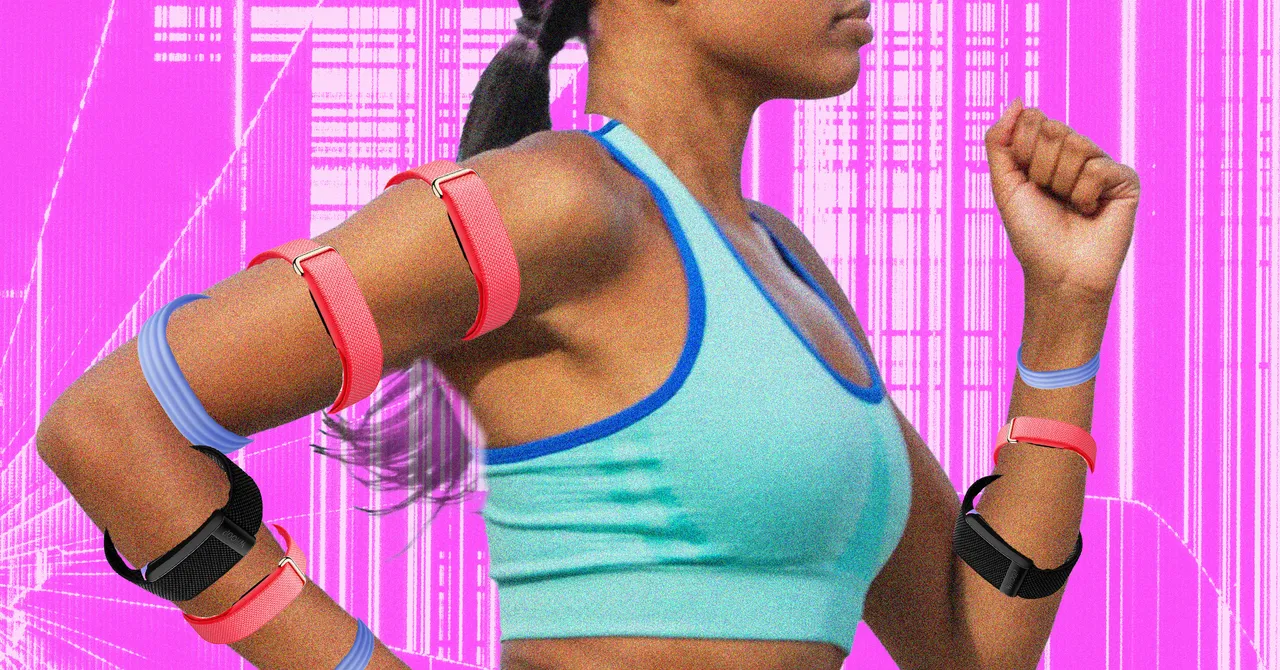
Screen-free wearables are emerging as one of 2026’s most noticeable gadget trends, with companies such as Garmin, Google’s Fitbit, Polar, Amazfit and Whoop pushing trackers that stay quietly out of sight while collecting health data around the clock. The shift matters because it signals a broader consumer backlash against always-on tech, with AI increasingly shaping both the appeal of these devices and the services sold on top of them.
Instead of demanding constant attention through notifications and bright displays, these bands and straps are designed to be worn, monitored occasionally in an app, and otherwise ignored. That pitch is resonating at a moment when many users are exhausted by alerts, digital overload and the pressure to be “on” all the time.
The new generation of low-distraction wearables is not a completely new invention, but it is clearly having a moment. What began as a niche health-tracking approach has become a mainstream product strategy, and even Apple is reportedly exploring a version of the concept. The result is a competitive market built around a simple promise: better data, fewer interruptions.
Why screen-free wearables are suddenly everywhere
Screen-free wearables are taking off because consumers increasingly want the benefits of health tracking without the constant presence of another glowing screen on their body.
That desire reflects a wider shift in how people feel about consumer technology. Smartphones, smartwatches, work apps and social platforms have turned many daily routines into a stream of pings, prompts and updates. In that environment, a device that gathers biometric data quietly in the background can feel less like a gadget and more like relief.
These products also arrive at a time when the smartwatch category has lost some of its original novelty. Early wearables promised to transform daily life, but for many users the practical reality has been simpler: weather checks, notifications, activity rings, sleep summaries and little else. Screen-free bands aim to reset expectations by stripping away the part of the product that often causes the most friction.
How this trend differs from the first wave of fitness trackers
This trend echoes the early Fitbit era, when trackers were used more as passive counters than as wrist-mounted mini-computers. The new devices borrow that old idea, but with more sophisticated sensors, better app ecosystems and more polished industrial design.
Earlier trackers were often so easy to ignore that users could go hours or days before noticing them. The modern version keeps that low-friction philosophy, but pairs it with deeper analytics and a more premium presentation. In other words, the hardware is quieter, but the software ambition is larger.
For many buyers, that is exactly the appeal. They want a device that tracks heart rate, sleep, movement and recovery without also behaving like a second phone.
What changed in the wearables market?
The biggest change is that wearables have become more intrusive just as users have become less willing to tolerate intrusion.
Over the past several years, fitness bands evolved into smartwatch-like products. OLED displays became common even on health-first devices. Some high-end trackers added voice assistants, app support and rich notification systems. Instead of fading into the background, many wearables started competing for attention with the phone itself.
That created a paradox. Devices sold as wellness tools became yet another source of distraction. They could buzz for messages, celebrate small milestones, nag about inactivity and reinforce compulsive checking habits. For some people, that is useful. For many others, it is exhausting.
The new screen-free category responds to that fatigue by removing the display entirely or minimizing its role. The device still does the sensing work, but the user relationship changes. You are meant to consult the app later, not to stare at your wrist all day.
Where Whoop fits in
Whoop is the clearest example of how the category has matured. The company has sold screen-free wearables since 2015, but its positioning has changed substantially.
Originally, Whoop described itself in highly specialized terms aimed at elite athletes and teams. Today, the brand markets itself much more broadly, pitching recovery, sleep and strain guidance to ordinary consumers willing to pay for a subscription-based system.
Whoop now frames its product as a tool to help users improve sleep, training and overall wellbeing from the first day, a much wider promise than its original elite-sports message.
That evolution matters because it shows how far screen-free wearables have traveled. What began as a performance niche is now a mainstream consumer category with room for big-tech competition.
How AI is reshaping the category
AI is both a selling point and part of the reason these devices feel necessary in the first place.
On the product side, AI gives wearable companies a new way to package health data. Raw numbers such as sleep duration, heart rate variability and training load are useful, but many people do not know how to interpret them. AI-driven summaries can translate charts into plain-language explanations, point out patterns and make the device feel more personal.
On the cultural side, AI also contributes to the overload problem. As employers, apps and platforms push people to use more automation and stay more connected, some consumers are looking for technology that subtracts rather than adds.
Why AI works better when there is no screen
AI tends to work especially well in screen-free wearables because the device can focus on measurement while the phone handles interpretation.
That separation matters. A tiny watch face is not ideal for long explanations or nuanced coaching. A companion app, by contrast, can turn sensor data into a readable narrative, push insights when needed and leave the band itself unobtrusive.
In effect, the absence of a screen becomes a design advantage. It reduces on-wrist clutter and gives the software more room to explain what the numbers mean.
Google’s Fitbit Air is a good example of the subscription model that has grown around this idea. Without a paid plan, the experience is basic: charts, stats and limited context. With the premium tier, the device can present more conversational explanations of what the data suggests and how daily habits may have influenced it.
That model reflects a broader industry bet: users may be willing to pay not just for data collection, but for interpretation.
| Wearable | Screen? | Primary appeal | Business model | Notable detail |
|---|---|---|---|---|
| Whoop | No | Recovery, sleep and training guidance | Subscription | One of the earliest mainstream screen-free wearables |
| Google Fitbit Air | No | Passive health tracking with AI explanations | Hardware plus premium health plan | More detailed insights unlock behind Google Health Premium |
| Garmin Cirqa | No / minimal | Low-distraction performance tracking | Device sale plus app ecosystem | Can surface workout maps without a traditional workout start flow |
| Polar Loop | No | Simple, unobtrusive health monitoring | Hardware-led | Part of the broader move toward discreet tracking |
| Amazfit Helio Strap | No | Fitness and wellness data collection | Hardware-led | Represents the growing competition beyond traditional smartwatch brands |
Who is buying these devices?
The audience is broader than competitive athletes, even if sports performance remains part of the pitch.
Some buyers want to optimize training. Others care more about sleep quality, stress levels or activity consistency. Still others are simply trying to escape the mental drain of full-featured smartwatches and endless notifications.
The category also appeals to people who have become skeptical of attention-heavy technology. Screen-free wearables offer a modest form of digital restraint: you still collect data, but the hardware itself is less likely to pull you back into a loop of checking and reacting.
What the mainstream buyer wants
For the average consumer, the ideal wearable is increasingly the one that disappears.
That does not mean the data is unimportant. It means users are more interested in outcomes than in interface novelty. They want better sleep, clearer recovery signals and fewer reasons to look at their wrist. If a wearable can provide that with minimal friction, it has a chance of standing out.
- Less screen time on the wrist
- Fewer interruptions during the day
- More focus on wellness data after the fact
- Longer battery life than many smartwatches
- Greater compatibility with “digital minimalism” habits
What is driving the backlash against attention-heavy tech?
The backlash is being driven by everyday exhaustion, workplace pressure and a growing sense that constant connectivity is harming well-being.
Many people now spend their days moving between phones, laptops, collaboration tools and messaging apps. Add a smartwatch into that mix and the number of interruptions multiplies. For some users, the result is a steady background hum of stress.
Researchers studying digital work environments have found recurring harms tied to this style of technology use, including information overload, technostress, blurred boundaries between work and home and a persistent fear of missing something important.
Researchers studying digital workplaces say the same pattern keeps showing up: more digital demand than people can comfortably absorb, along with the strain and anxiety that come with constant interruption.
That pressure helps explain why a device that is almost invisible during the day can feel attractive. It offers monitoring without the performance of monitoring.
Why simply turning off notifications is not enough
Turning off alerts is helpful, but it does not solve the deeper habit loop.
People often worry that if they mute everything, they will miss something important. That fear makes total disconnection difficult, especially for workers whose jobs depend on fast responses. Screen-free wearables take a different approach: they keep the health-tracking benefits while removing much of the temptation to check every few minutes.
In that sense, they are not anti-tech. They are a compromise between total abstinence and constant engagement.
How do these wearables use data without becoming distracting?
They use sensors continuously, then move interpretation off the device and into a companion app.
A modern screen-free tracker usually contains a heart-rate sensor, accelerometer, Bluetooth connectivity and additional hardware depending on the model. The difference is not the sensor stack; it is what gets removed. The display is stripped out, and with it much of the temptation to interact repeatedly throughout the day.
That design creates a different relationship with the user. Rather than producing real-time on-wrist feedback for every action, the tracker becomes a passive recorder. Later, the app can provide a fuller summary of the day, the night, or a training session.
- The wearable measures physiological and movement data in the background.
- It syncs that data to a phone app.
- The app translates the data into trends, scores and advice.
- The user checks the information when convenient, rather than on demand.
What the missing screen changes in practice
Removing the display changes more than aesthetics. It changes frequency, habit and emotional temperature.
A screen creates a constant invitation to look. A band without a screen is easier to forget. That can reduce compulsive checking and lower the sense that every run, sleep cycle or step count needs immediate evaluation.
It also reduces device fatigue. Users do not have to charge a bright, feature-heavy watch as often, and they are less likely to be lured into app-like behavior on the wrist. For many, that is the whole point.
What role does Google’s Fitbit play in this shift?
Google’s Fitbit brand shows how mainstream the screen-free idea has become.
Fitbit helped define the first wave of consumer activity trackers, so its movement toward a more discreet wearable strategy is symbolically important. It suggests the company sees room for a product that feels simpler than a smartwatch but smarter than an old-school step counter.
The paid AI layer also fits a wider industry pattern: hardware can attract buyers, but the recurring value increasingly comes from interpretation, coaching and premium insights.
That may be why the product is structured around a bare-bones free app experience and a richer subscription tier. The company is not just selling data collection. It is selling understanding.
Why are companies betting on subscription fitness?
Subscriptions turn a one-time tracker sale into an ongoing relationship.
That is attractive to companies because it creates recurring revenue and gives them room to build more sophisticated software features over time. It is also attractive to some users, provided the benefits are clear enough. If AI-generated guidance feels genuinely useful, paying monthly can seem reasonable.
But the model also has a downside. A low-cost band can become expensive over time once premium analytics are added. Consumers may need to decide whether they want the hardware, the coaching, or both.
Risks to watch
There are a few potential downsides to this market direction.
- Subscription fatigue may limit adoption.
- AI summaries can oversimplify complex health data.
- Users may become dependent on algorithmic coaching.
- Privacy concerns may grow as more intimate health data is processed in apps.
- The category could become crowded fast if every major brand launches a similar band.
What happens next?
The next phase of wearables is likely to be defined by quieter hardware, stronger AI software and a more explicit rejection of attention-grabbing design.
If the trend continues, the market may split more clearly into two camps: feature-rich smartwatches for users who want everything on the wrist, and low-distraction trackers for those who want the device to vanish into the background.
Apple’s reported interest is especially notable because it suggests even the company most associated with the modern smartwatch may see value in a more restrained approach. That would be a strong signal that the category is moving from novelty to necessity.
For now, the appeal is straightforward. Many consumers are looking for technology that serves them without insisting on being noticed. Screen-free wearables promise exactly that, and in a world overloaded with alerts, that may be enough to make them one of the year’s most compelling device categories.
Timeline: How the screen-free wearable idea evolved
| Year | Milestone | Why it matters |
|---|---|---|
| 2009-2012 | Early Fitbit trackers gain popularity | Introduced the idea of passive, low-friction activity tracking |
| 2015 | Whoop launches as a screen-free performance device | Established the premium, subscription-based model for no-screen wearables |
| 2020s | Smartwatches become more feature-heavy and notification-driven | Increased user fatigue creates demand for simpler alternatives |
| 2026 | Garmin, Google, Polar and Amazfit all push screen-free options | The concept moves from niche to mainstream |
In the end, the screen-free wearable boom is less about fashion than psychology. The devices are selling a promise that is rare in consumer tech: better health monitoring, but fewer demands on your attention. That makes them one of the clearest signs yet that the age of constant digital stimulation is starting to provoke a market correction.
Frequently asked questions
What are screen-free wearables?
Screen-free wearables are health and fitness trackers that collect data continuously but avoid putting a display on your wrist. They are designed to be worn passively and checked later in an app, which helps reduce notifications, compulsive checking and general digital distraction.
Why are screen-free wearables becoming popular now?
Screen-free wearables are becoming popular now because many consumers are tired of attention-heavy technology. As smartwatches became more notification-driven and work life became more digitally intense, more people started looking for devices that track health without demanding constant engagement.
How does AI fit into screen-free wearables?
AI helps screen-free wearables turn raw biometric data into plain-language summaries, coaching and trend analysis. Because the device itself has little or no display, the phone app can handle the heavier interpretation work and present the information in a more useful, conversational format.
Is Whoop still the leader in screen-free wearables?
Whoop remains the best-known early leader in the category, but it is no longer alone. Google’s Fitbit, Garmin, Polar and Amazfit are all pushing low-distraction devices, which shows the idea has moved from a niche sports product to a broader consumer trend.
Do screen-free wearables cost less than smartwatches?
Not always. Some screen-free wearables may have simpler hardware than smartwatches, but many rely on paid subscriptions for advanced insights and AI coaching. That means the upfront price can look reasonable while the total cost rises over time.