In short
Google appears to be testing a Gemini feature that could let Android users automate simple personal phone calls. The early code also hints at more detailed permissions so users can control what the AI accesses.
- Google may be expanding Gemini’s calling tools beyond business use.
- The feature appears designed for short, routine messages rather than full conversations.
- Android teardown findings suggest granular permissions for Gemini app access.
- The update is unconfirmed and may never be publicly released.
Google appears to be testing a broader version of its Gemini-powered “Call for Me” feature that could let Android users ask the AI to make simple personal phone calls, not just business inquiries. The early evidence suggests Google is exploring a tool that could help users send quick messages by voice to family or friends, while also building more granular controls over which app permissions Gemini can access.
The change matters because it points to Google’s next step in making Gemini less like a chatbot and more like a practical assistant that can act on the user’s behalf. If released, the feature could make it easier to handle routine tasks such as telling a parent you will be late or asking whether someone is coming to dinner.
What Google may be building
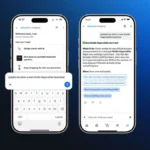
The rumored update centers on a new Android experience tied to Gemini, Google’s AI assistant. Evidence found inside an Android app teardown points to an introductory screen labeled “Gemini Calling,” which appears designed to explain how the feature would work before a user turns it on.
According to the discovered examples, the tool could handle straightforward requests like asking Gemini to call Mom and say you will arrive 15 minutes late, or to call a friend and confirm dinner plans. That suggests the system is being designed for brief, utilitarian conversations rather than open-ended, human-style phone calls.
In other words, Google may be moving Gemini from passive response mode into a more active assistant role, where the AI can complete small communication tasks on behalf of the user.
How would Gemini Calling likely work?
Gemini Calling appears to be aimed at short, predefined call tasks that resemble sending a voice message rather than having the AI hold a long conversation. Based on the examples unearthed in the teardown, the feature would likely be best for quick updates, confirmations, and status messages.
That kind of design would help keep the system focused and reduce the likelihood of errors during more complicated conversations. It would also make the feature easier for users to understand and trust, since the AI would be doing a narrow job instead of improvising on a call for several minutes.
- Tell someone you are running late
- Ask if plans are still on
- Share a short update without typing
- Reach people who are easier to contact by phone than by text
Why this matters for everyday Android users
A feature like this could be useful for anyone who often sends the same kinds of quick updates by phone. It may also appeal to users who prefer speaking over texting, people who forget to respond to messages, or anyone trying to contact someone who still relies on voice calls or a landline.
For many users, the attraction is not that Gemini would replace conversation, but that it could reduce friction around small communication tasks. Instead of opening an app, composing a text, and sending it manually, the user could potentially ask Gemini to do it with a single command.
That convenience also reflects a broader shift in AI product design. The race is no longer just about generating answers. It is increasingly about performing actions, managing routines, and blending into daily workflows in ways that save time.
How is this different from a normal assistant command?
The difference is that Gemini would not merely suggest what to say; it would actually initiate and manage the communication workflow. That moves the assistant closer to an agent-like tool, one that acts under the user’s direction instead of only providing information.
This is an important distinction. Voice assistants have long been able to place calls, but the new angle here is the possible use of generative AI to decide how to phrase a simple message and route it through the phone system in a more flexible way.
What the teardown suggests about permissions
Android Authority also reported evidence of more detailed permission controls for Gemini across individual apps, including settings that appear to relate to phone-call access. If accurate, those options would let users decide exactly which capabilities Gemini can use.
That would be a significant design choice. Rather than granting broad access to a single assistant, Google seems to be exploring a more selective model in which people can allow some actions while blocking others. In practice, that could mean enabling call assistance but restricting other app interactions.
The apparent aim is to give users more confidence and flexibility. A system that can act on someone’s behalf needs guardrails, especially if it can reach into core communication tools on a smartphone.
| Feature element | What the leak suggests | Why it matters |
|---|---|---|
| Feature name | Gemini Calling | Signals a broader phone-call role for Gemini |
| Example use cases | Running late, dinner plans, quick family updates | Shows the feature may target short, routine calls |
| Permission model | Granular app permissions | Could let users control what Gemini can access |
| Likely scope | Basic, message-like phone calls | Limits complexity and reduces risk |
| Status | Unconfirmed and possibly unreleased | Google may never ship the feature publicly |
What is Google’s broader strategy with Gemini?
Google has been steadily positioning Gemini as the centerpiece of its consumer AI efforts across Android and other products. The company is no longer presenting AI as an isolated tool for answering questions; instead, it is embedding Gemini into actions, workflows, and device-level functions.
A call-handling feature fits neatly into that approach. It would extend Gemini’s usefulness into real-world communication, where the assistant is not just generating language but helping execute a task the user wants done quickly.
This also aligns with a larger trend across the tech industry: AI systems are being pushed to become agents that can carry out multi-step instructions, rather than simply respond to prompts. A call assistant is one of the most concrete examples of that shift.
Could this be part of a bigger Android rollout?
Yes, and that is one of the reasons the report is notable. If Google is building permission controls and introductory screens, the company may be preparing a polished consumer release rather than a small experimental test.
At the same time, the discovery came from an APK teardown, which means the feature was found by examining app code rather than through an official announcement. That makes it a strong clue, but not a guarantee.
What an APK teardown can and cannot tell us
An APK teardown can reveal features that are under development, hidden from view, or being tested internally. It can also uncover interface text, permission settings, and examples that hint at how a future feature might function.
However, teardowns do not prove a feature will launch. Companies frequently test ideas, remove them, change direction, or keep them internal. Google itself may decide the feature is not ready, not safe enough, or simply not worth releasing.
That uncertainty is especially important in AI features that touch communications. Even a seemingly simple system can raise questions about reliability, consent, tone, and user expectations.
Android Authority said it found a “Gemini Calling” screen along with examples of call requests and permission settings, but noted that Google may ultimately decide not to release either the feature or the controls publicly.
Why phone-call automation is more sensitive than text automation
Automating a text message is one thing; automating a live phone call is another. Phone calls can involve interruptions, follow-up questions, emotional context, and social nuance that are harder for an AI to handle safely.
That is likely why the reported examples are so basic. Asking Gemini to call someone and relay a simple message is relatively low risk compared with asking it to navigate a real conversation or negotiate plans.
By keeping the scope narrow, Google could reduce the chance of the AI misunderstanding instructions or speaking out of turn. It also helps preserve the social norms around calls, where people may want to know whether they are speaking to a human or an automated system.
- Simple messages are easier to verify
- Short calls reduce confusion
- Permission prompts can improve trust
- Clear limits make the feature more predictable
What users might expect if Google ships the feature
If Gemini Calling becomes a public Android feature, users will likely expect it to be opt-in, transparent, and limited to straightforward use cases. They may also expect it to work smoothly across contacts, calling apps, and permission settings without requiring a long setup process.
Practical success will depend on a few basics: accurate speech, clear confirmation steps, and a reliable way to stop or review what the assistant is about to say. Those details matter more than flashy AI branding, because the feature would be handling real communication with real people.
Google would also need to explain when the AI is speaking, what data it uses, and how much control the user retains at every step. A feature that crosses the line from convenience into overreach could quickly draw criticism.
Timeline: how this story is unfolding
The reported development appears to be at an early stage, with details surfacing through code analysis rather than a formal product announcement. Here is a simplified look at the sequence so far.
| Stage | What happened | Status |
|---|---|---|
| Android teardown | Researchers found references to “Gemini Calling” | Observed in app code |
| Feature examples | Messages about being late and dinner plans appeared | Suggests limited call use cases |
| Permission clues | Granular app access controls were also spotted | Could improve user control |
| Public launch | No official release has been announced | Still speculative |
How the feature fits into the AI agent trend
Gemini Calling, if real, would be another sign that consumer AI is becoming more agentic. The industry is moving from systems that answer questions to systems that perform tasks, coordinate apps, and act on behalf of users under defined rules.
That transition is happening across platforms, but Google’s version could be especially influential because Android gives the company a direct route into everyday mobile behavior. A small feature like a call assistant can become a gateway to broader AI-powered assistance.
For Google, the challenge is balancing usefulness with restraint. Users may welcome an AI that makes routine calls easier, but they will likely reject any assistant that feels intrusive, unclear, or too powerful.
Bottom line
The reported Gemini Calling expansion suggests Google is exploring a way to let its AI handle simple personal calls on Android, extending a business-focused tool into everyday life. The feature remains unannounced and unconfirmed, but the apparent emphasis on limited use cases and granular permissions points to Google’s effort to make Gemini more helpful without giving it unchecked access.
If the company does move ahead, the most important question will not be whether Gemini can place a call. It will be whether users trust it to speak for them in a way that feels safe, accurate, and genuinely useful.
Frequently asked questions
What is Gemini Calling?
Gemini Calling appears to be a rumored Android feature that would let Google’s AI make simple phone calls on a user’s behalf. The examples found in app code suggest it is meant for short, practical messages such as saying you will be late or confirming plans.
Can Gemini currently make personal phone calls?
Not publicly, based on the information currently available. The feature was found in an Android app teardown, which means it has been discovered in code but has not been officially launched or confirmed by Google.
Why would Google add this feature?
Google would likely add it to make Gemini more useful in everyday life. A calling tool could help users complete small communication tasks faster, especially when they want to send a quick update without typing a text message.
What do the new permissions do?
The discovered permission settings appear to give users more control over what Gemini can access inside individual apps. In practice, that could let people allow call-related actions while limiting other parts of the assistant’s reach.
Will Google definitely release Gemini Calling?
No, not necessarily. Because the feature was spotted through an APK teardown, it may still be experimental, may change before launch, or may never be released publicly at all.