In short
Google is rolling out a more personalized Gemini AI experience for cars, starting with Android Auto and later Google built-in vehicles. The assistant can use data from Google apps like Gmail and Calendar to answer travel and scheduling questions more contextually.
- Google is adding Personal Intelligence to Gemini in cars.
- The feature can draw from Gmail, Calendar, Maps, Photos, YouTube and Search.
- Android Auto gets the rollout first, with Google built-in support coming later.
- The feature is opt-in and core car functions still work if users skip it.
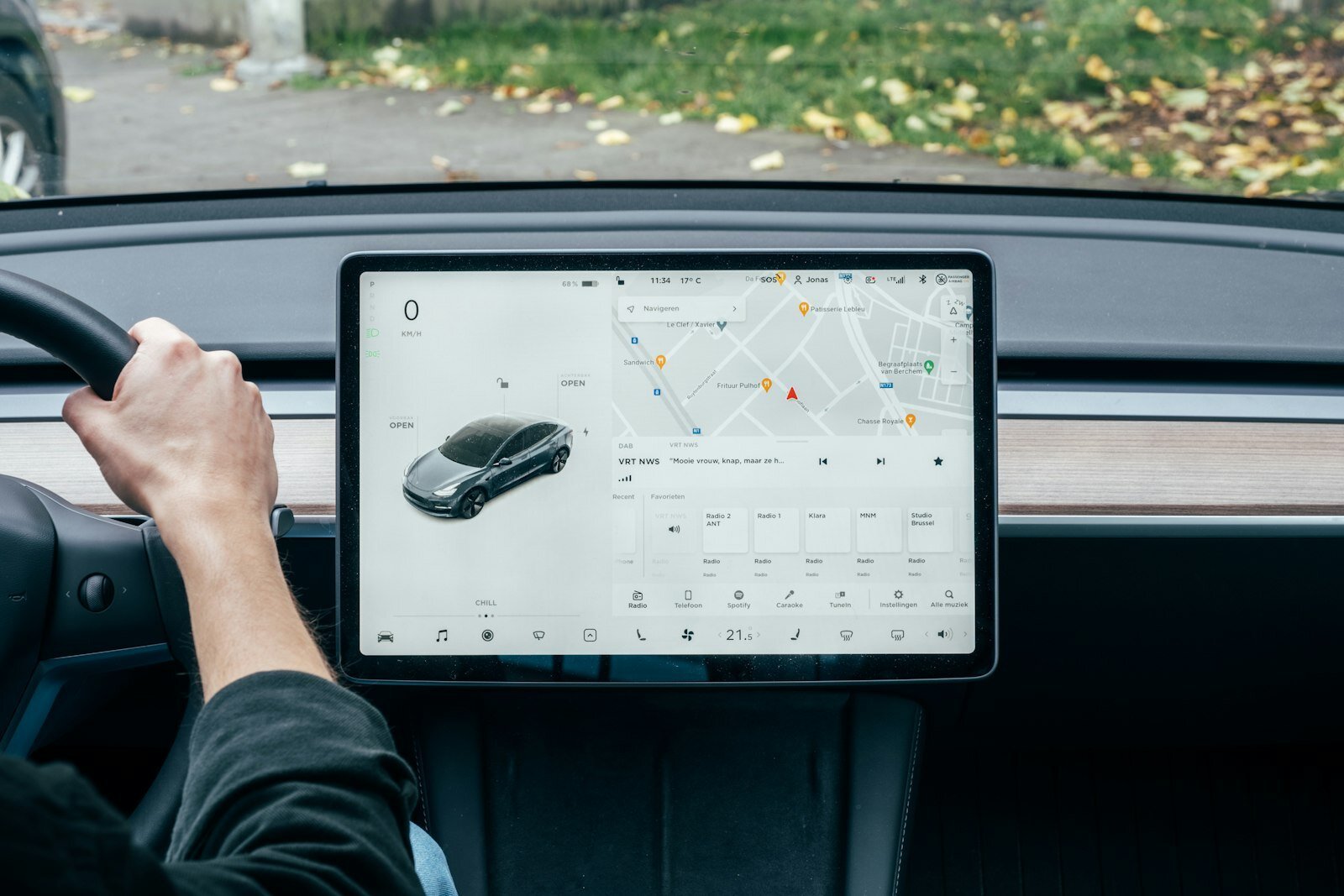
Google is rolling out a more personalized version of Gemini for cars, allowing the AI assistant to pull context from Gmail, Calendar, Maps, Photos, YouTube, and Search while drivers are on the road. The update begins with Android Auto today and will expand to cars with Google built-in in the coming months, making the assistant more useful for travel, errands, and scheduling.
The change matters because it moves Google’s in-car assistant beyond generic voice commands and into a more context-aware system that can find details buried in a user’s digital life without requiring manual searching while driving.
What Google is changing in the car
Google is introducing what it calls Personal Intelligence for Gemini in vehicles, a feature designed to connect the assistant to a driver’s Google apps and use that information to answer more specific requests. Instead of limiting the assistant to broad commands, the system can now combine data from multiple services to complete tasks that are tied to a person’s schedule, travel plans, and saved content.
In practical terms, Gemini can check a flight confirmation in Gmail, use the details to look up the flight’s current status, or read a calendar entry and help route a driver to an appointment. Google also says the assistant can use images saved in Photos, which could let a person ask it to locate a place captured in a picture and navigate there.
How the new personalized assistant works
The feature is built around the idea that Gemini can reason across apps rather than treat them as isolated services. If a driver asks about an upcoming airport trip, the assistant can pull the reservation information from email and then search for live flight updates. If someone needs directions to a meeting, Gemini can use the appointment details already stored in Calendar.
Google says the assistant can also work with photos and saved memories. That means a user could ask for directions to a business or location shown in an older image, rather than trying to remember the name or manually enter the destination into Maps.
Google says the new setting is optional, and if users do not turn it on, in-car Gemini still works for core tasks such as navigation, music playback, calls, and general questions, but the responses will not be tailored to personal data.
Why this rollout matters for drivers
The update is an important step in Google’s effort to make the car a more intelligent extension of its software ecosystem. Vehicles are one of the most constrained places for digital interaction, since drivers need hands-free systems that reduce friction rather than add it. By connecting Gemini to the apps people already use every day, Google is trying to make the vehicle assistant more practical and less generic.
That also puts Google in a stronger position in the competition for in-car software, where voice assistants, navigation systems, and connected-car platforms are increasingly central to the driver experience. A more personalized assistant could make Google services harder to replace once a car owner has become dependent on them for trips, reminders, and route planning.
For drivers, the main appeal is convenience. Instead of switching between an email app, calendar app, maps app, and photo gallery, the assistant can surface the relevant information in one conversation. The promise is not just convenience, but fewer distractions behind the wheel.
Which cars and phones get access?
The rollout starts on Android Auto immediately, while support for cars with Google built-in will arrive later. That means the feature is first appearing in vehicles that use Android Auto through a connected smartphone, before expanding to native automotive systems that ship with Google software already integrated.
Google built-in is available in a growing list of vehicles from automakers including Ford, General Motors, Honda, Nissan, Volvo, and Polestar. Those systems add native Android apps to the car itself, making the vehicle feel more like an extension of Google’s ecosystem rather than a simple projection of a phone.
| Feature | Availability | What it can do |
|---|---|---|
| Gemini in Android Auto | Rolling out now | Uses connected Google apps to personalize responses in the car |
| Gemini in Google built-in cars | Coming in the next few months | Brings the same Personal Intelligence features to native in-car systems |
| Personal Intelligence setting | User-controlled | Connects Gmail, Calendar, Maps, Photos, YouTube, and Search to Gemini |
| Core in-car functions without personalization | Always available | Navigation, music, calls, and questions remain usable even if the feature is off |
What users can ask Gemini to do
Google is framing the update around everyday situations rather than abstract AI capabilities. The examples it gave suggest the assistant is intended to reduce the number of steps required to manage common driving tasks.
- Check a flight status before arriving at the airport.
- Navigate to a doctor’s appointment using calendar details.
- Find a destination remembered from a recent photo.
- Use Google Search to answer general questions without leaving the car interface.
- Pull information from Gmail, Maps, and other apps when relevant.
That approach places Gemini closer to a true travel companion than a simple voice assistant. Rather than waiting for a user to provide every detail manually, the system can assemble context from the apps already tied to that person’s account.
Who gets control over the data?
Users do. Google says Personal Intelligence is not automatically enabled for every driver and that the system only links apps if the user chooses to turn it on. The company also says personalized responses depend on the phone being connected to the car, adding another layer of control over when the assistant can draw from private information.
That distinction is important because the feature sits at the intersection of convenience and privacy. A personalized vehicle assistant can save time, but it also requires a user to trust a system that may have access to emails, calendar entries, photos, and other sensitive data while driving.
Google’s positioning suggests it wants to reassure users that the new capability is additive rather than mandatory. In other words, the standard car experience remains intact for people who want a more limited assistant.
How does this compare with Google’s earlier car AI push?
Google first brought Gemini to Android Auto last year, then expanded it to cars with Google built-in in April. The latest update deepens that integration by giving the assistant access to a much broader set of Google services and making it feel more personal rather than simply conversational.
That progression shows how Google is moving from a standalone assistant model toward an ecosystem model. The first phase was about getting Gemini into the car. The second phase is about making it useful enough that drivers will prefer it over more basic voice controls.
The strategy also reflects a broader industry shift. Car companies and tech giants are racing to own the dashboard experience, because once a driver relies on a platform for navigation, communications, media, and scheduling, it becomes much harder to switch away from it.
Timeline of Google’s car assistant rollout
Here is the sequence of Google’s recent in-car Gemini expansion:
- Last year: Gemini arrives in Android Auto.
- April 2026: Gemini launches in cars with Google built-in.
- Today: Personal Intelligence begins rolling out to Android Auto.
- Coming months: Support extends to Google built-in vehicles.
Why Google is betting on personalization
Personalization has become one of the defining themes in consumer AI, and the car is a natural place for it. Drivers often want assistance based on context: where they are going, who they are meeting, what time they need to arrive, and what information is already stored in their digital accounts. A system that understands those connections can feel more useful than a voice assistant that only responds to isolated commands.
Google is also leveraging the breadth of its services. Few companies can match its combination of email, calendar, maps, photos, video, and search. By allowing Gemini to operate across that product family, Google can make the assistant more powerful while reinforcing the value of staying inside its ecosystem.
That creates a strong competitive moat if the experience works well. The more a car assistant can anticipate needs using existing data, the more likely a user is to keep relying on it for daily tasks.
What this means for the future of in-car AI
The new rollout suggests that the next stage of in-car AI will be less about novelty and more about utility. Drivers are unlikely to care whether an assistant can generate a clever response if it cannot help them get to a meeting, check a flight, or find a location from a photo. Google’s update is designed to close that gap by making Gemini aware of the user’s actual plans and history.
It also highlights how quickly the car is becoming another front in the AI competition. As voice assistants grow more capable, the winners may be the platforms that can safely combine language understanding with personal context and live services. Google’s move shows that it wants Gemini to be one of those platforms.
For now, the feature is limited to Google’s own ecosystem and depends on a user opting in. But the direction is clear: the car is no longer just a place where AI answers questions. It is becoming a place where AI helps manage a person’s day.
Key details at a glance
| Item | Details |
|---|---|
| Product | Gemini AI in cars |
| New feature | Personal Intelligence |
| Apps supported | Gmail, Calendar, Maps, Photos, YouTube, Search |
| Initial platform | Android Auto |
| Next platform | Cars with Google built-in |
| Opt-in requirement | Yes, users must enable Personal Intelligence |
As Google expands Gemini deeper into the dashboard, the company is betting that personalization will be the feature that turns a useful assistant into an indispensable one. For drivers, that could mean fewer taps, fewer distractions, and a car that understands a little more about where they are going and why.
Frequently asked questions
What is Gemini AI’s new car feature?
Gemini AI’s new car feature is Personal Intelligence, an opt-in mode that lets the assistant use data from Google apps such as Gmail, Calendar, Maps, Photos, YouTube and Search to give more relevant answers while driving.
Which cars will get personalized Gemini AI first?
Android Auto is getting the rollout first, with support for cars that use Google built-in arriving in the coming months. Google says several major automakers already offer vehicles with Google built-in software.
Does Gemini in the car need access to my Gmail and Calendar?
No, not unless you turn on Personal Intelligence. Google says the feature only connects to your apps if you enable it, and the in-car system still works without personalized access.
What can Gemini AI do with personal data in the car?
Gemini AI can use personal data to help with tasks like checking a flight status from an email confirmation, routing you to a calendar appointment, or finding a location from a photo and then navigating there.