In short
Anthropic has introduced Claude Duet, a research-preview AI agent for professionals and small businesses. The tool can summarize work, monitor connected apps, and complete tasks with user approval, but it is still limited to U.S. Pro and Max subscribers.
- Anthropic launched Claude Duet as a research preview AI agent for professionals and small business owners.
- The agent can summarize connected apps, monitor messages, and help complete tasks ranging from scheduling to dashboard creation.
- Anthropic says Duet asks for approval before major actions and includes stricter safeguards for sensitive data.
- Access is limited to U.S. Pro and Max subscribers, with a waitlist now open.
Anthropic has launched Claude Duet, a new AI agent aimed at professionals and small business owners that can monitor connected apps, summarize priorities, and carry out work on a user’s behalf. The company is rolling out the product as a research preview, signaling both ambition and caution as it enters a fast-moving race to build practical AI assistants that can do more than chat.
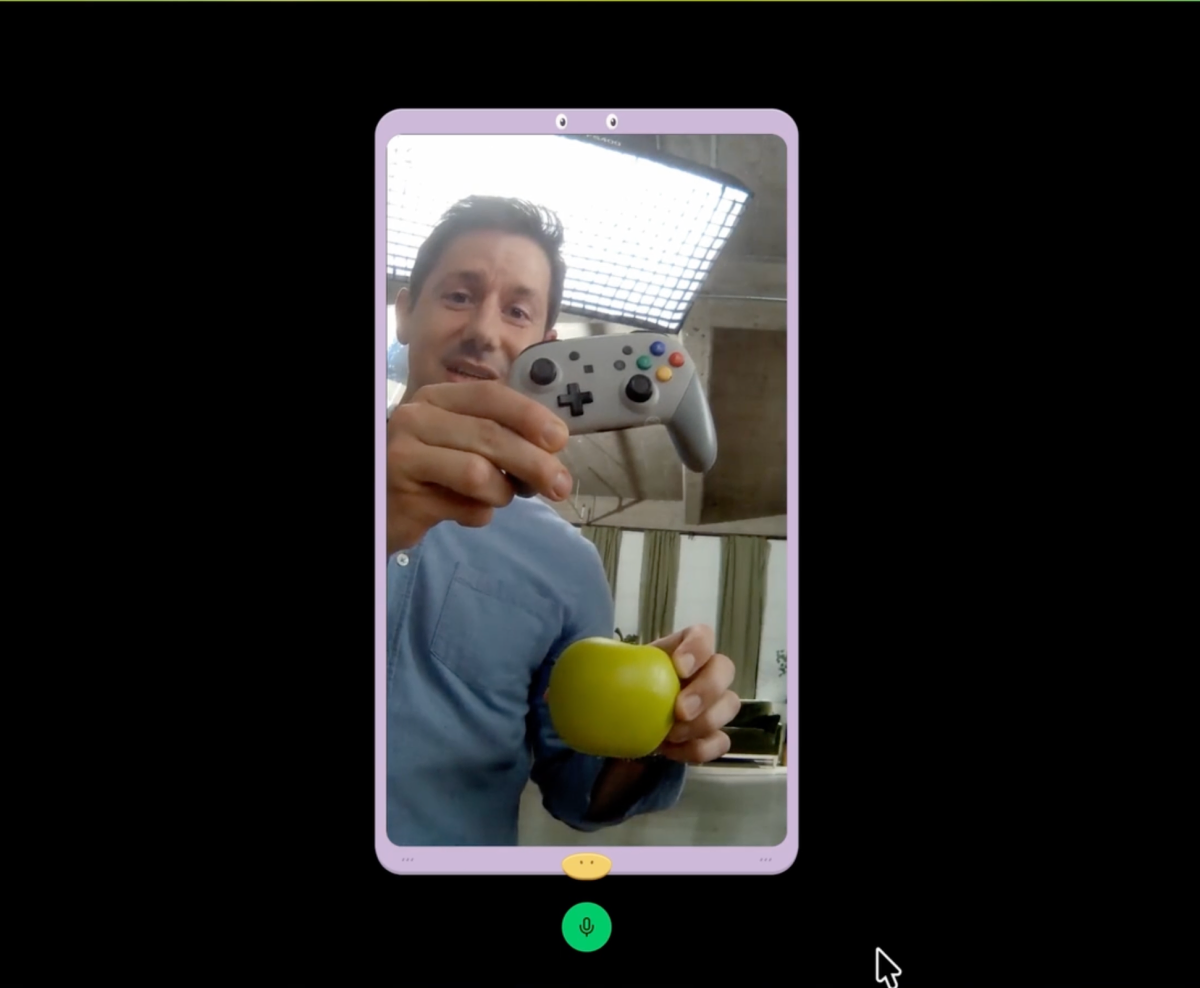
The debut matters because Duet is Anthropic’s clearest attempt yet to move Claude from a conversational model into an action-oriented workplace tool. Available as a standalone app on iOS and Android and through Claude on the web, the agent is designed to watch for urgent items across email and other connected services, draft responses, and help users complete tasks that range from scheduling to analysis and app prototyping.
Anthropic is positioning the product against a new wave of agent-style assistants from major AI rivals, while also trying to reassure users that Duet will not act recklessly with sensitive data. The company says the tool requires permission before major actions and uses extra safeguards to prevent exposure of highly confidential information.
What Claude Duet is and why Anthropic is launching it now
Claude Duet is Anthropic’s new productivity-focused AI agent, built for people who want a system that can do more than answer prompts. It is intended to help users manage information, prioritize work, and complete multi-step tasks across connected apps without constant manual oversight.
The launch arrives at a moment when AI companies are increasingly emphasizing agents rather than standalone chatbots. These systems are meant to connect to calendars, files, email, browsers, and business tools, then act with some degree of autonomy. For Anthropic, Duet extends Claude into a more operational role and broadens its appeal beyond writing and reasoning.
Anthropic describes Claude Duet as a daily helper that can start the morning with a concise summary of the most important updates, continue monitoring connected apps during the day, and alert the user only when something genuinely needs attention.
That pitch reflects a broader industry shift. Instead of asking users to prompt an AI repeatedly, companies want software that can keep track of context, surface decisions, and even execute work under supervision. Anthropic is betting that small business owners and busy professionals will see value in offloading routine coordination tasks to a system trained to respond more like an assistant than a search box.
How does Claude Duet work?
Claude Duet works by combining Claude’s memory, connected app integrations, and task execution tools with a built-in virtual machine that includes browser access. In practical terms, that allows the agent to inspect information, navigate websites, and complete actions inside a controlled environment.
Anthropic says Duet is built on Claude Opus 5.5, which gives the agent its reasoning and language capabilities. The service is designed to bridge the gap between understanding a request and taking the next step, whether that means collecting information from different tools, producing a report, or assembling a working prototype.
What kinds of tasks can it handle?
According to Anthropic, Duet can do a wide range of office work. That includes simple administrative duties such as scheduling meetings, but the company also says it can support more complex projects like building dashboards, generating forecasts, prototyping workflows, and creating web applications.
- Morning briefings from connected apps
- Continuous monitoring of messages and alerts
- Scheduling and coordination tasks
- Dashboard and report creation
- Sales and financial forecasting
- Prototyping and web app building
That range makes Duet more ambitious than a standard assistant. Anthropic is not merely offering text generation; it is promising a tool that can sit in the background, notice patterns, and turn instructions into action.
Why Anthropic says safety is built into the agent
Anthropic is making a point of emphasizing guardrails because agentic systems create new risks. Once an AI can take actions in connected accounts, the stakes are higher than a chatbot producing a wrong answer. A misread message, a mistaken file deletion, or an overzealous action could create real operational problems.
To address that, Anthropic says Claude Duet will ask for approval before major steps such as sending money or deleting items. The company also says the agent uses a dedicated safety classifier and prompt designed to block requests involving the most sensitive categories of information, including credit card details.
Anthropic says the extra safety layer is meant to reject attempts to expose the strictest tier of sensitive information, reflecting the company’s view that an agent with access to work tools needs stronger protections than a conventional chatbot.
Those protections matter because Duet is not only reading and summarizing content; it may also be making decisions that touch financial, business, or personally sensitive material. The company is trying to balance usefulness with restraint, a challenge that is likely to define the next phase of consumer and workplace AI.
How Claude Duet compares with other AI agents
Claude Duet enters a field that is becoming crowded fast. Meta has Muse, and OpenAI has Dots, both of which point to the same broader category: AI agents designed to help users manage tasks more proactively. Anthropic’s move shows that the race is no longer just about who has the smartest chatbot, but who can deliver the most reliable digital worker.
While each company frames its agent differently, the underlying product idea is similar. These systems aim to live closer to the flow of work, connecting to daily tools and reducing the need for repeated manual input. The competition will likely come down to trust, depth of integrations, quality of automation, and how well each company controls errors.
| Product | Company | Primary focus | Availability |
|---|---|---|---|
| Claude Duet | Anthropic | Professional and small business task automation | Research preview; app on iOS, Android, and web |
| Muse | Meta | AI agent experience for users and productivity | Competitive market offering |
| Dots | OpenAI | Agent-style assistance and workflow support | Competitive market offering |
For Anthropic, the competitive challenge is especially important because the company has built its brand around safety and responsible deployment. If Duet can combine practical automation with stronger reliability than rivals, it could become a meaningful differentiator in business AI.
Who can use Claude Duet right now?
Claude Duet is not broadly open to everyone yet. Anthropic says interested users can join a waitlist, but access is currently limited to Pro and Max subscribers in the United States.
That restricted launch is typical for a research preview, especially for a product that can interact with multiple apps and perform actions on a user’s behalf. Anthropic appears to be using this phase to gather feedback, observe failure modes, and refine safety systems before any larger rollout.
Why a research preview matters
A research preview lets a company test the real-world behavior of a product without promising full stability. In Duet’s case, that caution is especially understandable because Anthropic itself says the system is still early and may occasionally misinterpret a conversation or underestimate what is urgent.
That admission is important. Agent products are easy to market in abstract terms, but their success depends on consistency. A tool that occasionally gets the context wrong may be tolerated in a chatbot. In a work assistant that watches tasks and takes action, the standard is much higher.
What Anthropic says Duet still cannot do well
Anthropic is not claiming that Claude Duet is finished. The company says the system remains an early version and may still misread a thread or incorrectly judge urgency. It also says the agent is not yet as strong at personal errands, such as ticket booking.
That limitation is revealing. It suggests Anthropic sees Duet first as a serious work companion rather than a universal life assistant. The company appears to be focusing on work patterns it can support more reliably: email triage, reporting, planning, and structured projects.
By narrowing the initial use case, Anthropic may be trying to avoid the trap of overpromising. The most useful AI products often begin with tightly defined jobs and expand only after they prove dependable enough in the wild.
Why agents are becoming the next big AI battleground
AI agents are attractive to companies because they promise a more direct route from language model capability to real economic value. A chatbot can generate text, but an agent can participate in workflows. That difference matters to businesses that want to save time, reduce coordination costs, and automate repetitive knowledge work.
For professionals and small business owners, the appeal is obvious. Many daily tasks involve checking multiple systems, reconciling information, following up on requests, and deciding what matters most. A dependable agent could cut friction across all of those steps.
Still, the category is proving hard to get right. Agents need memory, tool use, permissions, guardrails, and strong error handling. They also need to know when not to act. The more autonomy they gain, the more important it becomes to prevent unnecessary or harmful steps.
What could make Claude Duet useful in practice?
Claude Duet could be useful if it reliably reduces the volume of low-value administrative work. That means fewer interruptions, faster summaries, less manual app-switching, and more structured support for routine decisions.
- It surfaces the right information early.
- It filters noise and flags only important changes.
- It asks before taking sensitive actions.
- It handles repeatable tasks without constant supervision.
- It improves output quality across common office workflows.
If it fails on any of those points, users may simply revert to conventional chat and manual tools. That is why Anthropic’s preview period will matter as much as the launch itself.
What this launch says about Anthropic’s strategy
Claude Duet shows that Anthropic is widening Claude’s role from a model family into a platform for active digital assistance. The company is no longer only competing on response quality; it is competing on how deeply Claude can be embedded into daily workflows.
That strategy has two implications. First, Anthropic is signaling that it wants a place in business operations, not just creative or conversational use cases. Second, it is accepting that the next phase of AI competition will be judged by whether systems can operate safely in real environments.
For small businesses in particular, an agent like Duet could become attractive if it reduces the need for separate administrative tools or even a portion of entry-level support work. But adoption will depend on trust, pricing, and whether the product can produce consistently useful outcomes.
Timeline: how Claude Duet is rolling out
Anthropic has not outlined a long public roadmap, but the current release sequence is clear enough to summarize.
| Stage | What happened | Why it matters |
|---|---|---|
| Announcement | Anthropic introduced Claude Duet as a new AI agent | Marks Anthropic’s move deeper into agentic AI |
| Launch format | Released as a research preview | Shows the product is early and still being refined |
| Platform access | Available on iOS, Android, and the web | Makes the assistant broadly accessible across devices |
| Eligibility | Waitlist open for U.S. Pro and Max subscribers | Limits access while Anthropic gathers feedback |
How secure is an AI agent that can take action?
An AI agent that can take action is only as secure as its permission model and safeguards. That is why the most important part of Claude Duet may not be its intelligence, but the systems around it that determine when it can act and what information it can access.
Anthropic’s decision to require approval for major steps is a sensible baseline, but it will not eliminate all risk. Errors can still happen before the point of approval, especially if the model misinterprets context or surfaces the wrong priority. That is the central tension in agent design: the more useful the system becomes, the more dangerous mistakes can be.
Businesses evaluating tools like Duet will likely care about auditability, clarity of permissions, and whether the assistant can be limited to narrow, low-risk workflows before it is allowed to handle more sensitive work. Those questions are likely to define adoption just as much as raw capability.
What comes next for Claude Duet?
The immediate next step is feedback. Anthropic will likely watch how users interact with Duet, where it fails, and which tasks prove most valuable. Research preview products often evolve quickly, especially when they are positioned at the center of a strategic product category.
If the tool performs well, Anthropic could expand availability, add deeper integrations, and increase the autonomy it grants. If the product struggles, the company may narrow its scope or strengthen constraints before broadening access.
Either way, the launch confirms that Anthropic sees the future of AI not just as generating answers, but as helping people run their workday. Claude Duet is an early bet that the next major shift in AI will come from agents that can observe, prioritize, and act with supervision.
For now, though, Anthropic is asking users to treat Duet as what it is: an early experiment with real promise, real limits, and real stakes.
Frequently asked questions
What is Claude Duet?
Claude Duet is Anthropic’s new AI agent for professionals and small business owners. It is designed to monitor connected apps, summarize important updates, and help complete tasks such as scheduling, forecasting, prototyping, and building web apps.
How is Claude Duet different from Claude chat?
Claude Duet is more action-oriented than regular chat because it can use memory, connected apps, and a browser-enabled virtual machine to complete tasks. It still asks for approval before major actions, making it closer to a supervised digital assistant than a standard chatbot.
Who can use Claude Duet right now?
Claude Duet is currently limited to U.S. Pro and Max subscribers who join the waitlist. Anthropic says the product is launching as a research preview, so access is intentionally restricted while the company tests performance and safety.
Is Claude Duet safe to use with sensitive information?
Anthropic says Claude Duet includes stronger safety controls, including approval prompts before major actions and a dedicated classifier meant to block the strictest sensitive data, such as credit card numbers. Even so, the company says it is still an early version and may make mistakes.