In short
Aina has launched a smart ring designed to control AI and non-AI apps, with a screen, joystick, microphone and speaker. Preorders open Thursday at an early-bird $399, and shipping is planned for January 2027.
- Aina unveiled an AI smart ring with a screen, joystick, mic and speaker.
- Preorders open Thursday at an early-bird price of $399; the later price is $499.
- The company plans to start shipping the ring in January 2027.
- Aina says the ring is built for interacting with proactive agents and multiple devices.
Aina has unveiled a smart ring that combines a screen, joystick, microphone and speaker, with preorders opening Thursday at an early-bird price of $399 and shipping planned for January 2027. The device is designed to act as a controller for AI and non-AI apps, making it a notable entry in a small but growing market for AI-focused consumer hardware.
What Aina is launching
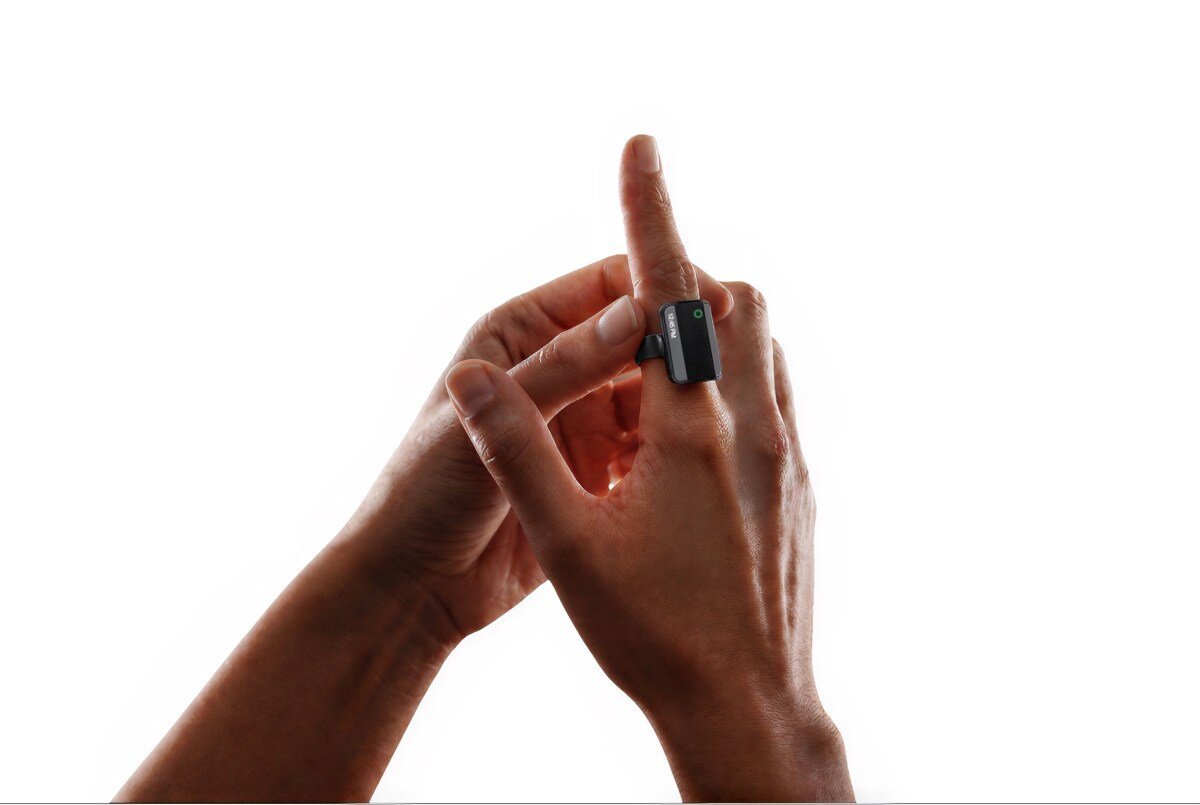
The new ring is built around a simple idea: give users a ring-sized interface for interacting with digital services that normally live on a phone or laptop. According to TechCrunch, the device includes a screen that shows phone notifications and identifies which apps are being controlled, along with a joystick and gesture input for triggering actions based on what is on a Mac or phone screen.
The ring also includes a microphone and speaker. That means it can do more than passively display alerts. TechCrunch reported that the speaker can be used to take calls on the ring itself, while the microphone supports notes, agent prompts, reminders and dictation on Mac.
Aina says dictation will work through Wispr Flow or through its own dictation engine. The company has also positioned the ring as a way to control music and smart-home devices, including Apple TV.
How does the ring work?
The ring is meant to be an input device as much as a wearable. Aina says it built the product around interaction with proactive agents, which suggests the company sees the ring as a front end for software that can anticipate tasks and respond to commands without the user having to navigate multiple screens.
That framing helps explain the hardware choices. A screen gives the user context. A microphone lets the ring accept spoken commands. A speaker allows two-way communication. A joystick and gesture controls add a physical layer for selecting actions, moving between options or confirming commands based on what is happening on a Mac or phone.
In practical terms, Aina is trying to make a ring do some of the jobs now handled by a phone, smartwatch or trackpad. The company is pitching the device to people who move between multiple digital devices and AI applications and want faster access to controls without opening another app or waking a larger screen.
Why it matters
Aina’s launch matters because it tests whether consumers want a dedicated wearable for AI control rather than another app on a phone. The pitch is not just about miniaturizing hardware; it is about changing the interface layer between people and software.
That could matter in three ways. First, it gives AI hardware startups another attempt to define a useful daily interaction model beyond chat windows and app menus. Second, it adds pressure on the broader wearable market, where smart rings have usually focused on health and passive monitoring rather than active control. Third, it reflects a bigger industry bet that AI agents will need more direct, context-aware controls than a standard touchscreen can provide.
For users, the promise is convenience: quick access to notes, reminders, dictation, music and smart-home control from something worn on a finger. The risk is obvious too. A device can be clever in a demo and still feel awkward in daily life if software, battery life or ergonomics fall short. Aina will have to prove that the ring is faster and easier than the phone already in a pocket.
Background: Aina’s push into AI hardware
Aina is not starting from zero. TechCrunch reported that the startup raised $5.5 million in July, giving it fresh funding for a hardware bet that is still far from mainstream. The company previously made Mirage, a three-key controller designed for app-specific Mac shortcuts, which suggests it has already been thinking about focused, specialized control surfaces rather than broad consumer devices.
The new ring continues that line of work but moves it onto the body. That shift is important because smart rings remain a small category, even as wearables have become more common. Most consumer wearables have emphasized notifications, fitness data or voice access. Aina is trying to fuse those familiar elements with AI-oriented actions, especially for people using proactive agents.
There is also a broader context here. AI hardware startups have been experimenting with dedicated controls for agents and apps, but few have found a clear formula that consumers actually adopt. Aina’s ring enters that crowded question: what is the right interface for AI if the phone is no longer the ideal answer?
What is on the ring?
Here is a quick breakdown of the hardware and features Aina has described, based on TechCrunch’s report:
| Feature | What it does | Why it matters |
|---|---|---|
| Screen | Shows phone notifications and which apps are being controlled | Adds context without reaching for a larger device |
| Joystick | Triggers actions based on Mac or phone screen context | Provides tactile control for navigating commands |
| Microphone | Supports notes, agent prompts, reminders and dictation | Lets the ring accept spoken input and task requests |
| Speaker | Enables taking calls on the ring | Turns the device into a two-way communication tool |
| Gesture controls | Work with screen context on Mac or phone | Expands interaction beyond taps and voice alone |
How much does it cost?
The company says preorders begin Thursday at an early-bird price of $399. After that period, the price rises to $499. Aina plans to begin shipping in January 2027.
Those figures place the product in premium territory for consumer hardware, especially for a category that is still trying to prove its value. The gap between the early-bird price and the later price also gives Aina a built-in incentive for early buyers to commit before the product ships.
By the numbers
The launch details show a startup still early in its commercial life, but already making a sizable wager on a niche product category.
| Metric | Figure | Context |
|---|---|---|
| Early-bird preorder price | $399 | Available when preorders open Thursday |
| Regular price | $499 | Price after the early-bird period ends |
| Funding raised | $5.5 million | Raised by Aina in July |
| Expected shipping start | January 2027 | Planned launch window for deliveries |
| Preorder start | Thursday | When customers can first place orders |
What the founder says
Founder Apoorv Shankar’s pitch is rooted in the idea that current devices were built for a different computing era. In comments reported by TechCrunch, he said,
“Phones and laptop screens were designed for an age of browsing where you think about opening apps.”
He also framed the device as an answer to a new kind of software interaction, saying,
“For interacting with proactive agents, we need a better interface”
The quotes point to the company’s central argument: if AI agents are supposed to do more work on a user’s behalf, then the interface should change too. Aina is betting that a ring can be that interface.
Why this category is crowded but still open
Aina is competing in a small market of AI-focused consumer hardware. That matters because the category has not yet settled on a dominant product shape. Some companies have explored wearable devices, others have focused on voice-first hardware or app overlays, and many have struggled to make the case that a separate gadget is worth carrying, charging and learning.
Smart rings add another complication. They are physically tiny, which makes them attractive as wearables, but also limits battery, display size and interaction depth. Aina’s answer is to combine several interface modes at once: screen, voice, physical joystick and gesture control. In theory, that makes the ring more capable. In practice, it also raises the bar for usability.
The company’s challenge is to persuade users that this mix is not just novel, but genuinely more efficient than the devices they already own. That is a high standard, particularly when the product is aimed at people who already use multiple digital devices and AI applications.
How does Aina compare with its earlier product?
Aina’s earlier product, Mirage, was a three-key controller for app-specific Mac shortcuts. That device was narrower in scope and likely easier to explain: three buttons for a defined set of shortcuts. The ring, by contrast, is broader and more ambitious.
Mirage hinted at Aina’s interest in speed and direct control. The new ring keeps that philosophy but extends it to notifications, dictation, agent prompts, smart-home devices and calls. In other words, Aina has moved from a purpose-built shortcut accessory to a general-purpose wearable interface for AI-era workflows.
What happens next?
The next milestone is straightforward: preorders open Thursday at the early-bird price. After that, the key date is January 2027, when Aina expects to begin shipping.
Between now and then, the most important questions are about execution. Will the software feel fluid enough to justify the hardware? Can the ring handle everyday tasks quickly and reliably? And will customers see it as a meaningful alternative to a phone or smartwatch, or as a niche accessory for early adopters?
Those questions matter because the success of this product will be judged less by the feature list than by daily behavior. If the ring becomes something people actually use to manage agents and connected devices, it could offer a template for a new class of AI interface. If not, it may end up as another ambitious wearable in a market still searching for its defining product.
The bottom line
Aina is betting that a ring can become the control center for AI-assisted life. With a screen, joystick, microphone, speaker and gesture controls, the startup is trying to make a small wearable do work that phones and laptops still dominate today. The hardware is unusual, the timing is early, and the commercial test begins Thursday.
Frequently asked questions
What is Aina’s AI ring?
Aina’s AI ring is a smart wearable with a screen, joystick, microphone and speaker. The company says it is designed to control AI and non-AI apps, handle notifications and support actions like dictation, reminders, calls and smart-home control.
How much does Aina’s ring cost?
Aina’s ring costs $399 during the early-bird preorder period. After that period, the price rises to $499.
When will Aina’s ring ship?
Aina plans to begin shipping the ring in January 2027. Preorders open earlier, on Thursday, at the early-bird price.
Why is Aina making a smart ring?
Aina says the ring is meant for interacting with proactive agents and for people who use multiple digital devices and AI applications. The company argues that phones and laptop screens were built for browsing, not for the newer style of agent-driven interaction.