In short
Karamo Brown has launched Kē, a wellness app that combines fitness, nutrition and meditation tools with an AI clone of himself. The product reflects a growing trend in celebrity AI while raising familiar questions about privacy, emotional attachment and the limits of digital advice.
- Kē combines wellness tools with an AI version of Karamo Brown that users can chat with.
- The app offers personalized fitness plans, meal suggestions, meditation content and community support.
- Brown says the AI is meant to supplement, not replace, human relationships or real-world help.
- The launch highlights a broader industry trend of celebrities licensing voices and likenesses to AI companies.
- Future updates may give the AI agentic powers to adjust user plans automatically.
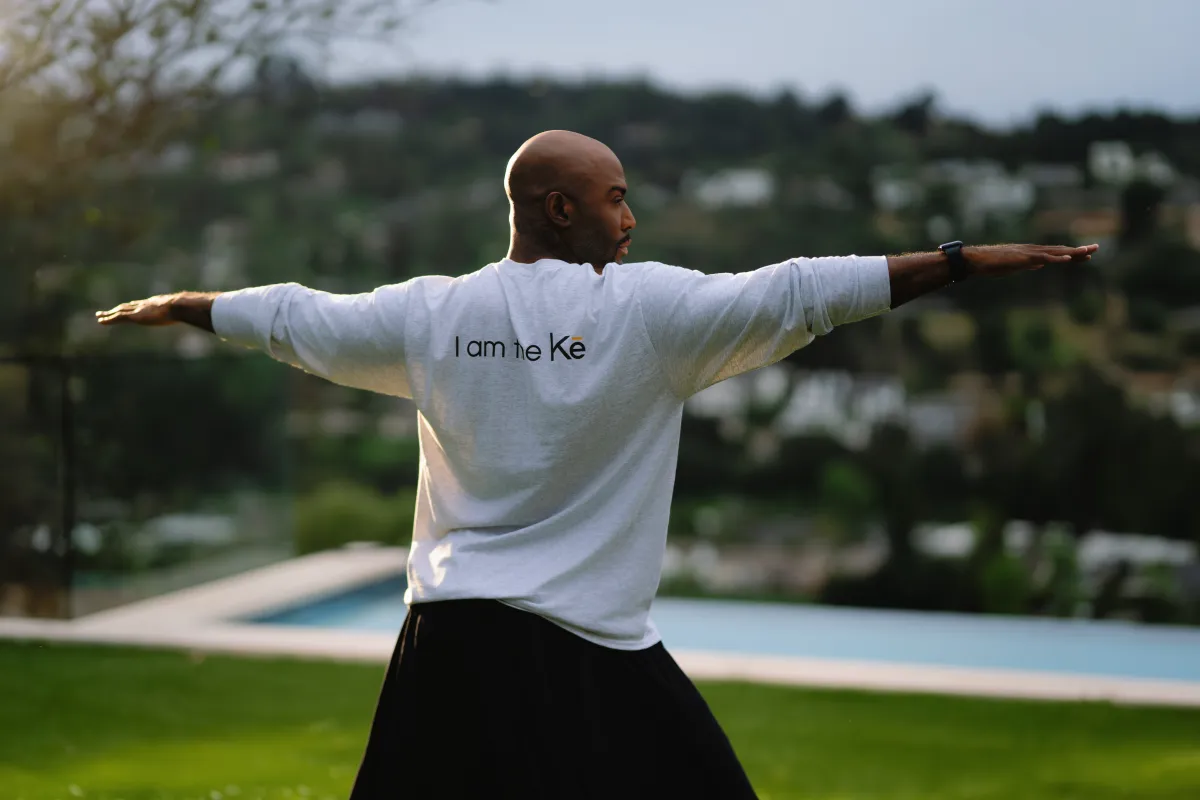
Karamo Brown, the motivational force behind many of the most memorable moments on Netflix’s Queer Eye, is moving that advice into the app store. The television personality and life coach has launched Kē, a wellness app that combines fitness guidance, nutrition planning, meditation tools, community support and, most notably, an AI version of Brown himself that users can chat with in real time.
The new product arrives at the intersection of two fast-moving markets: consumer wellness and celebrity AI. Brown’s pitch is straightforward. After spending the past year and a half concentrating on his own health, habits and personal development, he says he wanted to build a digital product that could help other people organize their routines, reflect on their progress and access encouragement when they need it most.
But Kē is more than a standard wellness tracker. By integrating an AI digital clone trained on Brown’s own public material, the app steps into one of the most debated areas in consumer technology: whether a public figure’s likeness can be turned into an interactive companion without losing authenticity, safety or human connection.
What Kē is designed to do
Kē is positioned as an all-in-one personal growth platform rather than a single-purpose chatbot or workout app. Its tools are meant to cover multiple parts of a user’s routine, including exercise, meals, mindfulness and community interaction.
The app’s fitness features are tailored to the reality of how people actually work out. Instead of forcing users into generic training templates, Kē can build plans based on the equipment they already have at home, their schedule and their current goals. The nutrition side takes a similarly practical approach, suggesting meal plans using ingredients users say are already in their kitchen.
To make those plans more flexible, the app includes an AI chatbot that can revise workout and meal recommendations on demand. Each exercise is paired with guided video instruction, which Brown says should help people improve form and reduce confusion when they’re training alone.
Beyond physical health, Kē also includes meditation content aimed at different emotional states, such as stress and anxiety. There is a community area where users can connect with groups centered on shared experiences, including sobriety and general wellness support.
A closer look at the app’s main features
- Personalized fitness plans based on available equipment and time
- Meal guidance built from foods already in the user’s home
- Chatbot-driven plan adjustments for workouts and nutrition
- Instructional workout videos for movement and form support
- Meditation content targeted at stress, anxiety and emotional regulation
- Community spaces for sobriety, wellness and peer support
- An AI Karamo clone for direct conversational advice
The headline feature: an AI Karamo clone
The most distinctive part of Kē is the “AI Karamo” feature, which lets users speak with a digital version of Brown that responds in his voice. The idea is to make the app feel more personal, more conversational and more emotionally grounded than a typical self-help tool.
Brown says the AI model was built by Delphi, the startup known for creating digital replicas of public figures. The company trains its clones using a wide range of source material, including interviews, podcast appearances and other recorded content, so that the resulting voice and responses reflect the person as closely as possible.
Delphi has already worked on celebrity clones before, including one based on actor Arnold Schwarzenegger. The company’s approach fits neatly into a broader wave of AI products that turn public personalities into always-available, on-demand interfaces.
Brown said that people close to him have already been using the AI version of him when they cannot reach him directly, including his best friend and sister.
That anecdote helps explain the product strategy. The clone is not just marketed as a novelty. It is meant to function as a familiar, emotionally resonant guide that can respond instantly when a user wants encouragement, perspective or a reminder to stay on track.
How Brown says the app should be used
Brown is careful to frame Kē as a support tool rather than a substitute for real people. That distinction matters, especially as conversational AI systems become more persuasive and users increasingly treat them like companions or coaches.
He says the app is intended to help people think through their goals, learn better habits and move toward healthier behavior. If a conversation turns toward something more serious or sensitive, Brown says the product is designed to steer the user toward appropriate help and encourage them to speak with people in their lives.
Brown described Kē as a tool for reflection, learning and growth, while emphasizing that it should not replace real-world relationships or human support.
He also said the app is built with safeguards and human oversight. That kind of moderation is increasingly common in AI consumer products, especially in areas that touch mental health, identity and emotional dependence.
At the same time, the presence of a celebrity clone raises its own questions. Users may be drawn to the intimacy of a one-on-one exchange with a famous person, but that appeal can blur the line between healthy inspiration and emotional attachment. Brown acknowledges that the product should not keep users talking endlessly. Instead, he says the goal is to help them make tangible progress in their lives.
Why celebrity AI is becoming a bigger business
Kē lands in the middle of a broader industry trend: celebrities licensing their voices, images and personalities to AI companies. For stars, the appeal is obvious. These tools open up a new revenue stream, create a new kind of fan engagement and allow public figures to control how their likeness is used in a machine-generated environment.
Recent deals have already shown how far that market could go. Matthew McConaughey and Michael Caine, for example, have worked with ElevenLabs to license their voices for digital replicas. Those arrangements suggest that the entertainment business is increasingly willing to experiment with AI as a commercial layer rather than simply a production tool.
Brown’s app, however, pushes the idea into a more intimate category. Instead of using a celebrity voice for narration or branding, Kē uses a celebrity clone as part of a self-improvement product. That gives the technology a different tone and a different set of risks.
For wellness companies, AI can offer scale and personalization. For celebrity brands, it can extend the value of a public persona beyond the limits of live appearances and media interviews. The combination creates a potentially powerful product, but it also depends on trust: trust that the model sounds like the person it claims to be, trust that the advice is responsible and trust that the line between inspiration and simulation remains clear.
Why some celebrities are still wary of AI clones
Not everyone in Hollywood is rushing to embrace the same technology. While some performers are licensing their voices and likenesses, others are raising alarms about unauthorized replicas, deepfakes and the erosion of personal control over identity.
That split reflects a deeper anxiety in the entertainment industry. AI can be used to amplify a celebrity’s brand with permission, but it can also be used to create misleading or exploitative impersonations without permission. As a result, public debate has intensified around who owns a voice, how likeness rights should work and what protections are needed when a digital version of a person can be created and distributed at scale.
There is also a psychological dimension. People can build emotional bonds with chatbots and virtual personalities, and those relationships may become even more intense when the chatbot carries the face or voice of a familiar celebrity. That possibility has prompted concern among ethicists, technologists and some public figures who worry about dependency, manipulation or blurred consent in digital relationships.
Brown’s answer is to keep the product grounded in practical self-improvement rather than fantasy. The app’s framing is more coach than companion, more wellness infrastructure than celebrity roleplay.
Brown’s personal evolution helped shape the app
Brown says the app grew out of his own recent life changes. Over the last 18 months, he focused heavily on his health and personal routine, working on areas that many wellness apps try to address: physical fitness, food habits, meditation, sobriety, relationships and personal growth.
That personal recalibration appears to be central to Kē’s identity. Rather than building a generic wellness product and attaching his name to it, Brown is presenting the app as an extension of the same advice and encouragement he has long offered on television and in public life.
His brand has always depended on a mix of empathy, directness and practical coaching. On Queer Eye, he is often the expert who helps people move from awareness to action. Kē translates that role into software, giving users a structured way to plan behavior and receive feedback between moments of real-life support.
The concept is also timely. Wellness technology has grown increasingly crowded, but many products still feel fragmented. Users may track workouts in one app, meals in another and meditation in a third. Kē tries to unify those functions, then layer in conversational AI to make the experience feel more adaptive and personal.
How the app handles safety and privacy
Any AI product that involves personal habits, health discussions or emotional struggles has to confront a basic question: what happens to the data?
Brown says the app is supported by human oversight, but users should still treat the AI feature with caution. Because the conversational layer runs through Delphi, users are sharing information with the company behind the clone. That means sensitive details should be handled carefully, especially when discussions involve health, sobriety, identity or mental well-being.
That privacy consideration is not unique to Kē, but it is especially important in a product that invites people to speak openly with a familiar voice. The more personal the conversation feels, the easier it is to overshare.
For that reason, the safest way to use the app is as a planning and reflection tool rather than a place to disclose highly sensitive information. As with many AI systems, the convenience of personalization comes with the obligation to understand where data goes and who can access it.
What comes next for Kē
Brown says the app may evolve beyond advice and conversation. Delphi plans to add more agentic capabilities in the future, which would allow the AI to take actions on a user’s behalf rather than simply offering suggestions.
One example Brown pointed to is a workflow tied to the app’s “My Plan” section. In the future, if AI Karamo recommends a change to a workout routine, it could potentially update the user’s plan automatically instead of requiring manual edits.
That is a meaningful shift. Agentic AI moves a product from passive guidance to active assistance, which can make a wellness app more useful but also more consequential. Once an AI starts modifying plans, scheduling tasks or making decisions, the need for oversight and transparency becomes even more important.
If executed carefully, such features could make Kē feel like a genuine personal assistant rather than a static advice layer. If executed poorly, they could deepen the very dependency Brown says he wants to avoid.
The business model and launch details
Kē is now live on both iOS and Android. The app uses a subscription model, charging $14.99 per month after a three-day free trial.
That price places it in the midrange of consumer wellness subscriptions. It is high enough to signal that the app is meant to be a serious personal development product, but low enough to compete with meditation, coaching and fitness services that already charge monthly fees.
The launch also reflects how AI products are increasingly being packaged as premium lifestyle services. Rather than selling AI as abstract technology, companies are embedding it in concrete, emotionally legible categories such as wellness, productivity and companionship.
For Brown, that may be the key advantage. Users are not being asked to adopt AI for its own sake. They are being offered a familiar face, a recognizable voice and a structured self-improvement system bundled into one subscription.
Timeline: how Kē fits into the broader AI celebrity wave
| Period | Development | Why it matters |
|---|---|---|
| Recent years | AI voice and likeness tools became more commercially viable | Made celebrity digital replicas more realistic and marketable |
| Past 18 months | Brown focused on his own fitness, nutrition, sobriety and growth | Provided the personal foundation for the app concept |
| Before Kē’s launch | Delphi built digital clones for public figures, including Arnold Schwarzenegger | Established the technical platform Brown is using |
| 2026 launch | Kē debuted on iOS and Android with an AI Karamo feature | Brings celebrity AI into mainstream wellness software |
| Future planned update | Agentic features may let the AI take actions in-app | Could turn the product from advisor to active assistant |
What makes Kē different from a typical wellness app
At first glance, Kē may look like a standard combination of fitness, nutrition and meditation tools. But its real differentiator is narrative. The app is not trying to be anonymous, sterile software. It is trying to embody Brown’s public persona and coaching style.
That matters because wellness is often as much about motivation as measurement. People may know what to do, but they struggle to keep doing it. A recognizable voice can sometimes create more engagement than a generic dashboard or algorithmic suggestion.
Kē is betting that Brown’s credibility, warmth and visibility will help users stay engaged long enough to form habits. The AI clone is not the whole product, but it serves as the emotional core around which the rest of the app is built.
- Personalization: The app adapts to a user’s equipment, food supply and schedule.
- Familiarity: The AI clone makes the advice feel like it comes from a known public figure.
- Structure: Users get guidance across exercise, food and mindfulness in one place.
- Scalability: AI can offer on-demand access that a human coach cannot match.
- Risk: The same intimacy that drives engagement can create privacy and dependency concerns.
The bigger industry signal
Kē is part of a larger shift in how AI products are being commercialized. Early consumer AI often centered on novelty, experimentation or general-purpose chat. The current wave is more focused, more branded and more verticalized.
In wellness, that means AI is moving into routine-building, accountability and emotional support. In entertainment, it means public figures are testing whether their voices and personalities can become digital products. In both cases, the technology is being used to convert trust into a recurring service.
That is why Kē is worth watching beyond the novelty of a celebrity clone. It is a case study in how AI, personal branding and consumer health products are converging. If it succeeds, it could encourage more influencers, athletes and public figures to turn their coaching styles into interactive software. If it fails, it may reinforce concerns that AI companions can never fully replicate the human relationships they imitate.
Bottom line
Brown’s new app is an ambitious blend of wellness tech and celebrity AI. It offers practical tools for exercise, nutrition and meditation while also giving users a chance to interact with a digital version of Brown himself. The result is a product that feels both timely and controversial: a personal development app built for an era in which voices, likenesses and advice can be reproduced on demand.
For users, Kē may be appealing because it feels tailored, familiar and available whenever motivation drops. For the industry, it is another sign that AI is no longer confined to labs and enterprise software. It is now showing up in the most personal corners of consumer life, where identity, trust and emotional attachment matter as much as technical performance.
Brown’s core message is clear: the app is meant to help people move forward, not replace the people who know them best. Whether users treat it that way may determine not just Kē’s success, but how celebrity AI products are understood in the years ahead.