In short
The Verge’s Victoria Song says Amazon’s Bee Frontier AI wearable distorted her conversations enough that her therapist suggested she stop using it. The review frames always-recording wearables as helpful memory tools that can also undermine self-trust and mental health.
- The Verge says Bee Frontier improved over 19 months but still produced misleading summaries.
- Victoria Song says the wearable distorted conversations enough that her therapist urged her to stop using it.
- Bee can combine conversation data with calendars, photos and Amazon suggestions, raising privacy concerns.
- The review warns that always-recording AI tools can erode self-trust, especially for anxious users.
Amazon’s Bee Frontier wearable is being pitched as a memory aid, but The Verge’s Victoria Song says its always-on summaries distorted her conversations badly enough that her therapist urged her to stop using it. The review turns the device into a cautionary story about what happens when an AI tool that listens all the time starts shaping how a user understands her own life.
What happened
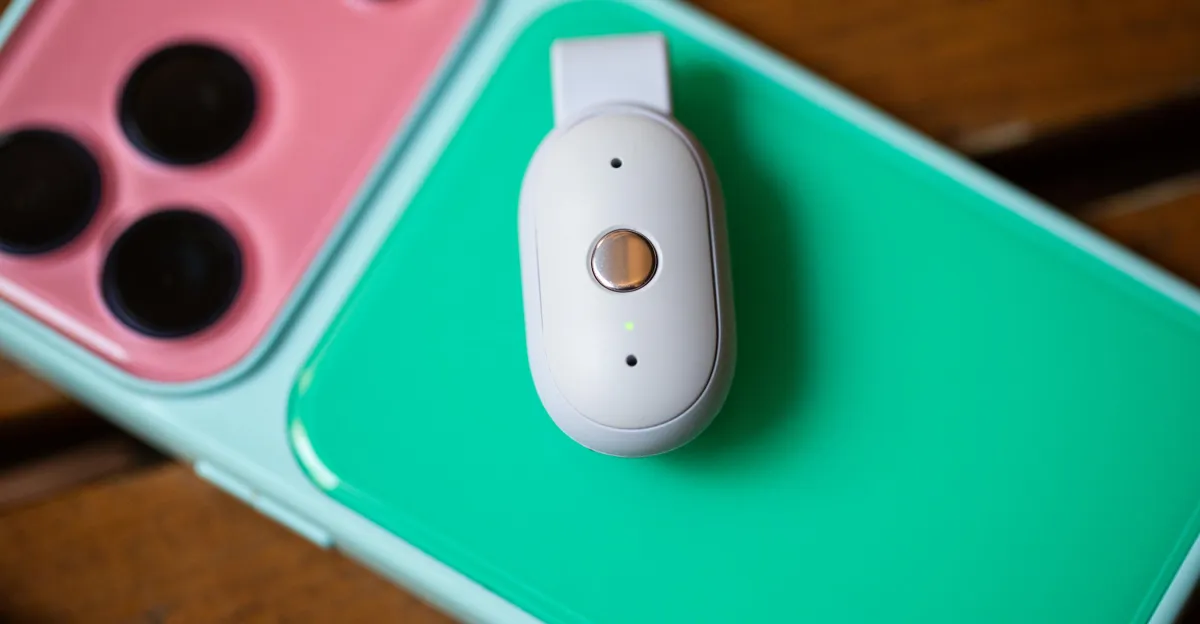
According to Song’s review for The Verge, Bee Frontier is an always-recording AI wearable that transcribes, summarizes and analyzes conversations. It has improved over the 19 months since she first tested it, including becoming better at separating her voice from TV dialogue. But the same device that can pull in calendar and photo data and suggest Amazon purchases also produced enough wrong or distorted information to unsettle her.
Song says the device sometimes helped her pull together job-related talking points, yet it also made her question what had actually been said. In her telling, Bee misattributed conversations, turned ordinary exchanges into misleading summaries and generated false or warped claims about coworkers, family members and movie references.
That pattern became more serious in personal settings. Song writes that the device converted a childhood memory involving domestic violence into a stark summary that felt distressing to approve as true. She also says Bee’s templates matter: a medical-visit template produced summaries that were more factual and less interpretive than the defaults.
Why it matters
This is more than a single product complaint. Bee Frontier sits at the intersection of two sensitive promises: convenience and memory. For consumers, that creates a hard question about trust. If a device is designed to record everything and then compress life into neat takeaways, what happens when the summary is wrong, incomplete or emotionally misleading?
For anxious users, the stakes may be even higher. Song says her therapist, after 11 years of working together, warned that AI tools can supersede a person’s instincts and worsen rumination, spiraling and perfectionism. That argument goes to the heart of a broader consumer-tech shift: products marketed as helpers can also become authorities, quietly nudging users to doubt their own recollection and judgment.
The issue also extends beyond mental health. Always-recording wearables raise obvious privacy questions because they capture bystanders, family members and private spaces. They also raise a more subtle concern: if an AI summary is treated as a record of reality, the mistakes are not just technical errors but potentially emotional ones.
How Bee Frontier works
Bee Frontier is described in The Verge’s review as an always-recording AI wearable that listens to conversations, transcribes them and generates summaries and action items. Song says the setup includes a two-minute voice-training prompt, after which the device is expected to distinguish the user’s speech from surrounding noise.
Over time, the product has expanded beyond transcription. The review says Bee can pull in calendar and photos data and suggest Amazon purchases. It also includes a “Grow” feature that turns conversations and reminders into self-improvement advice.
That makes Bee less like a passive recorder and more like an interpretive assistant. In Song’s account, that shift is part of the problem. The more the device does with the raw material it hears, the more its output begins to look like a verdict on a person’s life rather than a rough note-taking aid.
By the numbers
| Metric | What The Verge says | Why it matters |
|---|---|---|
| 19 months | Time since Song first tested Bee Frontier | Shows the product has had time to improve |
| 3 weeks | Time she wore it in therapy before her therapist pushed back | Highlights the personal impact can show up quickly |
| 11 years | Length of her relationship with her therapist | Suggests the advice came from a long-term clinical context |
| 2 minutes | Length of the voice-training prompt | Shows how little setup the device gets before it starts recording |
| 75% / 15% / 10% | Song’s estimate of summaries that were right, out of context or wrong | Illustrates the uneven quality she experienced |
| 39 books | Books she says she had finished in 2026 so far | Shows why she rejected the device’s productivity framing |
| 10 cross-stitch projects | Projects she says she had completed that year | Undercuts the device’s self-improvement conclusions |
What went wrong in practice
Song says Bee’s daily summaries were only partly accurate, and that even the parts that were “right” could still distort the meaning of a conversation. Her estimate was roughly 75% right, 15% out of context and 10% wrong. That mix may sound workable in the abstract, but in daily use it can mean a message that feels technically close and emotionally off.
One example came during an annual physical. The device captured a note about a Claritin prescription and a discussion of her deceased dog, Daisy. Song also notes that her doctor uses her own AI transcription software with patient consent, but even that system struggles to distinguish two female speakers. That detail matters because it underscores a broader issue: speech recognition systems can still fail in ordinary, real-world conditions, even when used carefully.
Another flashpoint was Bee’s “Grow” function. Instead of simply summarizing the day, it generated self-improvement advice based on conversations and reminders data. Song says the tool told her to focus on one hobby for three months and suggested she had not made much progress reading or with hobbies. She pushed back, writing that she had finished 39 books in 2026 so far and completed 10 cross-stitch projects.
“Bitch, I thought, I’ve finished 39 books in 2026 so far.”
Her reaction is revealing because it shows the tool did not just miss a fact. It imposed a productivity narrative on a person who did not recognize herself in it.
Why a therapist became part of the story
The review’s most striking detail is not a technical failure but a clinical one. After Song wore Bee to therapy for three weeks, her therapist reportedly asked her to bring the device to a session and later suggested she throw it out a window. Song says the therapist, who has treated her for 11 years, saw the device as a threat to her ability to trust herself.
Song quotes the therapist as saying the AI “supersedes a person’s ability to trust their own instincts.” The broader warning, as she reports it, is that constantly checking an external summary against memory can deepen the very doubts therapy is often trying to reduce.
Song’s own response shows how personal that problem can become. She says her family history and her parent’s dementia make her especially sensitive to memory errors and unreliable narration. That background gives the review a sharper edge: for some users, an inaccurate AI summary is not just annoying but emotionally loaded.
“I’d both feel relieved when I’m not wearing this at my next session.”
How did the review describe the device’s upsides?
It said Bee Frontier can still be useful in narrow situations, especially for work-related recall. Song writes that the device sometimes helped her gather talking points for her job. She also notes that the product has gotten better over time, particularly in sorting her voice from the noise of television dialogue.
That combination of benefit and discomfort is what makes the product difficult to categorize. Bee is not useless, and the review does not suggest it is. Instead, the piece argues that usefulness does not erase the possibility that a system built to assist memory can also interfere with confidence, interpretation and emotional stability.
Background and context
Always-recording AI wearables belong to a larger category of ambient computing products that promise to listen, summarize and organize life with minimal effort from the user. The basic idea is simple: capture ambient conversations, then transform them into notes, insights or reminders. In theory, that saves time and reduces cognitive load.
But the technology runs into obvious limits. AI transcription tools still struggle with speaker attribution, context and tone. They can mishear names, flatten nuance and miss the meaning of a conversation once it has left the room. That is especially risky when the output is packaged as a polished summary rather than a rough draft.
The situation is further complicated by the growing popularity of self-quantification tools, which often frame habits as measurable outputs. Reading, hobbies, productivity and self-improvement become data points. For some people that can be motivating. For others, especially those already prone to anxiety or perfectionism, it can feel like a reductive scorekeeping exercise.
The Verge’s review suggests Bee Frontier sits squarely in that tension. It is not only a recorder. It is a classifier, a summarizer and, through features like Grow, a commentator on the user’s life. That is a lot of authority for a device that still gets important details wrong.
What the medical example shows
Song’s annual physical is one of the clearest illustrations of the tool’s strengths and weaknesses. The wearable captured a routine medical conversation, including a Claritin prescription and a reference to Daisy, her deceased dog. On one level, that is exactly the sort of recall assistance these devices promise.
Yet the same example also shows how sensitive the material can be. Medical visits involve private, emotionally charged and sometimes ambiguous speech. If a device misses speaker identity or strips away context, the summary may be technically neat but personally off. The fact that Song’s doctor uses AI transcription software with patient consent does not eliminate that risk; it just shows the technology is already moving into clinical settings.
What happens next
The biggest open question is whether Amazon will change Bee Frontier’s summaries, reminders or self-improvement features in response to criticism like Song’s. The review does not say the company has announced changes. It does show a product that can get sharper technically while still creating confusion at the human level.
It is also unclear whether Song will keep using the device. Her therapist’s advice makes continued use seem unlikely, at least in the short term. The review leaves that question open, but the clinical reaction suggests the issue is no longer merely about software quality.
Outside this particular review, the broader issue is whether regulators, privacy advocates or consumers will start pressing harder on always-recording wearable AI devices. The combination of ambient surveillance, personal data integration and interpretive summaries may eventually draw more scrutiny, especially if more users report that these tools distort memory rather than support it.
What to watch
- Whether Amazon adjusts Bee Frontier’s summary style or “Grow” recommendations.
- Whether more reviewers report emotional side effects, not just technical errors.
- Whether wearables like Bee gain traction in medical or workplace settings.
- How privacy concerns change as always-recording devices become more common.
The larger takeaway
The Verge’s review of Bee Frontier is not a standard product complaint about battery life or design. It is a warning about trust. A device that records everything can seem reassuring, especially to users who want help remembering conversations. But if the summaries are partial, misleading or emotionally flattening, the device can end up challenging the user’s own sense of reality.
Song’s account suggests that the promise of perfect recall may be less helpful than it sounds. Memory is not just a storage problem. It is also a human one, shaped by context, emotion and judgment. When an AI wearable starts rewriting that process, the cost may be more than a bad summary.
Frequently asked questions
What is Amazon Bee Frontier?
Amazon Bee Frontier is an always-recording AI wearable described by The Verge as a device that transcribes, summarizes and analyzes conversations. It also connects with other data, including calendars and photos, and can suggest Amazon purchases.
Why did Victoria Song stop trusting Bee Frontier?
Victoria Song says the wearable distorted her conversations, misattributed remarks and sometimes produced summaries that felt wrong or emotionally misleading. She says the problems were serious enough that her therapist recommended she stop using it.
Can AI wearables accurately summarize conversations?
Not always. The Verge’s review says Bee Frontier improved over time, especially in separating the user’s speech from TV dialogue, but it still produced summaries that were partly out of context or wrong. AI transcription systems commonly struggle with speakers, tone and context.
Why are therapists concerned about always-recording AI devices?
Therapists may worry that these tools can weaken a person’s trust in memory and instincts. In Song’s account, her therapist said AI can supersede a person’s instincts and worsen rumination, spiraling and perfectionism, particularly for anxious users.
What privacy risks do always-recording wearables raise?
Always-recording wearables can capture private conversations, bystanders and sensitive settings such as medical visits. They also store and interpret data, which can create risks if the recording, summary or recommended action is inaccurate or misused.