Updated August 27, 2026 12:55 pm
In short
Legato is emerging from stealth with $12 million, AI hearing glasses launching later this year, and a new push to sell them through eye-care providers at a lower cost than traditional hearing aids.
- Legato emerged from stealth with $12 million in funding.
- The startup's Legato Frames use AI to separate speech from background noise.
- The company is targeting people with mild to moderate hearing loss.
- Legato plans a U.S. launch later this fall through eye-care providers.
- The product is designed to be discreet, lightweight and cheaper than traditional hearing aids.
Update — August 27, 2026 12:55 pm
Legato now says its Frames will be sold through select eye-care providers nationwide when they launch later this year.
The company also says the glasses should cost a fraction of traditional hearing aids and may qualify for vision insurance if bought through an eye-care clinic.
Trivedi added that the product is meant to do more than improve hearing, saying better hearing can help people stay connected and may carry broader health benefits.
Legato has emerged from stealth with $12 million in funding and a first look at its AI-powered hearing glasses, a product the startup says could make hearing assistance more discreet, more affordable and easier to adopt. The company is targeting the tens of millions of Americans who live with hearing loss but never pursue treatment, a gap it hopes to narrow with eyewear that looks and feels closer to regular glasses than a traditional hearing aid.
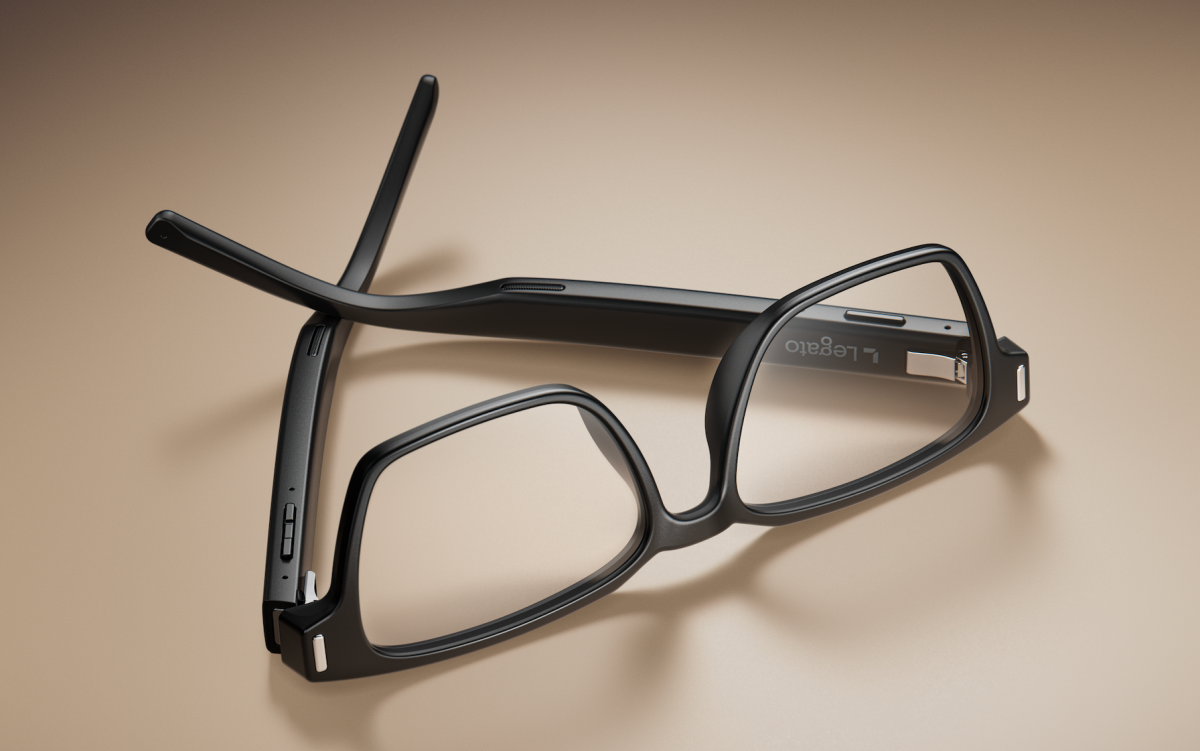
The startup, which plans to launch its Legato Frames later this fall, is pitching a new category of hearing device built around artificial intelligence, lightweight design and familiar eyewear aesthetics. Its central argument is simple: if hearing support becomes as normal as wearing prescription glasses, more people may actually use it.
For an industry long associated with bulky devices, high out-of-pocket costs and lingering stigma, Legato’s debut is notable not only because of the funding round, but because it reflects a broader effort to repackage medical technology in consumer-friendly form factors. The company says it wants to bring hearing care into everyday life without forcing users to think of themselves as “patients.”
Why Legato thinks hearing glasses can change the market
Legato is entering a large and underpenetrated market. The company says around 50 million adults in the United States experience hearing loss, yet only about one in five people diagnosed with the condition seek treatment. That disconnect has created a durable opportunity for companies that can reduce barriers to care.
Those barriers are not only financial. Many people avoid hearing aids because they are expensive, visible, uncomfortable or associated with aging. Legato believes eyewear may be a better entry point for people with mild to moderate hearing loss, the segment it is targeting first.
The startup’s bet is that people already accept glasses as an everyday health device. If hearing assistance can be folded into a similar product, adoption may rise simply because the experience feels normal and low-friction.
Who is Legato building for?
Legato says its first product is aimed at people with mild to moderate hearing loss, which it describes as the largest group within the hearing-loss population. That matters because many consumers in that category do not consider themselves candidates for a conventional hearing aid, even if they struggle in restaurants, meetings or family gatherings.
By focusing on this segment, Legato is trying to meet users where they are: people who need help hearing more clearly, but who may not want the hassle or social visibility of a standard device.
How Legato Frames work
Legato Frames combine hearing assistance technology with the arms of eyewear frames. The company says the system is protected by patents and built on a proprietary mix of acoustics, signal processing and mechanical design. The goal was to shrink the hardware enough to fit inside a form factor that does not look or feel like a medical appliance.
Rather than relying on the directional microphone approach common in many hearing aids, Legato uses an AI-driven system designed to separate speech from background noise. The company says it amplifies voices while suppressing unwanted sound, with the objective of improving conversation clarity in places such as cafes, dining rooms and crowded indoor spaces.
That is an important distinction. Traditional hearing aids can work well in quiet environments, but noisy public settings remain a major challenge. Legato is positioning its AI layer as a way to reduce the mental strain that some users experience when they have to work hard to follow conversations.
Mehul Trivedi, one of Legato’s co-founders, said the company wants hearing to become as routine as vision correction — something people address through a normal-looking product and then largely stop thinking about.
What makes the design different?
Legato says the product is intentionally discreet. The company has tried to make the frames as small and lightweight as possible, and it emphasizes that users should not need to adjust settings constantly or manage complicated controls throughout the day.
According to the startup, the glasses are meant to function like everyday eyewear: simple to wear, simple to understand and unobtrusive in social settings. That design philosophy may be just as important as the underlying audio technology, since stigma remains one of the biggest obstacles in hearing care.
The frames also use an open-ear setup, but Legato says sound is not meant to spill out to bystanders. The company says a dual-speaker system directs audio toward the wearer while reducing leakage, claiming the design cuts sound by 99% just inches from the ear.
Who is behind Legato?
Legato was founded by Mehul Trivedi and Steve Romine, two executives with deep experience in wearables and hearing care. Their backgrounds help explain the startup’s strategy: both have spent years working at the intersection of consumer electronics and hearing health.
Trivedi previously helped create Bose Frames at Bose, where he worked on wearable audio products. He later moved to EssilorLuxottica, where he led smart eyewear work and contributed to the Meta Ray-Ban project. Romine also came from Bose, where he ran the hearing aids division, before later becoming chief operating officer of hearing care company Audicus.
The pair founded Legato in late 2024 after Trivedi spent time away from large-company roles exploring how hearing technology might be merged with smart eyewear. During that period, he identified a technology he believed could connect the two categories, then reached out to Romine to build the company together.
| Key detail | Legato’s position | Why it matters |
|---|---|---|
| Funding | $12 million | Provides capital for product development and market launch |
| Product | Legato Frames | AI hearing glasses built into eyewear arms |
| Target user | Mild to moderate hearing loss | Largest share of the hearing-loss population |
| Expected launch | Later this fall | Signals the company is moving from prototype to commercialization |
| Distribution | Select eye-care providers | Leverages familiar clinical retail channels |
What does the $12 million funding round support?
The $12 million round came from Neotribe Ventures, Listen and Village Global, according to the company. Legato says most of the capital has gone toward product development, with a portion also reserved for marketing as it prepares for launch.
That mix suggests the company is still in an early commercial stage, prioritizing engineering, manufacturing readiness and customer awareness ahead of a broader rollout. In a category where trust matters, the marketing challenge will likely be as important as the technical one.
The startup has not disclosed a full valuation, pricing details or production volumes, but it has said the frames will cost a fraction of traditional hearing aids. It also says some customers may be able to use vision insurance when buying through an eye-care clinic, which could further lower the effective price.
How does Legato compare with traditional hearing aids?
Legato is trying to solve the same core problem as a hearing aid, but through a very different product experience. Traditional devices typically sit inside or behind the ear and often rely on directional microphones and complex tuning. Legato is moving the electronics into eyewear and using AI to isolate speech from background noise.
That difference could matter in the real world. Many hearing-aid users report that one of the hardest situations is understanding speech in noisy environments. A restaurant, a family dinner or a crowded office can overwhelm conventional devices, even when they work well in quieter spaces.
Legato says its system is meant to ease that burden by making conversation clearer without forcing the user to constantly manage settings. The company’s pitch is not that it is replacing all hearing aids, but that it is creating a more approachable option for a large group of people who are not currently served well by the market.
- Form factor: glasses rather than a traditional ear-worn device
- Audio approach: AI separates speech from background noise
- Goal: make hearing support discreet and low-maintenance
- Market angle: lower cost and lower stigma
Why hearing health is becoming a consumer-tech opportunity
Hearing assistance is increasingly being recast as a consumer technology problem, not just a clinical one. Companies are looking for ways to reduce stigma, simplify setup and integrate hearing support into devices people already recognize and want to wear.
That shift is visible in the design direction Legato is taking. By borrowing the language of eyewear, the company is trying to place hearing technology into a category associated with style, convenience and familiarity rather than impairment.
It is also tapping into a growing public-health argument. Trivedi said the company sees hearing as more than a quality-of-life issue, describing it as something tied to connection and long-term well-being. He pointed to research linking untreated hearing loss with higher risks of depression and dementia, themes that have helped elevate hearing care from a niche medical market to a broader wellness concern.
Trivedi framed better hearing as a way to stay socially connected and reduce the broader health consequences associated with untreated hearing loss.
Why the social stigma still matters
Stigma has long held back hearing-aid adoption. Many consumers delay treatment for years, even when the signs of hearing loss are obvious to friends and family. That delay can make conversations harder and may make the eventual adjustment to a device feel more daunting.
Legato’s answer is design. If the product looks like a standard pair of glasses, it may feel less like a medical intervention and more like ordinary personal gear. For people who already wear prescription glasses, that could be a particularly attractive path.
What happens next for Legato?
Legato says the frames are expected to launch later this fall through select eye-care providers across the United States. That distribution strategy is notable because it places the product in a familiar point of care rather than trying to build demand entirely online or through a separate audiology channel.
Working through eye-care clinics could also make the product easier to explain to consumers. Eye health and vision correction are already normalized in a way hearing loss often is not, and the company appears to believe that existing trust network can help accelerate adoption.
The next phase will test whether the promise of discreet AI hearing support can translate into a real market. The company still needs to prove that its product is comfortable enough for all-day wear, effective enough in noisy environments and affordable enough to broaden access meaningfully.
Timeline: How Legato reached launch
Legato’s rise from idea to product preview has been relatively fast, but it builds on years of experience in audio wearables and hearing care.
| Time period | Milestone | Context |
|---|---|---|
| Before 2024 | Founders work at Bose, EssilorLuxottica and Audicus | Develop expertise in smart eyewear and hearing aids |
| Late 2024 | Legato is founded | Company begins building hearing glasses concept |
| 2025-2026 | Product development and fundraising | Capital used to refine hardware, acoustics and design |
| August 2026 | Emerges from stealth with $12 million | First public look at Legato Frames |
| Fall 2026 | Planned U.S. launch | Selective release through eye-care providers |
What to watch in the hearing-glasses category
Legato’s debut is part of a larger trend: the blending of medical functionality, AI and everyday wearables. As sensors, batteries and software improve, more startups are trying to hide specialized capability inside products that resemble normal consumer goods.
That trend has clear advantages. Smaller devices are easier to wear. Familiar products are easier to adopt. And AI can make hardware feel more powerful without making it visibly larger.
But there are still big questions. Can a glasses-based device match the performance of established hearing aids? Will consumers trust AI to manage something as personal as hearing? And can the company deliver a product that is both stylish and clinically useful without driving up cost?
For now, Legato is making the case that the answer to those questions can be yes. The company’s launch suggests the market for hearing care may be opening up to a new kind of device — one that sits at the intersection of medical technology, consumer electronics and artificial intelligence.
If Legato succeeds, the glasses could represent more than a new product. They could be a signal that hearing support is moving from a specialized device people hide to a wearable people choose.
Frequently asked questions
What is Legato?
Legato is a hearing technology startup developing AI-powered hearing glasses. The company is aiming to make hearing assistance more discreet and accessible by building the technology into eyewear rather than using a traditional hearing-aid design.
How do Legato Frames work?
Legato Frames use AI and a proprietary audio system to distinguish voices from background noise and amplify speech for the wearer. The company says the glasses are built to be lightweight, low-profile and easy to use throughout the day.
When will Legato Frames launch?
Legato says the frames are expected to launch later this fall. The initial rollout will be through select eye-care providers in the United States rather than a broad retail launch.
Who is Legato targeting?
Legato is targeting people with mild to moderate hearing loss, which the company says is the largest segment of the hearing-loss population. That group often does not adopt traditional hearing aids because of cost, comfort and stigma concerns.
How much funding did Legato raise?
Legato raised $12 million from Neotribe Ventures, Listen and Village Global. The company says most of the money has been used for product development, with some also going toward marketing ahead of launch.