In short
ICANN has opened a new round of top-level domain applications, and AI companies are among the biggest winners and most aggressive bidders. OpenAI and Meta are leading the rush for names like .agent, .agi and .superintelligence.
- ICANN received 1,615 applications for new top-level domains from 481 applicants.
- OpenAI and Meta are among the most aggressive bidders for AI-related suffixes.
- Requested domains include .agent, .agi, .asi, .superintelligence and several branded extensions.
- The round may reshape branding, identity and navigation across the web if approved.
The Internet’s naming system is entering a new era, and artificial intelligence is already shaping it. ICANN has received 1,615 applications for new top-level domains, with companies including OpenAI and Meta pushing heavily for AI-themed web endings such as .agent, .agi and .superintelligence.
The surge matters because these extensions could become valuable digital real estate for brands, products and identity online, even as the traditional dominance of .com continues to hold.
The Internet Corporation for Assigned Names and Numbers, which oversees the global domain name system, is once again opening the door to new suffixes at the end of web addresses. That means the familiar endings we already know — such as .com, .org and .io — could eventually be joined by a much larger and stranger set of options, from company-specific labels to playful general-purpose terms.
But this round of applications shows a clear theme: AI companies want control over the language of the internet. Some are preparing for brand-led domains they can use across products and services. Others are seeking broad terms that could carry meaning in a market increasingly organized around AI agents, models and platforms.
Why are AI companies applying for domain endings?
AI companies are applying for top-level domains because the names can serve as valuable digital infrastructure, brand assets and marketing tools. A company that controls a suffix can build cleaner product URLs, create memorable campaign pages and potentially organize future services around its own web identity.
For firms competing to define the future of AI, owning one of these suffixes is also symbolic. It signals ambition, permanence and a desire to shape how users navigate the internet in an AI-first era.
ICANN’s latest application round shows that companies are treating domain endings as strategic assets again, especially in categories tied to AI, branding and platform identity.
Who is seeking the most AI-related domains?
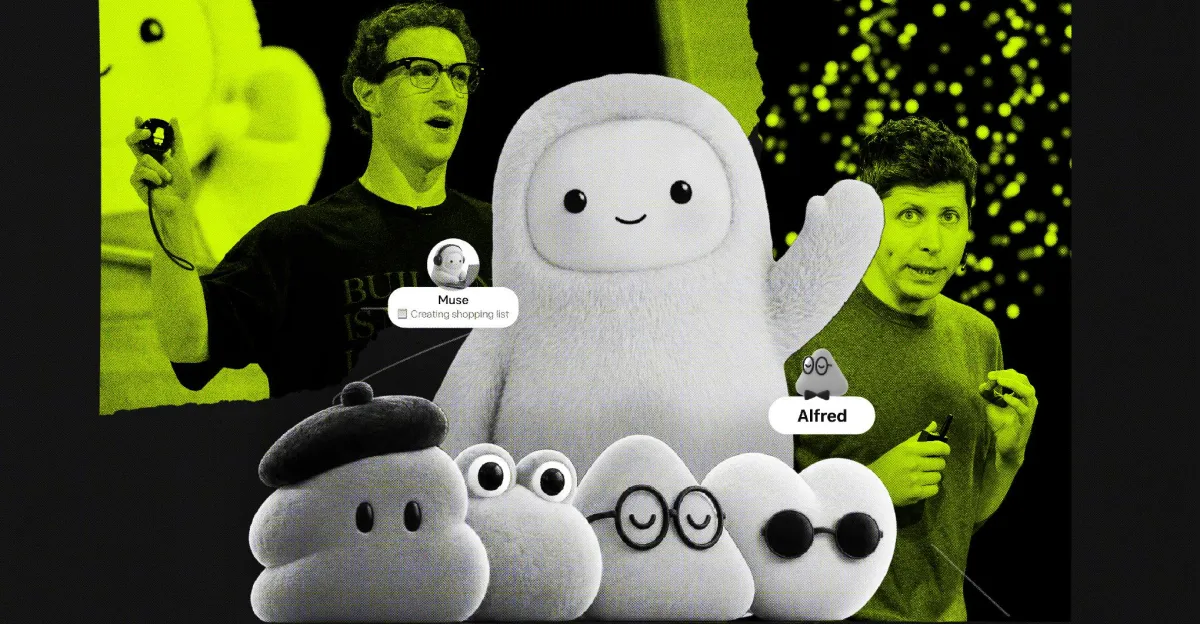
OpenAI and Meta stand out as the most aggressive applicants in this round. OpenAI submitted requests for 15 top-level domains, while Meta went even further with 21 applications, according to ICANN’s published list.
Those filings include a mix of broad AI-related names and branded extensions. In OpenAI’s case, the company applied for domains such as .agi, .asi, .chatgpt, .codex, .gpt and .openai. Meta’s list includes .agent, .facebook, .instagram, .messenger, .meta, .threads and .frommeta.
The pattern suggests two different strategies. One focuses on terms that could appeal to the AI industry at large. The other seeks a tightly controlled branded namespace for products, communities and future services.
How big is the new domain application round?
ICANN says 1,615 applications have been submitted by 481 applicants, making this one of the most consequential top-level domain rounds in years. The applications include both brand-owned extensions and generic strings designed for wider use.
That volume matters because the domain name system has become more conservative over time. The explosive hopes that once surrounded alternate suffixes have given way to a web still dominated by .com, even as some newer endings have carved out niche success.
What kinds of domains are being sought?
The applications fall into two broad categories: generic top-level domains and branded top-level domains. Generic proposals are open-ended and could theoretically be used by many customers or websites. Branded proposals, by contrast, are reserved for a single company’s use.
Examples from the latest batch show how wide the field has become. Among the generic-style entries are .anime, .geek, .haha, .jackpot and .itiswhatitis. On the branded side, filings include .applebees, .bankofamerica, .zillow and .zoom.
| Domain type | Examples | Likely use | Who controls it |
|---|---|---|---|
| Generic | .agent, .agi, .anime, .geek | Broad public or industry use | Applicant if approved, sometimes with open registration rules |
| Branded | .openai, .meta, .claude, .facebook | Company sites, products, logins, campaigns | Single company |
| Niche or playful | .haha, .itiswhatitis, .jackpot | Creative web identities or marketing | Applicant if approved |
What does the AI rush tell us about the future of the web?
The rush tells us that web identity still matters, even in an age dominated by apps, platforms and AI assistants. Companies continue to see value in memorable, controlled and flexible web addresses that can support products, communities and new forms of digital interaction.
It also suggests that AI terminology has become part of the internet’s commercial vocabulary. Terms like “agent,” “agi” and “superintelligence” are no longer just research concepts. They are now brandable labels companies are trying to own.
One striking detail is how many applicants are betting on futuristic language that may or may not survive long-term market shifts. The choice to apply for .asi, for example, reflects an obvious attempt to align with the more expansive idea of “super intelligence,” a term that has gained visibility in political and industry conversations.
How do branded domains work, and why do companies want them?
Branded domains give a company its own controlled namespace, which can be used for product pages, internal systems, user accounts or future services. Instead of relying on a standard domain like companyname.com, a firm can build structured addresses such as product.company or account.company.
That can make web experiences cleaner and more memorable. It can also simplify brand management across large product families. For a company like Meta, the appeal is obvious: one corporate umbrella could support multiple identities, including Facebook, Instagram, Messenger and Threads, all under a consistent naming system.
Bluesky also appears to be aiming in that direction. Its application for .bsky suggests the company may want to weave the domain directly into usernames or user-facing handles, though the exact implementation would depend on approval and technical rollout.
Why has the alternate-domain market struggled before?
Alternate top-level domains have often struggled because internet users default to the familiar. Most people are conditioned to type .com, and in many cases the older web ending remains more trusted, more memorable and easier to guess.
Some newer endings have succeeded anyway. Domains like .ai and .app have gained traction thanks to strong market trends and clear use cases. But many others have remained novelty items, admired more for cleverness than for actual adoption.
That history helps explain why the latest wave is notable. It is one thing for individuals or small startups to experiment with a quirky domain. It is another for major companies to commit resources to the process and stake out entire namespace strategies.
What happened the last time domains expanded?
The last major expansion of the domain system introduced many new options, but only a small number became part of everyday use. Most consumers kept relying on .com, while only a few specialized or industry-aligned endings gained real traction.
This new round could repeat that pattern unless companies turn their domains into obvious, practical tools. The difference this time is the scale of AI investment and the willingness of big tech firms to treat domain ownership as part of product planning.
Where do the applications go from here?
These filings are only the beginning of a long approval process. No new domain will be officially delegated until sometime next year at the earliest, and even then approval is not guaranteed for every applicant.
ICANN will need to review technical, operational and policy issues before any suffix becomes available. Some applications may face contention if multiple parties want the same string, while others could be approved without conflict.
That means the current list is less a final map than a preview of the internet’s next naming contest. The real significance lies in who is trying to secure which words before they become scarce.
Key names and filings in the current round
The following table highlights some of the most notable applications in the latest ICANN round, based on the public list released this week.
| Applicant | Requested domains | Notable detail |
|---|---|---|
| OpenAI | .agi, .asi, .chatgpt, .codex, .gpt, .openai and others | One of the most active applicants overall, with 15 requested TLDs |
| Meta | .agent, .facebook, .instagram, .messenger, .meta, .threads, .frommeta and others | Submitted the largest batch among the names highlighted in the round, with 21 requests |
| Anthropic | .anthropic, .claude | Focused on company and product branding |
| Bluesky | .bsky | Potentially useful for usernames and identity systems |
What happens if these domains are approved?
If approved, the domains could be used in ways that range from practical to highly experimental. Brands might use them for official product hubs, authentication systems, support pages or future account structures.
They could also become status symbols, signaling which companies were early enough to claim language that maps onto the AI economy. In a crowded market, owning .agent or .gpt could matter as much for perception as for utility.
Still, approval does not guarantee relevance. A domain becomes important only if people use it, trust it and remember it. That is the real challenge for every applicant, no matter how famous the company name attached to it may be.
The bigger picture: AI is changing even the web’s address book
The latest ICANN round is not just a bureaucratic update. It is a snapshot of how deeply AI has entered corporate strategy, internet branding and digital identity.
Companies are not merely building models and products. They are also trying to own the vocabulary that will frame those products for years to come. The battle over .agent, .agi and .superintelligence is, in that sense, a battle over the language of the next internet.
And despite all the hype around AI-driven interfaces, voice assistants and automated agents, one old lesson still holds: memorable names matter. The companies that understand that may gain a small but meaningful advantage when the web’s next wave of addresses finally goes live.
Timeline of the latest ICANN domain round
| Stage | What happened | Why it matters |
|---|---|---|
| Application window opens | ICANN begins accepting requests for new top-level domains | Starts the process for brands and generic strings to enter the queue |
| Public application list released | 1,615 applications from 481 applicants become public | Reveals which companies are competing for the most valuable names |
| Review phase ahead | Technical and policy vetting begins | Determines which requests can proceed toward delegation |
| Expected future approval | Nothing becomes official until sometime next year | Gives applicants time to prepare for possible contention or rejection |
For now, the takeaway is simple: AI companies want a piece of the internet’s address system, and they want it early. If these applications succeed, the next generation of domains may say as much about the AI industry as the models behind them.
How should readers interpret the AI domain rush?
Readers should see it as a sign that AI branding is moving from product names to internet infrastructure. The competition is not just over apps and models anymore. It is also over the words users type into browsers, the labels they recognize and the shortcuts that define trust online.
That may sound esoteric, but it has practical consequences. In the web economy, a good name can shape user behavior, search visibility and brand recall. In a crowded AI market, those advantages can be surprisingly durable.
Frequently asked questions
What are AI domain names?
AI domain names are top-level domains or web suffixes tied to artificial intelligence terms or brands, such as .agent or .agi. They can be used for branding, products, usernames or company-controlled web spaces if approved by ICANN.
Why are OpenAI and Meta applying for so many domains?
OpenAI and Meta are applying for many domains to secure brand control, future-proof their web identities and potentially build cleaner product ecosystems. Owning a top-level domain can also create marketing advantages and help companies shape how users interact with their services.
When will the new top-level domains become official?
They will not become official immediately. ICANN says the applications still need to go through review and approval, and no new top-level domain is expected to be finalized until sometime next year at the earliest.
Are generic domains like .agent and .agi available to everyone?
Not yet. These are only applications at this stage, and approval will depend on ICANN’s review process. If approved, a domain might be controlled by one applicant or opened under specific rules depending on the final outcome.