In short
Pangram is expanding its AI detection business with fresh funding, a Substack partnership and image analysis tools. The startup is betting that the internet will need a trust layer to identify synthetic content in publishing and beyond.
- Pangram raised $9 million and is expanding beyond text into image detection.
- Substack is using Pangram’s tools to show readers when newsletter authors use AI.
- The company is pitching itself as a trust layer for a web flooded with synthetic content.
- AI detection remains difficult because the line between AI-assisted and AI-generated work is blurry.
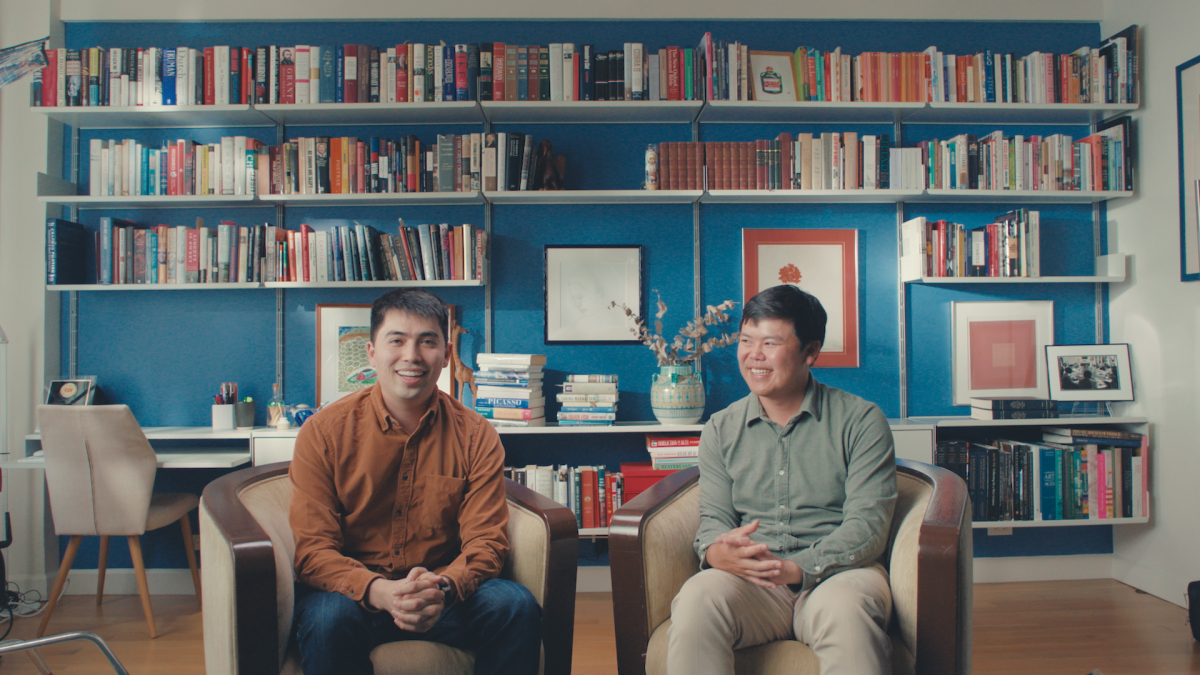
Pangram, the AI detection startup co-founded by Max Spero, is positioning itself as a new kind of internet trust infrastructure after raising $9 million and landing a partnership with Substack. The company is now expanding from text analysis into image detection as concern grows over AI-generated content appearing in newsletters, job applications, product reviews and claims submissions.
The timing matters because the volume of synthetic content is rising faster than many platforms can verify it, leaving publishers and users to decide when a piece of writing is human-made, machine-assisted or fully generated. Pangram’s pitch is that detection tools can help close that gap, even as the line between acceptable AI use and deceptive automation remains difficult to define.
Why AI detection is becoming a business in its own right
AI detection has moved from a niche technical problem to a commercial opportunity because synthetic content is no longer limited to obvious spam or novelty use cases. It now shows up in places where trust has direct financial or reputational consequences, including hiring, commerce and media.
For platforms, the challenge is not simply identifying machine-generated text. They also have to decide what to tell users, how much confidence to attach to a result and whether to treat AI assistance as suspicious at all. That complexity has created room for startups that promise to act as a verification layer between content creation and content consumption.
Pangram is one of several companies trying to fill that role. Its strategy combines detection models, product integrations and a growing emphasis on transparency for end users who want to know whether the material they are reading was written with the help of AI.
What makes the problem harder than a simple real-or-fake test?
The answer is that modern AI use exists on a spectrum, not a binary. A newsletter may be lightly edited by a human, drafted with a chatbot, or generated entirely by a model and polished for publication. In the real world, those categories are often blurry, which makes detection more difficult than spotting a straightforward fake.
Detection systems also have to contend with edited text, paraphrasing, translation, mixed-author documents and adversarial attempts to evade filters. That means a product can rarely promise perfect certainty. Instead, it has to estimate probability, explain uncertainty and remain useful even when the evidence is incomplete.
Max Spero, Pangram’s co-founder and CEO, says the company sees AI detection as part of a broader trust stack for the modern internet, rather than just a yes-or-no classifier for generated text.
How Pangram is trying to become a trust layer for the web
Pangram’s core argument is that the internet needs tools that can help users and platforms understand the origin of content. That means going beyond consumer-facing novelty and into workflows where authenticity affects decisions.
The startup recently secured $9 million in funding, a sign that investors believe detection may become a meaningful category rather than a temporary response to a passing wave of AI hype. Its partnership with Substack is especially notable because newsletter publishing sits at the intersection of creator trust, audience expectations and automated writing tools.
Substack has begun using Pangram’s technology to indicate to readers which writers are using AI in their newsletters. That kind of disclosure is likely to be watched closely by other platforms that rely on creator credibility, including publishing tools, marketplaces and review systems.
At the same time, Pangram has broadened its product line to include AI image detection. That move reflects a practical reality: synthetic media is increasingly multimodal, and trust concerns do not stop at text.
Why the Substack deal matters
The Substack integration matters because it gives Pangram a public-use case in a sector where authorship is part of the product. Readers subscribe not just to information, but to a person’s voice, judgment and originality. If a newsletter relies on AI writing tools, readers may want to know that before they decide whether to pay attention or pay for access.
For Substack, the partnership offers a way to address a growing sensitivity around disclosure without forcing the platform to make sweeping assumptions about every creator. For Pangram, it offers distribution, credibility and a chance to prove that detection tools can be embedded into everyday publishing rather than relegated to back-end moderation.
What happened in the latest conversation with TechCrunch?
Pangram’s Max Spero appeared on TechCrunch’s Equity podcast to discuss the company’s approach and the broader debate over where to draw the boundary between AI-assisted work and AI-generated output. The conversation centered on one of the most contested issues in the industry: whether disclosure should be based on the presence of AI tools, the degree of human oversight or the final form of the content itself.
That debate is especially important because many users now rely on AI for drafting, summarizing, brainstorming and editing. A hard prohibition on any AI use would be impractical in many workflows. But a permissive attitude toward undisclosed generation could erode trust in content ecosystems where authenticity matters.
Detection startups like Pangram are therefore forced to operate in a gray zone. Their products can help surface patterns, but the social and policy questions around interpretation remain unresolved.
Where AI detection is already showing up
AI detection is not just a media concern. It is increasingly relevant across industries where a synthetic shortcut can distort judgment or create fraud risk.
- Publishing: readers want to know whether a newsletter, article or post was written by a person or a model.
- Hiring: employers may want to identify whether a résumé, cover letter or application essay was machine-generated.
- Retail and e-commerce: platforms need to monitor fake or low-quality AI-generated reviews.
- Insurance and claims: companies may use detection tools to spot suspiciously generated submissions.
- Moderation: online communities need help distinguishing authentic participation from automated noise.
These use cases suggest why investors may see detection as more than a defensive product. If synthetic content keeps expanding, verification could become embedded in the digital plumbing of multiple industries.
How does image detection fit into Pangram’s strategy?
Image detection gives Pangram a way to address the next stage of the synthetic-content problem, where text and visuals are increasingly produced by the same model ecosystem. A platform that can only analyze writing may miss the broader spread of AI-generated material users encounter in feeds, listings and documents.
By adding image detection, the startup is betting that customers will prefer a single trust product spanning different content types. That could be especially useful for platforms that host both written and visual submissions, or for moderation teams that want consistent tooling rather than separate vendors for each medium.
The expansion also highlights a strategic challenge: as generative models improve, detection tools must keep adapting. A system that works on one generation of synthetic media can become less effective as model quality advances and creators learn how to hide the fingerprints of automation.
Why the line between AI-assisted and AI-generated matters
That distinction matters because the policy consequences are very different depending on where a piece of content falls. A writer who uses AI for grammar fixes is not the same as someone who asks a model to produce an entire article and publishes it without review.
Still, many platforms struggle to define where assistance ends and authorship begins. Is a prompt followed by heavy editing still AI-generated? Does using a chatbot for an outline change the status of the final work? If a model drafts only a portion of a submission, should that trigger disclosure?
These questions are central to Pangram’s public message. Detection software can surface signals, but platforms and publishers must decide how to translate those signals into policy. That means the company’s market opportunity is tied as much to governance as to machine learning.
Common policy scenarios platforms may face
- A creator uses AI to brainstorm but writes the final content manually.
- A job candidate submits an AI-polished cover letter with original experience and claims.
- A seller posts reviews generated by a model to inflate product ratings.
- An insurance claimant drafts a statement with AI, then edits it before submission.
Each of these examples raises different trust questions, and each may require a different response from the platform involved. That is why a generic label of “AI or not AI” can be too blunt for real-world moderation.
AI detection startup landscape: a small but crowded lane
Pangram is not entering a vacuum. Over the past two years, a cluster of startups has emerged to answer a pressing question: how do you tell whether a piece of content was produced by a person or by a model? Some companies focus on text, others on images, and some on broader provenance or watermarking systems.
The competition reflects both opportunity and uncertainty. On one hand, the scale of AI-generated content suggests strong demand. On the other, detection has a history of false positives, inconsistent performance and an arms race with model creators who can often improve output faster than detectors improve accuracy.
That is one reason many startups now frame their products less as definitive judges and more as decision-support tools. The more carefully a company presents its confidence levels, the more likely it is to earn trust from enterprise buyers, publishers and platforms.
| Company milestone | What it means | Why it matters |
|---|---|---|
| $9 million raised | New funding to grow Pangram’s detection products | Signals investor interest in AI trust infrastructure |
| Substack partnership | Readers can see which newsletter authors use AI | Moves detection into a real publishing workflow |
| Image detection launch | Expansion beyond text into synthetic visuals | Reflects the broader spread of generated media |
| Equity podcast appearance | CEO Max Spero discussed the company’s strategy | Highlights the policy and product debate around AI use |
What investors may be betting on
Investors backing Pangram are likely betting that trust, disclosure and provenance will become recurring software needs, not temporary pain points. As generative AI becomes normalized, organizations may need ongoing ways to audit content at scale.
That could create recurring demand in sectors where automated content has clear downside risks. A news publisher may want audience trust. A marketplace may want to limit fake reviews. A hiring platform may want authenticity in candidate materials. An insurer may want to reduce fraudulent claims. These use cases could turn detection into a subscription business with multiple verticals.
But the economics are not simple. Detection products can be expensive to maintain because adversaries adapt quickly and model quality keeps improving. Any company in this space must continuously retrain, test and update its systems, which raises the cost of staying accurate.
How should users think about AI detection claims?
Users should treat detection results as indicators, not final verdicts. That is the practical lesson emerging from the entire sector. A detection score can inform a decision, but it should not be the only input, especially when the consequences involve reputation, employment or access to money.
That caution is important because false positives can be damaging. A human writer may be wrongly labeled as synthetic, while a generated piece may pass through a detector without issue. The best systems are likely to combine algorithmic analysis with disclosure rules, provenance standards and human review.
Pangram’s appeal lies in promising exactly that sort of layered approach. Its products are not just about identifying content, but about helping platforms create a more legible environment for users who are increasingly uncertain about what they are reading.
The bigger internet trust problem
The rise of AI content is only one part of a much larger crisis of online credibility. The web has already been dealing with misinformation, spam, fake engagement, manipulated media and bot-driven activity for years. Generative AI accelerates all of those problems by making content production cheaper, faster and more scalable.
That is why some startups now describe themselves as a “trust layer.” The phrase captures a growing belief that platforms will need services focused less on creation and more on verification. If the next wave of internet products is built on synthetic output, then the next wave of infrastructure may be built on proving what is authentic.
Pangram is trying to claim a place in that shift. Its funding, its Substack integration and its new image tool all point to a company that wants to move from a narrow detector to a broader infrastructure provider.
What comes next for Pangram and the detection market?
The next test for Pangram is whether it can turn early credibility into durable adoption. Partnerships are useful, but the market will ultimately judge the company on accuracy, speed, ease of integration and the quality of its judgment in ambiguous cases.
If the startup can keep improving its tools while staying honest about their limits, it could become a key supplier to platforms that need to manage AI disclosure at scale. If detection proves too unreliable, however, the category may remain a useful supporting tool rather than a central layer of the web.
Either way, the questions Pangram is trying to answer are not going away. As more text and images are generated by AI, platforms will need practical ways to tell users what they are seeing. The challenge is no longer whether synthetic content will spread. It is how the internet will keep trust intact while it does.
Timeline of Pangram’s recent momentum
Here is a simplified view of the company’s recent moves and why they matter for the AI detection market.
| Period | Development | Impact |
|---|---|---|
| Recent months | Raised $9 million | Gave Pangram resources to expand product development |
| Recent months | Substack began using Pangram’s detection tools | Created a visible publishing use case for disclosure |
| Recent months | Launched AI image detection | Broadened the company’s reach beyond text-only workflows |
| Current | Max Spero discussed the category on TechCrunch Equity | Helped frame the public debate over AI assistance and generation |
As the synthetic-content problem deepens, companies like Pangram will be judged on whether they can make AI use more transparent without pretending the issue is simpler than it is. That tension is likely to define the next phase of the trust-and-verification market.
Frequently asked questions
What is Pangram?
Pangram is an AI detection startup focused on helping platforms and users determine whether content was written by a person, generated by a model or created with a mix of both. The company is building tools for text and images and positioning itself as part of the internet’s trust infrastructure.
Why is AI detection getting more attention now?
AI detection is getting more attention because synthetic text and images are showing up in newsletters, job applications, reviews and claims. That creates real trust and fraud risks for platforms, publishers and businesses that need to know whether content is authentic.
How is Substack using Pangram’s technology?
Substack is using Pangram’s detection technology to help show readers which newsletter authors are using AI in their writing. The integration gives audiences more transparency and gives Pangram a visible real-world use case in publishing.
Can AI detection reliably tell if something is fake?
Not always. AI detection can be useful, but it is rarely perfect because content can be edited, paraphrased or only partly generated by AI. The most responsible use is to treat detection results as signals that support human judgment, not final proof.