Updated September 3, 2026 5:53 pm
In short
Pangram’s CEO says AI detection is becoming essential as synthetic text and images spread online, warning the web may be nearing a dead-internet-style trust crisis and that lower-end writing jobs may already be disappearing.
- AI-generated text and images are increasingly appearing in jobs, reviews, claims and newsletters.
- Pangram recently raised $9 million, added Substack as a partner and launched image detection.
- Max Spero says the internet may be close to a dead internet theory scenario.
- He argues the more useful question is how much AI was used, not just whether AI was used.
- False positives and misuse make AI detection especially risky in sensitive contexts.
Update — September 3, 2026 5:53 pm
Spero now says the risk may be even closer than he previously suggested, warning that the internet could drift into a real-world version of dead internet theory within the next few years.
He also drew a sharper line on the labor impact of AI, saying the lowest tier of writing work may already be gone for good, even as strong human writing could become more valuable as AI adoption spreads.
The updated discussion also underscores how costly mistakes can be in image detection, where false positives are especially sensitive.
Update — September 2, 2026 8:54 pm
Spero now says the risk is closer than he previously framed it, warning the internet could become a real-world version of dead internet theory within the next few years.
The updated source also adds a new point on the labor impact of AI: he believes the lower end of writing work may already be gone for good, while strong human writing could become more valuable as AI use spreads.
TechCrunch also notes that Pangram sees false positives as especially sensitive when detection is applied to images, reinforcing the stakes of getting these tools wrong.
The internet is approaching a trust crisis as AI-generated text and images spread into everyday online activity, and Pangram CEO Max Spero says the web may be “dangerously close” to the point where synthetic content is indistinguishable from human-made work. His warning comes as the AI-detection startup expands its tools, lands a partnership with Substack, and argues that the future of online credibility may depend on proving how much AI was used, not simply whether it was used at all.
Spero made the case on TechCrunch’s Equity podcast, where he discussed the limits and promise of detection technology as AI-generated content increasingly shows up in places that once seemed relatively insulated from automation: job applications, product reviews, insurance forms, newsletters, and images that can influence public perception and business decisions.
The conversation reflects a bigger shift in the AI economy. A few years ago, the challenge was building text and image generators that worked convincingly. Now the challenge is building systems that can tell the difference between authentic human creation, AI assistance, and fully synthetic output before trust in online information erodes further.
Why AI detection is becoming a core internet problem
AI detection has moved from a niche technical issue to a practical business need because companies increasingly rely on user-generated content to make decisions. Reviews influence buying behavior, application materials influence hiring, and claims documents can affect financial payouts.
As more of that content can be produced by large language models or image generators in seconds, platforms are under pressure to establish whether they are hosting genuine human contributions or mass-produced synthetic submissions. That pressure is helping create a small but growing market for what some founders call the internet’s “trust layer.”
Pangram is one of the startups trying to fill that role. The company recently raised $9 million to expand its detection technology and announced a partnership with Substack, which is using Pangram’s system to help readers see which newsletter writers may be using AI in their work. Pangram also introduced a separate image-detection product as demand for visual verification rises alongside text scrutiny.
What makes this different from earlier spam detection?
This is different because the question is no longer just whether content is spam, but how it was made and how much of it came from a machine. Traditional spam filters were built to catch obvious abuse. Modern AI-generated content can be polished, context-aware, and cheap to produce at scale, making it harder to classify and easier to mislabel.
That subtlety matters. A person may use AI for brainstorming, editing, formatting, translation, or first drafts without turning over the entire creative process to a machine. Detection systems that only sort content into “AI” or “human” risk oversimplifying a spectrum that is now central to writing, publishing, hiring and moderation.
How Pangram is positioning its technology
Pangram is not just trying to identify synthetic content; it is trying to measure the degree of AI involvement. That distinction, Spero argued, may be more practical than a blunt binary label because many real-world workflows now mix human judgment with machine assistance.
For publishers, that could mean helping readers better understand how a newsletter was produced. For platform operators, it could mean spotting suspicious patterns in mass submissions. For businesses, it could mean identifying content that appears authentic at first glance but may have been generated or heavily altered by a model.
The startup’s pitch is that detection works best when it is treated as infrastructure rather than a novelty. In that framing, it becomes part of the stack that supports identity, attribution, moderation and compliance in an era when the volume of machine-created material is rising fast.
| Milestone | What happened | Why it matters |
|---|---|---|
| Recent funding round | Pangram raised $9 million | Signals investor interest in AI verification tools |
| Substack partnership | Pangram’s detection tech was integrated for readers | Brings AI transparency to newsletter publishing |
| New product launch | The company released AI image detection | Extends verification beyond text into visuals |
| Podcast warning | Spero said the web may be nearing dead internet theory territory | Highlights concern about authenticity online |
What is dead internet theory, and why does it keep resurfacing?
Dead internet theory is the idea that much of what people see online is no longer produced by humans, but by bots, automated systems and synthetic media. While the theory is often discussed as a fringe or exaggerated concept, its basic premise has become more believable as AI tools reduce the cost of producing content at scale.
Spero’s warning was not that the internet is already dead, but that it could be headed toward that state if synthetic material keeps overwhelming authentic human participation. His point was not merely philosophical. If users begin to assume that feeds, forums and review sections are dominated by machine output, the incentive to trust, contribute and spend time online may weaken.
That concern is especially relevant for platforms built on scale. If a small number of automated actors can create enormous volumes of text, images or comments, then the internet’s signal-to-noise ratio can collapse quickly. For companies that rely on user confidence, that is not an abstract risk; it is a product problem and a business problem.
Why “how much AI” may matter more than “AI or human”
Because many creators now use AI as a tool rather than a replacement, the real challenge is figuring out where assistance ends and authorship begins. A newsletter drafted by a person and refined with AI is materially different from one generated end-to-end by a model, but both may contain machine-produced language.
Spero’s view is that a more nuanced measurement could be more useful than a categorical verdict. That approach would allow platforms to disclose degrees of AI use instead of making the risky claim that they can always determine origin with perfect confidence.
Such nuance could also reduce conflict. If a user is accused of fully automating work when they actually used a model for editing or outline generation, the result can be reputational damage or unfair penalties. On the other hand, if platforms are too permissive, they may understate how much synthetic content is entering their systems.
Spero argued that the more relevant question is not simply whether AI touched a piece of content, but how much of the final product came from it, a distinction he said may become increasingly valuable as human and machine workflows blend together.
Where AI detection can go wrong
AI detection systems are powerful only if they are accurate enough to avoid punishing innocent users. False positives are one of the biggest concerns, especially in sensitive categories where a mistaken label could have legal, professional or personal consequences.
That is particularly true for images. A bad classification on a harmless photo can be embarrassing, but a mistaken call on sensitive visual material could lead to serious harm. Spero pointed to the need for caution in any situation where a detection result might influence moderation, reputational judgments or official decisions.
False negatives are also a problem. If a system misses synthetic content, it gives users and platforms a false sense of security. That can be especially damaging when AI is used to manufacture credibility at scale, whether in fake reviews, fabricated documents or manipulated media.
In practice, this means no detector can be treated as infallible. The best systems will likely be those that combine pattern analysis with human review, contextual signals and conservative policy design rather than trying to automate judgment entirely.
How AI is changing the market for writing jobs
Spero believes AI will reshape the labor market for writers, but not evenly. In his view, lower-end writing work is already at risk of disappearing, while strong human writing may become more valuable because it stands out in a world saturated with machine-generated text.
That argument reflects a pattern seen in several creative industries: as AI raises the volume of content, the market begins to reward originality, voice and judgment more than speed alone. The result may be fewer entry-level tasks for writers who once built careers through routine assignments, and greater premiums for creators who can offer perspective that models cannot easily imitate.
The shift could also change how publications and brands think about quality. If the internet is flooded with cheap, adequate prose, then audiences may become more selective about where they spend attention. Human authorship, if clearly signaled and consistently high-quality, may become a brand asset in itself.
What does that mean for publishers and platforms?
For publishers, it means trust becomes part of the product. Readers may increasingly want to know whether a story, essay or newsletter was written by a person, assisted by a model, or produced entirely by one.
For platforms, it means moderation and disclosure may become competitive advantages. Companies that can provide better transparency may earn more user confidence than those that treat synthetic content as an afterthought.
For workers, it may mean a split market. Entry-level labor that can be easily automated may shrink, while experienced professionals who can supply expertise, taste and accountability may become more valuable.
- Routine content work is likely to face the most pressure.
- Distinctive human voice may become a stronger selling point.
- Transparency tools could become part of editorial and platform norms.
- AI-assisted production may become acceptable if clearly disclosed.
Who is Max Spero, and why does his view matter?
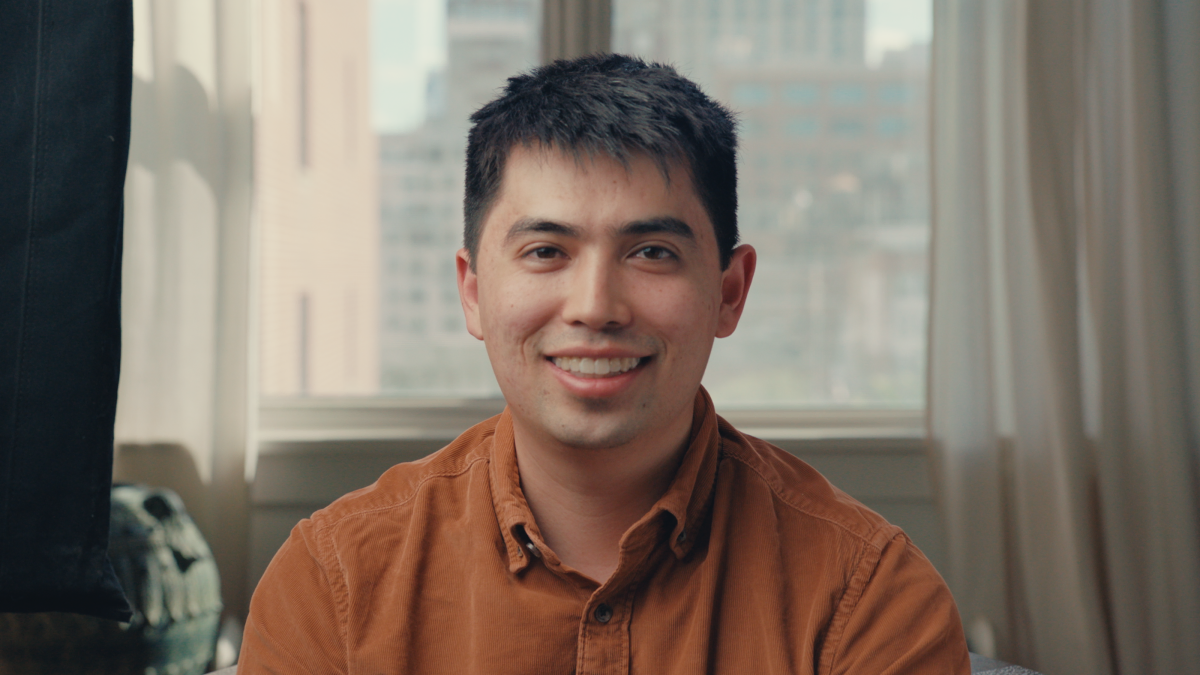
Max Spero is the co-founder and chief executive of Pangram, one of the startups betting that the next major layer of internet infrastructure will be verification rather than generation. His perspective matters because it comes from a company building tools for a problem that generative AI itself created.
Unlike broad commentary about AI hype or panic, Spero’s comments are grounded in a commercial product strategy. Pangram is not only warning about synthetic content; it is selling a system designed to identify it. That makes the company’s claims especially relevant to the broader debate over whether detection can keep pace with generation.
His remarks also arrive at a moment when AI governance is still catching up. Policymakers, publishers and platform operators are all asking similar questions: What counts as disclosure? What qualifies as harmful synthetic media? How should institutions respond when certainty is impossible?
Why Substack’s partnership is a meaningful signal
Substack’s use of Pangram’s technology is significant because newsletters occupy a middle ground between formal journalism, creator media and personal publishing. Readers often follow writers because they trust a specific voice, which means disclosure about AI involvement has direct implications for the relationship between creator and audience.
By showing readers which authors may be using AI, Substack is acknowledging that transparency itself can be a feature. The move suggests that some platforms believe audiences want clarity about authorship, even when AI assistance is not inherently prohibited.
That approach may become common across publishing tools. Rather than banning AI outright, platforms may create labels, thresholds or disclosure systems that allow creators to use AI while still preserving audience trust. Pangram’s role is to make those labels more credible.
What the broader AI trust market looks like
Pangram is part of a broader wave of startups trying to solve the verification problem created by generative AI. Some focus on text classification. Others work on image forensics, watermarking, provenance or content authenticity standards. Together, these companies are trying to create a future in which machines can be used widely without making every digital artifact suspect.
The business opportunity is substantial because the verification problem cuts across industries. A hiring platform needs to know whether resumes are genuine. An e-commerce site needs to know whether reviews are legitimate. A publisher needs to know whether a contributor wrote what they submitted. An insurer needs to know whether a claim document was fabricated or altered.
In that sense, the market is not just about AI detection. It is about digital trust at scale, and that may prove to be one of the most durable enterprise categories in the generative AI era.
| Use case | Risk from AI content | What detection could help with |
|---|---|---|
| Job applications | Automated cover letters or resumes | Flagging suspiciously generated submissions |
| Product reviews | Fake endorsements or negative campaigns | Identifying mass-produced review text |
| Insurance claims | Fabricated descriptions or altered images | Spotting inconsistent or synthetic evidence |
| Newsletters | Unclear authorship and disclosure | Indicating AI assistance or generation |
How close is the internet to the point of no return?
The internet is not doomed, but the warning signs are real. Spero’s concern is that if the balance keeps shifting toward low-cost synthetic content, the web could reach a point where users stop assuming that what they see was made by a person.
That shift would change behavior at every layer. Users might trust platforms less. Creators might feel pressure to disclose more. Platforms might invest more aggressively in verification. And companies that cannot prove authenticity could face a credibility discount.
The next few years may determine whether AI becomes a tool that coexists with human expression or a force that overwhelms it. The answer will likely depend less on whether people use AI at all and more on whether the internet can build systems strong enough to separate human intent from machine output.
Pangram’s bet is that detection will help keep that balance intact. Spero’s warning is that the window for doing so may already be narrowing.
What comes next for AI detection?
The most likely next phase is not perfect identification, but better probabilistic judgment. Detection tools may become more accurate when paired with metadata, provenance signals, publisher policies and human oversight.
That could lead to a layered trust model in which no single detector is expected to make final decisions. Instead, platforms could use detection as one input among many, much like fraud systems or spam filters do today.
If that happens, the biggest winners may be not only the companies that can classify content, but the ones that can explain their confidence, their limitations and the consequences of getting it wrong.
For now, Pangram is betting that the internet’s next major battleground will not be generation, but verification. And if Spero is right, that battle may decide whether the web remains a place where people believe what they see.
Listen to the full Equity episode for the complete discussion of AI detection, dead internet theory and the future of online trust.
Frequently asked questions
What did Pangram’s CEO say about the internet?
Pangram CEO Max Spero said the internet could be “dangerously close” to dead internet theory becoming a reality within a few years. He said the concern is not that the web is already dead, but that synthetic content may soon overwhelm human-made material if trust tools do not catch up.
What does Pangram do?
Pangram builds AI detection tools designed to identify synthetic text and images and, more importantly, estimate how much AI was used in creating content. The company is pitching its software as part of a broader trust layer for platforms, publishers and businesses that need verification.
Why is AI detection hard?
AI detection is hard because modern models can generate polished content that looks human, while many real users now blend AI assistance into their workflow. That makes a simple human-versus-AI label too crude and raises the risk of false positives and false negatives.
Why is Substack using Pangram?
Substack is using Pangram’s technology to show readers which newsletter authors may be using AI in their writing. The partnership is meant to increase transparency and help audiences better understand how content they read was produced.
Will AI replace writing jobs?
AI is likely to replace some lower-level writing work, according to Spero, but strong human writing may become more valuable because it stands out in a market flooded with machine-generated text. The biggest pressure will likely be on routine, repeatable content tasks.