In short
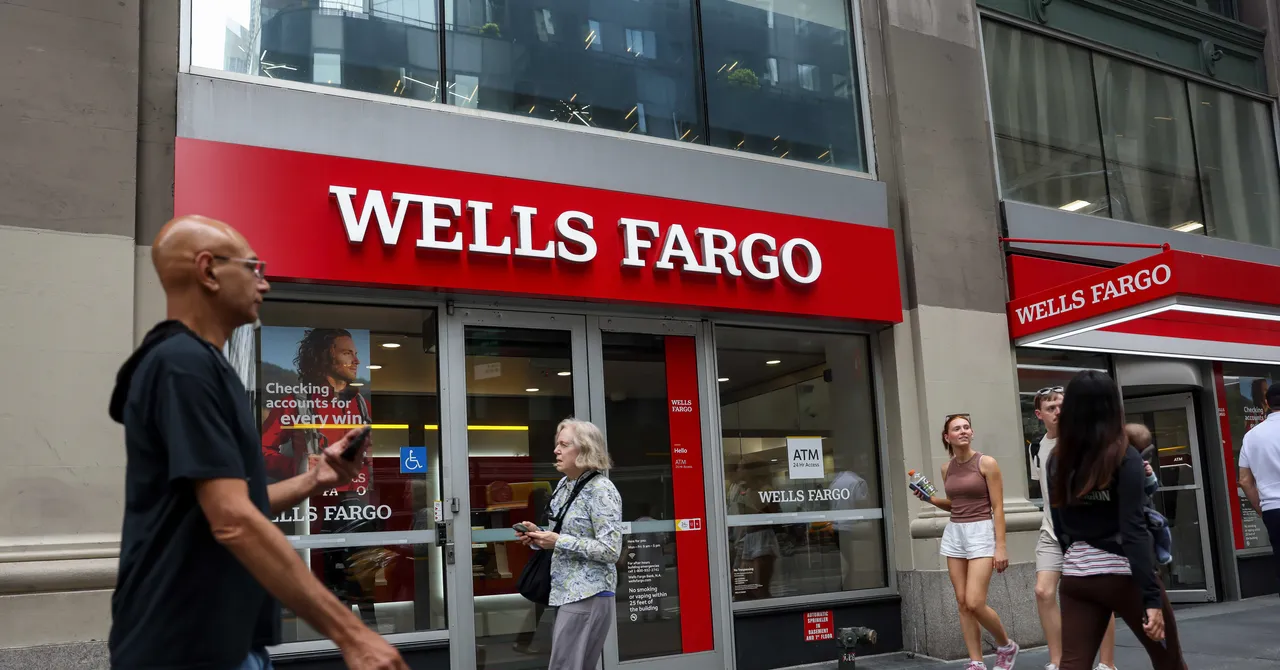
Wells Fargo will update customer terms Tuesday to warn that AI agents used for shopping or other tasks are at the customer’s own risk. The move reflects a broader bank crackdown on third-party tools that can log in with customer credentials and make purchases.
- Wells Fargo’s updated customer agreement takes effect Tuesday and warns that AI agent use is at the customer’s own risk.
- JPMorgan Chase, Bank of America, Citibank and PNC have also added restrictions or warnings around AI agents.
- Banks say the main issues are security, unauthorized access and liability for mistaken or automated transactions.
- Consumer AI agents are still early-stage and account for only a tiny share of online transactions.
Wells Fargo will update its customer agreement on Tuesday to warn that people who use AI agents to act on their behalf do so at their own risk, joining a growing wave of U.S. banks trying to limit third-party software that can log in with customer credentials and make purchases.
The move matters because it puts one of the country’s largest lenders in the middle of a fast-forming policy fight: AI agents can speed up routine online tasks, but they also create new questions about security, liability and who pays when a bot buys the wrong thing, withdraws funds or triggers a dispute.
What Wells Fargo is changing
According to WIRED, Wells Fargo’s updated terms will take effect Tuesday and cover millions of customers. The bank’s revised language is designed to address AI agents directly, rather than treating them as an edge case under existing digital-banking rules.
The strongest signal in the new language is the bank’s warning that use of an AI agent is “AT YOUR OWN RISK.” WIRED reported that the agreement tells customers, in effect, that Wells Fargo does not want to absorb responsibility for the behavior of outside tools that may be given account access or credentials.
“Your use of any AI Agent is AT YOUR OWN RISK,”
That stance reflects a broader industry concern: banks are comfortable offering their own AI products, but far less comfortable with outside software acting inside customer accounts without the bank’s direct control.
Why it matters
Bank policy changes may sound procedural, but this one could shape how consumer AI tools grow in the financial sector. AI agents are still early-stage, and WIRED described them as responsible for only a minuscule share of online transactions. Even so, banks are already reacting as if the risk is real, not hypothetical.
The issue is not just whether an AI agent can complete a purchase. It is whether that purchase is authorized, how the bank can verify intent, and who bears the loss if the software makes a mistake. If a user hands over login information, or grants an agent broad permissions, the line between convenience and exposure gets blurry fast.
For customers, the practical implication is simple: bank accounts are not likely to be treated the same way as a shopping cart or a voice assistant prompt. A bank sees a transaction record, not a user’s convenience goal. That distinction is becoming the core of the debate.
How other banks are responding
Wells Fargo is not acting alone. WIRED reported that major banks have been moving in the same direction, tightening language around third-party AI agents that can operate using customer credentials.
JPMorgan Chase changed its terms in late October to ban third-party agents that log in with customer credentials. Bank of America warned customers not to share login information with agents. Citibank and PNC also revised terms to include warnings about agents.
The common thread is liability management. Banks generally view outside access to customer accounts as a security risk, but AI agents add a new wrinkle: they can appear to act with user intent while still making choices the user did not explicitly approve. That is exactly the sort of gray area institutions dislike.
By the numbers
| Item | Detail |
|---|---|
| Wells Fargo update | Takes effect Tuesday |
| JPMorgan Chase change | Late October |
| Customers covered | Millions |
| Wells Fargo generative AI interactions | A billion+ times |
| AI agents in online commerce | Minuscule share of transactions |
Background: how banks got here
AI agents are software tools that can carry out online tasks on a user’s behalf, including clicking through pages and making purchases. In principle, they are meant to reduce friction: instead of telling a chatbot what to do step by step, the user gives a goal and the agent executes the task.
That promise is attractive to consumers and companies alike, but the banking sector has long treated third-party access to accounts as a serious threat. If software is acting with a customer’s credentials, the bank has to decide whether the transaction is truly authorized, whether fraud protections apply, and whether it has any responsibility for losses caused by automated behavior.
Consumer AI shopping agents have already run into resistance from major platforms. Amazon blocked Meta’s Muse from making purchases on its platform, and United said personal bots would be blocked from buying flights on customers’ behalf. Those reactions show that the pushback is not limited to banks; retailers and travel companies are also drawing boundaries around automated purchasing.
The story has another twist: while banks are restricting outside agents, they are also building first-party tools of their own. Wells Fargo has said users have interacted with its generative AI tool a billion-plus times, a sign that customers are already comfortable with AI help when the bank itself is the provider and supervisor of the system.
What consumers are actually doing with AI agents
AI agents remain a niche behavior in the broad online economy, but WIRED reported that power users adopted them in 2026 for shopping and other online tasks. That group is still small, yet it matters because early adoption often shapes how companies write rules before the mass market catches up.
Some users are already granting agents broad permissions and, in some cases, account credentials despite the security risks. That behavior is precisely what worries banks. Once a tool can move between sites and accounts with little human supervision, the risk of unintended withdrawals, mistaken purchases or disputed charges rises sharply.
Consumer comfort appears to depend on the purchase type. People are more willing to let AI handle routine buys than big-ticket or dynamic purchases. That makes intuitive sense: replacing a recurring household item is one thing; booking a flight, timing a market-sensitive purchase or moving money is another.
“People are very comfortable with AI buying toilet paper”
That comment from University of Virginia professor Luca Cian captures the split in consumer psychology: mundane purchases feel manageable, but anything expensive or time-sensitive quickly raises the stakes.
What banks fear most
The main concern is not futuristic autonomy. It is mundane error with real financial consequences. If an agent makes an unintended purchase or triggers an automated withdrawal, the bank may be pulled into a dispute over whether the transaction was properly authorized.
That is why banks are drawing a line around liability now, while AI agents are still early-stage. They are essentially trying to prevent the technology from becoming an assumed feature of account access before clear rules exist for responsibility, reimbursement and fraud review.
American Express is already exploring whether to reimburse some agent mistakes if retailer recovery fails, according to WIRED. That suggests the next phase of the debate may move from warnings and restrictions to actual dispute-resolution policy, especially if customers begin relying on agents for more than trivial tasks.
What the experts are saying
Academic and industry observers told WIRED that the disconnect between user intent and machine execution is at the center of the problem. Bryant University associate professor of marketing Kacy Kim put it this way:
“Consumers authorize goals, not every click”
That distinction matters because financial agreements and fraud systems are built around specific actions, not broad outcomes. A customer may want a flight ticket or a grocery order, but the bank may only see a chain of clicks that another system performed.
Forrester analyst Sucharita Kodali added another practical observation about adoption:
“All of our data shows that most people don’t even know what agents are, much less use them”
That helps explain why the banking response may look ahead of the market. Institutions are not waiting for mainstream use before setting rules. They are writing terms now in anticipation of wider adoption later.
Wells Fargo’s own AI push gives the move extra weight
Wells Fargo’s warning is notable because it comes from a bank that has also leaned into AI tools internally. WIRED reported that users have interacted with the bank’s generative AI tool more than a billion times. That indicates customer appetite for AI assistance is already large, even if the form of assistance the bank prefers is one it can control.
This is the tension running through the financial sector: banks want the benefits of automation, but they do not want to inherit the risk of outside software acting as an uncontrolled intermediary. First-party tools let them manage the customer experience, monitor the system and set the liability terms. Third-party agents do not.
In that sense, Wells Fargo’s policy is as much about drawing a business boundary as a security one. If the bank’s own tools can help customers shop, search or manage tasks safely, it may see little reason to allow outside agents to stand between the customer and the account.
How does this affect customers?
For most customers, the immediate effect is likely to be limited to the fine print. But the broader message is clear: if an AI agent is acting using your credentials, your bank may not protect you the same way it would protect a traditional card or app transaction.
That could matter in several ways:
- Customers may need to decide whether convenience is worth the risk of sharing credentials or permissions.
- Disputes could become more complicated if a bot makes a purchase the customer did not intend.
- Automated withdrawals may face closer scrutiny from banks concerned about authorization.
- Card issuers may eventually define reimbursement rules for agent-caused mistakes.
The practical advice implied by these changes is straightforward: don’t assume that a shopping agent has the same standing as a bank-approved payment flow. The bank may see the transaction as outside its standard protections.
What happens next
The next test is whether other major banks follow Wells Fargo with similar warnings or outright bans. WIRED’s reporting suggests that this is already becoming a sector-wide pattern, but the exact language and enforcement could still vary from lender to lender.
Three questions are likely to shape the next phase:
- Will more banks add explicit agent-specific restrictions to customer agreements?
- Will issuers like American Express formalize reimbursement rules for bot mistakes?
- Will consumer adoption rise enough to force a broader redesign of banking and checkout systems?
There is also a market question hanging over the debate. If consumer AI agents remain a small niche, banks may keep treating them as a contained risk. If adoption grows quickly, these warnings could become the first step in a deeper redesign of how online payments, account access and automated shopping work together.
For now, the direction is clear. Banks are moving to keep AI agents at arm’s length, even as customers, retailers and tech companies continue experimenting with what those agents can do.
Timeline
| Date | Development |
|---|---|
| Late October 2026 | JPMorgan Chase changed terms to ban third-party agents using customer credentials |
| October 2026 | Bank of America warned customers not to share login information with agents |
| November 22, 2026 | WIRED published its report on bank crackdowns on AI agents |
| Tuesday | Wells Fargo’s updated customer agreement takes effect |
What this story shows is that the banking industry is not waiting for a perfect definition of AI agents before acting. It is treating them as a present-day liability and writing the rules accordingly.
Frequently asked questions
Why are banks warning customers about AI agents?
Banks are warning customers because AI agents can use login credentials, make purchases and trigger transactions in ways that create security, authorization and liability risks. Lenders want to avoid being responsible for mistakes or unauthorized activity caused by outside software.
What did Wells Fargo change in its customer terms?
Wells Fargo is updating its customer agreement on Tuesday to address AI agents directly and warn that their use is at the customer’s own risk. WIRED reported that the new language is meant to limit the bank’s exposure if an agent acts using customer credentials.
Are other banks doing the same thing?
Yes. WIRED reported that JPMorgan Chase, Bank of America, Citibank and PNC have all moved to restrict or warn against third-party AI agents. The trend suggests large banks are trying to set similar guardrails before the technology becomes more common.
How common is AI-agent shopping right now?
AI-agent shopping is still limited. WIRED described autonomous tools as responsible for only a minuscule share of online transactions, even though some power users have begun using them for shopping and other online tasks.
Will customers be reimbursed if an AI agent makes a mistake?
That is still an open question. WIRED reported that American Express is exploring reimbursement for some agent errors if retailer recovery fails, but there is not yet a broad industry standard for who pays when an agent goes wrong.