In short
Elorian has launched Glimpse, its first AI model, as a research preview focused on visual reasoning across images and video. The startup says the system repeatedly inspects visual inputs during inference and could be useful for robotics, science and media workflows.
- Glimpse is Elorian’s first model and is available now as a research preview with API access.
- The model is built around repeated visual inspection, including cropping, frame retrieval and code-assisted analysis.
- Elorian says Glimpse is smaller and cheaper to train than many frontier models, yet competitive on select benchmarks.
- The company’s near-term customers are likely to be robotics, scientific and media organizations.
Elorian has launched Glimpse, its first AI model, in a research preview that aims to do something most multimodal systems still struggle with: reason directly over images and video instead of merely describing them. The Palo Alto startup, which raised a $55 million seed round before shipping a product, is positioning the model as a faster, cheaper path to stronger visual intelligence for robots, labs and media teams.
The release matters because visual understanding is becoming a central test for frontier AI. If models can accurately inspect diagrams, charts, game boards and moving scenes while they think, they become more useful not only for analysis, but also for action.
Elorian unveiled the model on Friday, giving developers API access while keeping its consumer-style chat experience on a waitlist. The company is framing Glimpse as both a technical argument and a commercial product: the claim is that current systems can talk about pictures, but still fail to truly inspect them the way people do.
What Elorian is trying to fix
Elorian says the core problem with today’s multimodal AI systems is that they often process an image once, convert it into tokens and then continue reasoning in text. That workflow can be effective for captions and broad descriptions, but it tends to fall short when the answer depends on small visual details, spatial relationships or changes across video frames.
Glimpse is built around repeated visual inspection during reasoning. Instead of treating the image as a single static input, the model can return to the source, crop into specific regions, fetch frames from a video and even run code to compare what it sees. Elorian describes the internal mechanism as a “visual scratch space,” a kind of working area for inspection and verification.
In practical terms, that means the model is designed to behave less like a caption generator and more like an analyst that keeps looking back at the evidence before answering.
How is Glimpse different from a typical multimodal model?
It repeatedly revisits the original visual input while reasoning, rather than making one pass and relying mainly on text representations. Elorian says this lets the model zoom in, isolate key frames and check details mid-answer, which is especially useful when images contain symbols, charts or other dense information.
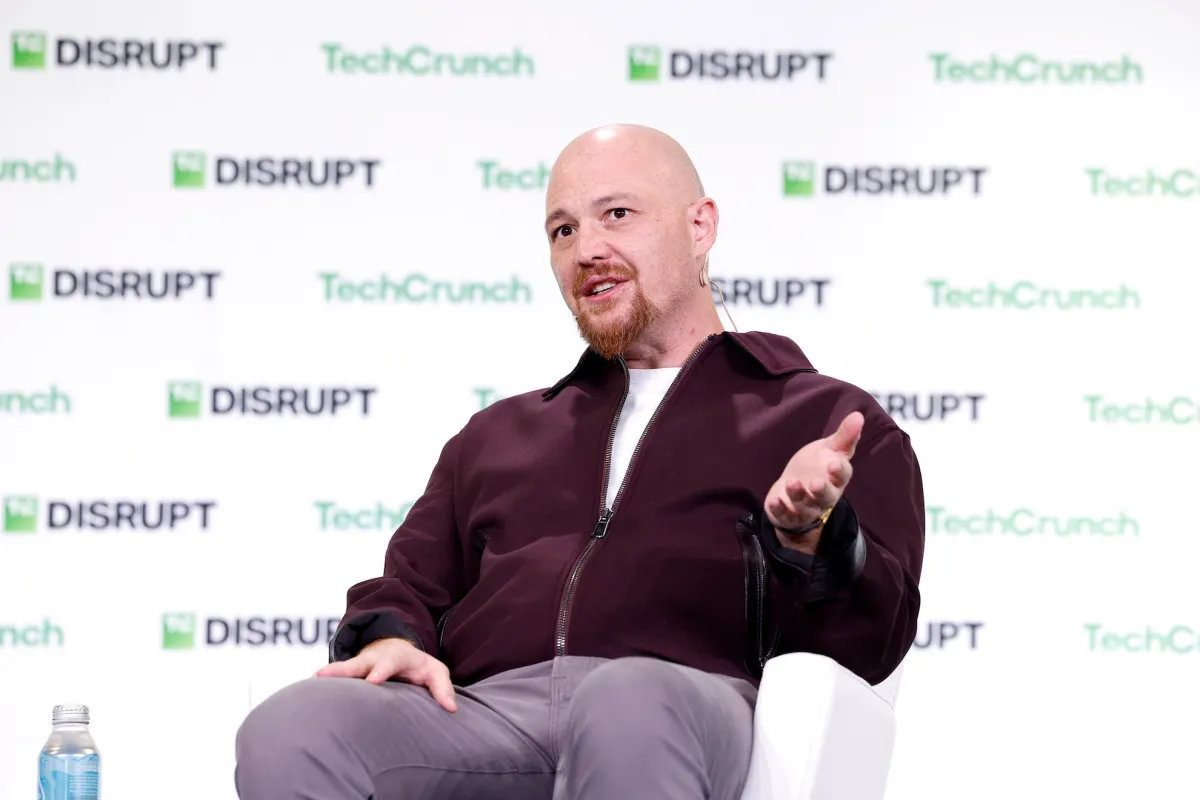
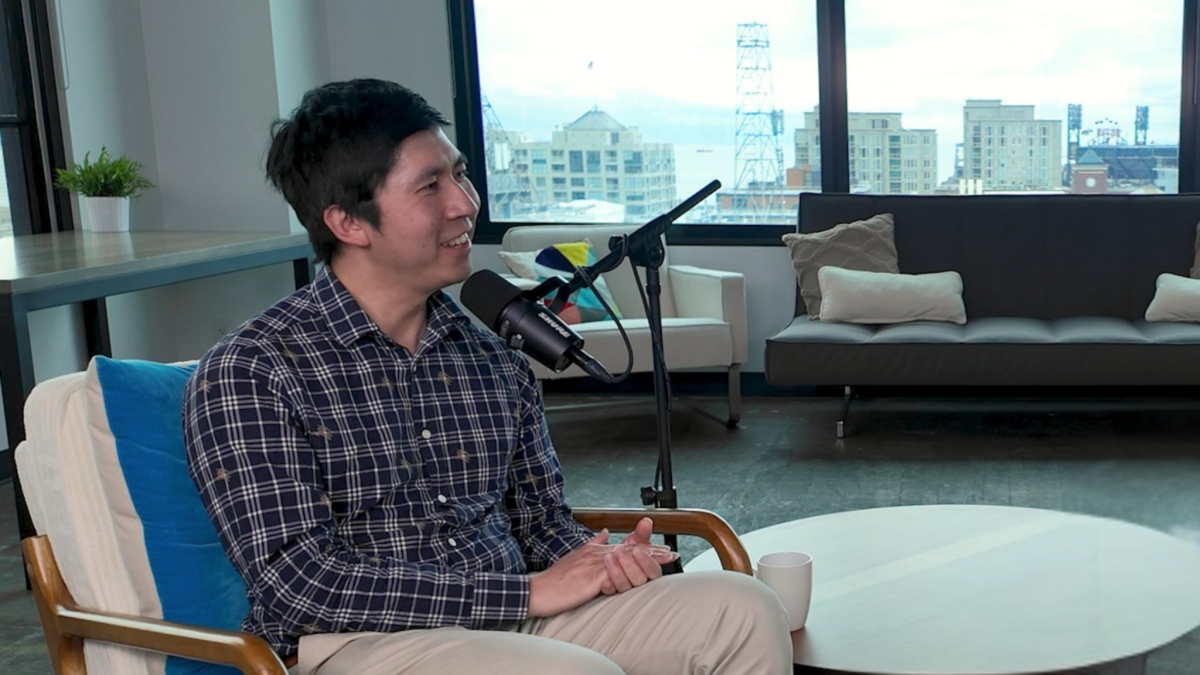
According to CEO Andrew Dai, one of the clearest signs that current systems still lag human vision came during a board game night, when a frontier model could not identify who was winning from a photo of the game board.
Dai, who previously worked as a researcher at Google DeepMind, said games were a revealing example because each one has its own visual language. A chessboard, a tabletop strategy game or a card layout may be obvious to a person familiar with the rules, but can be opaque to a model unless it has learned how to interpret the symbols in context.
He also argued that everyday human tasks such as reading IKEA assembly diagrams show how much visual inference people perform automatically without needing textual explanation.
Why visual reasoning is becoming a bigger AI battleground
Visual reasoning is quickly moving from a niche research topic to a competitive frontier because so many valuable real-world workflows depend on images and video. Manufacturing lines, robotics systems, scientific imaging, medical analysis, creative production and security review all require models that can move beyond surface-level recognition.
That shift helps explain why many large AI companies are racing to improve image, chart and video understanding. OpenAI added crop-and-zoom-style reasoning to its o-series models in 2025, a sign that the industry is converging on similar ideas. Elorian’s bet is that the method becomes more powerful when it is not an add-on, but the foundation of the model itself.
The startup’s pitch is therefore as much about architecture as capability. By building a system around iterative visual inspection from the start, Elorian says it can improve performance while keeping the model relatively efficient to train and run.
What makes the company’s training approach notable?
Elorian says Glimpse was trained by a small team using only a few hundred GPUs, a relatively modest footprint compared with the enormous compute budgets associated with the most heavily financed frontier systems. The company says the model is also substantially smaller than the top-tier models it benchmarks against.
If those claims hold up in broader testing, they would suggest that visual reasoning improvements do not always require the biggest possible training cluster. That would be meaningful for startups and enterprise teams looking to deploy stronger models without paying for the absolute largest systems on the market.
| Key detail | Elorian / Glimpse | Why it matters |
|---|---|---|
| Launch status | Research preview with API access | Developers can test the system now while broader chat access remains limited |
| Core capability | Repeated visual inspection during reasoning | Helps the model revisit images and video frames instead of relying on a one-time scan |
| Training footprint | A few hundred GPUs | Suggests a more efficient path than many frontier-scale builds |
| Pricing | $0.60 per million input tokens; $3 per million output tokens | Places it between premium and lightweight model tiers |
| Target markets | Robotics, science, media and creative work | These sectors depend heavily on image and video understanding |
How much does Glimpse cost?
Glimpse is priced at $0.60 per million input tokens and $3 per million output tokens. That puts it below some of the most expensive midrange models, but above the lowest-cost lightweight options.
In Elorian’s view, that pricing strikes a useful balance for customers who need strong visual reasoning without paying premium frontier-model rates. The company appears to be targeting organizations that process large visual datasets, where better accuracy can justify slightly higher model costs.
Where does Glimpse fit in the market?
It sits in the middle of the pack economically. Elorian says the model is cheaper than systems in the Sonnet and Sol class, but more expensive than smaller models such as Haiku and Luna. That positioning suggests a deliberate attempt to offer more capability than budget tools while staying accessible to enterprise buyers.
For buyers, the calculus will likely be simple: if the model can reliably outperform rivals on visual tasks that matter, the added cost may be worth it. If not, cheaper alternatives will remain attractive for simpler image captioning and extraction work.
What the benchmarks suggest
Elorian says its internal testing shows Glimpse ahead of even GPT-6 Astra on chart-based scientific reasoning and short-form video captioning, while posting competitive results across other visual reasoning benchmarks. Those claims, if confirmed outside company-controlled evaluations, would make the model a serious contender in a crowded field.
Benchmark results are only part of the story, however. The real question is whether the model generalizes to messy, real-world use cases where images are incomplete, motion is ambiguous and the answer depends on subtle visual cues. That is exactly the kind of challenge Elorian says Glimpse is built to address.
For now, the company is asking developers to treat the release as a preview rather than a final verdict. The model is available through an API, while the chat product remains on a waitlist.
Dai said the company’s long-term goal is not just to help models see more clearly, but to move toward systems that use visual understanding to choose actions, including the direct control of robots.
Who is backing Elorian?
Elorian emerged from stealth six months ago with a large seed round led by Striker Venture Partners, Menlo Ventures and Altimeter Capital. The financing also included support from Nvidia and Google chief scientist Jeff Dean, two names that signal both compute credibility and technical ambition.
That funding round stood out not only because of its size, but because it came before the company had launched a product. A $55 million seed at a $300 million valuation suggested that investors were willing to pay for the team’s background, the market opportunity and the possibility of a differentiated technical approach.
The startup’s pedigree also reflects a broader pattern in AI investing: capital is flowing aggressively toward teams with deep research experience and a clear thesis about a hard problem. In Elorian’s case, the problem is visual reasoning.
What is the company aiming to build next?
Elorian says its immediate focus is on organizations that work with large volumes of video and image data. That includes robotics companies, scientific laboratories, media businesses and creative teams that need to inspect, summarize or compare visual material at scale.
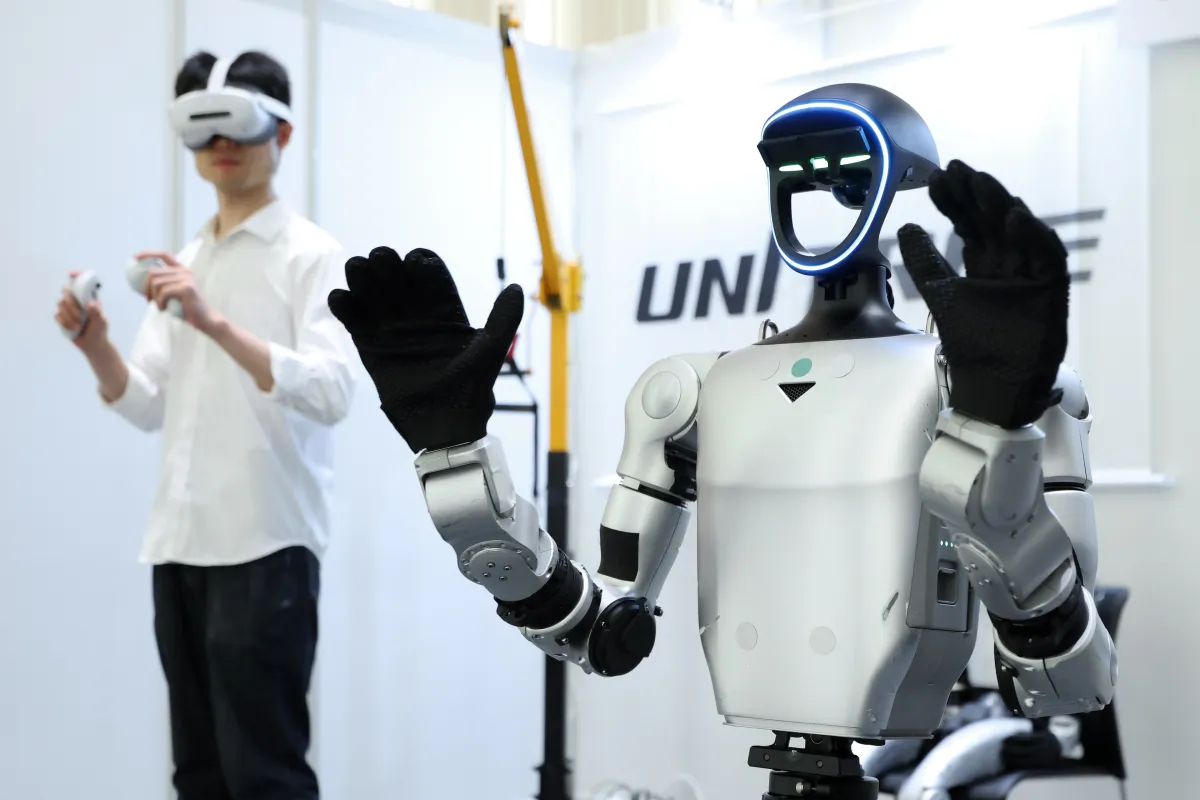
Longer term, the company wants to connect perception to action. In that vision, the model would build an internal representation of a scene and then use it to determine what to do next, whether that means answering a question about a visual input or controlling a robot in the physical world.
That direction is important because it points beyond passive analysis. The more a model can understand a scene with precision, the more likely it is to operate in real environments, where decisions must be grounded in what is actually present rather than what is merely inferred from text.
Why robotics is a natural next step
Robots must interpret objects, distances, motion and context continuously. A system that can repeatedly inspect a scene and verify details is better suited to that job than a model that only generates descriptions.
For example, a robot handling packages, navigating a factory floor or picking up parts from a shelf needs more than object labels. It needs a form of visual reasoning that can track state, spot changes and plan action. Elorian is betting that Glimpse can become a building block for that future.
Timeline: how Elorian reached its first launch
The company’s progress has been quick, with major milestones arriving in rapid succession. Here is a simplified timeline of the startup’s rise so far.
| Date | Milestone | Why it matters |
|---|---|---|
| Earlier in 2026 | Elorian comes out of stealth | Signals the company is ready to compete publicly |
| Earlier in 2026 | Startup raises $55 million at a $300 million valuation | Shows strong investor confidence before product launch |
| Friday, Oct. 16, 2026 | Glimpse released as a research preview | Marks the company’s first model launch |
| Next year, according to Dai | Aim to build the world’s best visual reasoning model | Sets an aggressive roadmap for the company’s next phase |
Why this release matters for the AI race
Glimpse enters a field where many models can already identify objects, describe scenes and generate captions. The harder challenge is truly reasoning about what a visual input means when the answer depends on structure, context and detail.
If Elorian’s approach proves robust, it could influence how future multimodal systems are built. Instead of treating vision as a side feature attached to a language model, companies may increasingly design models around iterative inspection, verification and action selection.
That would have ripple effects across the industry. Enterprises would get better tools for complex image and video workloads, robotics companies would gain stronger perception systems and researchers could push multimodal AI toward more human-like analysis.
Still, Glimpse is at the beginning of its life cycle. The model’s claims will need to survive independent testing, broader developer adoption and the usual realities of production deployment. Even so, Elorian has made its ambition clear: it wants to prove that AI can do more than describe what it sees. It wants it to reason with the image itself.
Key points at a glance
- Elorian launched Glimpse, its first AI model, as a research preview with API access.
- The model is designed to revisit images and video during reasoning, not just summarize them once.
- Elorian says the system can outperform leading rivals on select visual tasks, including chart reasoning and short video captioning.
- The startup is backed by major investors and technical figures, including Nvidia and Jeff Dean.
- Initial customers are expected in robotics, science, media and creative industries.
Frequently asked questions
What is Elorian’s Glimpse model?
Elorian’s Glimpse model is a new AI system designed to reason directly over images and video while answering questions. Instead of scanning a picture once and turning it into text, it repeatedly revisits the visual source to inspect details, compare regions and analyze frames.
How is Glimpse different from other multimodal AI models?
Glimpse differs because it keeps returning to the image or video during reasoning. Elorian says the model can crop into areas of interest, pull frames from video and even run code to compare visual evidence, which is meant to improve accuracy on complex visual tasks.
How much does Glimpse cost to use?
Glimpse is priced at $0.60 per million input tokens and $3 per million output tokens. That places it below some premium midrange models but above lightweight options, making it aimed at customers who need stronger visual reasoning rather than the cheapest possible inference.
Who is Elorian targeting with Glimpse?
Elorian is targeting robotics companies, scientific labs, media organizations and creative teams that handle large volumes of images or video. Those sectors need models that can understand visual content in greater detail and support analysis, captioning and future action-oriented workflows.
Why does Elorian think visual reasoning matters?
Elorian believes visual reasoning is a major weakness in today’s AI systems because many still cannot reliably interpret symbols, charts, boards or moving scenes the way humans do. The company sees better visual reasoning as a path toward more useful AI and eventually robotics control.