In short
An opinion essay argues that the three-martini lunch deserves a comeback because AI-driven productivity culture is making work faster but more isolated. The broader point is that business still needs unhurried, in-person connection.
- AI is speeding up work, but many employees are not getting the promised free time.
- The essay argues that long lunches can build trust and connection in ways digital tools cannot.
- Return-to-office policies alone have not fixed workplace loneliness or culture problems.
- The three-martini lunch is presented as a symbol of unhurried, human-centered business.
Corporate America has spent the artificial intelligence boom promising speed, scale and relentless efficiency. Yet one veteran marketer argues that the workplace may be losing something far more valuable than time: the unhurried, human contact that used to happen over a long lunch.
In a sharply personal essay, Andrea Javor makes the case for reviving the so-called three-martini lunch, not as a nostalgic celebration of excess, but as a practical antidote to modern work culture. Her argument lands at an unusual moment. AI agents are being deployed to automate tasks, email volume keeps climbing, and managers are still expected to do more with less. The result, she writes, is a workplace that is busier, faster and paradoxically lonelier.
Javor’s view is less about cocktails than connection. As she sees it, the ritual of a long midday meal once created space for trust, informal mentoring and relationship-building that now gets squeezed out by remote meetings, productivity dashboards and the constant pressure to prove responsiveness. In an era when AI can draft the follow-up note but cannot replace a raised eyebrow across the table, she argues that business has over-corrected in favor of efficiency and lost a key social technology in the process.
The case for bringing back the long lunch
At the center of Javor’s argument is a simple premise: not every useful business interaction can be reduced to a calendar invite or a chat message. A long lunch, she suggests, makes room for the kinds of conversations that rarely happen in a formal meeting. People reveal context. Tone softens. Trust compounds. Deals may not close immediately, but relationships often deepen in a way that pays dividends later.
That matters more now, she argues, because work has become increasingly mediated by software. Teams chats, video calls and AI-generated messages may move information efficiently, but they strip away some of the texture that builds rapport. She describes a workplace in which there is less spontaneity, fewer impromptu conversations and less of the casual exchange that once helped colleagues understand one another as people rather than as productivity units.
Javor’s nostalgia is also strategic. In her telling, the return-on-investment calculation for old-fashioned face time has changed. What used to look like indulgence may now be a competitive advantage if it helps organizations counter isolation, strengthen culture and reduce the transaction-only mindset that often dominates digital work.
From efficiency to exhaustion
The essay places the decline of the leisurely business meal inside a broader history of American work culture. The three-martini lunch, in Javor’s telling, did not disappear overnight. It was first mocked as a symbol of excess, then politically attacked as a taxpayer-subsidized perk, and eventually eclipsed by a newer ideal: the always-on, always-available worker.
That shift accelerated during the rise of tech-era hustle culture. Javor points to the influence of Silicon Valley’s speed-at-all-costs mentality, the popularity of books and television that glamorized productivity and ambition, and the moralizing language of “hustle” that came to frame constant motion as a virtue. Over time, she suggests, even eating lunch at one’s desk became a badge of seriousness.
By the 2010s, the pressure hardened further. Social media, gig-economy rhetoric and the prestige of hyperproductivity made downtime feel suspect. Checking work email before getting out of bed became ordinary. The workday no longer had natural boundaries, and the midday meal increasingly became a quick refueling stop rather than a social institution.
The essay argues that a long lunch should not be dismissed as frivolous; it can function as a rare forum where people slow down enough to build trust, share context and actually meet one another.
How the three-martini lunch became a cultural symbol
Part of the essay’s appeal comes from the symbol itself. The “three-martini lunch” has long occupied a contradictory place in American culture: a shorthand for mid-century corporate indulgence, but also a marker of a more theatrical and socially fluid business era. Javor traces the phrase’s evolution from a 1950 newspaper column describing New York professional excess to a 1970s political target for critics of elite privilege.
In the 1970s, the phrase became a convenient shorthand for tax policy debates and questions about who benefited from business deductions. Later, as the workplace became more performance-driven and less ceremonial, the image of a lingering lunch seemed outdated, even unserious. But Javor argues that the criticism missed something important: the meal itself was never only about alcohol or leisure. It was also about time, sociability and the shared ritual of doing business in person.
That historical framing helps explain why the idea remains resonant. The lunch stands in for a broader lost practice: the ability to spend unstructured time with colleagues, vendors, clients or managers without demanding immediate measurable output from every minute.
AI promises free time, but where did it go?
The article’s sharpest contemporary twist is its treatment of AI. Executives have sold artificial intelligence as a productivity breakthrough that will remove drudge work and create room for higher-value thinking. But many workers, Javor suggests, have seen little evidence that the promised breathing room has actually arrived.
Instead, the AI boom appears to have intensified expectations. If software can draft emails, summarize meetings and automate workflows, then managers may conclude that humans should produce even more. In that environment, a long lunch can feel like a luxury people can no longer justify, even if the tools designed to save time never translate into shorter workdays.
Javor’s workplace portrait is familiar to many employees navigating generative AI adoption. The technology is often introduced alongside the expectation that teams will do more with the same headcount, or less. That can create a strange contradiction: AI is marketed as a way to free people from routine, but the practical effect is often to increase the pace of work and raise the baseline for what counts as enough.
Human judgment still matters
One of the essay’s most effective arguments is that AI has not solved the parts of work that depend on human judgment, tone and timing. A machine can compose a polished message, but it cannot easily tell when a colleague needs encouragement, when silence might be more persuasive than another follow-up email, or when an offhand comment in a restaurant matters more than a formally crafted memo.
That is why Javor treats the lunch not as an anachronism but as a compensating mechanism. In her view, the more work becomes automated, the more valuable those spaces become where people can read each other, share stories and develop the interpersonal instincts that software cannot generate.
Remote work, return-to-office and the limits of proximity
Javor also uses the essay to question one of the most widely embraced responses to workplace disconnection: return-to-office mandates. The logic behind RTO is often framed as social rather than purely operational. If workers feel isolated, the theory goes, bringing them back together should restore collaboration and culture.
But the essay suggests that physical proximity by itself is not enough. Being in the same building does not automatically recreate the kind of connection that long lunches, informal conversations and relationship-driven work once provided. In some cases, she argues, office attendance has become a compliance exercise rather than a cultural remedy.
That point is increasingly echoed in workplace research and employee sentiment surveys, which have found that many workers see RTO policies as monitoring tools rather than genuine attempts to improve collaboration. The message is clear: if organizations want more meaningful connection, they may need to offer more than a desk and a badge swipe.
| Workplace era | Dominant norm | Typical interaction style | What gets lost |
|---|---|---|---|
| Mid-century corporate culture | Long lunches, client dining, face-to-face networking | Informal, relationship-first conversations | Speed, rigidity, constant metrics |
| Early internet and tech boom | Move fast, optimize output, compress schedules | Quick meetings, lean staffing, desk eating | Unstructured relationship-building time |
| AI era | Automated drafting, always-on productivity expectations | Teams chats, video calls, generated emails | Informal trust, nuance, human texture |
The loneliness problem hiding inside productivity culture
Javor’s essay also speaks to a broader cultural concern: the erosion of social connection at work. The workplace has always been a source of income, but for many adults it also functioned as a space where friendships, mentorship and daily rituals were built. When those interactions are compressed into scheduled calls and automated updates, the relational side of work can disappear.
That loss matters beyond morale. Loneliness has become a widely discussed social problem, and work is one of the few institutions where many adults still spend substantial time with other people. If work becomes a purely transactional interface, employees may gain efficiency but lose a meaningful part of their social lives.
Javor underscores that by recalling the subtle, mundane exchanges that once gave office life its social glue: a comment about someone’s weekend, a joke about a business trip, a quick aside that resets a tense meeting. These are not dramatic moments, but they are the connective tissue of organizational life.
Why small talk is not small
The essay makes a broader cultural defense of the ordinary. In a high-output environment, small talk is often treated as dead time. Yet these little conversations help people calibrate one another, build comfort and establish a baseline of trust. They are also among the first things to vanish when work becomes heavily digitized.
That is one reason Javor views the three-martini lunch as more than a joke from an older era. It represents a setting in which small talk had room to mature into bigger talk. The meal was not wasted time if it created the conditions for later cooperation.
What changed in the workplace economy
The essay’s historical arc also tracks broader economic changes. The shift from long, relationship-heavy lunches to fast, instrumented workdays reflects not just changing taste but changing incentives. As corporate life became more measured by visible outputs, employees learned to optimize for what could be tracked, reported and defended.
That logic expanded with digital communication tools. Email made work feel more immediate. Slack and similar platforms made responsiveness a marker of diligence. Video calls removed geographic barriers but also multiplied the number of meetings that could fill a day. The cumulative result has been an environment where workers are always reachable and rarely unstructured.
AI now enters that system as an accelerant. It can reduce friction in drafting, scheduling and summarizing, but it may also intensify the expectation that every task should be faster than before. Without intentional limits, the time saved by automation can simply be absorbed by more work.
From output to performative availability
One of the most revealing threads in the essay is the idea that work has become less about presence and more about performative availability. Workers are expected to respond quickly, appear engaged and demonstrate productivity through visible signals. That makes long lunches seem suspicious, even if the actual work would benefit from them.
In that sense, the revival Javor imagines is not really about cocktails. It is about reclaiming permission to think, converse and linger without treating every spare minute as an opportunity for optimization.
A satirical pitch with a serious point
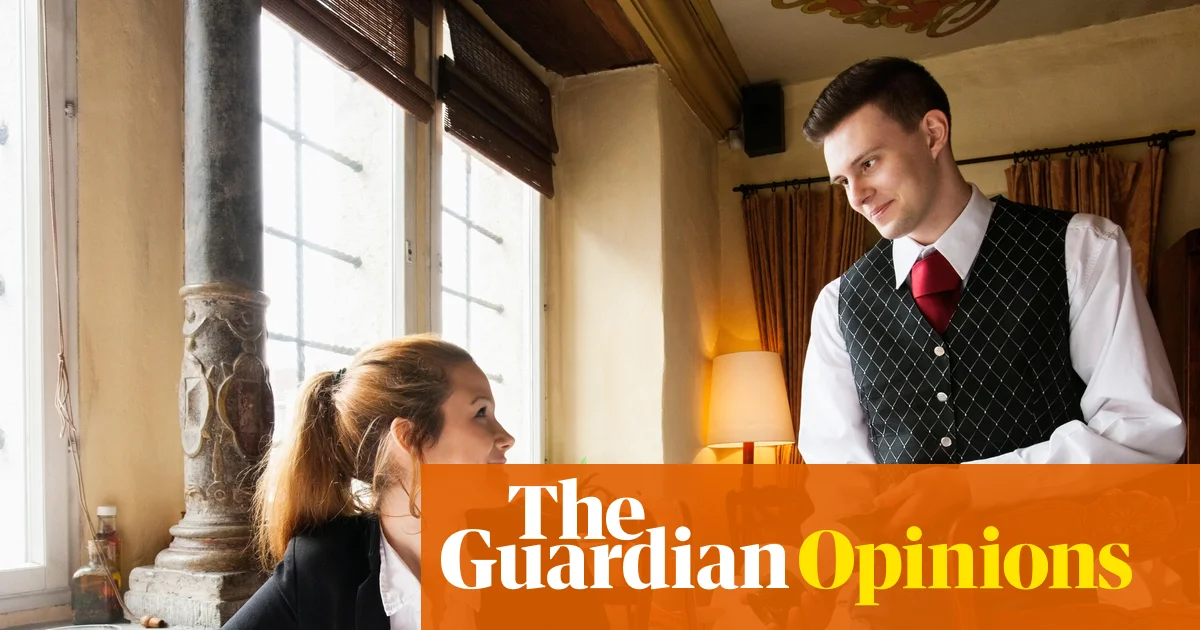
Javor’s piece works because it uses humor to make a serious argument. The imagery is knowingly glossy: a polished dining room, oysters, Sancerre, the aura of old-school executive charm. But underneath the style is a practical critique of how modern organizations have narrowed the definition of effective work.
She is not arguing that every employee needs to go back to a mid-century power lunch model or that alcohol should become central to office life again. Rather, she is asking why business culture has become so suspicious of any setting that feels leisurely, social or unoptimized. Her answer is that somewhere along the way, the workplace lost sight of how people actually build trust.
According to the essay, the goal is not indulgence for its own sake, but an environment where colleagues can be fully present long enough for genuine connection to happen.
What a modern version might look like
If a literal three-martini lunch is not realistic, Javor’s argument still leaves room for a contemporary adaptation. A modern version might be less about alcohol and more about time: longer client meals, team lunches without laptops, off-calendar conversations, and a workplace culture that does not treat every midday break as a lapse in discipline.
That could also mean rethinking how organizations measure engagement. Instead of assuming that more meetings, more messages and more office time equal better culture, leaders might ask whether their teams actually know one another well enough to collaborate with ease.
- Longer meals can support relationship-building that short meetings cannot.
- Unscripted conversations often produce more trust than formal check-ins.
- AI may increase speed, but it does not replace social nuance.
- Returning to an office is not the same as rebuilding community.
- Connection at work has value even when it is not immediately measurable.
The bottom line for the AI era
The larger lesson in Javor’s essay is that AI may be changing how work gets done, but it has not changed what makes work humane. Faster drafting and better automation can improve efficiency, yet they do not solve the deeper need for shared context, mutual understanding and time spent together without a stopwatch.
That is why the old lunch ritual has returned as a surprisingly useful symbol. It captures what the AI era risks erasing: the pause between tasks, the ambiguity that leads to trust, the social space in which business becomes more than exchange. In a world obsessed with output, Javor argues that the real competitive edge may be the ability to sit still long enough to connect.
Or, as her essay puts it in spirit, some forms of work cannot be compressed into a prompt. They require presence, patience and the willingness to linger over the meal.