In short
Apple has finally rolled out a much smarter Siri in the iOS 27 beta, adding personal context, better voice conversations and app control. The upgrade is significant, but it lands after the AI industry has already moved into a more advanced phase.
- Siri AI is now in the consumer beta of iOS 27 after repeated delays.
- The assistant can use personal context, answer more naturally and handle more tasks.
- Apple relied in part on Google Gemini models to train its Apple Foundation Models.
- The upgrade is useful, but the AI market has already moved beyond basic assistants.
- The full public rollout is expected with iOS 27 in September.
Apple has finally delivered the Siri upgrade it promised after repeated delays, with the assistant now rolling out in the consumer beta of iOS 27. The new version can use personal context, tap broader world knowledge and surface information stored on an iPhone, but its long-awaited arrival lands in a market where AI assistants are no longer novel.
That shift is why the moment feels bigger in technical terms than it does culturally. Apple has repaired a product that many users considered broken for years, yet the broader AI industry has already moved into more advanced territory, from coding agents to systems that can reason through multi-step tasks and operate across apps and devices.
For Apple, the release is still an important milestone. Siri is now noticeably more capable, more conversational and far more useful than the assistant many iPhone owners have lived with for years. But the launch also underscores how much ground Apple ceded while competitors raced ahead.
What Apple actually changed in Siri
The updated Siri is no longer just a command-and-response voice tool. It can hold more natural conversations, remember context from previous exchanges and help users find information stored across their device without requiring them to remember where it was saved.
Apple has also added a dedicated app for Siri, along with a typing option for people who prefer text input. Voice responses can be adjusted for pacing and expressiveness, giving the assistant a more flexible feel than the old, rigid version.
The changes go beyond polish. Siri can now look across photos, emails, contacts, texts and calendar entries to help people recover details that might otherwise be buried. In practical terms, that means users can ask for something as vague as a receipt saved months ago or a document captured in a photo, and Siri can still attempt to locate it.
How does the new Siri help with personal context?
It uses on-device and cloud-based intelligence to connect the dots across a user’s Apple ecosystem. If someone asks for a license number saved in a photo, a QR code screenshot, or a past event in their calendar, Siri can search for that information and bring it back without forcing the user to manually dig through apps.
That is the central promise Apple had been making for years: an assistant that understands the user, not just the words. In the new version, that promise appears to be finally working as intended.
Why the launch feels late despite the upgrade
Apple’s Siri update is arriving into a very different AI landscape than the one that existed when the company first began talking about a smarter assistant. The consumer conversation has since shifted toward AI products that can write code, summarize research, generate media, plan tasks and act as semi-autonomous agents.
In other words, a functional chatbot is no longer enough to stun consumers or investors. The market has moved from “Can it answer?” to “Can it do?” and then quickly to “Can it reason, remember and execute across tools?”
That helps explain the unusual reaction to Apple’s progress. The company appears to have fixed a longstanding weakness, but not unveiled a category-defining breakthrough. The result is a useful Siri that feels less like a revolution and more like a delayed correction.
Apple has delivered what it once promised and, in some respects, more than that — but the surprise has been blunted by how quickly the rest of the AI industry advanced while Siri lagged behind.
How the new Siri works in daily use
Apple says the assistant can now handle a wider range of everyday tasks through conversation, voice, text and visual context. That includes finding local information, launching apps, controlling media playback and helping with routine digital chores.
The upgrades are designed to make Siri feel less like a shortcut system and more like an actual helper inside the iPhone experience. Users can ask it to get directions, play music, draft a message, edit a photo or open an app without needing to navigate menus by hand.
What kinds of questions can Siri answer now?
It can answer practical questions that used to send users to search engines or force them to hop between apps. Apple says it can provide information such as event times, band schedules, location-based details and suggestions based on ingredients or other context a user provides.
It also supports brainstorming and discovery. Users can ask Siri to help refine an idea, explain a new topic or generate meal ideas from what they already have at home. In the Camera’s viewfinder, Siri can identify real-world objects or help with tasks such as splitting a restaurant bill.
What changed behind the scenes?
Apple did not build the new Siri entirely on its own. The assistant’s improvements were made possible in part by Apple’s cooperation with Google, which supplied Gemini models that Apple used to train and refine its own Apple Foundation Models.
That distinction matters. Apple is not simply licensing Gemini and branding it as its own. Instead, it is using Google’s technology as a foundation while shaping models intended to run on Apple Silicon and within Apple’s Private Cloud Compute framework.
The goal is to preserve Apple’s familiar emphasis on privacy, device integration and hardware efficiency while still taking advantage of outside AI expertise. In practice, that means the assistant is built to perform well within Apple’s ecosystem rather than depend entirely on a third-party service.
| Milestone | What happened | Why it matters |
|---|---|---|
| Repeated delays | Apple postponed the Siri AI overhaul several times | Raised doubts about whether Siri would ever catch up |
| July 2026 | Siri AI appeared in the consumer beta of iOS 27 | First public sign the upgrade was real |
| Current beta | Users can hold conversations, search personal context and use typing | Marks the biggest Siri improvement in years |
| Expected September 2026 release | iOS 27 is slated for broader public rollout | Mainstream iPhone users will get access |
Why Apple’s achievement still feels underwhelming
The simplest explanation is timing. If Apple had unveiled this version of Siri before the wider AI boom matured, it might have been treated as one of the most significant product upgrades in consumer tech. Instead, it is arriving after the industry has spent years normalizing far more ambitious AI features.
There is also an emotional element. Siri became a symbol of Apple’s missed opportunity. For years, users joked about its limitations, inconsistent answers and poor follow-through on routine requests. So when Apple finally produces an assistant that works reliably, the achievement reads less like a leap forward and more like overdue maintenance.
That does not make the upgrade trivial. It simply means the comparison set has changed. The bar for AI usefulness is now much higher, and Apple’s gain is real but no longer singular.
Is Siri now competitive with other AI assistants?
In everyday Apple-centric use, it looks far more competitive than before. The assistant can understand vague prompts, retrieve personal information and complete simple actions with much more consistency. But the broader AI market now includes tools that are more flexible, more autonomous and more deeply integrated into work software.
Apple has closed a gap, not necessarily created a lead.
What this means for iPhone users
For most iPhone owners, the practical result is straightforward: Siri may finally become useful enough to matter. That has been the missing ingredient for years. A voice assistant only becomes indispensable when it can save time, reduce friction and produce correct answers more often than not.
Apple’s version of Siri now looks much closer to that standard. It can help users rediscover personal information, handle basic requests more accurately and support a conversational workflow that feels closer to modern AI products.
The real test will come after the public release of iOS 27, expected in September, when millions of users who have not been running beta software get access to the new assistant.
How Apple’s AI strategy is evolving
The Siri overhaul suggests Apple is taking a hybrid approach: use outside model expertise where necessary, but keep the customer-facing experience tightly inside Apple’s own hardware and software stack. That strategy aligns with the company’s broader business model, which depends on integrating services and devices in ways competitors cannot easily copy.
It also shows Apple is willing to be pragmatic. Rather than insist on building every component from scratch, it is leaning on a partner to accelerate model training while still emphasizing Apple-controlled infrastructure, including its proprietary silicon and private cloud systems.
The advantage is obvious. Apple can catch up faster without abandoning its privacy narrative or ecosystem control. The risk is that users will compare its assistant not against the Siri of old, but against the newest and most capable AI systems on the market.
Timeline: Siri’s road to the iOS 27 beta
The path to this release has been shaped by delays, expectations and a rapidly changing AI landscape.
| Date | Event | Impact |
|---|---|---|
| Previous years | Apple repeatedly delayed the Siri AI revamp | Created frustration and skepticism |
| July 2026 | Consumer beta of iOS 27 launched | First public access to Siri AI |
| Summer 2026 | Beta users began testing voice, text and context features | Showed the assistant’s practical improvements |
| September 2026 expected | iOS 27 full release | Broader public rollout to iPhone users |
Key features at a glance
- Natural back-and-forth conversations
- Typing support alongside voice input
- Dedicated Siri app with conversation history
- Personal context search across photos, messages, mail and calendar
- Improved app launching, media playback and device actions
- Better answers for local and location-based queries
- Brainstorming and practical suggestion tools
- Visual assistance through the Camera viewfinder
The bigger picture
Apple’s new Siri is important not because it redefines AI, but because it finally brings the company’s longest-running assistant into the modern era. That may sound modest, but for millions of users, it could transform a feature that has been mocked into one that is genuinely useful.
Still, the timing ensures the launch will be judged against a much broader story: the speed of the AI industry, the rise of agentic software and the expectation that digital assistants should do more than simply respond. Apple has repaired Siri’s reputation to some degree, but it has done so at a moment when the definition of “good enough” has already moved on.
That tension is what makes the rollout feel anticlimactic. Apple did what it said it would do. The problem is that the world changed while it was getting there.
When iOS 27 reaches the general public in September, the real verdict will begin. For now, Siri has finally become the assistant many users wanted all along — just not in the era when that would have sounded revolutionary.
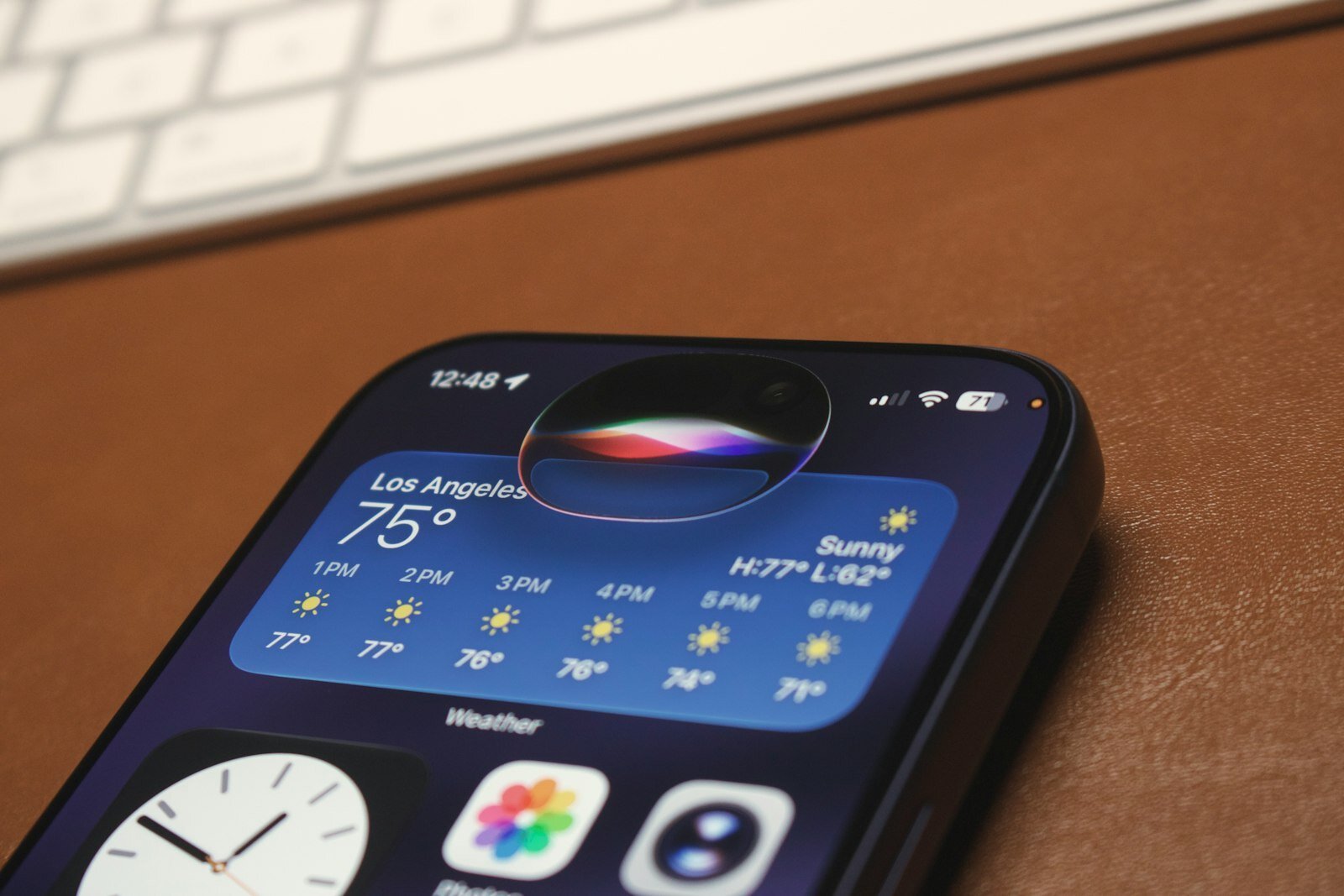
Featured image suggestion: An iPhone on a desk showing the updated Siri interface, symbolizing Apple’s long-awaited AI assistant upgrade.
Frequently asked questions
When will Apple’s new Siri AI be available to everyone?
Apple’s new Siri AI is expected to reach the general public when iOS 27 launches in September 2026. Right now, the assistant is available in the consumer beta build that rolled out in July, so only testers can try the full experience for now.
What can the new Siri AI do?
The new Siri AI can hold more natural conversations, search across personal content on an iPhone, answer questions with broader world knowledge and help with everyday actions such as sending messages, playing media, opening apps and finding saved information.
Did Apple build Siri AI entirely on its own?
No, Apple did not build it entirely alone. The company used Google Gemini models to help train and refine Apple Foundation Models, which are then designed to run on Apple Silicon and Apple’s Private Cloud Compute infrastructure.
Why does Siri AI feel anticlimactic if it is a big improvement?
It feels anticlimactic because the assistant is arriving after the AI industry has already advanced into coding agents, reasoning systems and multi-step task tools. Apple fixed an old problem, but it did not surprise the market with a brand-new category of AI.