In short
Google’s DeepMind reorganization, including Jeff Dean’s departure and Demis Hassabis shifting roles, has fueled debate over whether the company is still trying to win the AI frontier. The move highlights tensions between research ambition, product execution, and Google’s enormous but sometimes slow-moving advantages.
- Google has reshuffled DeepMind leadership as scrutiny over its AI strategy intensifies.
- Jeff Dean has left to start a new company, while Demis Hassabis is focusing more on long-term research.
- Analysts say Google still has major advantages through Search, Cloud, and distribution.
- The debate is no longer just about model quality, but whether Google wants frontier leadership or product monetization.
- Talent retention and company culture may determine how much ground Google can regain.
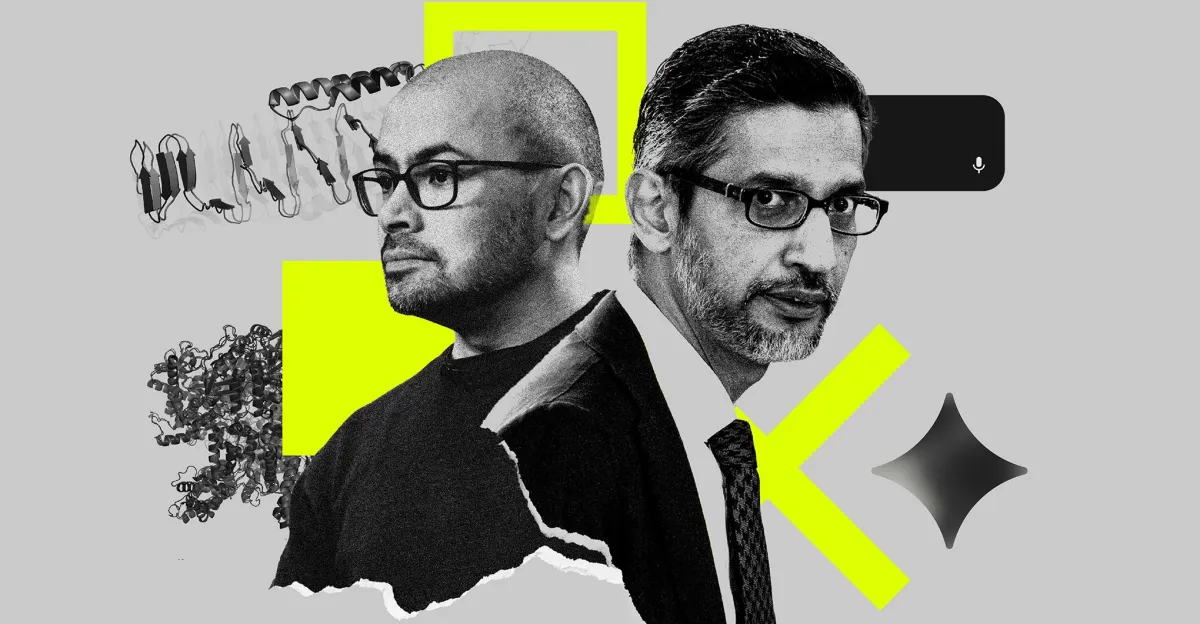
Google’s latest overhaul of Google DeepMind has intensified doubts about whether the company still intends to fight for the AI frontier, after Jeff Dean departed to launch a new startup and Demis Hassabis shifted away from day-to-day leadership to focus on longer-horizon research. The changes matter because they come at a moment when Google has enormous AI distribution power, but remains under pressure to prove it can still lead the market rather than merely catch up.
The reshuffle has become more than an internal management story. It now looks like a referendum on Google’s AI strategy, the company’s culture, and whether it wants to build the best models in the world or simply turn its existing advantage in Search and Cloud into a profitable AI business.
What changed at Google DeepMind?
Google has reworked the leadership structure around its flagship AI division, placing more emphasis on product execution while moving some of the company’s most prominent research leaders into new roles or new ventures. Jeff Dean, long one of Google’s most influential technical figures and the founder of Google Brain, has left to create a startup that will operate on Google Cloud. Demis Hassabis, who helped build DeepMind into one of the world’s most famous AI labs, is stepping back from direct operational control to concentrate on longer-term scientific work.
The immediate effect is that Google DeepMind no longer looks like the same kind of standalone, personality-driven frontier lab it once did. The broader effect is uncertainty: if the company’s best-known AI leaders are changing roles or leaving, what does that say about Google’s confidence in its own race plan?
How should the new structure be read?
It should be read as both a tactical reset and a warning sign. On one hand, Google is trying to speed up how its research becomes real products. On the other, the reorganization reflects the fact that the company has not dominated the frontier model race in the way many people expected it would.
Google’s public message is that it remains committed to AI leadership. But the move also acknowledges a familiar truth about the company: it often has world-class technology, yet struggles to convert that advantage into a simple, fast-moving product story.
Why is this shakeup getting so much attention?
Because Google should, on paper, be one of the strongest AI companies in the world. It has massive distribution through Search, Gmail, Android, YouTube, Chrome, and Cloud. It has enormous cash flow, deep engineering talent, and access to data and infrastructure that few rivals can match. In theory, that combination ought to make Google the obvious leader in consumer AI.
Instead, the company has faced growing skepticism as rivals, especially OpenAI and Anthropic, have become the names most associated with cutting-edge model development and practical AI momentum. That mismatch between Google’s scale and its current positioning is what makes the latest shakeup feel so consequential.
In Silicon Valley, org charts are rarely just org charts. They are read as signals about power, urgency, and strategy. That is especially true at Google, where leadership changes often reveal whether the company is trying to reassert control, catch up, or reframe the race entirely.
The core concern is not simply that Google is changing leaders; it is that the changes suggest a company still searching for the right balance between research ambition and commercial execution.
Google still has enormous advantages
Despite the criticism, Google should not be written off. The company has one of the strongest fallback positions in technology: Search. That product reaches billions of people and remains one of the most valuable distribution channels on the planet. If Google can embed AI deeply into Search and its other consumer products, it can reach users at a scale rivals cannot easily match.
Google also has a massive cloud business that can monetize AI infrastructure even when the company’s own models are not clearly in the lead. In that sense, Google can afford mistakes in a way smaller AI firms cannot. It has a cushion that makes short-term underperformance less dangerous than it would be for almost any competitor.
That cushion, however, is also part of the problem. If a company can survive while trailing the frontier, it may be less forced to take the same risks as a startup fighting for survival. That tension sits at the center of the Google DeepMind story.
What is Google’s AI safety net?
Google’s safety net is its existing ecosystem of products and customers. Search gives it direct consumer reach, Cloud gives it enterprise distribution, and its advertising engine gives it the resources to absorb costly research bets. Even if a model launch is disappointing, Google still has other businesses to support the overall strategy.
That is why some analysts argue Google is not in existential danger. But the same structure can also make the company slower, more cautious, and more bureaucratic than the pure-play AI companies now challenging it.
Is Google trying to win the frontier race or just commercialize what it has?
That is the central question. Google says it wants both, but some observers think the company is acting like a business that is increasingly comfortable monetizing AI inside its existing products rather than trying to dominate the bleeding edge at all costs.
From that perspective, the leadership shakeup makes strategic sense. If the priority is getting models into products more quickly, then Google may benefit from elevating the people best suited for operational execution and moving research-oriented leaders toward longer-term work.
But there is another interpretation: Google may be drifting away from the frontier because its most urgent battles are now commercial rather than scientific. If that is true, the company may still produce excellent models, but it could become more of a fast follower than a first mover.
How does Gemini fit into the debate?
Gemini is at the heart of the uncertainty because it represents Google’s attempt to build a flagship model family that can compete with the best systems from OpenAI, Anthropic, and others. Yet recent scrutiny has focused on whether Google is truly betting everything on the next version of Gemini, or whether it is already adjusting expectations around how much leadership the model line can deliver.
Some critics have argued that Google’s current behavior does not look like the behavior of a company expecting a major breakthrough. The timing of the reorganization, they say, looks more like defensive maneuvering than an expression of confidence.
That does not mean Google cannot regain momentum. But it does suggest that the company’s path back to the top may be less dramatic than many in the industry expected during the early days of the generative AI boom.
| Event | What happened | Why it matters |
|---|---|---|
| Google AI reorganization | DeepMind leadership was reshaped and more focus was placed on productization | Signals a strategic reset during a competitive AI cycle |
| Jeff Dean departure | Dean left Google to found a new startup on Google Cloud | Removes one of Google’s most respected technical leaders |
| Demis Hassabis role change | Hassabis stepped back from operational leadership to focus on research | Raises questions about how Google balances research and product goals |
| Industry reaction | Analysts and reporters questioned Google’s commitment to frontier leadership | Shows how leadership changes are being interpreted as strategic signals |
Why do analysts keep talking about Google’s culture?
Because culture may be the real issue. A growing number of AI observers argue that Google’s biggest obstacle is not a lack of talent or money, but a structure that can be slow, layered, and risk-averse. That critique has followed the company for years, and the DeepMind shakeup brought it back into focus.
In the view of some industry researchers, Google’s problems are less about any single executive and more about a system that makes decisive action difficult. Even when the company identifies the right direction, it can take too long to move.
That can be especially damaging in AI, where model releases, infrastructure decisions, and product launches happen at extraordinary speed. A company that moves too slowly can suddenly find itself chasing trends that were once within reach.
One recurring argument from critics is that Google’s challenge is not talent scarcity, but organizational friction that keeps slowing the company down.
Why do people keep leaving for Anthropic?
Because Anthropic has become a magnet for researchers and engineers who want a clearer mission and a more values-driven environment. It is not without controversy, but it has built a reputation as a place where people can work on frontier models while also believing the organization has a distinct ethical stance.
That matters in AI, where many workers are no longer choosing employers purely on salary. They want alignment on safety, deployment, and long-term goals. Google has sometimes struggled to convince that kind of talent that it offers the clearest path to meaningful work.
In a tight labor market for top AI talent, even small differences in mission can shape where people go next.
What does Jeff Dean’s exit mean for Google?
Jeff Dean’s departure is symbolically important because he has long been one of the most recognizable technical leaders at Google. He was not just an engineer; he was a signal of continuity, technical seriousness, and institutional memory.
His exit could have a ripple effect beyond the org chart. Senior technical leaders often attract teams, shape culture, and keep ambitious researchers anchored inside a company. When someone of Dean’s stature leaves, people around them may begin to reassess their own future.
That is one reason the move has triggered talk of a possible wider exodus. In large AI organizations, morale can shift quickly when employees sense the company’s center of gravity is moving.
How might the departure affect retention?
It could make retention harder, especially for employees who joined Google to work closely with Dean or Hassabis. If those figures are no longer driving daily technical direction, some staff may start exploring opportunities elsewhere.
That does not guarantee a mass departure. But in AI, where talent is scarce and reputation spreads quickly, leadership stability matters more than many executives like to admit.
How does this compare with other AI labs?
Google’s current position looks different from the one occupied by OpenAI, Anthropic, and Meta. OpenAI remains the company most associated with the public imagination around AI products. Anthropic has earned a reputation for strong enterprise adoption, especially in coding. Meta has the scale to stay relevant even when it is not first to market.
Google, meanwhile, is in a strange middle position. It has the resources of a giant platform company, but the market often evaluates it as if it were a pure AI lab. That creates pressure to perform like a startup while operating like a multibillion-dollar conglomerate.
That tension is not unique to Google, but it is especially visible there because the company’s identity is split between research excellence and product conservatism.
Who is winning right now?
At the moment, the race looks less like a single winner and more like a set of different leaders across different segments. OpenAI dominates mindshare, Anthropic appears strong in enterprise and coding workflows, and Google remains powerful in distribution and infrastructure.
The question is not whether Google can still matter. It clearly can. The question is whether it can still set the pace.
What does this mean for AI leadership inside Google?
It means the company may be entering a period of more overt product pressure. If the new structure is designed to accelerate launches, shorten decision-making chains, and make Google’s AI work feel more integrated with its core businesses, then the leadership change is a practical one.
But practicality has a cost. Research labs thrive when they have room to explore. Product teams thrive when they can ship quickly. Google is trying to do both, and the challenge is that the two goals often pull in opposite directions.
If the company leans too far toward products, it risks becoming a follower in the most important part of the AI race. If it leans too far toward research, it may continue producing impressive technology that does not translate into clear commercial wins.
Why this matters beyond Google
Google’s reorganization is important because it reflects a larger shift in the AI industry: the balance of power is moving from model prestige toward practical deployment. Winning the frontier still matters, but so does converting that work into useful products, enterprise revenue, and durable customer relationships.
That shift helps explain why companies like Anthropic are being closely watched, why cloud providers are becoming more central to AI economics, and why internal restructuring at Google can move markets and shape talent flows across the sector.
In other words, this is not just an org-chart story. It is a story about where AI value is migrating and which companies are best positioned to capture it.
Timeline: how the Google AI story got here
| Period | Development | Industry readout |
|---|---|---|
| 2010s | Google built world-leading AI research teams, including Brain and DeepMind | Set the foundation for broad AI dominance |
| Early generative AI era | Google was seen as highly capable but slower to respond publicly to ChatGPT’s impact | Raised questions about execution and urgency |
| Recent months | Google consolidated AI leadership and pushed for an AI-first company structure | Signaled a major internal reset |
| Last week | Jeff Dean left, Demis Hassabis shifted roles, and DeepMind was reorganized | Triggered debate about whether Google is narrowing its frontier ambitions |
What happens next?
The next phase will likely be defined by three questions. First, can Google keep the talent it still has? Second, can it turn Gemini and related systems into products people actually use every day? Third, can it reassure the market that its AI strategy is deliberate rather than reactive?
If Google can answer yes to all three, this story may look in hindsight like a necessary recalibration. If not, the reorganization could become one more example of a company with extraordinary assets struggling to turn potential into sustained leadership.
For now, the most honest assessment is that Google remains one of AI’s most powerful players, but it is no longer being viewed as the automatic favorite. That alone is a major change.
And in an industry where momentum matters almost as much as capability, perception can quickly become reality.
Conclusion
Google DeepMind’s shakeup has become a test of faith in Google itself. The company still has the scale, data, talent, and distribution to matter at the highest level. What it does not yet have is a settled answer to the question of whether it wants to win the AI race in the traditional sense, or simply turn AI into another layer of its existing empire.
That question will shape how Google organizes its teams, how it retains its best people, and how aggressively it competes against the labs now setting the pace. The leadership changes do not end the story. They make it more urgent.
Frequently asked questions
Why is Google DeepMind’s leadership shakeup important?
It is important because it signals a strategic reset at one of the world’s most prominent AI organizations. The departures and role changes have raised questions about whether Google is trying to speed up product delivery, or whether it is quietly accepting a less aggressive role in the frontier race.
Is Google still a major player in AI?
Yes, Google is still a major player in AI because it controls powerful distribution channels like Search, Android, YouTube, and Cloud. Even if it is not seen as the current frontier leader, it has enough scale, data, and infrastructure to remain deeply influential.
What does Jeff Dean’s departure mean for Google?
Jeff Dean’s departure is significant because he was one of Google’s most respected technical leaders and a key figure in its AI culture. His exit could affect morale, retention, and the sense of continuity inside the company’s AI teams.
Why are people comparing Google to Anthropic and OpenAI?
People are comparing them because Anthropic and OpenAI currently shape much of the conversation around frontier models and practical AI products. Google is being measured against them to see whether it can still set the pace rather than simply respond to market leaders.
Could Google regain AI leadership?
Yes, Google could regain leadership if it turns its research strengths and massive distribution into faster product wins. But analysts warn that if the company keeps moving cautiously, it may remain a strong follower rather than a recurring front-runner.