In short
Google has reshuffled key AI leadership roles, prompting questions about strategy, execution, and whether the company is organized to win the model wars. The changes come as OpenAI and Anthropic continue to set the pace in public perception and product momentum.
- Google has moved major AI leaders into new roles, including a change involving Jeff Dean.
- The shakeup has fueled debate over whether Google is optimizing for assistants or larger AI ambitions.
- OpenAI and Anthropic continue to shape the competitive pressure on Google’s model strategy.
- Google’s challenge is not just building strong models, but turning them into visible product wins.
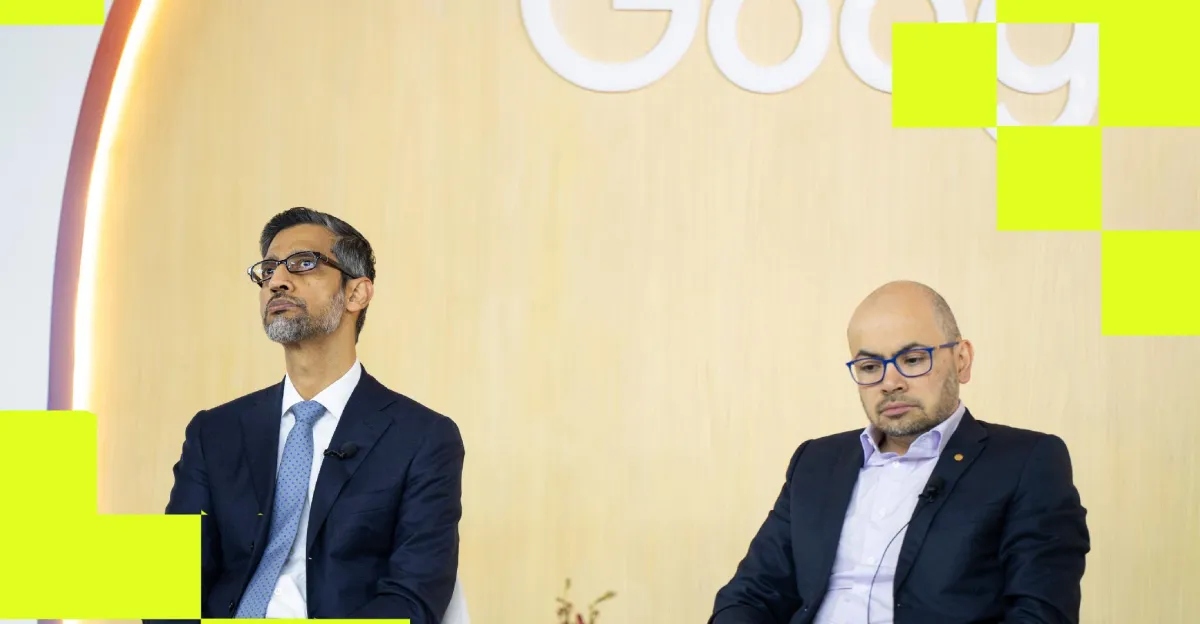
Google has reorganized key parts of its AI leadership, moving some of its most prominent figures into new roles and, in at least one case, out of the company altogether. The changes matter because they come as Google is still trying to prove it can turn its research advantage into a clear win against OpenAI and Anthropic in the fast-moving model race.
The shakeup does not appear to be a routine staffing update. It reflects a broader question now hanging over Google: whether the company’s AI future will be led by product teams focused on assistants and consumer features, or by a more ambitious research agenda aimed at building the next generation of frontier models.
That tension was the focus of a recent Vergecast discussion, which framed the latest leadership changes as a signal that Google’s AI strategy is being reshaped from the top down. Beneath the personnel moves is a larger debate about execution, ambition, and whether Google is organized to make the most of one of the strongest AI research benches in the industry.
What changed in Google’s AI leadership?
Google moved several major AI figures into different positions this week, including long-time executive Jeff Dean, whose role has shifted in a way that leaves his future at the company unclear. The changes also affect how Google’s AI work is being directed internally, with some responsibilities apparently moving away from the teams that have historically defined the company’s consumer-facing AI efforts.
While the company has not publicly framed the changes as a strategic retreat, the timing has prompted speculation that Google is reassessing where its AI talent should be deployed. That has become especially noticeable because Google’s models are widely viewed as technically competitive, even as rivals have gained more public momentum.
Why Jeff Dean’s move got attention
Jeff Dean is one of the most recognizable names in Google’s technical history, so any change involving him carries symbolic weight. His role has long represented the company’s deep engineering culture, and shifts around a figure of that stature are often read as a sign that bigger organizational changes are underway.
In this case, the uncertainty around Dean’s new position adds to the sense that Google is not just shuffling titles. It is making choices about which people will lead the next phase of its AI push and which problems those people should be trying to solve.
Why does the Google AI shakeup matter now?
It matters because Google is under pressure to convert technical strength into visible leadership. The company helped create much of the modern AI foundation, but the public narrative around the AI race has increasingly centered on OpenAI and Anthropic, both of which have built strong reputations for product velocity and model quality.
Google’s challenge is not simply to keep up in benchmarks. It must also decide what success looks like in a market where the most important products may be chatbots, assistants, search experiences, and enterprise tools rather than research breakthroughs alone.
The Vergecast discussion treated the leadership changes as more than a routine reorg, suggesting they raise a bigger question about whether Google is built to win the AI race or merely to keep pace with competitors.
How the AI race has shifted
The AI market has moved from a pure research contest into a high-stakes product war. In the early phase, attention went to who could build the largest and smartest model. Now, companies are judged on a mix of factors: model performance, speed of shipping, ecosystem control, and whether consumers and businesses actually adopt the tools.
That shift creates both opportunity and risk for Google. It has extraordinary distribution through Search, Android, Chrome, Workspace, and YouTube, but that same breadth can slow decision-making. Rivals with smaller product portfolios can often move faster when a new model or feature becomes available.
Is Google in turmoil or simply reorganizing?
The most likely answer is that it is doing both to some degree: reorganizing because the market is changing, and feeling pressure because the market is changing so fast. Leadership turnover at this level often reflects a company trying to resolve strategic disagreements about where to concentrate power and resources.
That does not necessarily mean Google is failing. It does mean the company is confronting a hard truth that many large tech firms face during platform shifts: past dominance in one era does not guarantee clarity in the next.
Two competing interpretations
- Optimistic view: Google is refining its AI structure so its best people can work on the highest-value problems.
- Skeptical view: the company is scrambling to catch up after rivals set the pace in public-facing AI.
- Middle-ground view: the reorganization is a normal response to a rapidly evolving market, but one that also reveals strategic uncertainty.
Each reading points to the same underlying issue: Google no longer gets the benefit of the doubt simply because it has more data, more infrastructure, or more users. It has to show that those advantages translate into products people want to use.
How do OpenAI and Anthropic shape the pressure on Google?
OpenAI and Anthropic have become the clearest reference points in the AI model wars. Their products are often seen as the most advanced or most compelling in the public imagination, which puts pressure on Google to demonstrate that its own frontier models are not just competitive on paper but compelling in practice.
That pressure is especially intense because Google’s research teams are not weak. In fact, many observers believe some of the best underlying technology in the field has come from Google’s own labs. The problem has been less about invention than about packaging, prioritization, and speed.
Why technical leadership is not enough
A company can have strong models and still lose the narrative. Users rarely evaluate AI systems the way researchers do; they care about reliability, convenience, and whether a tool becomes part of their daily routine. That is why product strategy matters just as much as model quality.
For Google, this means the central challenge is not merely to build better systems, but to decide whether those systems should power search, assistants, workplace tools, or entirely new product categories. The leadership shakeup suggests that internal debate is still very much alive.
What does this say about Google’s AI strategy?
It suggests Google may be trying to rebalance its AI ambitions away from narrow consumer assistant work and toward broader, more strategic bets. The Vergecast discussion raised the possibility that some leaders, including Demis Hassabis, may want to work on more ambitious problems than the familiar virtual-assistant direction that has shaped much of consumer AI.
That is an important distinction. Building an assistant is not the same as building a platform, and building a platform is not the same as leading a research frontier. Google may be trying to align all three, but those goals do not always fit neatly together.
Why assistants can be a strategic trap
Virtual assistants are easy to market and hard to perfect. They promise a simple future in which users delegate tasks to AI, but in practice they often fall short on reliability, context, and usefulness. If too much of a company’s AI strategy is defined by assistants, it can end up chasing consumer expectations that move faster than the underlying technology.
Google’s challenge is to avoid locking itself into a product category that looks obvious but may not be where the most important value ultimately lands.
| Issue | What happened | Why it matters |
|---|---|---|
| Leadership | Major Google AI figures were reassigned, with some moving out of Google | Signals a possible shift in priorities and internal power |
| Market position | Google’s models remain highly competitive, but rivals get more public credit | Shows the gap between technical strength and narrative leadership |
| Strategic focus | Debate continues over assistants versus bigger AI ambitions | Could determine how Google turns research into products |
| Industry pressure | OpenAI and Anthropic continue to define the pace of the model race | Raises expectations for Google to respond more decisively |
Google, Reddit, and the danger of mutual dependence
The Vergecast conversation also highlighted another issue: Google and Reddit are becoming increasingly dependent on each other in ways that may not be sustainable. Reddit provides valuable content that helps search and AI systems, while Google’s ecosystem can drive traffic and visibility back to Reddit.
That dependence can look healthy when both sides benefit, but it can also become a vulnerability if one party changes its access, monetization strategy, or product design. In the AI era, data relationships are strategic assets, not just traffic arrangements.
Why this matters for AI companies
AI systems depend heavily on access to large, relevant, and legally usable data sources. Platforms that host high-value human discussion, reviews, and firsthand knowledge have become increasingly important. If those relationships shift, companies like Google may need to rethink how they train models, power search, or surface answers.
For Google, this is part of a broader pattern: the company is not only managing model competition, but also managing the web relationships that help its products stay useful.
What else was discussed around the Google shakeup?
The Vergecast episode linked the AI leadership changes to a broader tech news cycle, showing how much of the industry is moving at once. Topics ranged from Disney’s plans to expand content inside Disney Plus to criticism of “time spent” as a metric, as well as ad placements in BMW vehicles and ongoing disputes around speech and moderation policy.
Those stories may seem unrelated, but they point to a common theme: platform owners are under pressure to squeeze more value from every surface they control. Whether that surface is an app, a car screen, or a search result, the business logic is increasingly about attention, distribution, and monetization.
Why the “time spent” metric is under fire
The critique of time spent is simple: just because users linger does not mean a product is good, healthy, or useful. For AI products, this critique may become even more important, since the best assistant may be the one that helps quickly rather than keeps people trapped in a loop of prompts and replies.
That idea matters for Google, too. If the company builds AI around engagement alone, it risks recreating the same metric problems that have haunted social platforms and content apps for years.
How big is the strategic choice facing Google?
It is very big. Google is not merely choosing managers; it is deciding how to balance research prestige, product execution, and corporate scale in a market that may define the next decade of computing.
Because Google already has a search business, an advertising business, an Android ecosystem, and a growing set of AI products, every major shift has consequences. A new AI direction could influence everything from search results to enterprise services to how the company positions itself against Microsoft and OpenAI.
Core questions Google must answer
- Should frontier AI development be more centralized or more distributed across product teams?
- Should consumer assistants remain the main entry point for AI, or just one feature among many?
- How can Google make its research leadership visible to ordinary users?
- Can the company move faster without sacrificing the scale that made it powerful?
Those are not just internal management questions. They are competitive questions that could determine whether Google remains a central force in AI or becomes one of several large companies trying to keep up with a faster-moving field.
What should readers watch next?
The next clues will likely come from how Google assigns its people, what products it prioritizes, and whether the company becomes more aggressive in showing off its models. New titles are only part of the story. The more important signal will be where the best talent is directed and what kinds of AI experiences Google puts in front of users.
If the company uses this moment to sharpen its focus, it could still turn its technical depth into a major competitive advantage. If not, the leadership shakeup may be remembered as the point at which Google’s AI ambitions became harder to define.
For now, the message is clear: Google is not standing still in AI, but it is also not settled. The company appears to be searching for the right structure, the right priorities, and perhaps the right story to tell about what comes next.
In short: Google’s AI leadership shuffle is a sign that the company is rethinking how it competes in the model wars, and the outcome could shape its role in the next era of search, assistants, and frontier AI.
| Timeline | Event | Significance |
|---|---|---|
| This week | Google AI leaders were reassigned | Triggered questions about strategy and stability |
| Same period | Industry discussion intensified around OpenAI and Anthropic | Increased pressure on Google to respond |
| Recent Vergecast episode | Leadership shakeup analyzed as part of a wider AI race | Framed the issue as both organizational and strategic |
Frequently asked questions
What happened in Google’s AI leadership shakeup?
Google reassigned several prominent AI leaders this week, including a role change involving Jeff Dean. The moves have prompted questions about whether the company is simply reorganizing or making a deeper strategic shift in how it wants to compete in AI.
Why does the Google AI shakeup matter?
It matters because Google is trying to prove it can translate strong AI research into market-leading products. The changes come while OpenAI and Anthropic are widely seen as setting the pace in the model race, increasing pressure on Google to respond.
Is Google losing the AI race?
Not necessarily, but it is under more scrutiny than ever. Google still has major technical strengths and huge distribution, yet rivals have been more effective at shaping the public narrative and shipping compelling AI products.
What role do assistants play in Google’s AI strategy?
Assistants are a central part of Google’s consumer AI effort, but they may also be a limitation if they narrow the company’s ambitions. The shakeup suggests Google is still deciding whether assistants should be the core of its AI future or just one piece of a broader plan.
How do OpenAI and Anthropic affect Google’s decisions?
They raise the competitive bar. Their models and products have become the benchmark for many users and developers, forcing Google to balance research excellence with faster product execution and clearer messaging.